Melly's Stag Beetle
IntermediateHomoderus gladiator
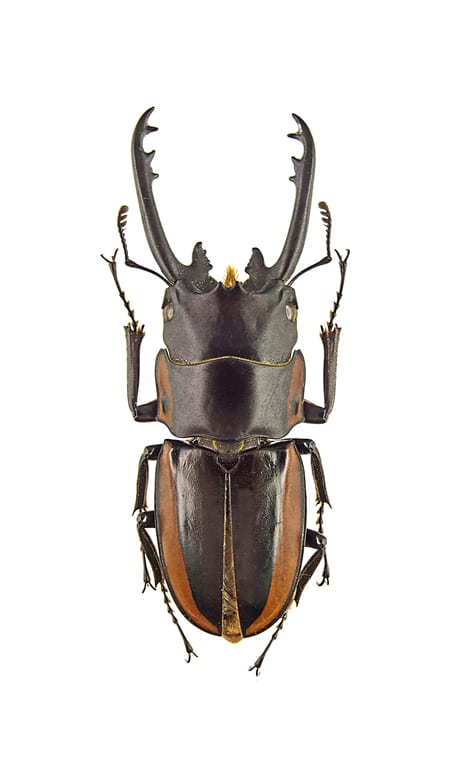
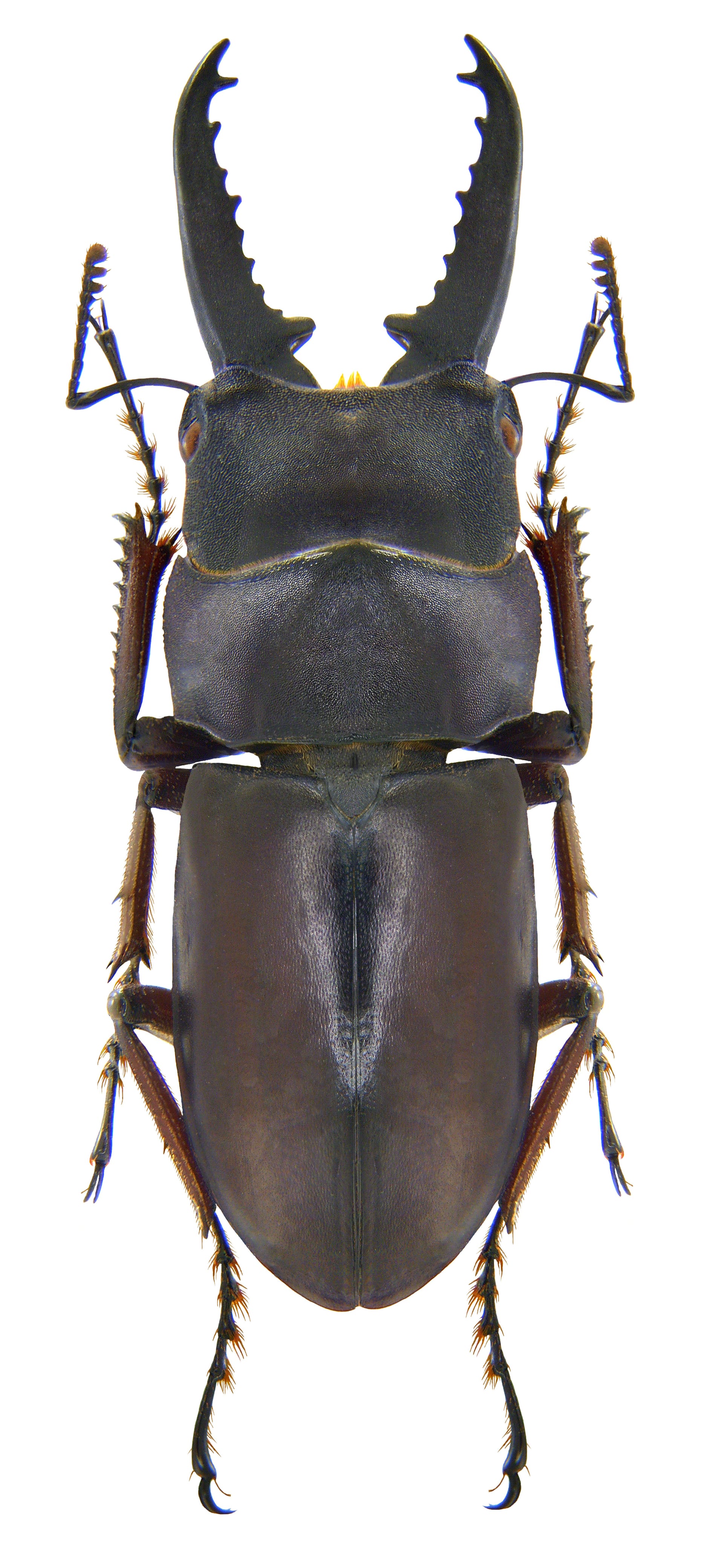
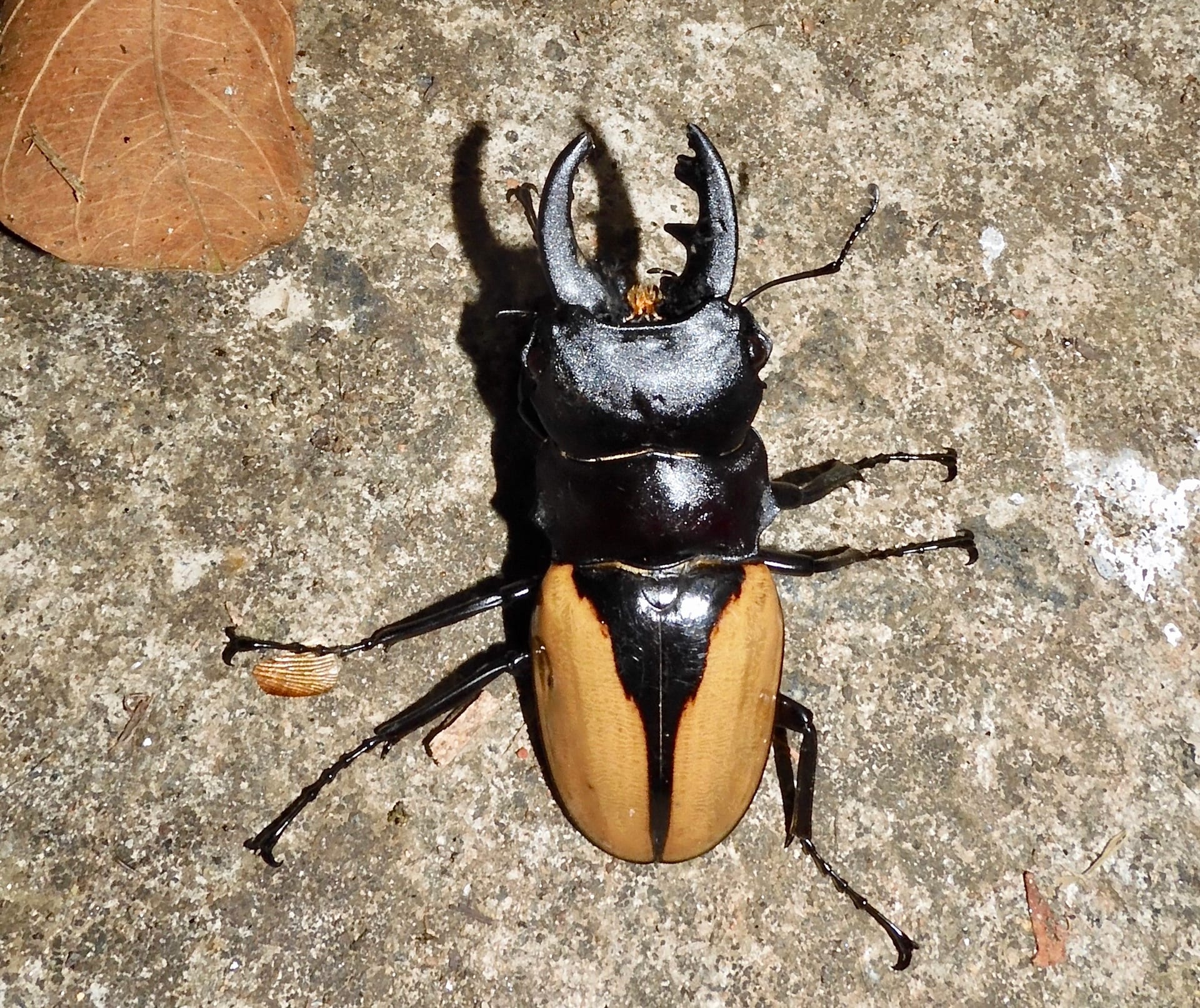
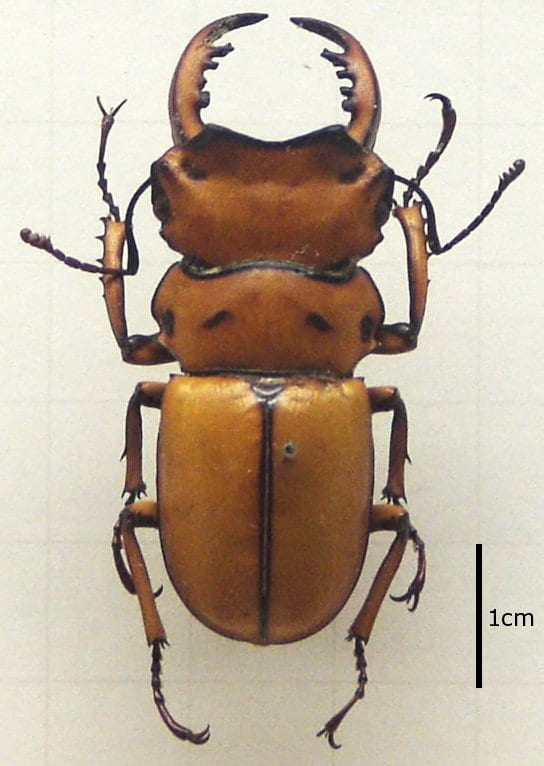
A central African Homoderus with a tawny body marked in black; males have a screen-like shield on the head. It resembles H. mellyi but is redder, and females have wholly tawny wing cases.
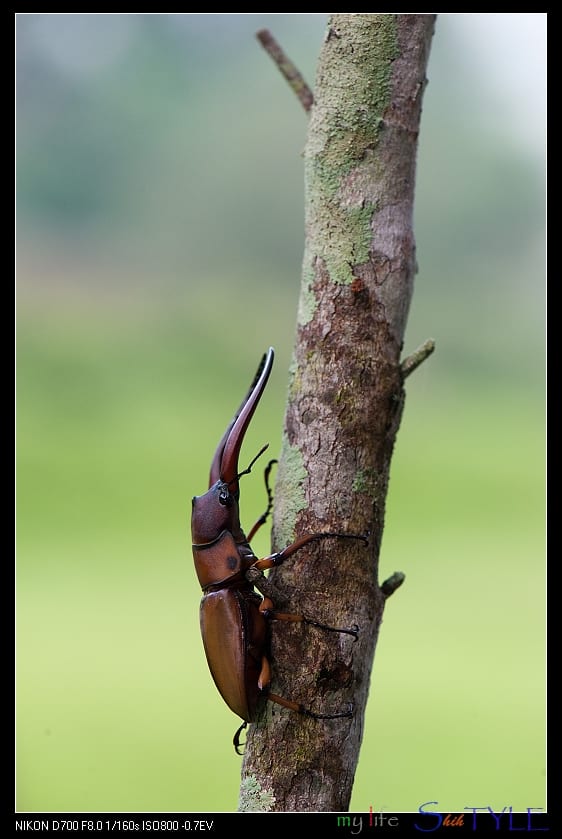
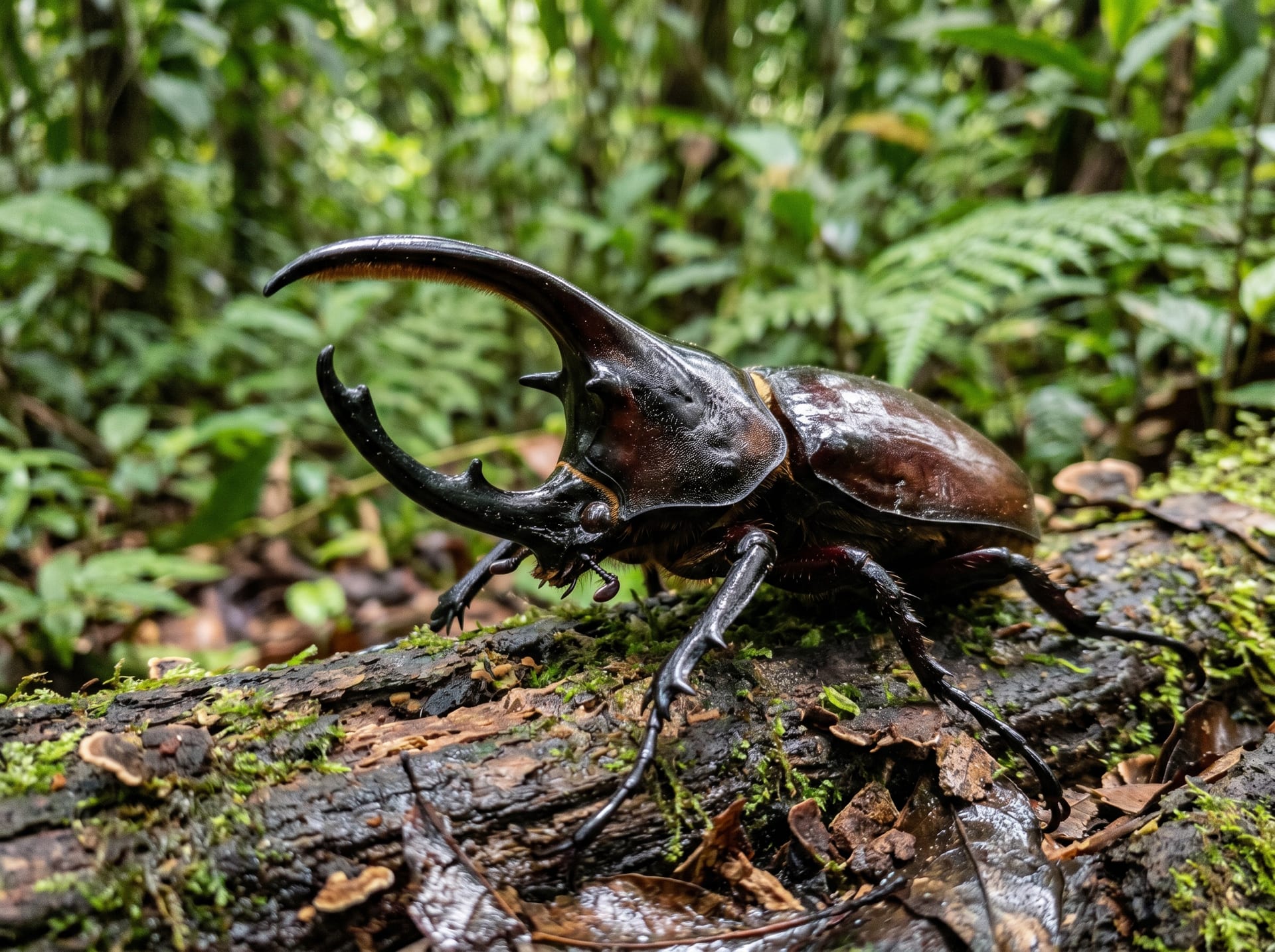
Homoderus gladiator Jakovlev, 1895 is a stag beetle of central Africa. The genus holds only H. mellyi and this species, and is named for the screen-like projection on the male head, which grows larger in bigger males and shields the head from a rival's mandibles. Its markings are much like those of H. mellyi but redder, and females have wholly tawny wing cases and a reddish head (H. mellyi females have black wing cases with two tortoiseshell stripes). The nominate subspecies is given for Zaire and Uganda, and H. g. johnstoni, with a pointed clypeus, for Zaire and Cameroon; some treat the latter as a separate species. GBIF records come from the DR Congo, Kenya, Cameroon, Uganda and elsewhere. Larvae of the genus eclose in about six months, but under Japanese conditions adults need a long rest of more than six months before sexual maturity. The BE-KUWA 2025 edition gives a captive record of 60.1mm and a wild record of 58.0mm. Captive-bred stock is sold by specialist shops in Japan.
Source: Wikipedia (CC BY-SA 4.0)
The Gladiator stag beetle grows to Captive record 60.1mm, wild record 58.0mm.
Origin
Central Africa (DR Congo, Uganda, Cameroon, Kenya and others)
Lifespan
Rests more than six months before maturity; short-lived once mature
Size
Captive record 60.1mm, wild record 58.0mm
Temperature
20〜28℃
Edited & verified by: BreederDirect editorial team
The taxonomic, regulatory, and husbandry data on this page are compiled and verified against the authoritative primary sources below.
Primary sources
Many live foreign Scarabaeoidea (stag beetles, rhinoceros beetles, flower chafers and relatives) are quarantine pests whose import is banned under Japan's Plant Protection Act, and even importable species require a species-name certificate from a foreign government body under the Invasive Alien Species Act (entry only via designated airports, never by international post). Whether a species may enter must be checked with the Plant Protection Station in advance, so choose domestically bred stock and never release captive beetles.
Sources: Plant Protection Station: Importing Scarabaeoidea (JA) / Plant Protection Station: Importing live insects (JA) / Ministry of the Environment: List of invasive alien species (JA) / Species+ CITES query (no listing)
Regulations may change. Always verify the latest information with the relevant authorities.
Find listings for this species
Humidity
60〜80%
Adults take beetle jelly; larvae eat fermented substrate or fungus-bottle media
Adults and larvae are said to prefer warmth and humidity, though larvae tolerate dry spells for quite a while. Larvae held at a constant 20C or so are said to produce large adults even on fermented substrate.
Females lay into the surface of fairly soft white-rotted wood, leaving clear egg scars like those of Dorcus rectus. Adults do not start breeding until exposed to a certain level of heat, and resting pairs have been brought into activity, mating and laying by warming them from above with a light bulb.
Larvae eclose in about six months, but in Japan adults rest for more than six months before maturing and are short-lived afterwards, so pair them soon after they become active.
Males fight, using the head shield against a rival's jaws. Keep adults singly and together only for mating.
The subspecies johnstoni, with a pointed clypeus, is sometimes treated as a separate species, so check locality and subspecies and never mix stock with H. mellyi. Importing foreign stag and rhinoceros beetles is regulated by the Plant Protection Act and the Invasive Alien Species Act (species-name certificate), with each species needing clearance from the Plant Protection Station, so domestically bred stock is the safe choice. Never release captive beetles.
Intermediate. This is an intermediate-level species. Some prior experience and knowledge of environmental management are recommended.
Gladiator stag beetle typically reaches Captive record 60.1mm, wild record 58.0mm as an adult. Size may vary depending on care conditions and individual genetics.
Gladiator stag beetle feeds on: Adults take beetle jelly; larvae eat fermented substrate or fungus-bottle media. Aim for a balanced diet with appropriate feeding frequency.
The price of Gladiator stag beetle varies significantly depending on bloodline, size, captive-bred generation, and sex. Check our market price page for the latest pricing information.
Last updated: September 23, 2026