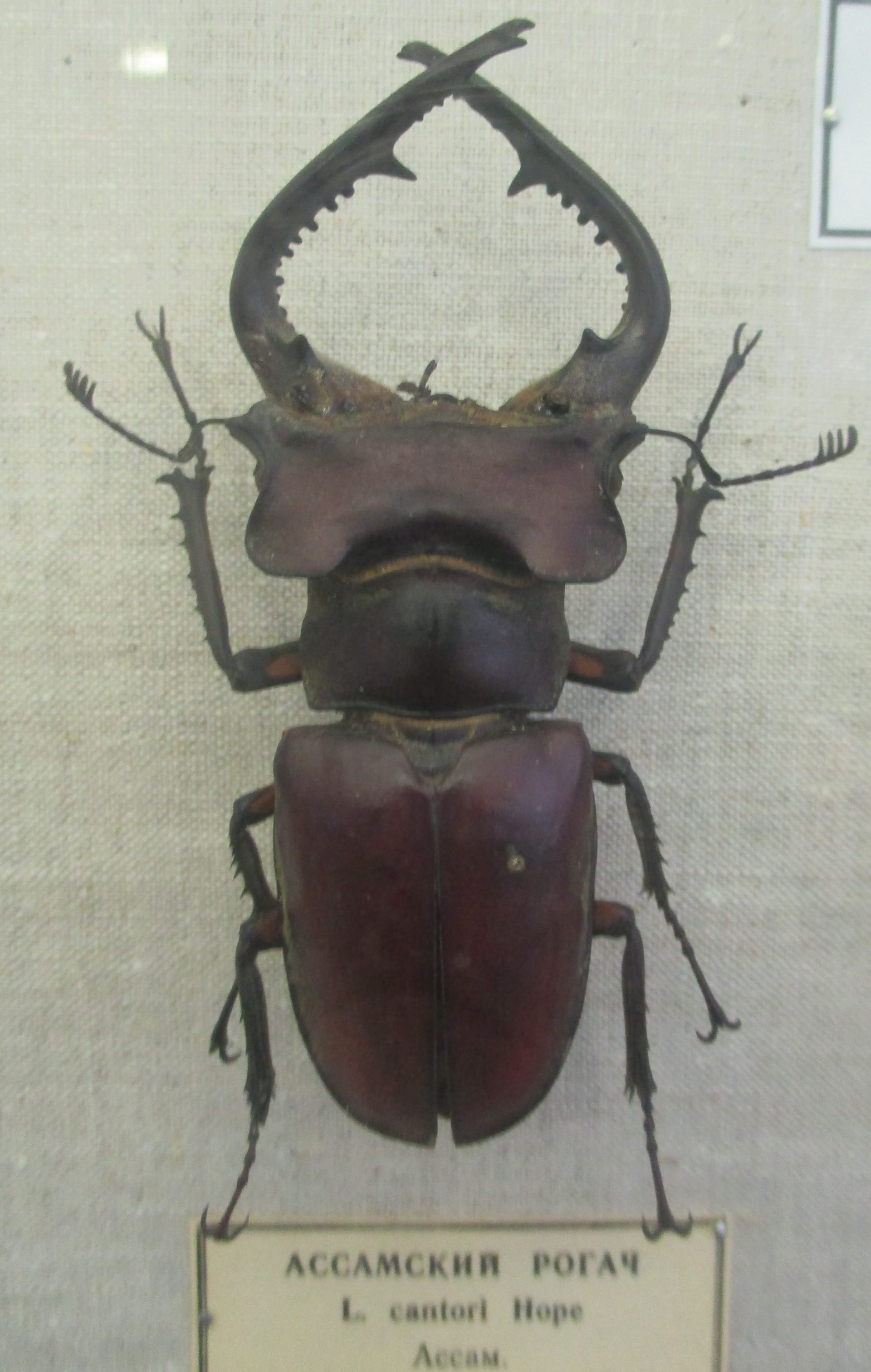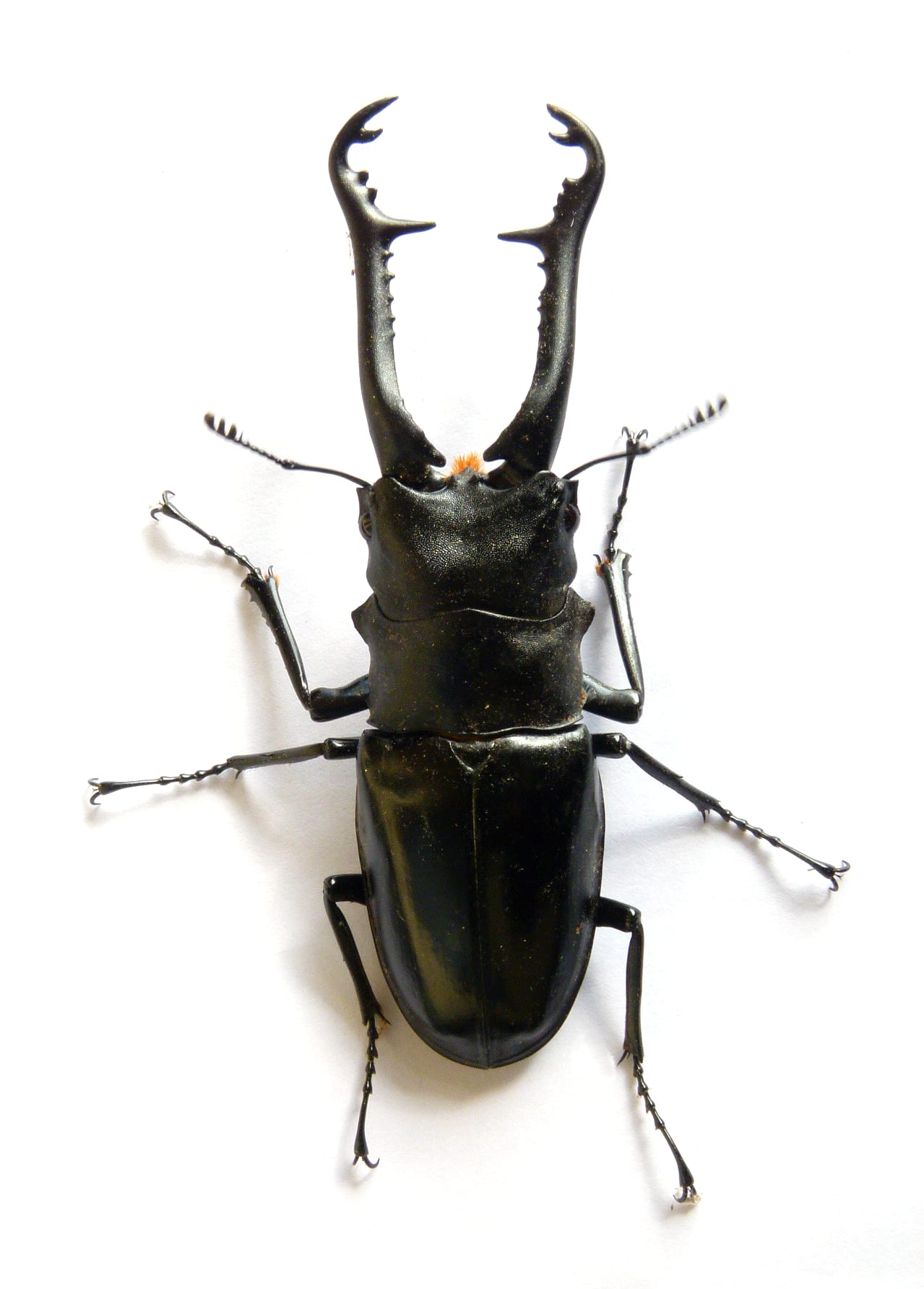
Source: Wikimedia Commons
Giraffe Stag Beetle (India)
IntermediateProsopocoilus giraffa nilgiriensis
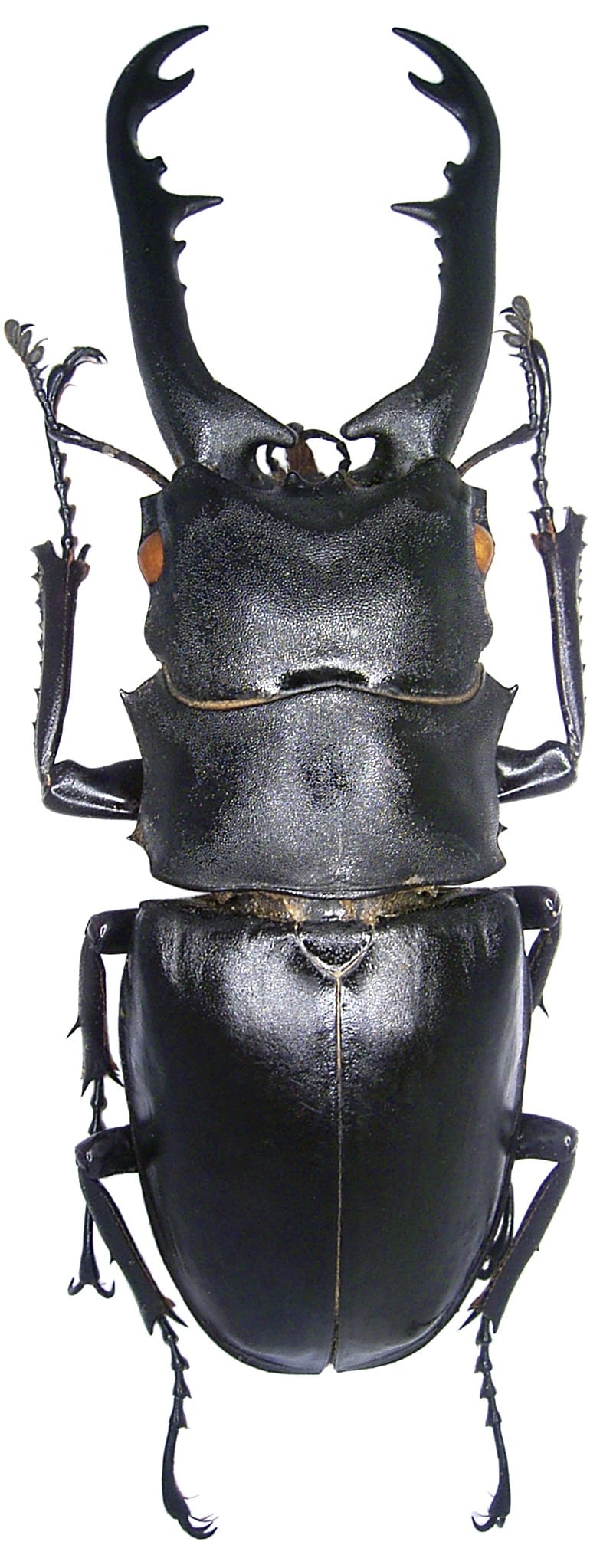
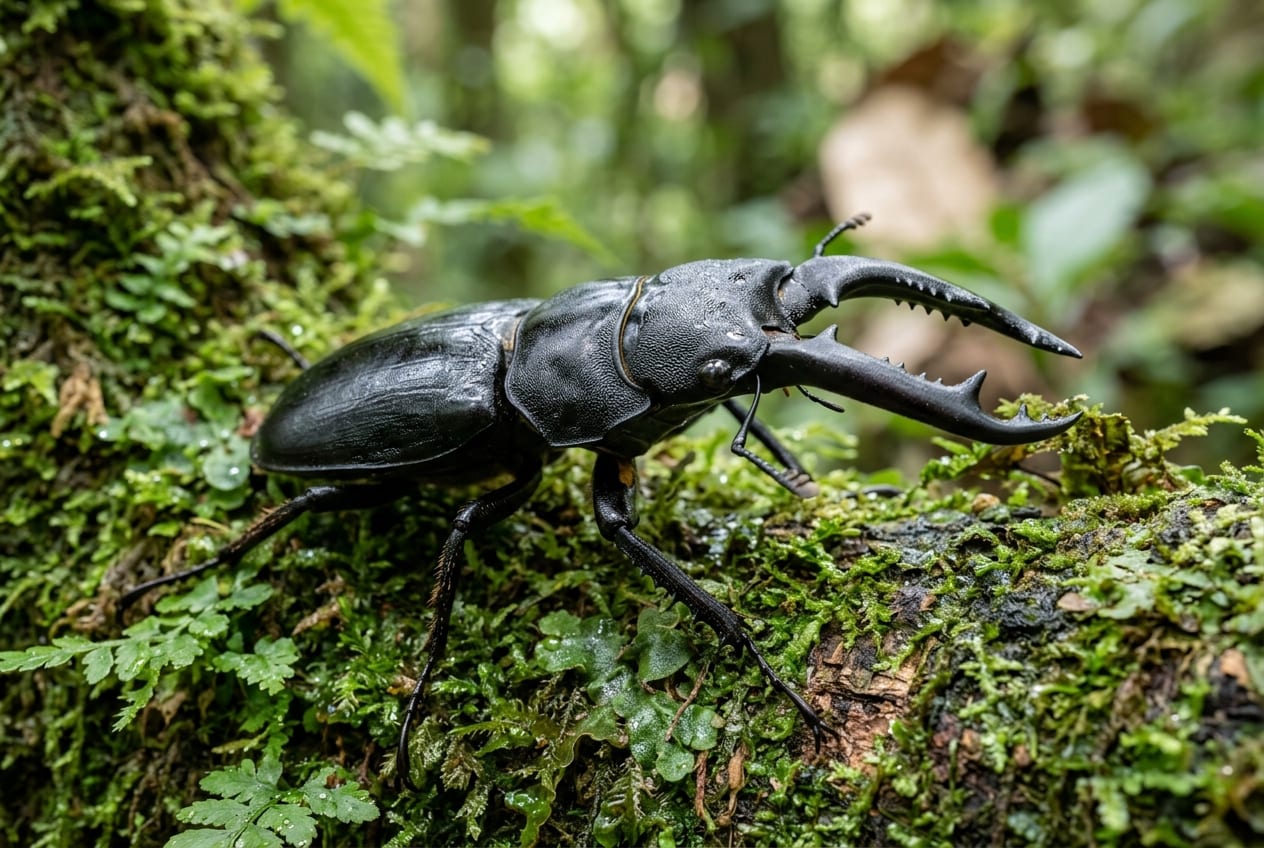
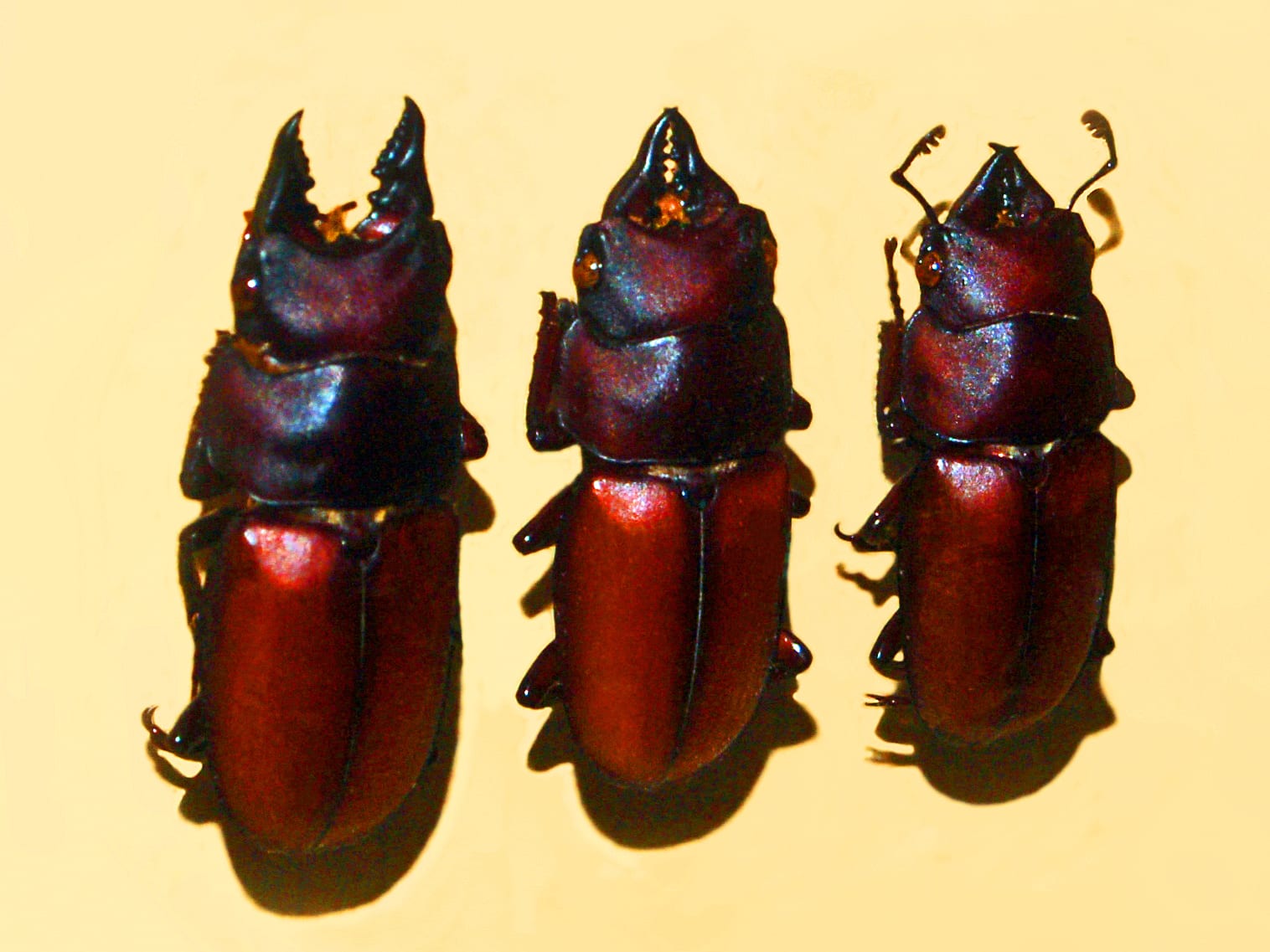
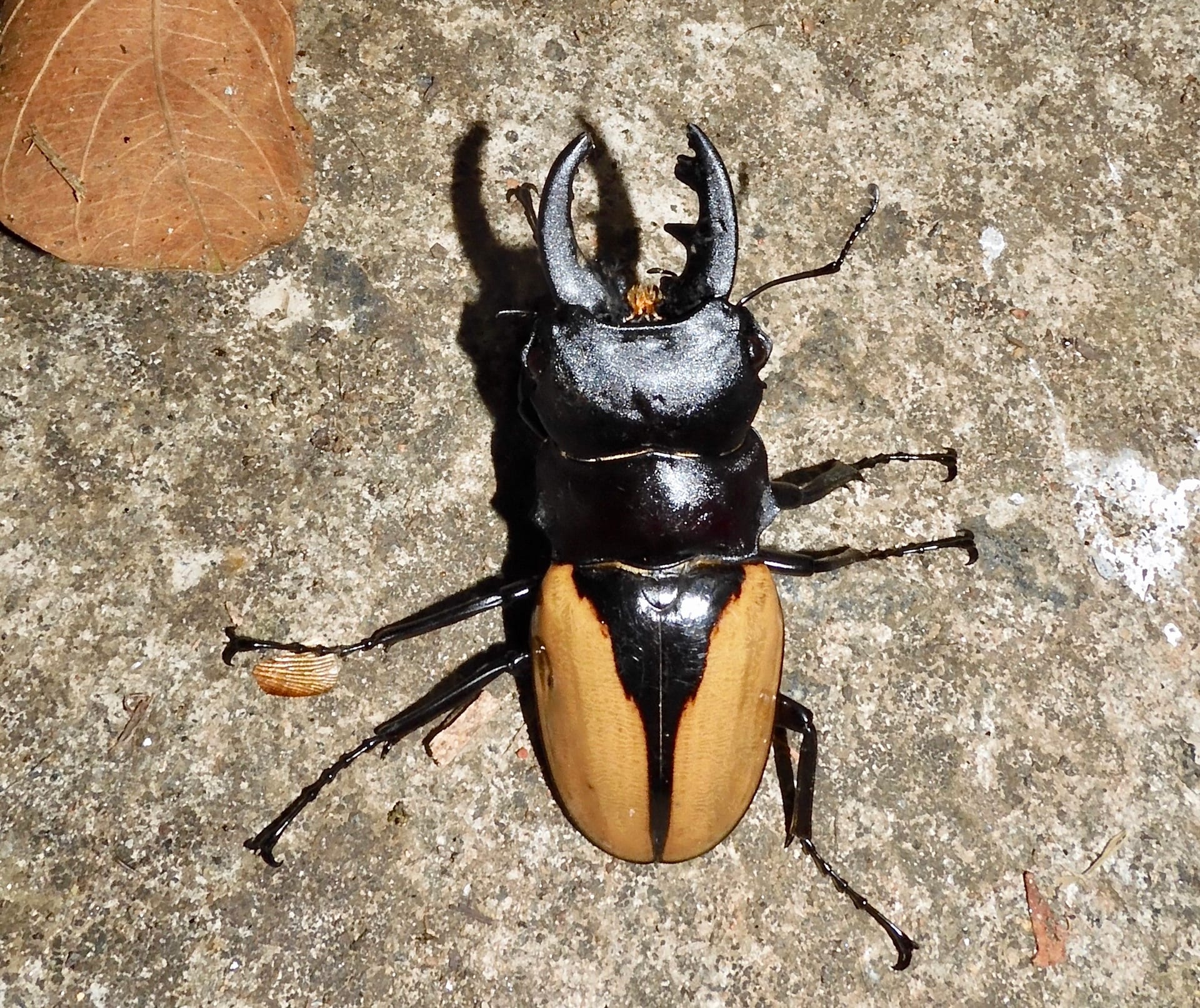
A giraffe stag subspecies from the Nilgiri hills of southern India, the western limit of the species, with a wild maximum of 106.6 mm. Small numbers are traded as Indian stock.
Difficulty
Intermediate
Temperature
20〜26℃
Lifespan
Adults 6-15 months
Size
Males 62.5-106.6 mm / females 44.5-45 mm
Humidity
60〜80%
Diet
Tree sap, beetle jelly
About
The Nilgiri subspecies of the giraffe stag (Prosopocoilus giraffa nilgiriensis) lives in southern India and is named after the Nilgiri hills; it marks the western limit of the species, and live beetles have been photographed at Mudigere, Karnataka. Males measure 62.5-106.6 mm and females 44.5-45 mm; the wild maximum is 106.6 mm and the captive record 106.4 mm. Biology matches the species: it feeds mainly on hardwood sap and females lay in rotten wood. Larvae pupate 7-14 months after hatching and adults live 6-15 months, long for the genus. Keep at about 20-26 C, collect eggs from fairly soft logs, and rear larvae in fungus bottles or substrate. The long mandibles pinch weakly but the basal inner teeth are powerful, and stressed males injure females, so keep singly. Indian stock is not abundant and is popular with hobbyists who collect the subspecies by locality alongside the South-East Asian forms. The BE-KUWA captive record is 106.4 mm (2012).
Source: Wikipedia (CC BY-SA 4.0)
Lifespan of the Giraffe Stag Beetle (India)
The Giraffe Stag Beetle (India) lives Adults 6-15 months.
Size of the Giraffe Stag Beetle (India)
The Giraffe Stag Beetle (India) grows to Males 62.5-106.6 mm / females 44.5-45 mm.
Temperature & humidity for the Giraffe Stag Beetle (India)
The ideal temperature for the Giraffe Stag Beetle (India) is 20〜26℃.
Basic Info
Origin
Southern India (Nilgiri hills and the Western Ghats)
Care Specifications
Semi-aggressiveSolitaryBreeding: Easy
Sources: beetlebreeding.ch - The Breeding/Rearing of Prosopocoilus giraffa keisukei by Kay (species-level guidance) / Prosopocoilus giraffa (subspecies list) - Wikipedia (JA)
Breeding Records & Localities
Captive record (♂)
106.4 mm
Wild record (♂)
106.6 mm
Record source: BE-KUWA 2025 edition (Giraffa (nilgiriensis), captive 106.4 mm, 三浦 涼 2012 / wild 106.6 mm)
Notable localities
India (southern India, Nilgiri)
Regional subspecies
- Prosopocoilus giraffa nilgiriensis — Southern India
The southern Indian subspecies at the western edge of the species' range.
Generation codes
- WD
- Wild-caught
- WF1
- Offspring of a wild-caught female
- F1〜
- Captive generations (same locality)
- CBF1
- Cross-locality captive-bred (reset)
Sources: BE-KUWA Certified Breeding Records (Mushi-sha, FY2025 edition PDF, JA) / Prosopocoilus giraffa (subspecies list) - Wikipedia (JA)
References & Sources
Edited & verified by: BreederDirect editorial team
The taxonomic, regulatory, and husbandry data on this page are compiled and verified against the authoritative primary sources below.
Primary sources
- Wikipedia
- Ministry of the Environment, Invasive Species Act: "Guidance for Those Importing Live Insects in Scarabaeoidea"
- CITES Appendix (checklist.cites.org)
- beetlebreeding.ch - The Breeding/Rearing of Prosopocoilus giraffa keisukei by Kay (species-level guidance)
- BE-KUWA Certified Breeding Records (Mushi-sha, FY2025 edition PDF, JA)
- GBIF
Taxonomy & Authority
Accepted name: Prosopocoilus giraffa nilgiriensis Mizunuma & Nagai, 1991
Authority databases: GBIF
Nomenclature follows global taxonomic authority databases.
Regulations & Conservation Status
Not CITES-listed
Plant Protection Act: When importing live specimens of Scarabaeoidea (including rhinoceros beetles, stag beetles, flower beetles, etc.), a species identification certificate issued by the exporting country government agency or equivalent must be attached in accordance with the Invasive Species Act (import ports are limited to Narita, Chubu, Kansai, Fukuoka, and Kagoshima airports). This species itself is not a designated invasive species, and import is possible upon submission of the certificate.
Sources: Ministry of the Environment, Invasive Species Act: "Guidance for Those Importing Live Insects in Scarabaeoidea" / CITES Appendix (checklist.cites.org)
Regulations may change. Always verify the latest information with the relevant authorities.
Giraffe Stag Beetle (India) Listings
Loading latest listingsFind listings for this species