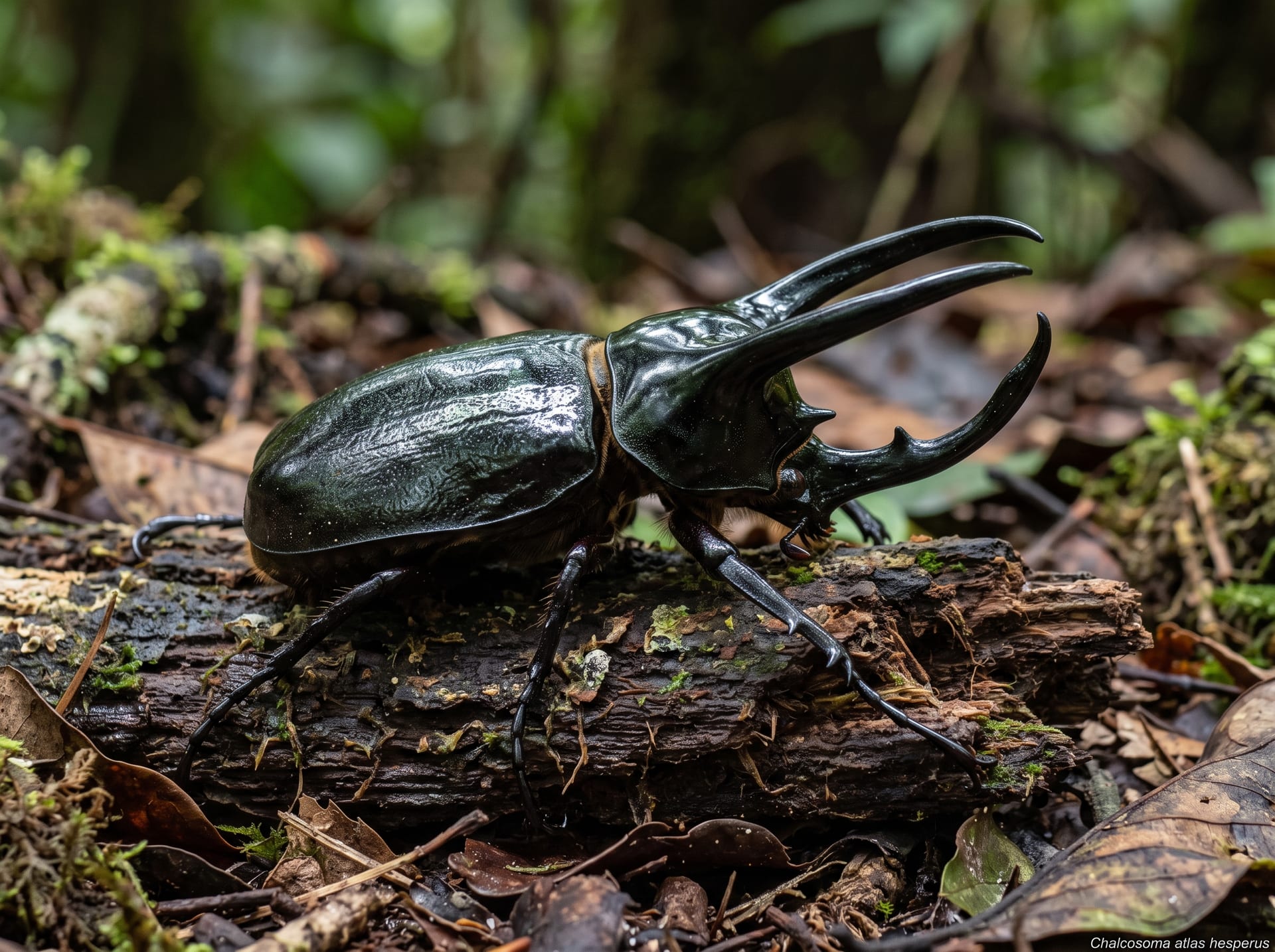
Atlas Beetle (Philippines)
IntermediateProsopocoilus dorsalis
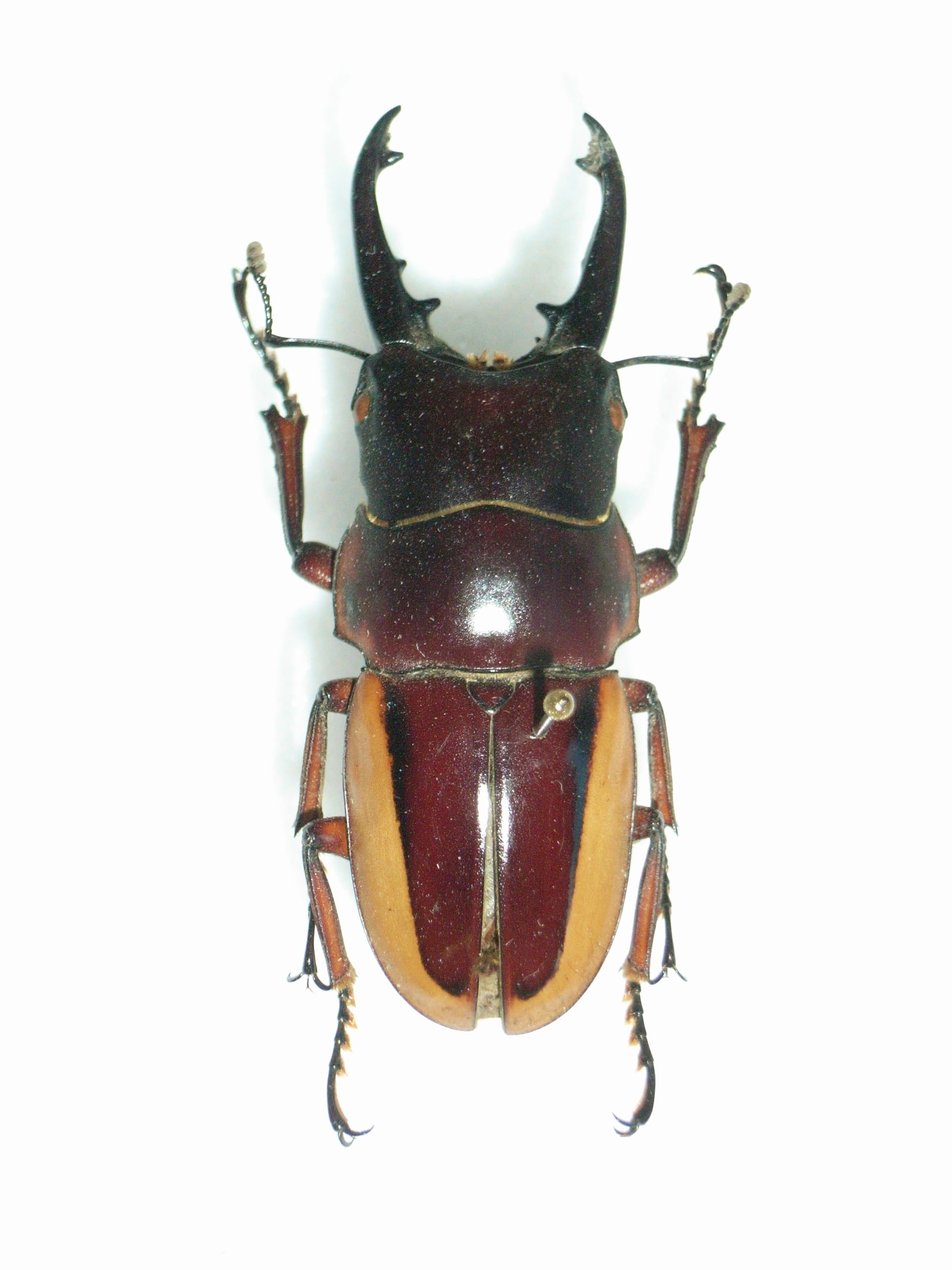
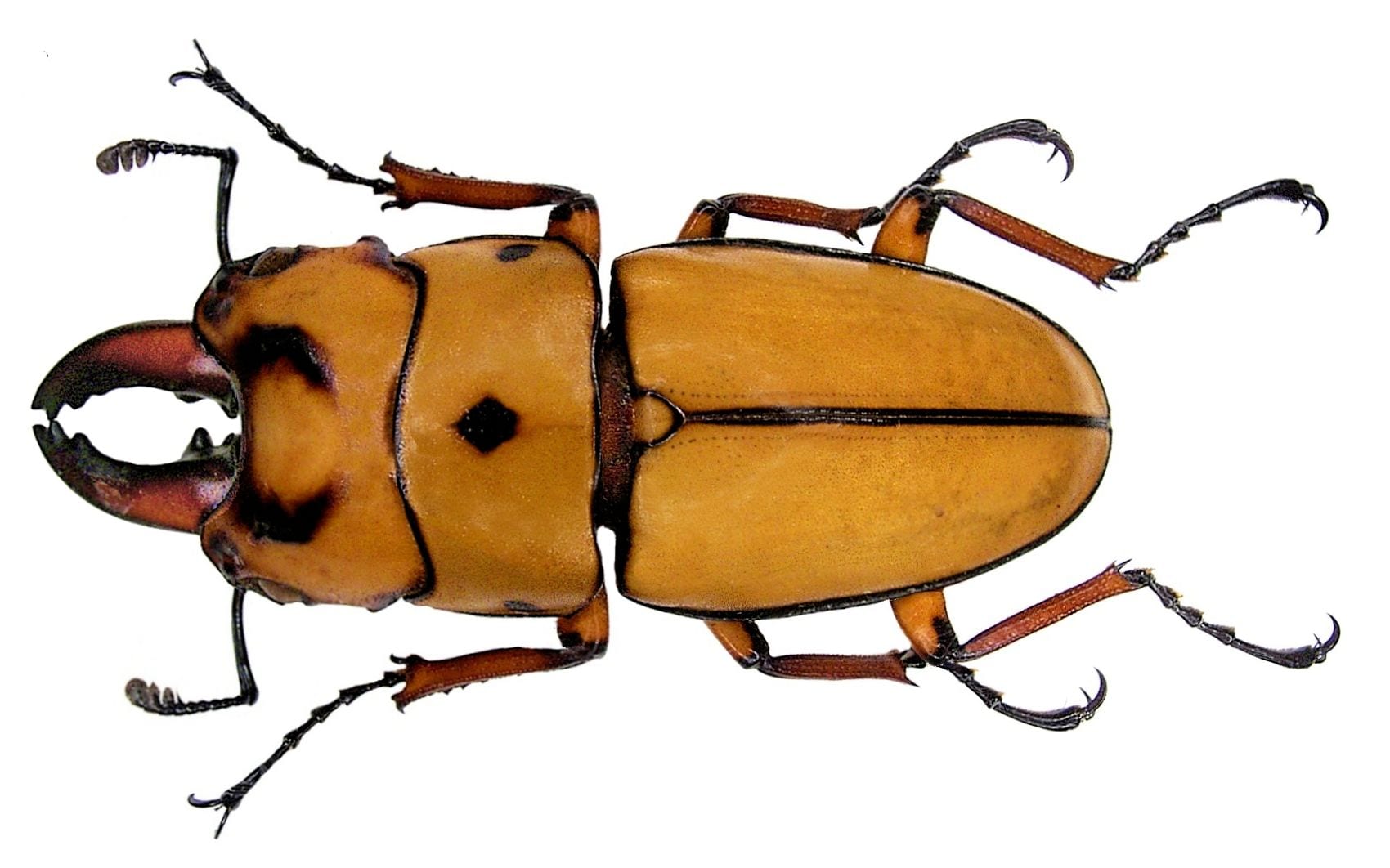
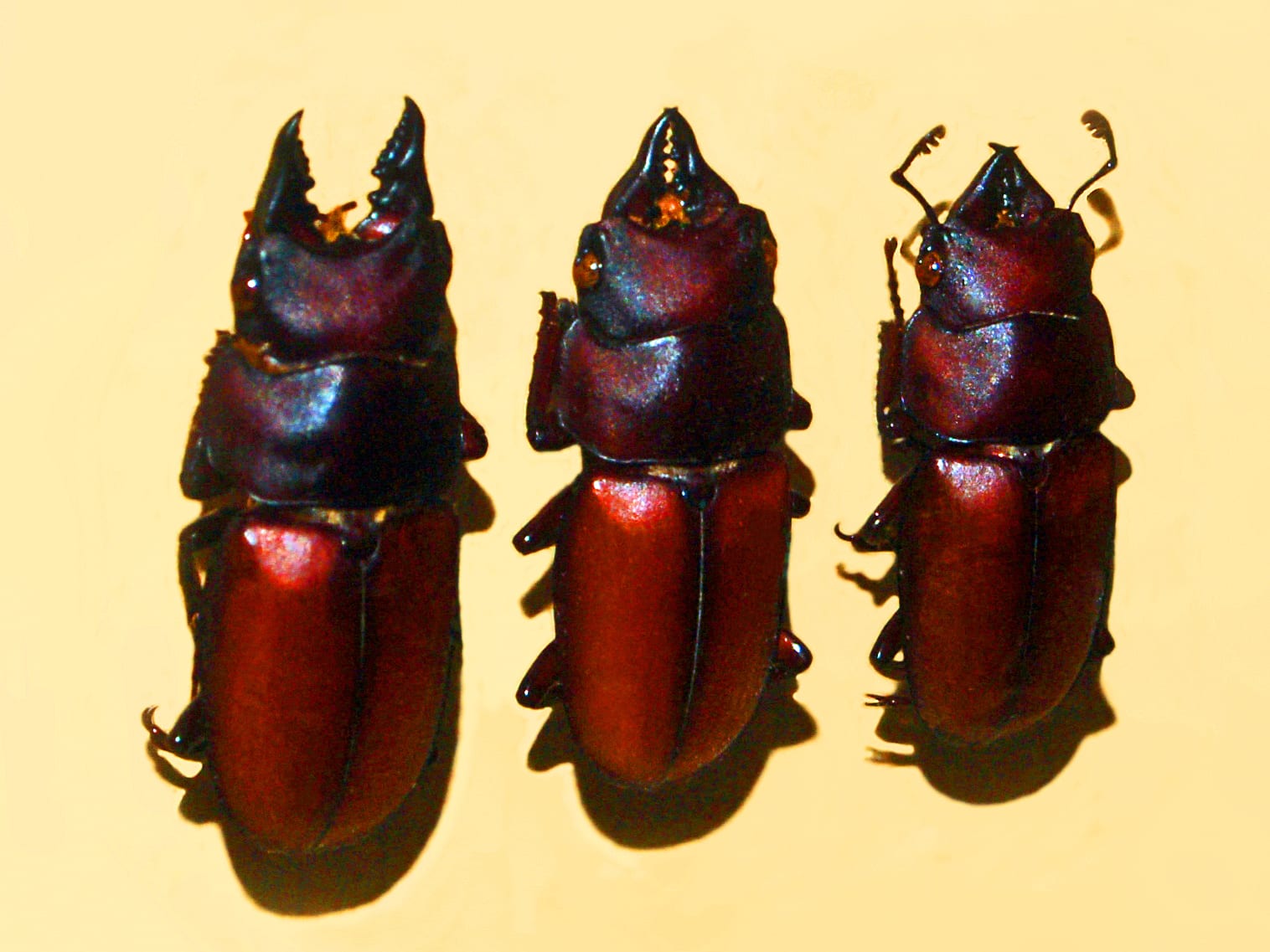
A saw stag beetle recorded mainly from the Philippines. The sexes differ greatly and male mandible shape changes with body size. BE-KUWA lists the nominate form and the larger subspecies hiromii separately.
Prosopocoilus dorsalis (Erichson, 1834) is a saw stag beetle originally described as Lucanus dorsalis. Most GBIF records are from the Philippines, with others from Indonesia. The genus is marked by strong differences between the sexes and by male mandibles that come in short, intermediate and long forms; its life cycle is fairly close to that of Dorcus, with larvae feeding on rotten wood and humus. Males are combative but also quick to give up and flee when losing. Little has been published on this species' form or wild ecology. The BE-KUWA 2025 edition lists the nominate form and the subspecies hiromii separately: male captive records of 57.8mm (wild 54.2mm) for the nominate form and 73.0mm (wild 70.0mm) for hiromii, and a female captive record of 40.6mm. Since size differs so much between subspecies, check the subspecies and locality when buying and never mix lines. Captive-bred stock is sold by specialist shops in Japan.
Source: Wikipedia (CC BY-SA 4.0)
The Dorsalis saw stag beetle grows to Captive records 57.8mm (male, nominate), 73.0mm (male, hiromii), 40.6mm (female).
Origin
Southeast Asia, mainly the Philippines (GBIF records from the Philippines and Indonesia)
Lifespan
Little data
Size
Captive records 57.8mm (male, nominate), 73.0mm (male, hiromii), 40.6mm (female)
Temperature
20〜28℃
Edited & verified by: BreederDirect editorial team
The taxonomic, regulatory, and husbandry data on this page are compiled and verified against the authoritative primary sources below.
Primary sources
Many live foreign Scarabaeoidea (stag beetles, rhinoceros beetles, flower chafers and relatives) are quarantine pests whose import is banned under Japan's Plant Protection Act, and even importable species require a species-name certificate from a foreign government body under the Invasive Alien Species Act (entry only via designated airports, never by international post). Whether a species may enter must be checked with the Plant Protection Station in advance, so choose domestically bred stock and never release captive beetles.
Sources: Plant Protection Station: Importing Scarabaeoidea (JA) / Plant Protection Station: Importing live insects (JA) / Ministry of the Environment: List of invasive alien species (JA) / Species+ CITES query (no listing)
Regulations may change. Always verify the latest information with the relevant authorities.
Find listings for this species
Humidity
60〜80%
Adults take beetle jelly; larvae eat rotten wood and fermented substrate
There is little numeric temperature data. Avoid extremes of heat and cold and keep the substrate from drying out.
The genus has a life cycle close to Dorcus, with larvae growing on rotten wood and humus. Provide fermented substrate or a laying log.
Males are combative, so keep adults singly and together only for mating.
Larval duration and adult lifespan are poorly documented.
The nominate form and hiromii differ greatly in size, so confirm subspecies and locality and keep lines separate. Importing foreign stag and rhinoceros beetles is regulated by the Plant Protection Act and the Invasive Alien Species Act (species-name certificate), with each species needing clearance from the Plant Protection Station, so domestically bred stock is the safe choice. Never release captive beetles.
Intermediate. This is an intermediate-level species. Some prior experience and knowledge of environmental management are recommended.
Dorsalis saw stag beetle typically reaches Captive records 57.8mm (male, nominate), 73.0mm (male, hiromii), 40.6mm (female) as an adult. Size may vary depending on care conditions and individual genetics.
Dorsalis saw stag beetle feeds on: Adults take beetle jelly; larvae eat rotten wood and fermented substrate. Aim for a balanced diet with appropriate feeding frequency.
The price of Dorsalis saw stag beetle varies significantly depending on bloodline, size, captive-bred generation, and sex. Check our market price page for the latest pricing information.
Last updated: September 23, 2026