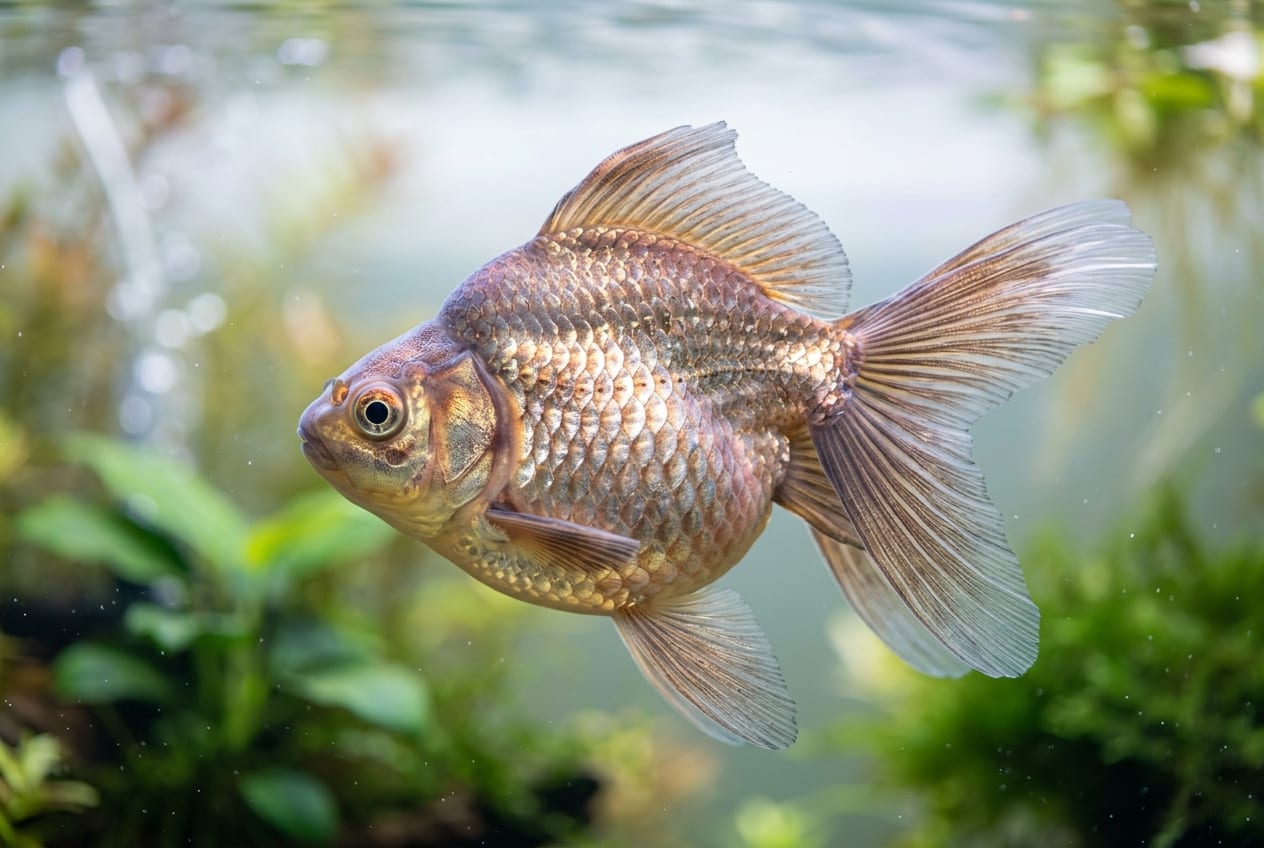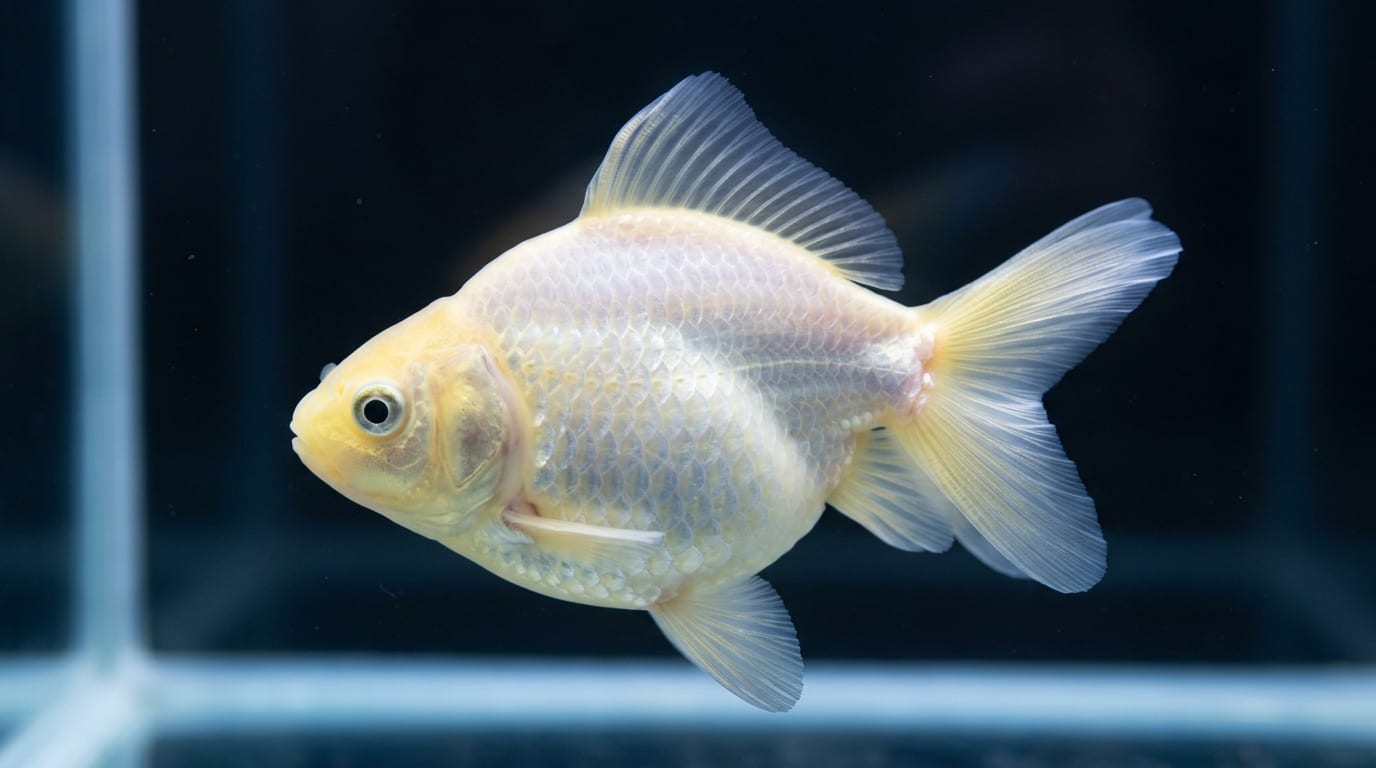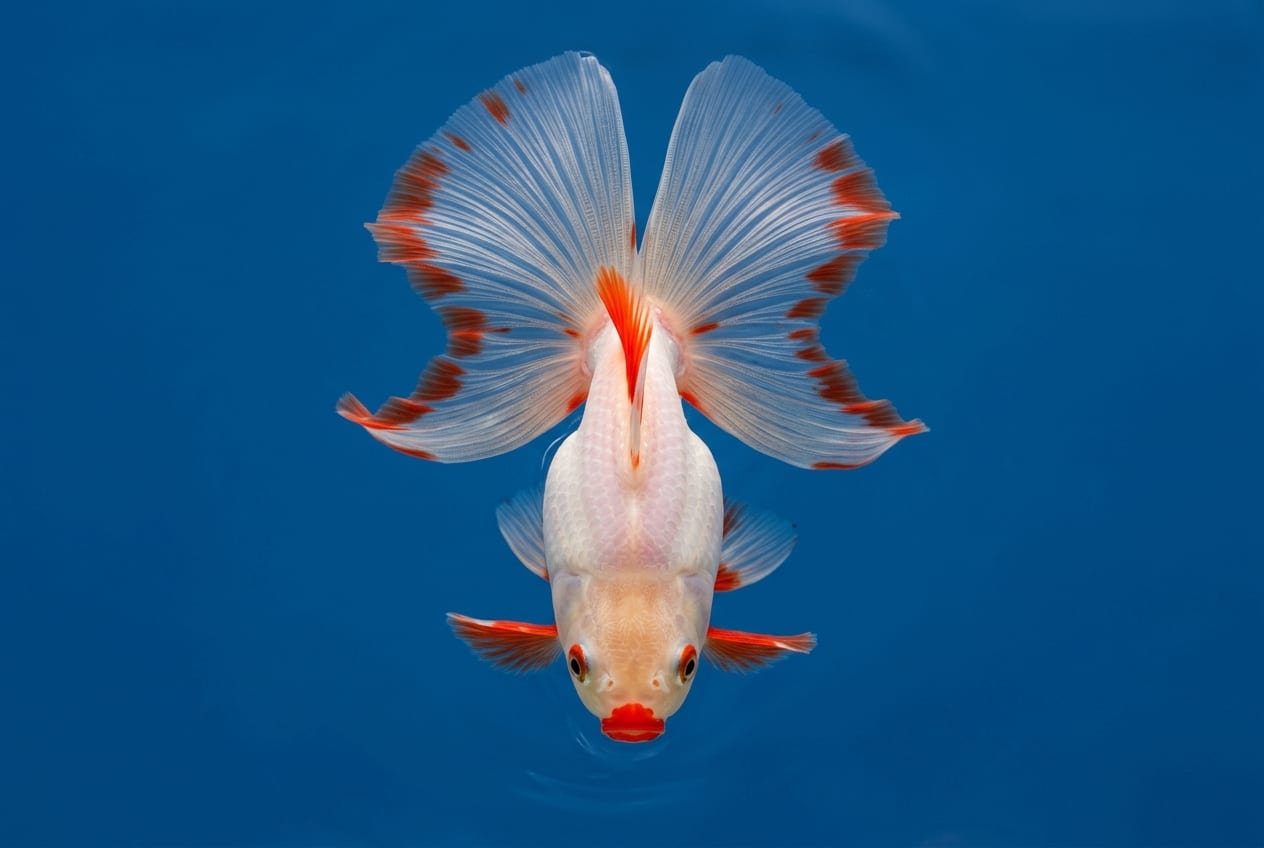
AI-generated image
Tokai Nishiki
IntermediateCarassius auratus
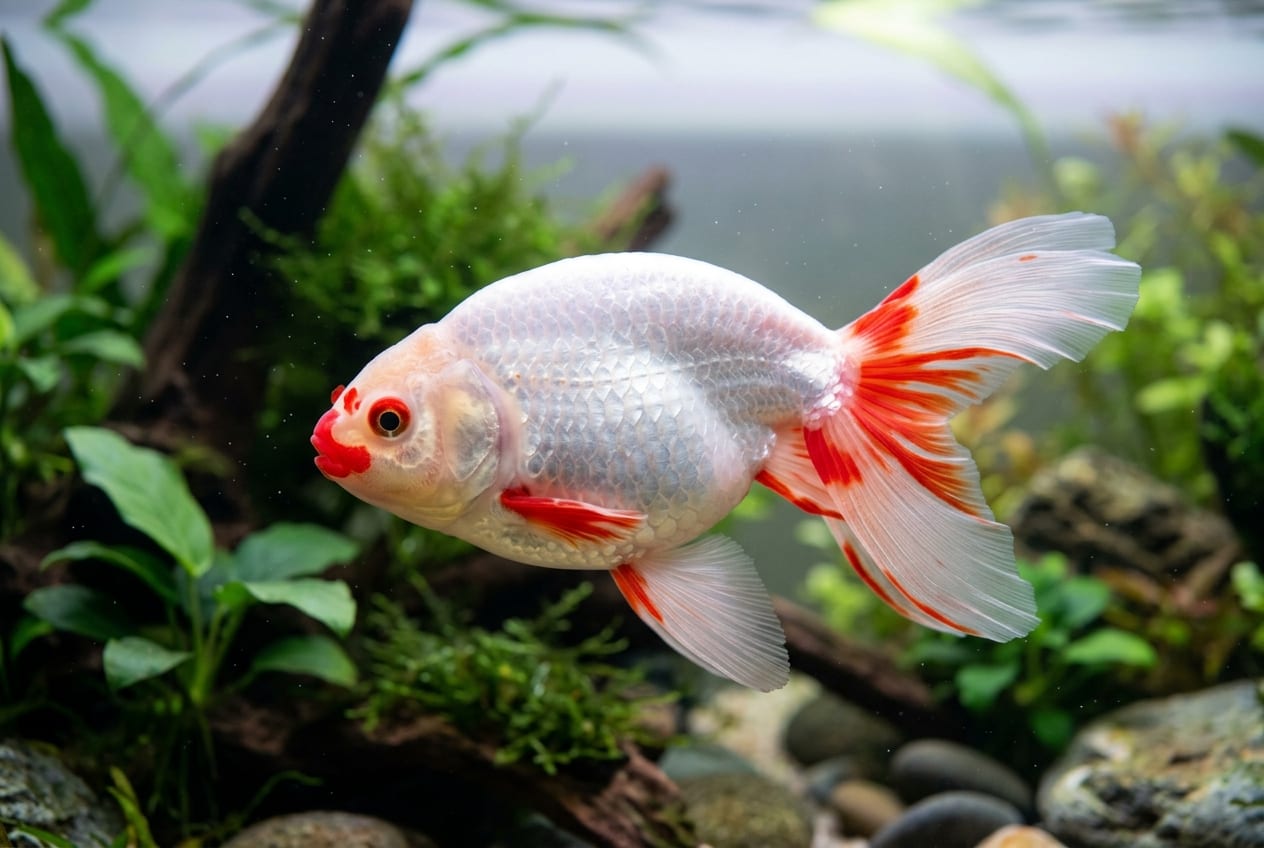
An Aichi-born variety pairing the jikin body with a fan-like tail borrowed from the butterfly tail. The ideal is the rokurin pattern, red only on the mouth and fins, and a small circle of enthusiasts maintains the line.
Difficulty
Intermediate
Temperature
15〜28℃
Lifespan
10-15 years
Diet
Prepared foods, frozen bloodworms
About
Tokai nishiki is an Aichi variety created in 2003 by crossing the panda butterfly tail with the jikin. It keeps the jikin body while the tail opens into a broad fan in the manner of a butterfly tail, and it shows well from above and from the side alike. The ideal is the jikin's rokurin pattern: red at six points only, the mouth and each fin, over a white body. That pattern does not appear on its own but is produced by the same artificial colour work used on the jikin, and fish raised without it usually finish plain red. The variety is not yet strongly fixed, and some fish show the butterfly tail traits heavily. It is hardy and not difficult to keep, but only a handful of enthusiasts maintain the line.
Source: Wikipedia (CC BY-SA 4.0)
Lifespan of the Tokai Nishiki
The Tokai Nishiki lives 10-15 years.
Temperature & humidity for the Tokai Nishiki
The ideal temperature for the Tokai Nishiki is 15〜28℃.
Basic Info
Origin
Aichi Prefecture, Japan
Lifespan
10-15 years
Temperature
15〜28℃
Diet
Prepared foods, frozen bloodworms
Care Specifications
- pH
- 6–8
- Hardness (GH)
- 5–19 dGH
- Water Temp.
- 15–28℃
PeacefulGroupBreeding: Hard
Sources: FishBase (Carassius auratus) / Keihan Nishikigoi Center: goldfish water management / Kingyo Hitosuji: Tokai Nishiki
Morphs (Varieties)
Goldfish varieties arose from fixed mutations and selective breeding, and body form, tail form, scale type, colour and head growth are all carried forward by selection over generations. Inheritance is therefore shown as line-bred throughout rather than split into dominant and recessive.
Line-bredEstablished by selective line breeding.
Jikin body formFan-shaped (butterfly) tailRokurin colour pattern
Sources: Kingyo Hitosuji: Tokai Nishiki
A curated selection of notable morphs. Inheritance modes are a breeding-planning guide; actual appearance varies with combos.
References & Sources
Edited & verified by: BreederDirect editorial team
The taxonomic, regulatory, and husbandry data on this page are compiled and verified against the authoritative primary sources below.
Taxonomy & Authority
Accepted name: Carassius auratus (Linnaeus, 1758)
Breeder: (2003)
Parentage: パンダ蝶尾 × 地金
Authority databases: FishBase · GBIF · Kingyo Hitosuji: Tokai Nishiki
Nomenclature follows global taxonomic authority databases.
Regulations & Conservation Status
Not CITES-listed
Sources: CITES Appendices (species not listed) / FishBase (Carassius auratus)
Regulations may change. Always verify the latest information with the relevant authorities.
Tokai Nishiki Listings
Loading latest listingsFind listings for this species