Care Guide for Spotted Garden Eels and Zebra Garden Eels | How to Raise Sand-Dwelling Garden Eels | ブリちょく
Marine Fish| ✍️ BreederDirect Editorial
Care Guide for Spotted Garden Eels and Zebra Garden Eels | How to Raise Sand-Dwelling Garden Eels
Spotted garden eels (Heteroconger hassi) and zebra garden eels (Heteroconger polyzona) are representative species that burrow in sandy substrates. While they require a special aquarium environment (deep sand bed, gentle water flow, and specific feeding methods), their graceful swaying movements in the tank are absolutely captivating. This guide explains the secrets to successful care.
Key Takeaways
Spotted garden eels (Heteroconger hassi) and zebra garden eels (Heteroconger polyzona) are representative species that burrow in sandy substrates. While they require a special aquarium environment (deep sand bed, gentle water flow, and specific feeding methods), their graceful swaying movements in the tank are absolutely captivating. This guide explains the secrets to successful care.
What Are Spotted and Zebra Garden Eels?
✍️
BreederDirect Editorial
The BreederDirect editorial team specializes in care information for animals, covering veterinary care and breeding to deliver beginner-friendly guides.
Find Marine Fish on BreederDirect
Buy directly from verified breeders
Browse Related Listings
Find Marine Fish listings related to this article on BreederDirect. Buy directly from verified breeders.
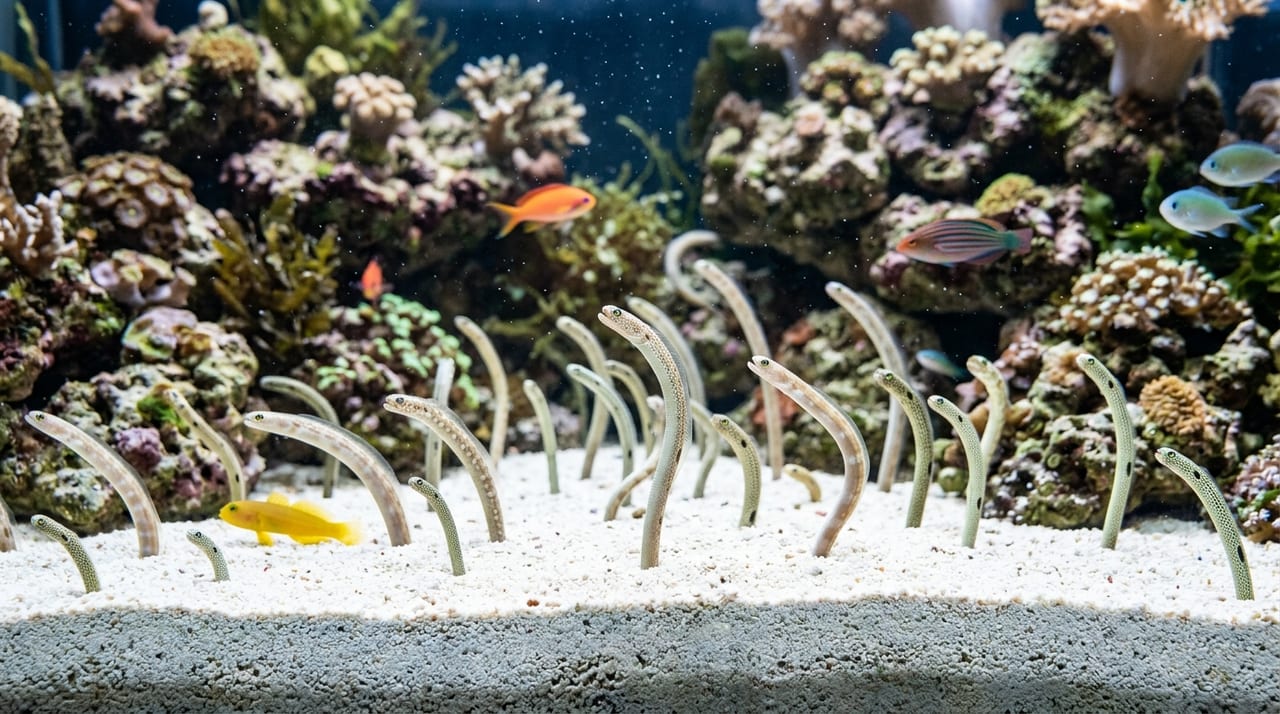
Spotted garden eels (Heteroconger hassi) and zebra garden eels (Heteroconger polyzona) are slender saltwater fish belonging to the order Anguilliformes, family Congridae, subfamily Heterocongrinae. They are popular in public aquariums and are collectively called "garden eels" because of their charming behavior of digging burrows in sandy substrates and swaying gently with about two-thirds of their bodies exposed.
How to Distinguish Between Spotted and Zebra Garden Eels
Feature
Spotted Garden Eel
Zebra Garden Eel
Body Color
White with black spots (cheetah pattern)
White, orange, and black stripes
Size
Around 40cm
60–70cm
Distribution
Indo-Pacific and Red Sea
Indo-Pacific
Price Range
Somewhat expensive
Relatively affordable
Both species are social fish that form groups, and keeping multiple individuals (3 or more) allows you to observe schooling and group-dwelling behavior.
Special Environment Requirements for Care
Garden eels require a fundamentally different aquarium setup compared to typical saltwater fish. Prepare thoroughly before acquiring them.
Choosing Tank Size
Minimum: 60cm (90cm or larger recommended for multiple fish)
Depth (front-to-back) is more important than width (space for burrowing)
Height should be at least 45cm (prevents escape accidents)
Essential: Tank cover (glass lid) — they may jump out when frightened
Sand Bed Setup (Most Critical)
Garden eels burrow in sandy substrates to create their burrows. Setting up the sand bed is the most important aspect of their care.
Sand Type and Depth
Recommended sand: Fine live sand or aragonite sand (grain size 0.5–1mm)
Required depth: Minimum 15cm, ideally 20–25cm
Shallow sand prevents burrow formation, causing the fish to swim back and forth along the bottom, resulting in stress
Placing small stones or mesh beneath the sand bed helps prevent substrate settling
Sand Bed Preparation Steps
Spread 20cm of fine-grain aquarium aragonite sand
If possible, add a few centimeters of live sand on top (helps establish beneficial bacteria)
Let the tank run for 1–2 months and fully establish the nitrogen cycle using live rock
Introduce fish only after the tank is completely cycled and established
Water Flow Management
Garden eels prefer gentle water flow.
Recommended flow: Weak (just enough to gently sway polyps)
Strong current collapses burrows and causes stress
Direct the power outlet away from the sand bed, toward the water surface or tank sides instead
Steady, unidirectional weak flow is better than random mode
Water Quality Parameters
Parameter
Optimal Range
Temperature
24–27°C
Specific Gravity
1.024–1.026
pH
8.1–8.3
Nitrate (NO₃)
20ppm or less
Ammonia/Nitrite
Zero
Feeding Methods
Feeding garden eels is the most challenging aspect of their care. With proper technique, you'll become proficient.
Foods They Eat
Live food: Copepods, daphnia, brine shrimp (especially initially)
Transition to prepared food: Some individuals can be acclimated over time from frozen food to powdered pellets to granular food
Feeding Tips
Garden eels feed on plankton drifting past them while their heads are exposed from the sand.
Use water flow: Direct food into the pump's intake or discharge so it passes in front of the fish's mouth
Target feeding: Use a pipette or thin feeding tube to deliver food directly in front of their mouths
Feeding frequency: Ideally twice daily in small amounts
Watch for other fish stealing food (garden eels won't leave their burrows to compete)
Mixed Species and Multiple Specimens
Keeping Multiple Specimens of the Same Species
Spotted and zebra garden eels have a social nature and form groups, making multiple-specimen keeping recommended.
Minimum 3 individuals; 5 or more is ideal
The sight of a group swaying together is exceptionally beautiful
Provide at least 30–40cm² of sand bed surface area per fish
Compatibility with Other Fish
Good compatibility: Peaceful medium-sized saltwater fish (gobies, small tangs, dartfish, anthias)
Fish to avoid: Aggressive species (large tangs, triggerfishes, large angelfish)
Use caution: Fish that dig or sift the substrate (loaches, detritivores) may destroy burrows
Introduction Guidelines
Drip acclimation is essential: Slowly acclimate over 1–2 hours using the drip method
Initial focus on burrow construction: Fish may hide in the sand for several days after introduction
Simultaneous introduction of multiple fish is preferable: A single fish is prone to stress and isolation
Don't skip quarantine: Observe new fish in a separate tank for 2–3 weeks before transferring to the main tank
Summary
Spotted and zebra garden eels are advanced-level saltwater fish requiring a special environment (deep sand bed, gentle water flow, and targeted feeding), but their unique, graceful swaying movements from the sand offer an incomparable appeal. With a properly prepared sand bed and appropriate tank conditions, combined with multiple-specimen keeping, you can create a mesmerizing, garden-like display reminiscent of an underwater flower field.