Goldfish Overcrowding Risks and Proper Stocking Density Guide | Tank Size Reference and Water Quality Management
Overcrowding is the primary risk factor for goldfish disease and mortality. This guide explains proper stocking numbers by tank size and practical methods for maintaining water quality while managing density.
Key Takeaways
Overcrowding is the primary risk factor for goldfish disease and mortality. This guide explains proper stocking numbers by tank size and practical methods for maintaining water quality while managing density.
Related Species

The Vicious Cycle of Overcrowding
It's easy to think "the more goldfish you add, the more lively and fun it is," but overcrowding is one of the greatest risk factors threatening goldfish health and survival. The core issue is not just "lack of space," but rather that multiple biological vicious cycles occur simultaneously.
The most critical problem is rapid water quality deterioration. As fish numbers increase, waste, uneaten food, and ammonia excretion increase proportionally. When filter capacity is exceeded, the conversion of ammonia → nitrite → nitrate stalls, and the water becomes toxic. Goldfish are high-waste producers compared to tropical fish of similar size, and they have the characteristic of fouling water quickly.
Next comes oxygen depletion. As fish density increases, oxygen consumption rises, but since water surface area remains constant, dissolved oxygen levels tend to drop. In summer when water temperature is high, the amount of oxygen that can dissolve in water decreases, so when overcrowding coincides with high temperatures, the risk of hypoxia rises sharply.
Furthermore, fish in overcrowded conditions continuously secrete stress hormones chronically. This significantly impairs immune function and dramatically increases the incidence of diseases such as ich, Aeromonas infection, and fungal infections. In overcrowded conditions, "an environment prone to disease" becomes the norm.
Proper Stocking Density by Tank Size
Appropriate goldfish density varies based on three factors: "fish size," "filter capacity," and "water change frequency." The values below should be treated as guidelines and adjusted based on water quality data.
The common guideline is "10 liters of water per goldfish." However, this figure assumes small individuals around 5–7 cm in body length. For medium and large individuals 10 cm or longer, 20–30 liters or more per fish is required.
| Tank Size | Guideline Volume | Max Number (Small 5–7 cm) |
|---|---|---|
| 45 cm tank | ~30 L | 3 fish |
| 60 cm tank | ~60 L | 6 fish |
| 90 cm tank | ~150 L | 15 fish |
| 120 cm tank | ~300 L | 30 fish |
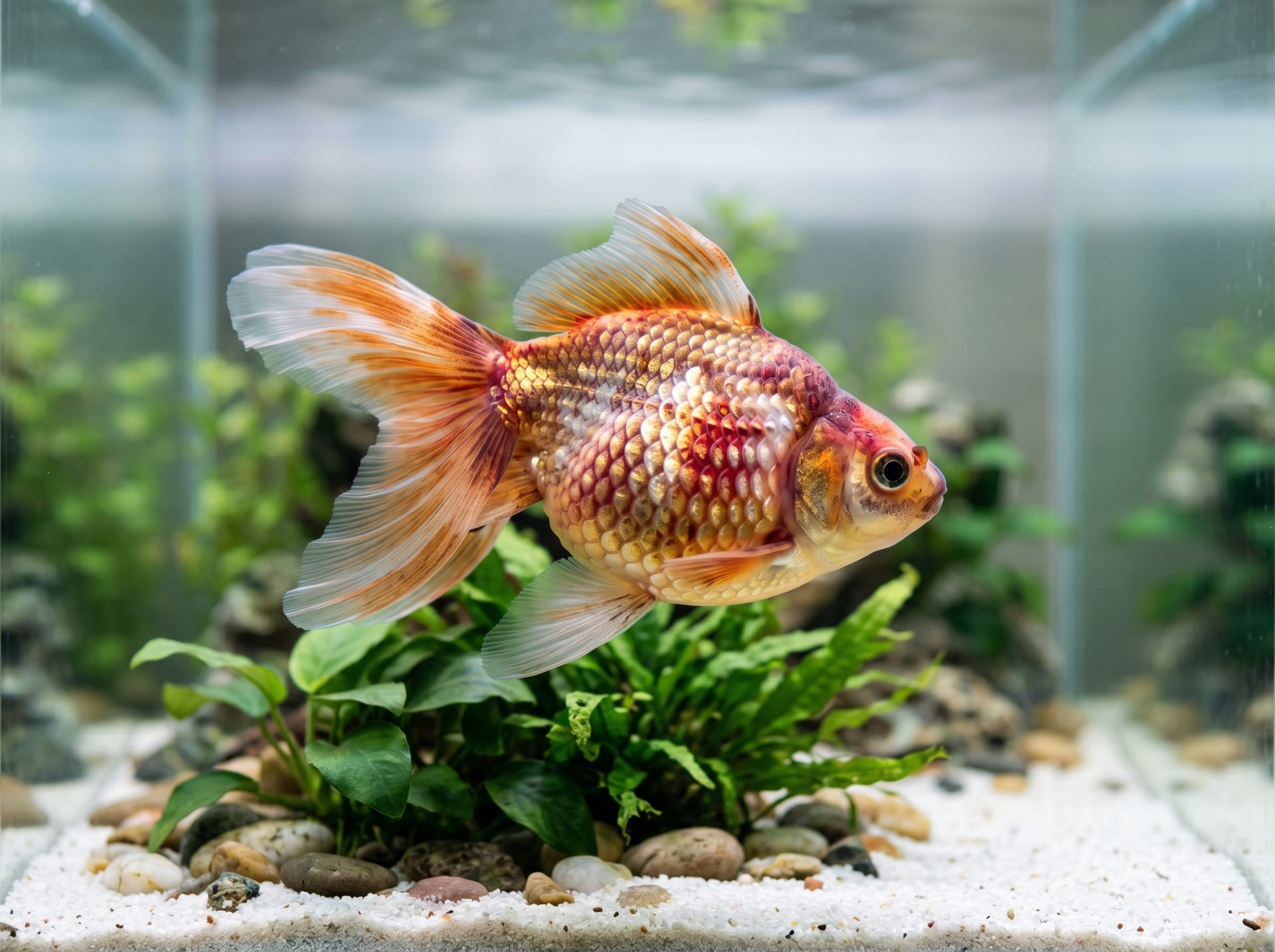
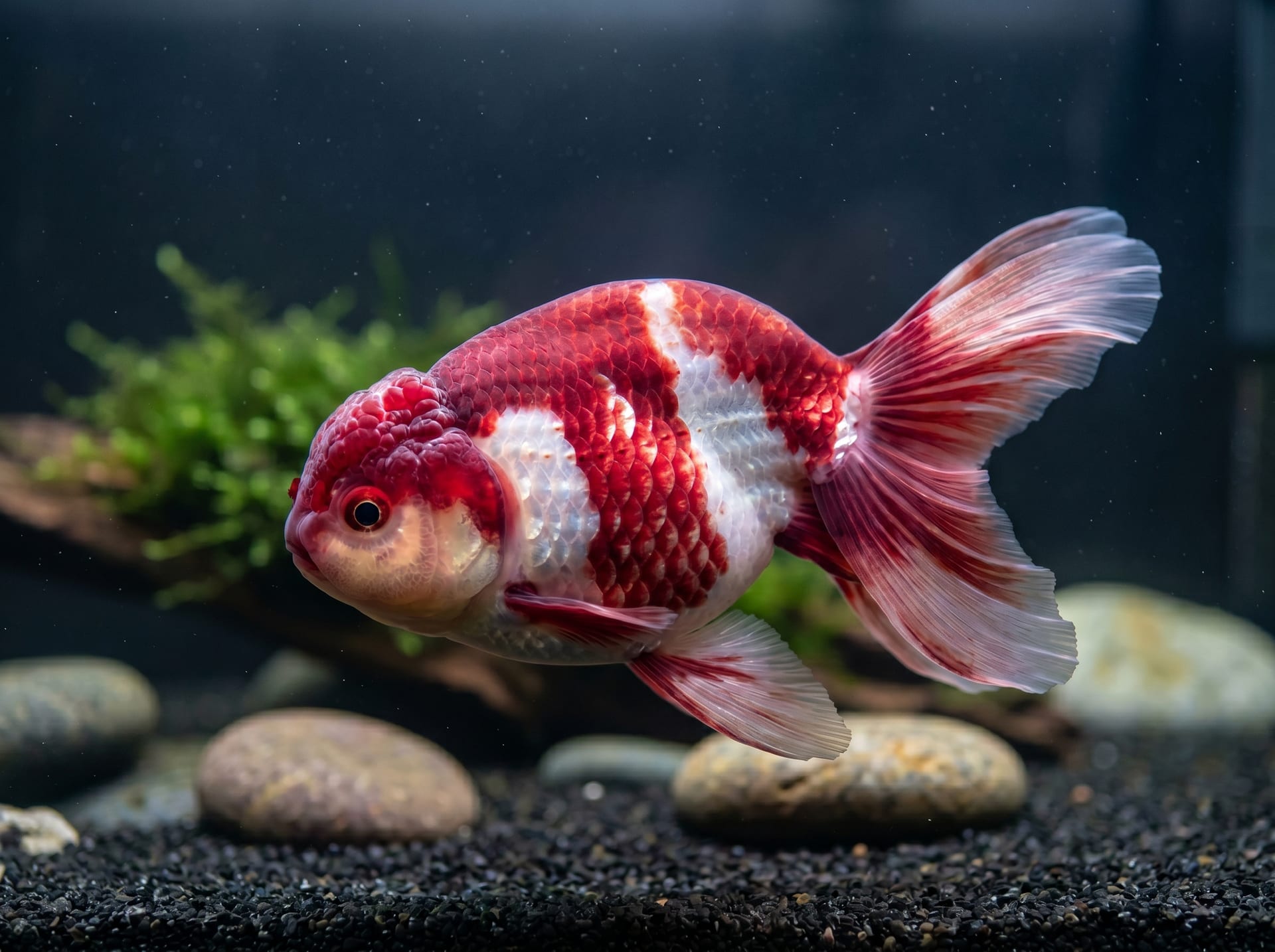
However, varieties such as ranchu, telescope goldfish, and pearl scale that grow with a rounded body shape have lower adaptation to water flow and are prone to stress, so density settings with more margin than the guidelines above are necessary. Make adjustments suited to the characteristics of your variety.
Objectively Assessing Overcrowding Through Water Quality Indicators
Visual assessment alone of whether the tank is "crowded" is insufficient. Regular water quality testing to understand overcrowding effects numerically leads to proper management.
The main indicators to check are as follows.
- Ammonia (NH₃/NH₄⁺): The ideal is 0 mg/L. Damage to fish begins above 0.5 mg/L, and 1 mg/L or higher is in the danger zone. In overcrowded tanks, high values tend to appear even immediately after water changes.
- Nitrite (NO₂⁻): Also ideally 0 mg/L. Fish begin to suffer damage at 0.3 mg/L or higher. In overcrowded conditions where bacterial nitrification cannot keep up, this indicator tends to accumulate.
- Nitrate (NO₃⁻): A guide for determining water change timing. Ideally maintaining 50 mg/L or below, though in overcrowded conditions it can exceed 100 mg/L.
- pH: The appropriate range for goldfish is 7.0–8.0. In overcrowded environments where organic matter breakdown progresses, pH tends to drift acidic, and stress increases at 6.5 or below.
Using water quality test kits or digital meters to measure at least weekly helps detect overcrowding effects early. If values consistently worsen, take it as a sign to review your stocking density.
What to Do When Overcrowding Occurs
If you realize you already have overcrowding, or if you plan to add multiple goldfish, it's important to address the situation gradually.
The most fundamental solution is to increase water volume. Set up a new tank alongside your current one and distribute the fish between them. Since bacterial establishment (cycling) takes 2–4 weeks, in urgent cases you can accelerate the process by using established tank water (seed water) and bacterial supplements.
As an emergency measure, increasing water change frequency is effective. Performing water changes 2–3 times per week can slow water quality deterioration, but keep each change to 30% or less of total water volume. Rapid water quality fluctuations themselves cause stress to fish.
Adding external or undergravel filters to increase filtration capacity is another option. However, understand that this is a measure that slightly raises the overcrowding limit and is not a fundamental solution.
There are cases where reducing the number of fish is the best option. Finding adoptive homes through local goldfish clubs, social media communities, or breeders is a valid option for recovering a sustainable rearing environment.
Density Management in Show and Breeder Environments
When raising goldfish for shows or competition, density management becomes even more stringent. To maximize body shape, head development, and color quality as ornamental fish, adequate water volume per individual and spacious rearing conditions are essential.
At breeder level, it's not uncommon for ranchu and Tosa kin adults to be managed in environments of 30–50 liters or more per individual. Ideally, multiple outdoor earthen ponds or large FRP containers are prepared and density is adjusted by growth stage.
The fry stage is particularly susceptible to overcrowding effects. Even though large numbers hatch initially, the essence of breeder-style rearing is the process of repeatedly culling and adjusting density to narrow down the final number of fish. Proper density management is the most fundamental condition for "bringing out goldfish's natural potential" and is a principle common to all scales of rearing.
Habits for Maintaining Ongoing Density Management
The most important thing in preventing overcrowding is following the rule of "preparing water volume and management systems before increasing the number of fish." It's common for fish numbers to increase due to the appeal of a lively appearance and cute fish, but when tank setup becomes a secondary concern, water quality falls into chronic instability.
Make it a habit to check the following checklist when adding new goldfish for peace of mind.
- Verify that the combined size of all fish after adding new ones falls within appropriate density for your current tank volume
- Confirm that filter capacity can handle the increased bioload
- Check that water quality data from the past week shows no issues
- Quarantine (isolate and observe) new fish before adding them to the tank
Goldfish are long-lived fish that can live over 10 years with proper care. Avoiding overcrowding and maintaining stable water quality is the greatest investment in making a long-term relationship with goldfish possible.