Complete Guide to Choosing Aquatic Plants for Goldfish Tanks | Hardy Varieties That Are Difficult to Eat and Care Methods
This guide explains the benefits and precautions of adding aquatic plants to goldfish tanks. We introduce recommended aquatic plant varieties that are difficult for goldfish to eat and help purify water quality, as well as tips for maintaining a tank where plants and goldfish coexist.
Key Takeaways
This guide explains the benefits and precautions of adding aquatic plants to goldfish tanks. We introduce recommended aquatic plant varieties that are difficult for goldfish to eat and help purify water quality, as well as tips for maintaining a tank where plants and goldfish coexist.
Related Species
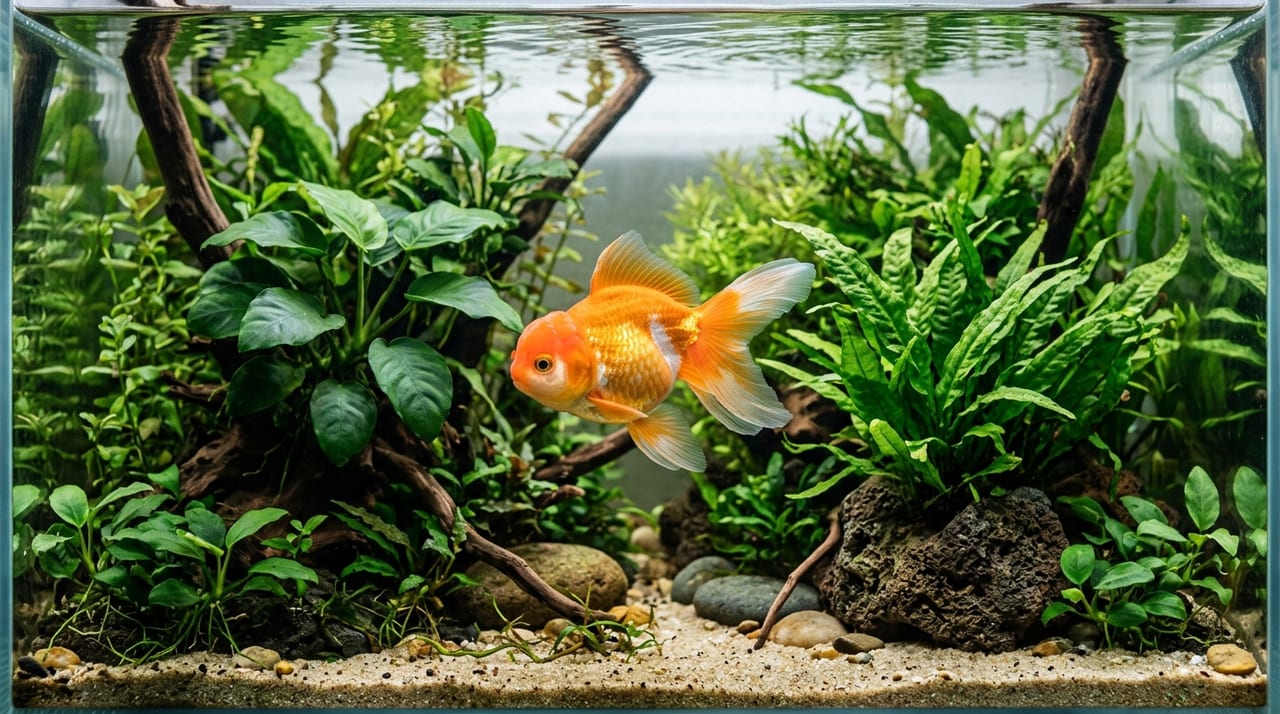
Incorporating aquatic plants into a goldfish tank not only improves its appearance but also offers many benefits such as water purification, providing hiding places for goldfish, and oxygen supply. However, goldfish are highly omnivorous and quickly eat soft aquatic plants. In this article, we introduce how to choose aquatic plants suitable for coexisting with goldfish and practical management methods for maintaining a goldfish tank with plants long-term. If you make mistakes in plant selection, you may encounter problems such as "the plants were completely eaten right after planting" or "roots floated and clouded the water." Therefore, it is important to first understand goldfish feeding habits and aquatic plant characteristics before choosing varieties.
Benefits of Adding Aquatic Plants to Goldfish Tanks
- Water Purification and Nitrogen Cycle Support: Aquatic plants absorb ammonia, nitrates, and phosphates that result from goldfish waste as nutrients during photosynthesis. Their ability to absorb nitrogen compounds is particularly high, contributing to a reduction in water change frequency.
- Oxygen Supply: Oxygen generated through photosynthesis dissolves in the water, increasing the dissolved oxygen level necessary for goldfish. During hot summer months in particular, it helps reduce the risk of oxygen depletion.
- Visual Appeal of Greenery and Stress Reduction for Goldfish: The presence of natural vegetation helps goldfish feel calm, reducing excessive swimming and stress-related behaviors. However, if there are too many plants, the swimming space for goldfish becomes limited, so aim for plants to occupy about one-third of the tank.
- Role as a Spawning Substrate: Goldfish during breeding season have the habit of laying eggs on aquatic plants. By keeping some plants with densely packed soft leaves, you create a suitable environment for spawning behavior and make egg management easier.
Aquatic Plant Varieties That Are Difficult for Goldfish to Eat
Anubias Nana (Anubias barteri var. nana)
This is the most popular collector standard variety. Its thick, leathery leaves are difficult for goldfish to nibble, and it is sturdy enough to survive even in semi-aquatic environments. Because it grows slowly, no supplemental fertilization is needed. Attachment to driftwood or rocks for aquascaping makes cleaning easier. Since it grows even under low light, special high-intensity LEDs are not necessary.
Microsorum (Microsorum pteropus)
A member of the fern family, its thick, rubber-like leaves prevent goldfish from eating it. Like Anubias, it excels at attaching to driftwood or rocks, and because roots do not need to be buried in the substrate, replanting is easy. It has a wide temperature tolerance of 14–30°C and can adapt to temperature fluctuations in goldfish tanks.
Vallisneria (Vallisneria spp.)
A ribbon-like aquatic plant with long shoots that sways beautifully underwater. While goldfish may eat it, it grows quickly, so regeneration keeps pace even if some is consumed. As a rooted stem plant, it is relatively resistant to goldfish foraging and substrate disturbance. It prefers bright lighting.
Water Wisteria (Hygrophila difformis)
It grows quickly, and new shoots continuously emerge even if goldfish nibble on it. Although its relatively soft leaves make it prone to being eaten, its strong reproductive ability means it can be maintained with regular trimming. It is also easy to manage by simply floating it on the water surface.
Java Fern Clover (Hydrocotyle tripartita)
It is beautiful with densely packed fine clover-shaped leaves, and it grows at a moderate pace. Since it grows at a pace that keeps up even if goldfish eat some of it, coexistence with medium to large goldfish is relatively possible.
Comparison of Characteristics by Variety
| Aquatic Plant | Resistance to Goldfish | Ease of Care | Use in Aquascaping |
|---|---|---|---|
| Anubias Nana | Very strong | Beginner-friendly | Attach to driftwood/rocks |
| Microsorum | Very strong | Beginner-friendly | Attach to driftwood/rocks |
| Vallisneria | Moderately strong (quick regeneration) | Intermediate | Plant in substrate/background |
| Water Wisteria | Weak (easily eaten) | Beginner-friendly | Float/foreground to midground |
| Java Fern Clover | Moderately strong (quick regeneration) | Intermediate | Foreground/cover substrate |
As shown in the table, attachment-type plants (Anubias Nana and Microsorum) do not require roots to be buried in the substrate and have the common advantage of being resistant to being uprooted even if goldfish dig up the substrate. When introducing aquatic plants for the first time, starting with these two varieties reduces the likelihood of failure.
Tips for Managing Coexistence Between Aquatic Plants and Goldfish
- Lighting Duration Management: The standard is 8 to 10 hours per day, with lights off at night. Prolonged lighting promotes algae growth, so automatic management using a timer is convenient.
- CO2 Supplementation Is Not Necessary: Since CO2 is naturally produced by goldfish respiration, forced CO2 supplementation normally required for aquatic plant cultivation is unnecessary. Plants like Anubias, Microsorum, and Vallisneria grow sufficiently without CO2.
- Substrate Selection: Because goldfish have a habit of digging up the substrate, choosing larger-grain substrate of about 5–10 mm diameter rather than fine sand or standard sand improves the anchoring strength of attached plants. Soil easily breaks down with goldfish disturbance and is not well-suited for goldfish tanks.
- Regular Trimming: If plants become too dense, water circulation worsens and water quality becomes unbalanced. Trim about one-third of the plants 1–2 times per month to maintain adequate space.
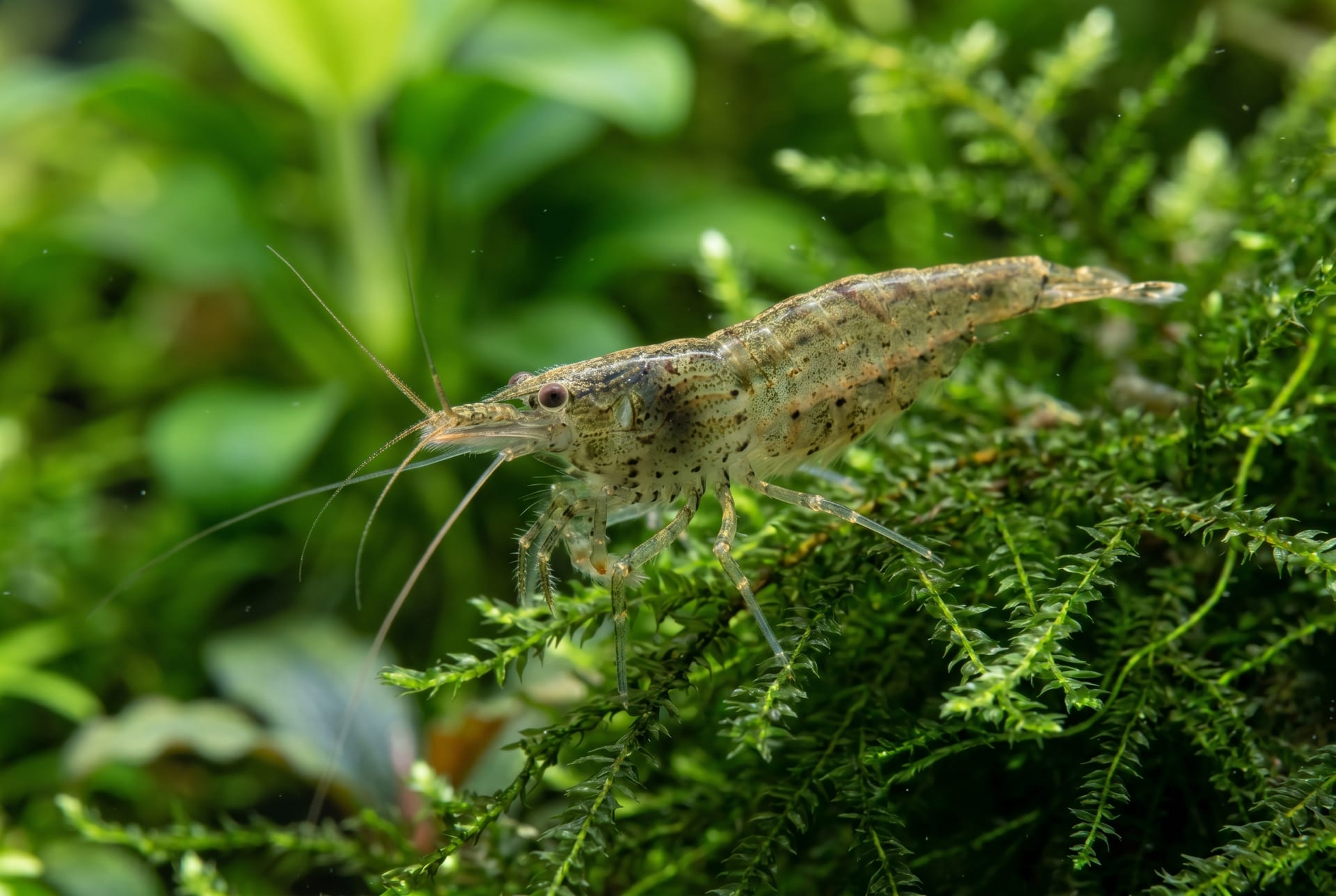
- Algae Control: Goldfish produce abundant waste with rich nutrients, making algae growth likely. Adding a small number of Amano shrimp or nerite snails helps with algae removal (since goldfish may eat the shrimp, it is good to provide rock structures as hiding places).
- Preparation Before Adding New Plants: Placing purchased plants directly in the tank may introduce snail eggs or residual chemical components. Before planting, rinse thoroughly with running water and remove damaged leaves and roots to reduce future problems. If possible, observe them in a separate container for a few days before moving to the main tank for added peace of mind.
- Thoughtful Placement in Aquascaping: Positioning plants toward the back and sides of the tank while keeping the front and center area clear for goldfish to swim freely balances both aesthetics and practicality.
Troubleshooting When Aquatic Plants Are Not Growing Well
- Leaves Melting or Darkening: This is often caused by "conversion from terrestrial to aquatic leaves" due to environmental changes shortly after introduction. Waiting a while sometimes results in new leaves developing.
- Black Whisker-like Algae Appears: This tends to occur in areas with strong water flow or when nutrient levels are excessive. Review your trimming and water change frequency.
- Leaves Are Continuously Being Eaten: There may be too few plants relative to the number of goldfish. Adjust by providing more of the easily eaten varieties or increasing the proportion of harder-to-eat varieties.
- Growth Appears to Have Stopped: Check your lighting duration and position (whether light is reaching the plants). Since strong lighting is often not used in goldfish tanks, slower growth is also natural.
Aquatic Plants Not Suitable for Goldfish Tanks
Soft-leaved plants such as Hornwort, Cabomba, and Amazon Sword are often quickly eaten by goldfish and are unsuitable for beginners. Floating plants (Water Sprite and Amazon Frogbit) risk having their roots eaten by goldfish, but can be used as supplementary additions for their shading and oxygen-producing benefits.
The key to long-term success in coexisting with aquatic plants and goldfish is adopting the mindset of "choosing varieties that are difficult for goldfish to eat," "adding fast-growing varieties as supplements," and "prioritizing natural appearance over perfect aquascaping." Rather than pursuing a perfect layout, designing a space where goldfish can swim comfortably should be the primary focus—this is the essence of a goldfish tank.
Frequently Asked Questions
- Can I reduce water change frequency if I add aquatic plants? Plants assist with water purification, but they cannot absorb all goldfish waste. Complete elimination of water changes is not possible, so it is best to maintain your current water change frequency as the baseline while considering plants as a supplementary tool.
- Can I use only artificial plants? Artificial plants are a worry-free choice that won't be eaten by goldfish and offer high layout flexibility. However, they do not provide the benefits unique to live plants, such as water purification and oxygen supply, so combining both is also an option.
- Filter flow has worsened since I added plants. What should I do? Overgrown plants can obstruct water flow. Avoid planting in the areas around the filter intake and outlet, and maintain water flow pathways through regular trimming.