AI-generated image
Hayato Nishiki
IntermediateCarassius auratus
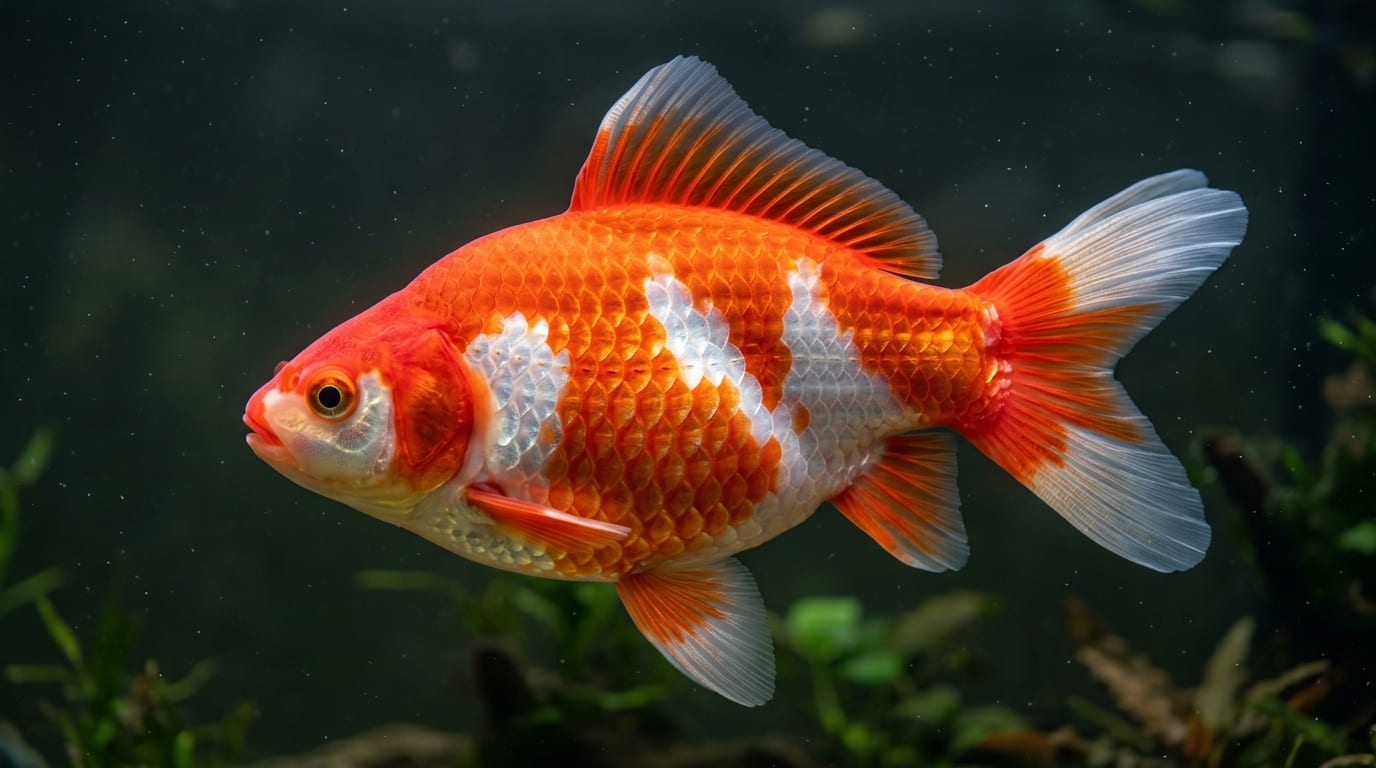
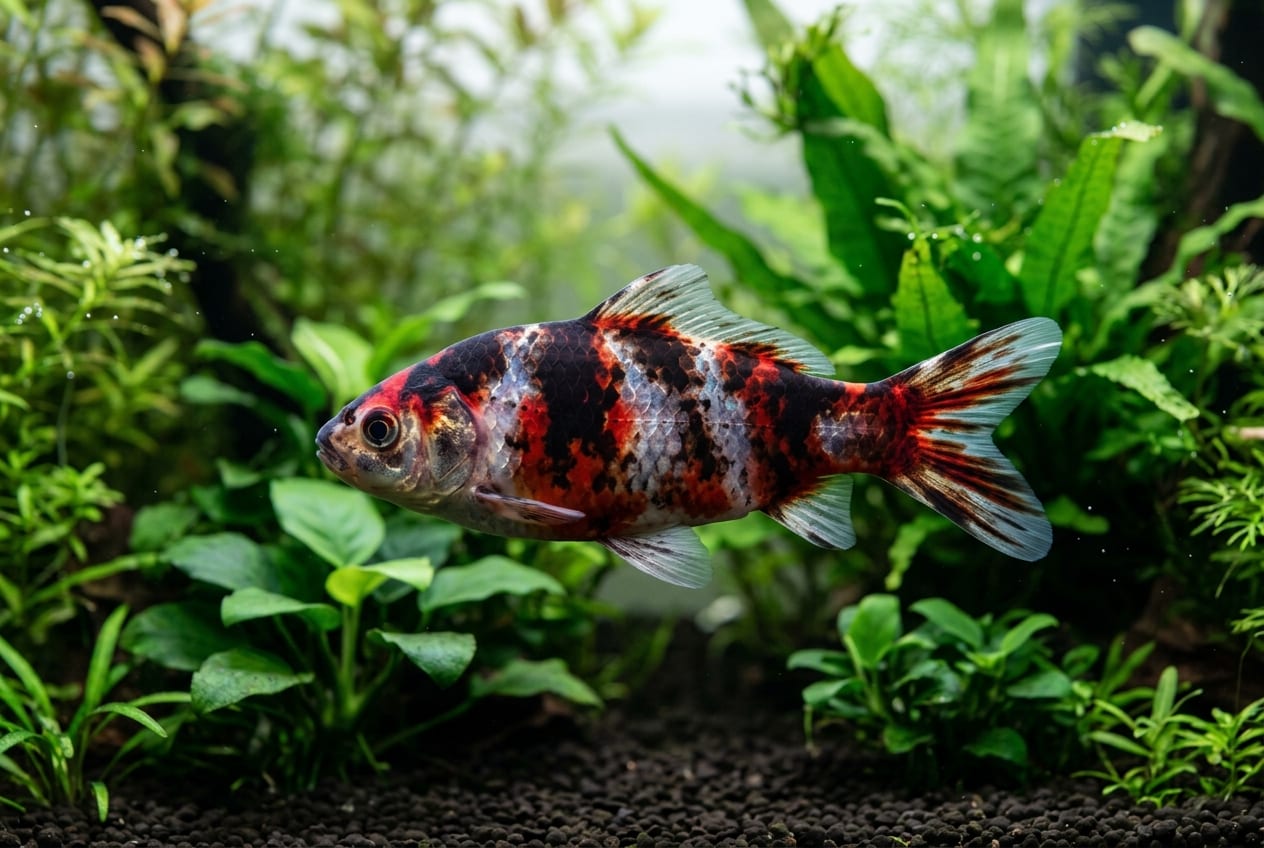
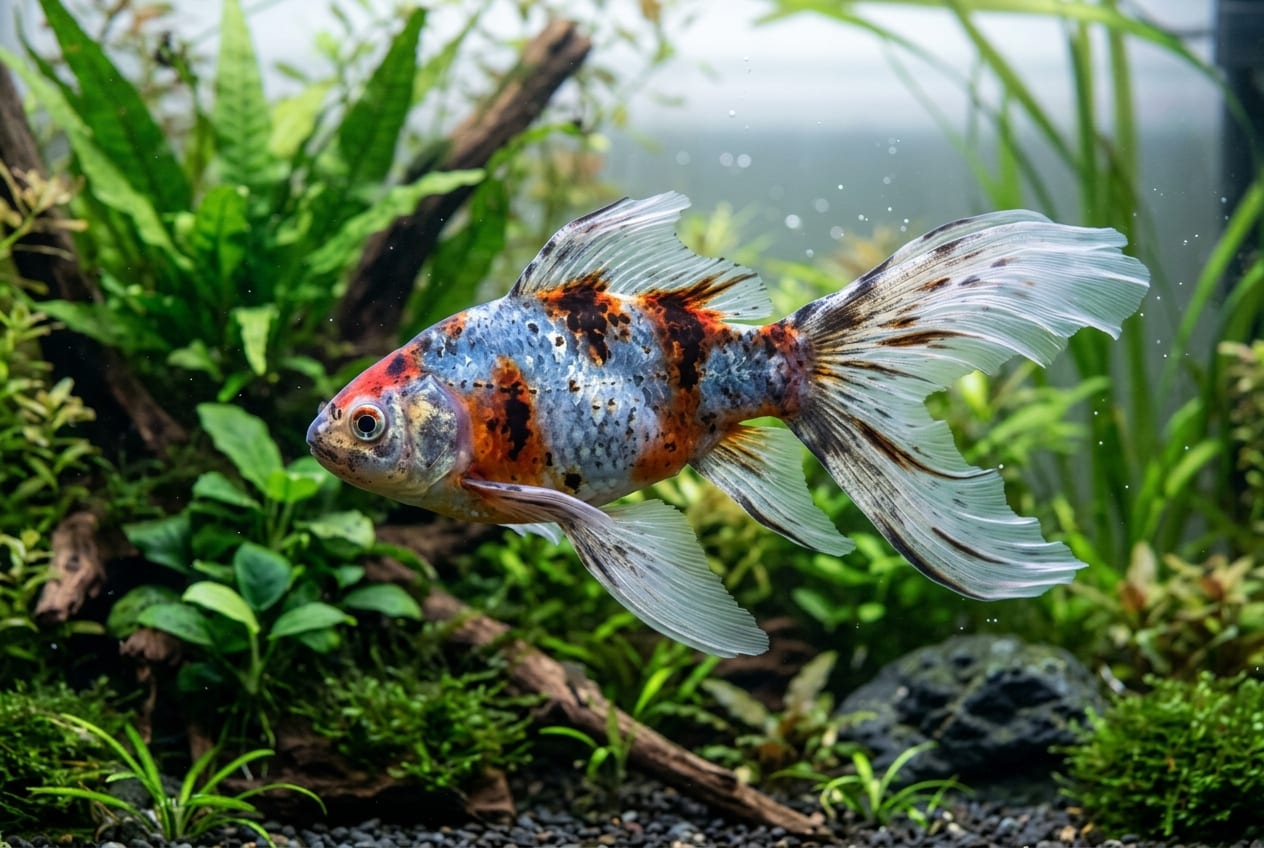
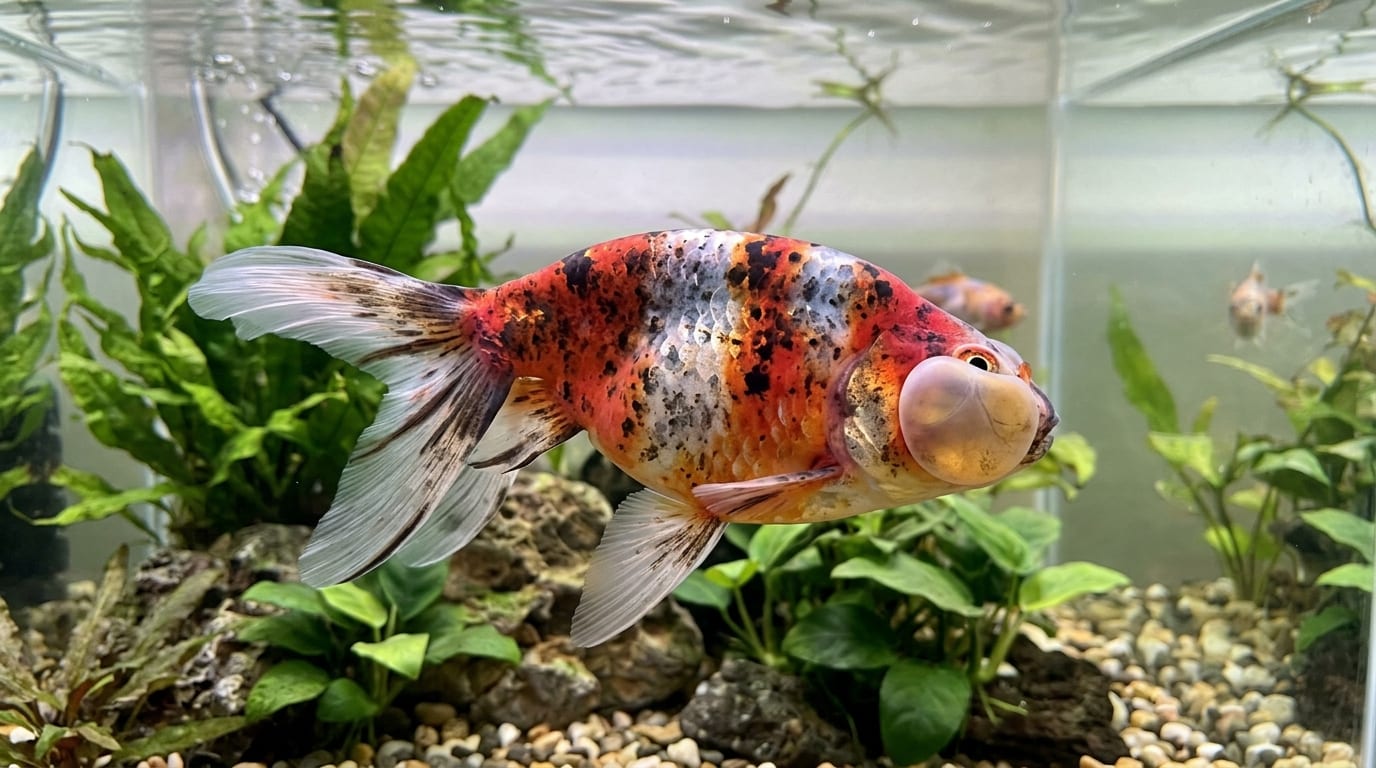
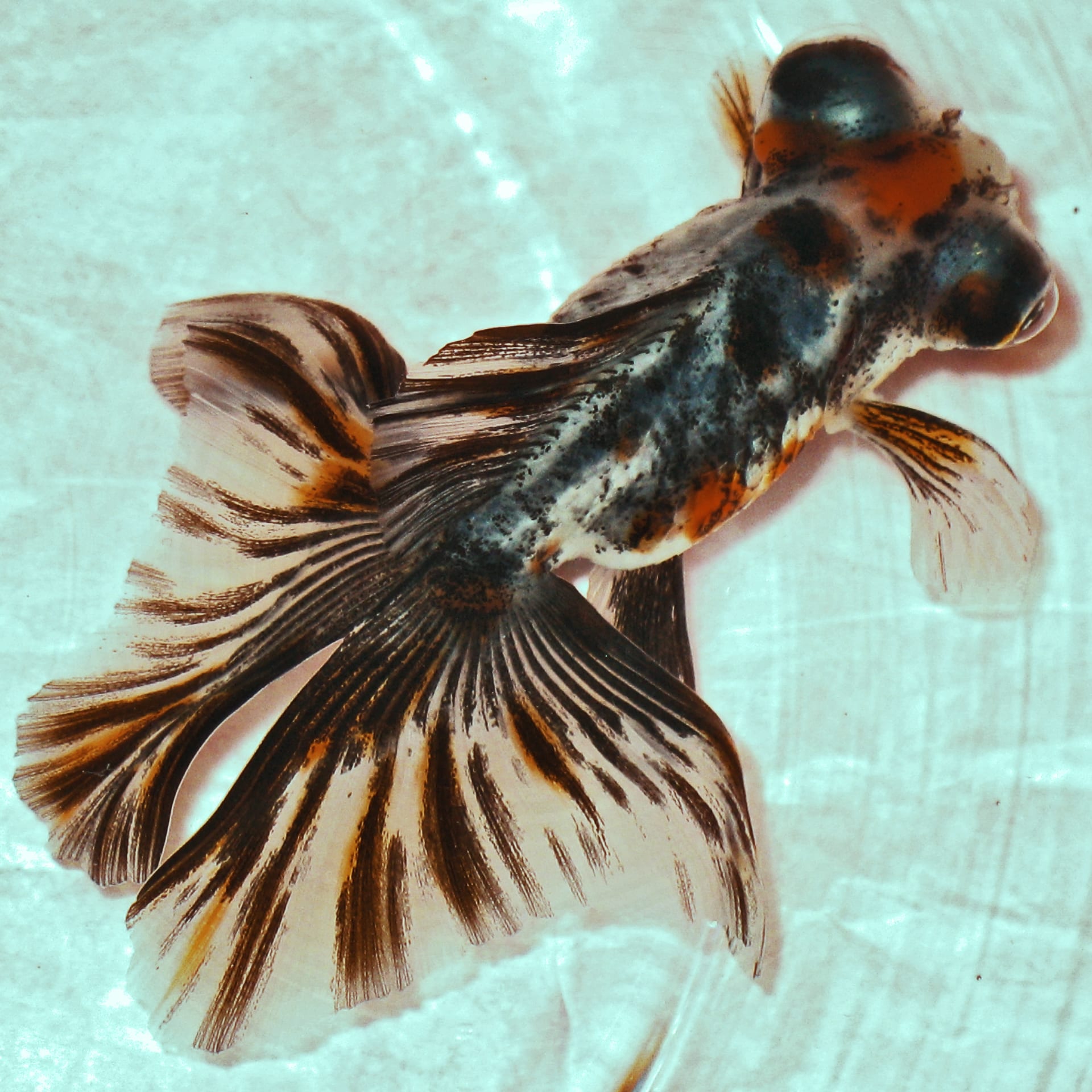
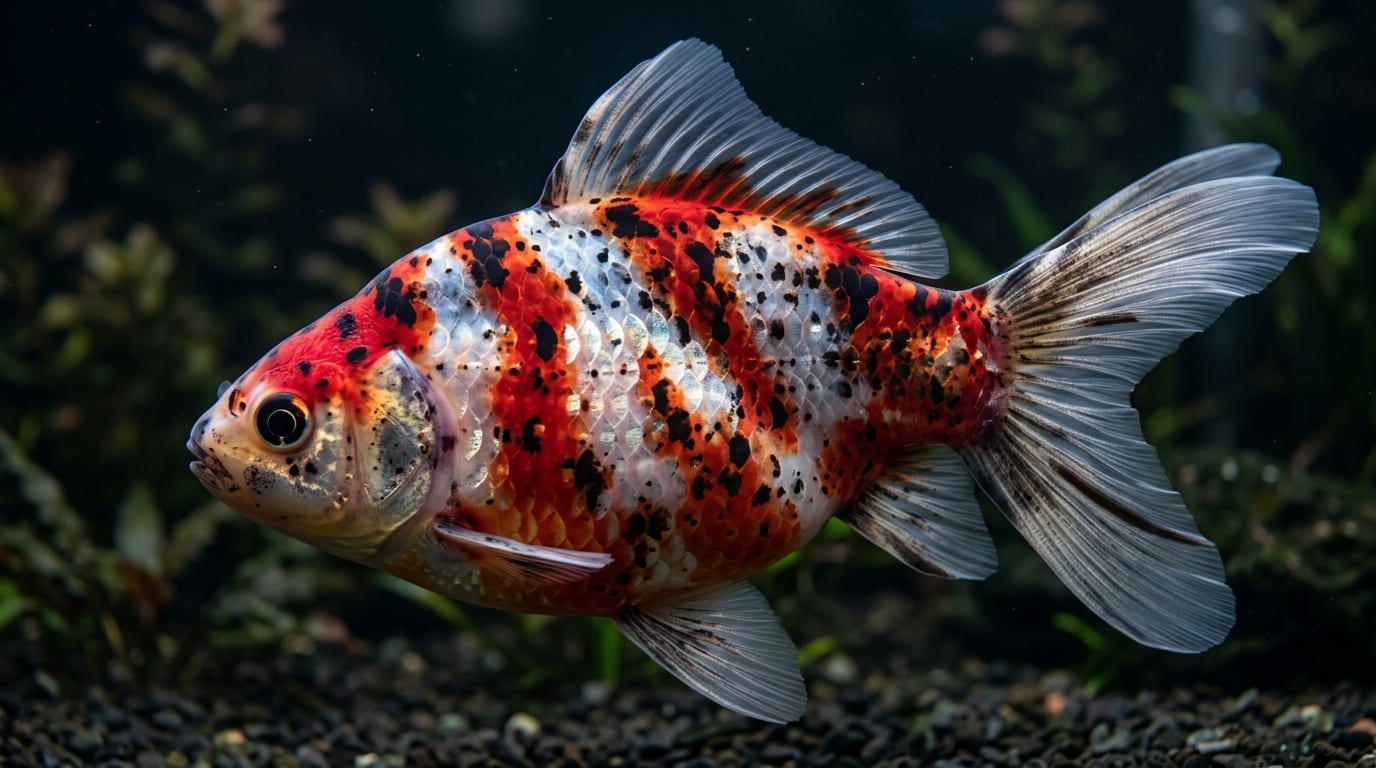
A wakin-type goldfish that arose from breeding lines of the jumbo azumanishiki without head growth and with a short tail. Deeper-bodied and thicker than an ordinary wakin, it carries calico patterning in red, white and black with transparent scales, and is hardy and fast-growing.
Difficulty
Intermediate
Temperature
15〜28℃
Lifespan
10-15 years
Size
About 30cm
Diet
Prepared foods, frozen bloodworms
About
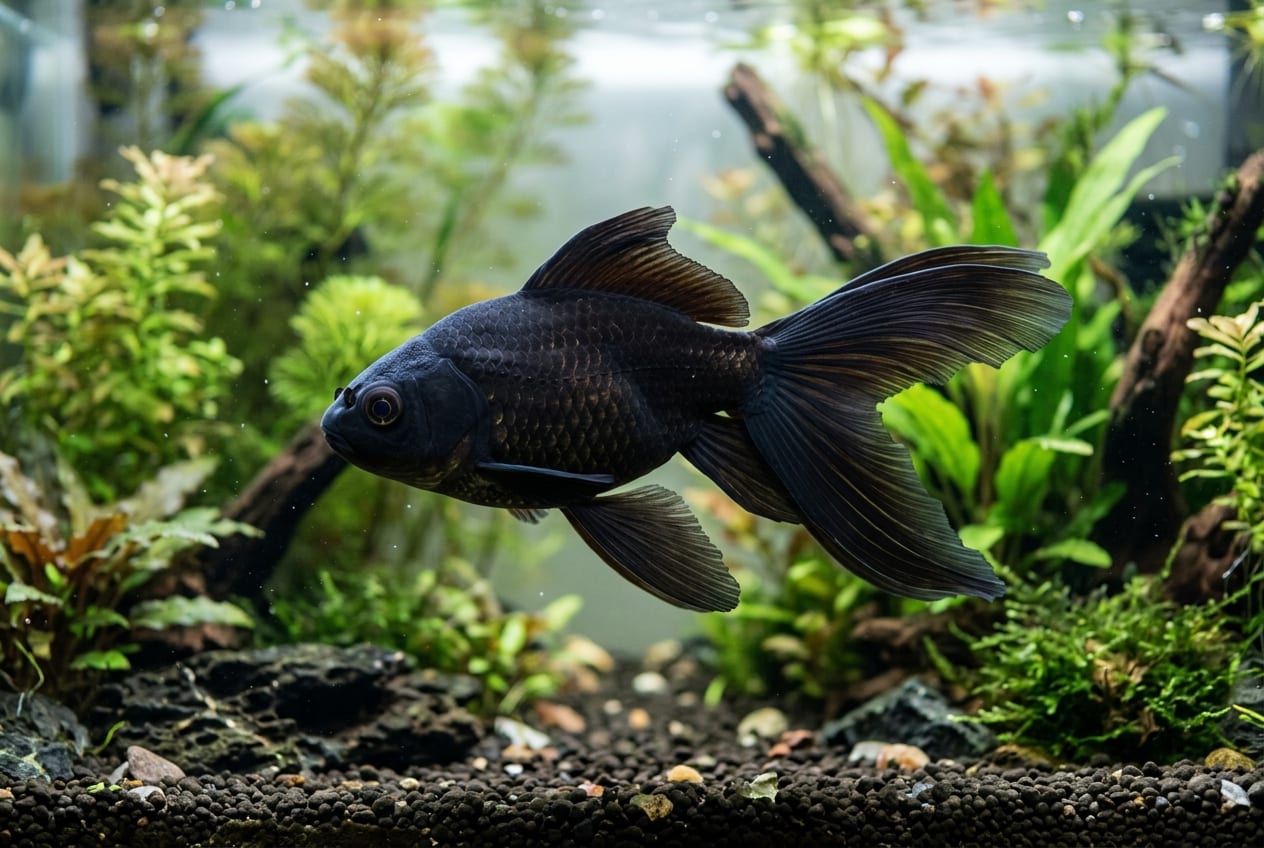
The hayato nishiki is a wakin-type goldfish developed at the Makiki fish farm. It is described as a fixed form selected from fish that appeared in breeding lines of the jumbo azumanishiki without head growth and with a short tail. Carrying jumbo azumanishiki blood, it is deeper-bodied and thicker than an ordinary wakin. Its standard colouring is the same red, white and black of the azumanishiki with transparent scales mixed in, while the normal-scaled red and variegated fish that came out of it are treated separately as the hayato wakin. Shops describe it as short-tailed and small-headed with a deep body and calico markings, hardy, easy to grow on and inclined to reach a good size, around 30cm. It moves through Kyushu producers and a few specialist shops and is never available in quantity. Allow for the size with ample volume and filtration, and give it the swimming room a wakin-type fish needs.
Source: Wikipedia (CC BY-SA 4.0)
Lifespan of the Hayato Nishiki
The Hayato Nishiki lives 10-15 years.
Size of the Hayato Nishiki
The Hayato Nishiki grows to About 30cm.
Temperature & humidity for the Hayato Nishiki
The ideal temperature for the Hayato Nishiki is 15〜28℃.
Basic Info
Origin
Japan (developed at the Makiki fish farm)
Lifespan
10-15 years
Care Specifications
- pH
- 6–8
- Hardness (GH)
- 5–19 dGH
- Water Temp.
- 15–28℃
PeacefulGroupBreeding: Moderate
Sources: FishBase (Carassius auratus) / Keihan Nishikigoi Center: goldfish water management / Tropical Fish Sano Kingyokan: jumbo shishigashira, hayato nishiki and hayato wakin / Ichigaya Fish Center: hayato nishiki / AQUASHOP ARRANGE: goldfish that grow large
Morphs (Varieties)
Goldfish varieties arose from fixed mutations and selective breeding, and body form, tail form, scale type, colour and head growth are all carried forward by selection over generations. Inheritance is therefore shown as line-bred throughout rather than split into dominant and recessive.
Line-bredEstablished by selective line breeding.
Deep-bodied wakin form without head growthShort tailCalico of red, white and black with transparent scales
Sources: Tropical Fish Sano Kingyokan: jumbo shishigashira, hayato nishiki and hayato wakin
A curated selection of notable morphs. Inheritance modes are a breeding-planning guide; actual appearance varies with combos.
References & Sources
Edited & verified by: BreederDirect editorial team
The taxonomic, regulatory, and husbandry data on this page are compiled and verified against the authoritative primary sources below.
Primary sources
Taxonomy & Authority
Regulations & Conservation Status
Not CITES-listed
Sources: CITES Appendices (species not listed) / FishBase (Carassius auratus)
Regulations may change. Always verify the latest information with the relevant authorities.
Hayato Nishiki Listings
Loading latest listingsFind listings for this species