Goldfish Tank and Indoor Humidity · Mold Problem Guide | Condensation · Black Mold · Environmental Management Around the Tank
When keeping a goldfish tank indoors, humidity rise, condensation, and mold can become problems. This guide explains the water evaporation from your tank, condensation prevention, black mold prevention, and ventilation planning — covering how indoor aquarium keeping affects your living environment and specific solutions.
Key Takeaways
When keeping a goldfish tank indoors, humidity rise, condensation, and mold can become problems. This guide explains the water evaporation from your tank, condensation prevention, black mold prevention, and ventilation planning — covering how indoor aquarium keeping affects your living environment and specific solutions.
Related Species
Impact of Goldfish Tanks on Indoor Humidity
When keeping goldfish indoors, the tank constantly evaporates water from the surface. In a typical 60cm tank (approximately 60 liters of water), it is said that about 0.5–1 liter of water evaporates per day depending on conditions. This varies with aeration strength, room temperature, and whether or not a lid is used, but when multiple tanks are placed in the same room or in a building with high air-tightness, the impact on indoor humidity can reach levels that cannot be ignored.
In particular, the following conditions increase evaporation:
- Wide water surface exposure (no lid, wide-mouthed containers)
- Strong aeration with vigorous water surface agitation
- Water temperature raised by lighting and heaters
- Large temperature difference between room and water
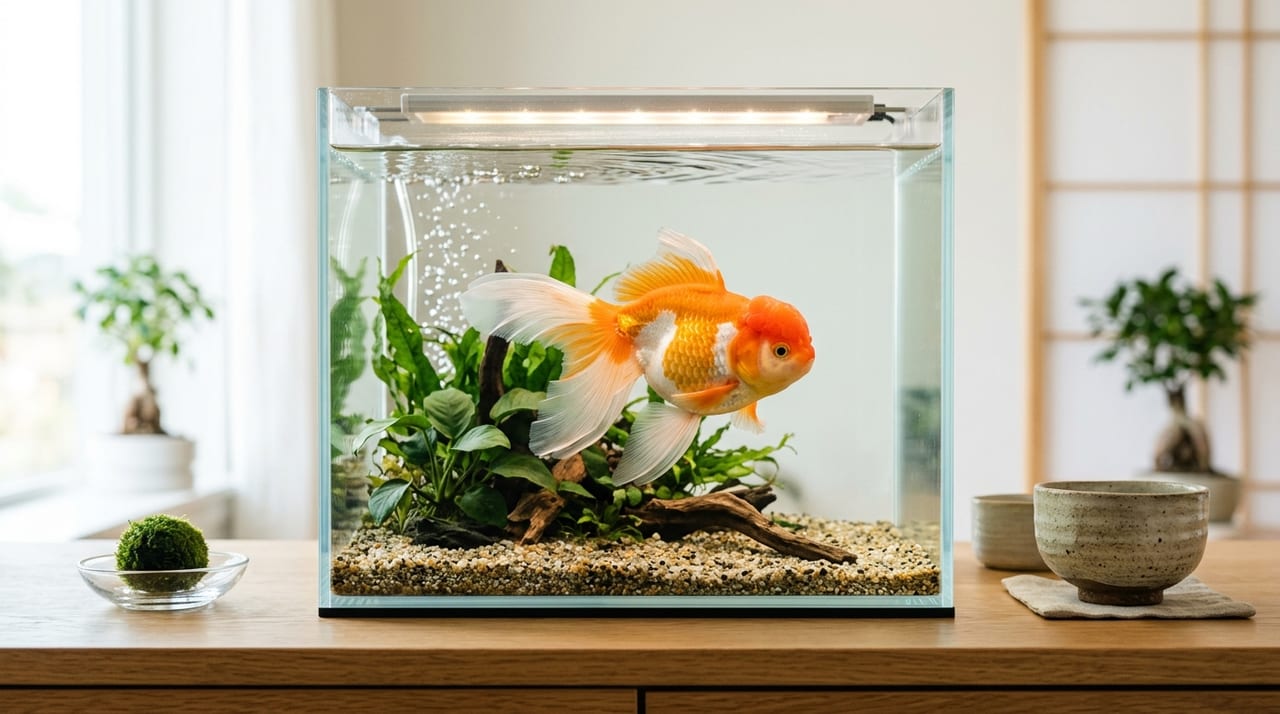
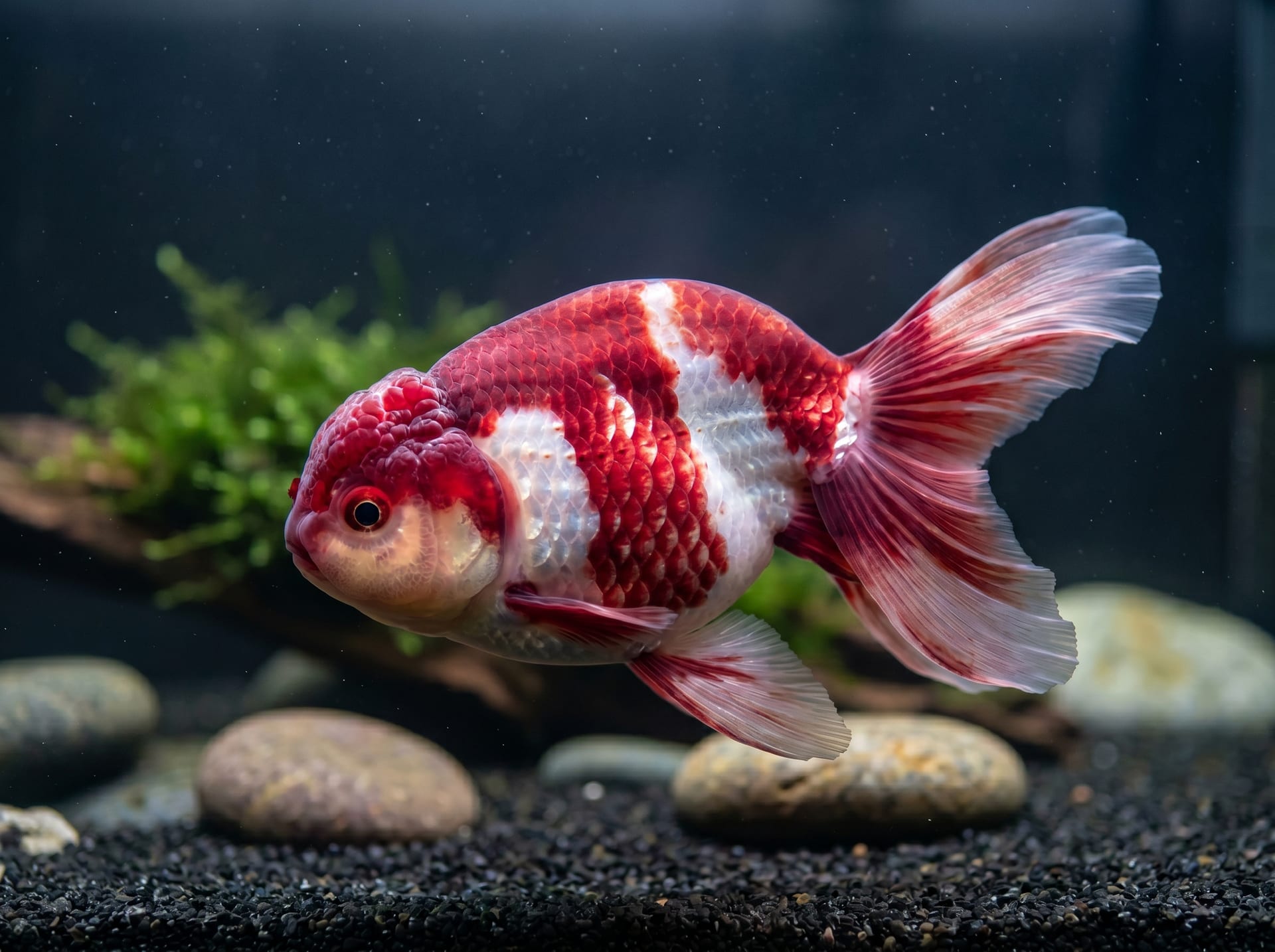
Wide-mouthed plastic trays and tub-type containers commonly used for goldfish keeping have especially high evaporation rates, and humidity management tends to become an issue in indoor ranchu breeding. Additionally, tanks with LED lights on for extended periods for aesthetic purposes tend to raise water temperature easily and promote evaporation.
The most effective way to suppress evaporation is to use a glass or acrylic lid. Sealing completely interferes with oxygen supply, so a practical balance is to cover about 70–80% of the water surface while leaving a gap on one side.
How Condensation Occurs and Its Impact on Walls and Windows
In winter, there are cases where windows or walls facing external walls in a room with a tank develop condensation. This is because warm, humid air evaporated from the tank comes into contact with cold glass or walls, cools, and condenses as water droplets.
Repeated condensation makes mold more likely to develop around window frames, wallpaper, and fittings. Wooden window frames and drywall-backed wallpaper absorb moisture easily, and once mold takes hold, it is time-consuming to remove.
The main measures to prevent condensation are as follows.
| Measure | Key Points |
|---|---|
| Frequent ventilation | Open windows 2–3 times daily for 5–10 minutes to expel humidity outside |
| Dehumidifier / AC dry mode | Keep a dehumidifier running from rainy season to summer; maintain indoor humidity at 50–60% |
| Window insulation | Raise glass surface temperature with thermal film or interior windows to reduce condensation |
| Tank placement | Install at least 30 cm away from external walls and windows; avoid areas with large temperature differences |
Ventilation is the most cost-effective measure. It is effective to develop a habit of ventilating consciously at times when humidity temporarily increases, such as after water changes.
To Avoid Overlooking Mold on Tank Stands and Surroundings
The location where a tank is installed is constantly subject to water droplet splatter and humidity buildup, creating an environment where mold thrives. Particularly easy to overlook are the bottom of the tank stand (cabinet), contact points with walls, and the underside of the tank mat. These areas have poor air circulation and black mold can spread without notice.
Develop a habit of checking the back, bottom, and underside of the mat on your tank stand about once a month. If you find black mold, wipe it with rubbing alcohol and dry it thoroughly. For widespread mold, chlorine bleach is effective, but use it at a safe distance from the tank to avoid affecting the goldfish, and ventilate thoroughly after the work.
The material choice for the tank stand also affects mold risk. Standard wooden tank stands absorb moisture easily and are prone to mold, so choosing waterproof and moisture-resistant models, or stainless steel or plastic frame models, makes long-term maintenance easier. Cushion mats placed between the tank and stand (such as EVA mats) also absorb water and can become breeding grounds for mold, so it is recommended to remove, dry, check, and replace as needed about once every 3–6 months.
Managing Floor and Wall Moisture from Splashing and Water Spills
Water splashing when goldfish swim actively, water droplets that splash up as aeration bubbles burst, and water spills during tank maintenance all become sources of indoor humidity. If this moisture soaks into floors and walls and does not dry, it eventually causes mold and corrosion.
Place a waterproof mat on the floor around the tank and develop a habit of wiping it dry with a towel whenever it gets wet. For wooden floors, cleaning is easier if urethane coating or waterproof floor coating has been applied. When performing water changes, do so with windows open and ventilation running, and ideally make it a habit to confirm and wipe up surrounding moisture as part of your routine work.
Also, using fine air stones for aeration can reduce surface agitation and minimize splashing. Aeration that produces large bubbles and strikes the surface vigorously increases both evaporation and splashing, so try adjusting bubble fineness within the range that maintains your goldfish's health.
Humidity Management in Rooms with Multiple Tanks and Long-Term Environmental Maintenance
When installing multiple tanks in the same room, individual measures may not keep pace with humidity management. As total tank volume increases, evaporation increases proportionally, so you must increase dehumidifier capacity and ventilation frequency accordingly.
Ideally, you would dedicate a room to tanks with concrete floors, tiled surfaces, and drainage outlets, but this is rarely practical for households. In that case, continuing measures focused on the following three points will help maintain your indoor environment long-term:
- Suppress evaporation with lids — Install lids on all tanks and minimize gaps around aeration outlets in particular
- Regular ventilation and dehumidification — Combine ventilation with dehumidifier and AC dry mode according to season and weather
- Monthly surroundings check — Detect mold on tank stands, walls, and mat undersides early and address promptly
Managing indoor humidity also affects goldfish health. Excessive humidity poses corrosion and electrical leakage risks not only to people but also to tank equipment and metal parts. By maintaining the water quality and temperature your goldfish need while being mindful of impacts on your living environment, you can sustain healthy indoor keeping over the long term.