AI-generated image
Calico Bubble Eye
AdvancedCarassius auratus
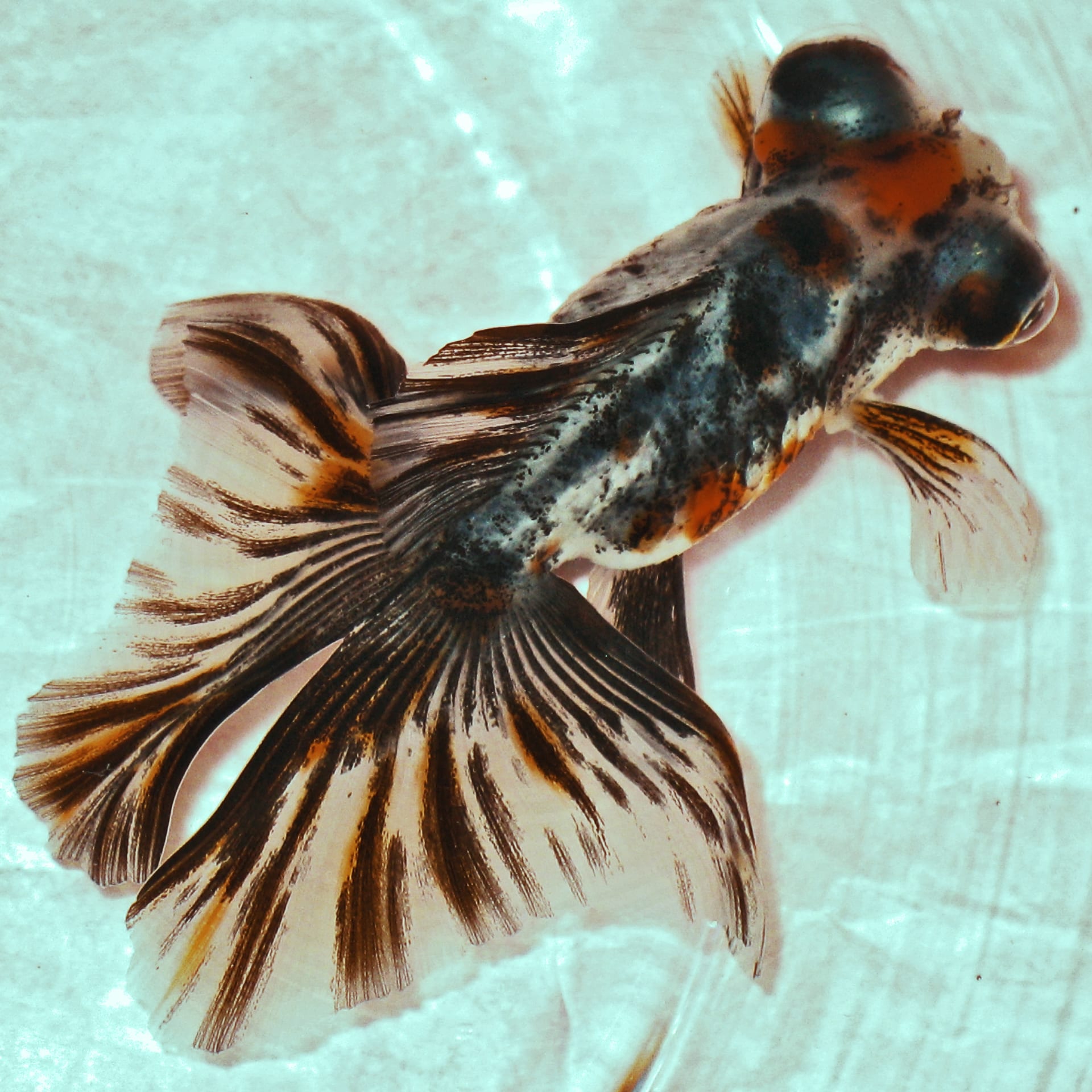
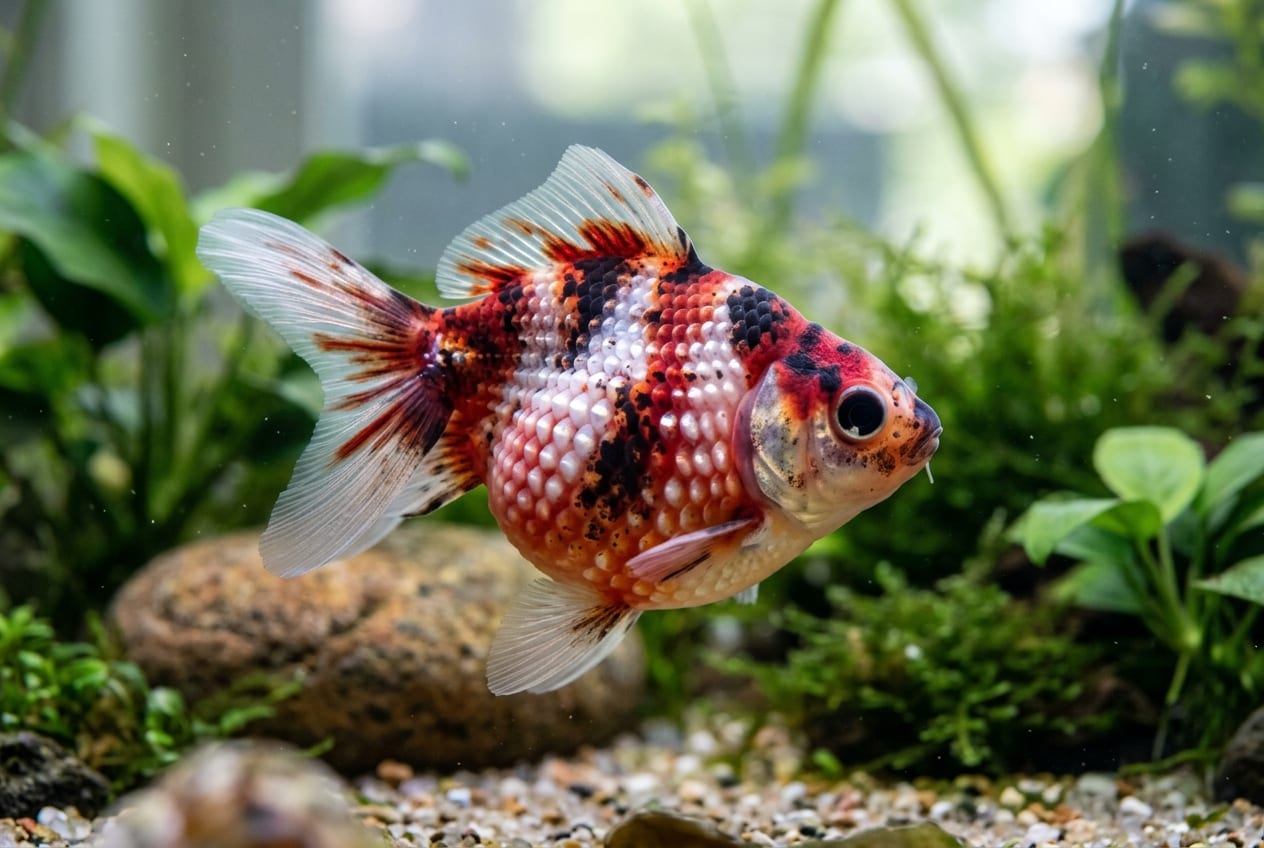
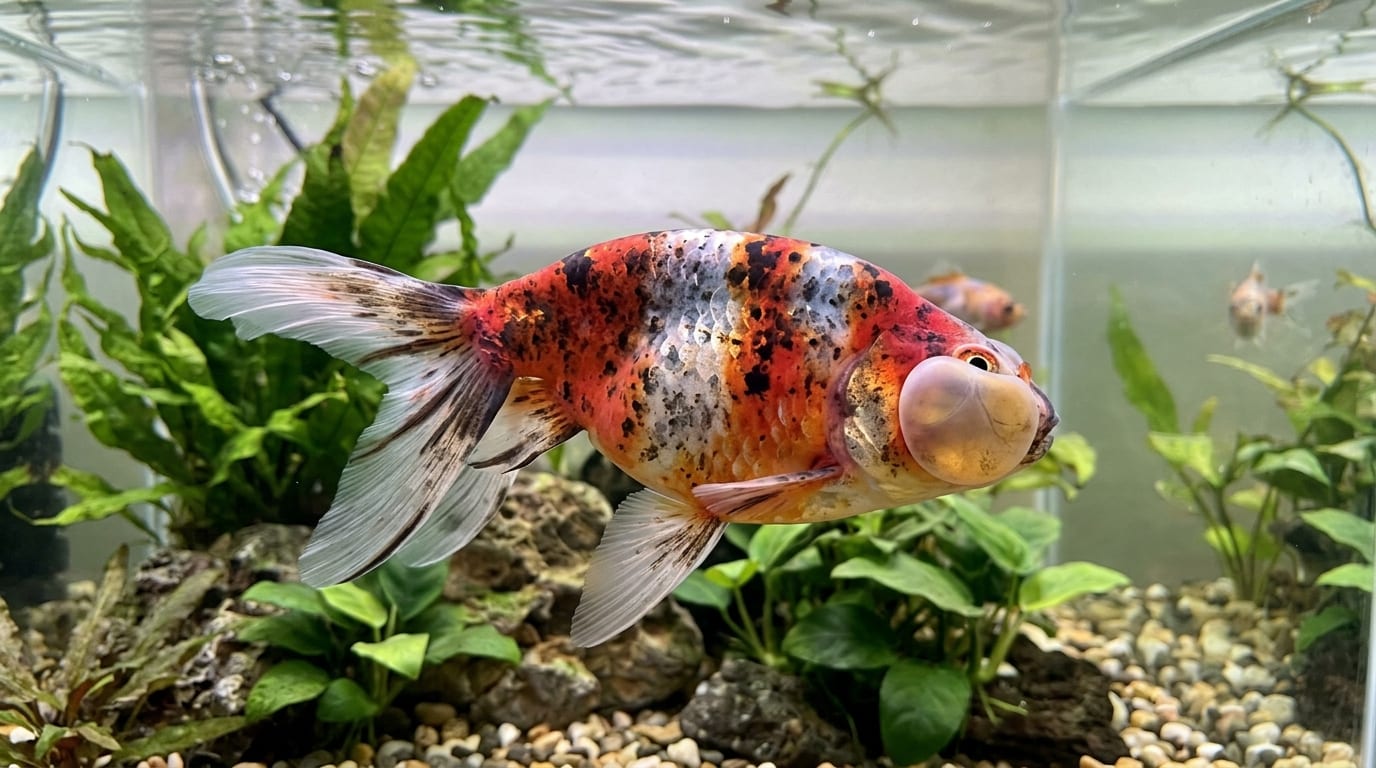
A bubble eye in calico dress, mottled in red, black and white. Mosaic transparent scales add a pale blue cast, while the dorsal-less body and the sacs below the eyes are unchanged.
Difficulty
Advanced
Temperature
15〜28℃
Diet
Prepared foods, frozen bloodworms
About
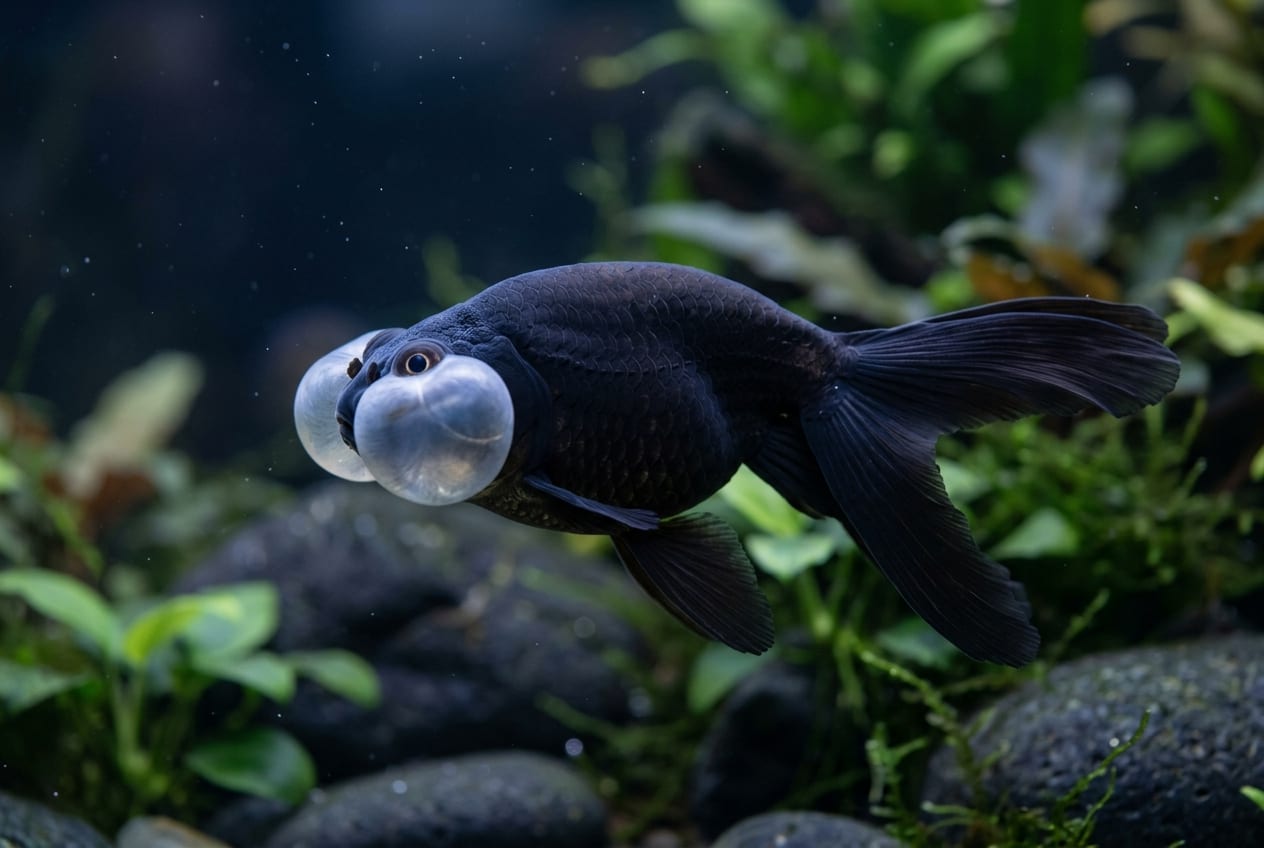
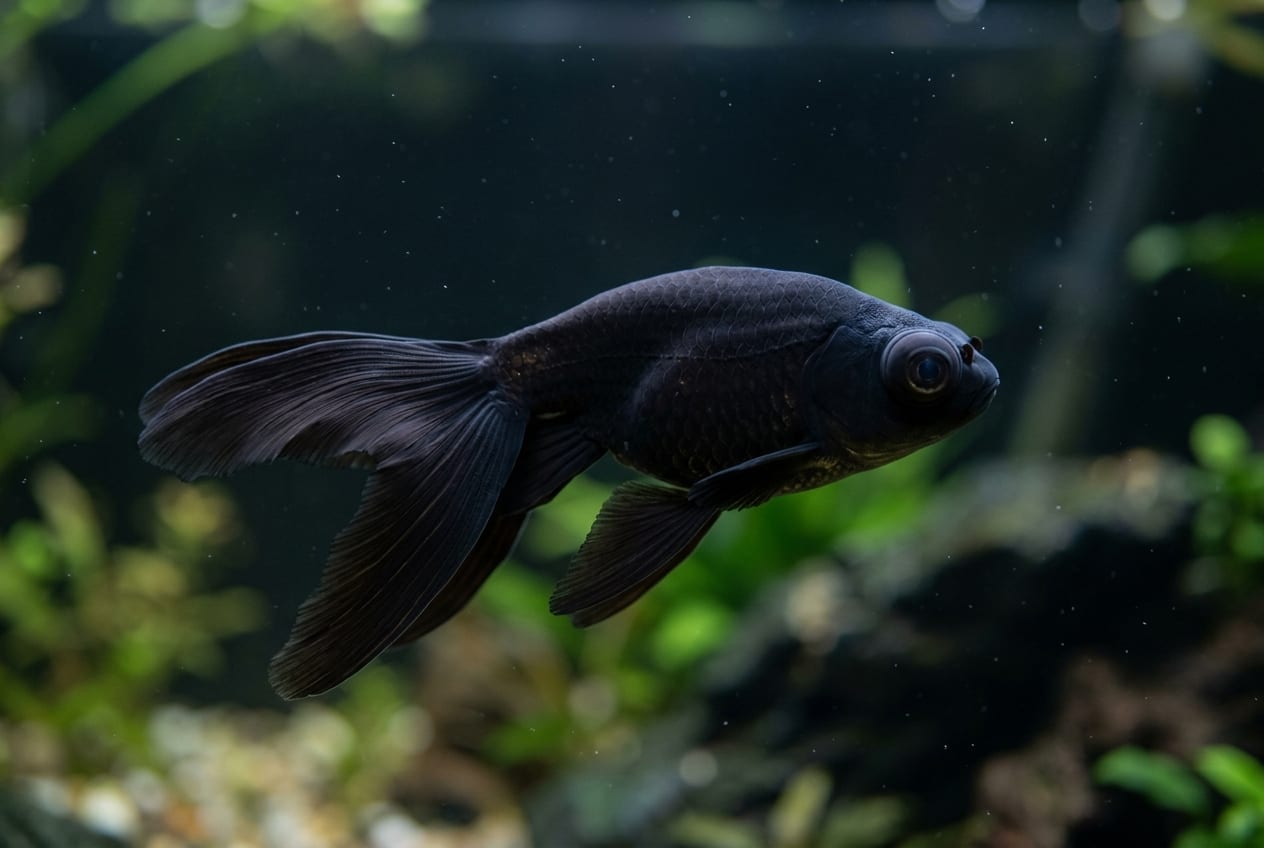
The calico bubble eye is a colour line that carries calico patterning on the bubble eye. Calico refers to a complex mottling of red, black and white; the pattern entered many breeds through crosses with the calico telescope, which carries mosaic transparent scales. The build is that of an ordinary bubble eye: no dorsal fin, upward-facing eyes, and a balloon-like sac on each side. The sacs hold lymph and never return symmetrically once torn. The amount of pale blue depends on how the transparent scales fall, so no two fish are marked alike. Swimming ability is equally limited, so avoid strong currents and exposed filter intakes. Patterning shifts as the fish grows, with the black receding and the red settling over several years.
Source: Wikipedia (CC BY-SA 4.0)
Temperature & humidity for the Calico Bubble Eye
The ideal temperature for the Calico Bubble Eye is 15〜28℃.
Basic Info
Origin
China (developed variety)
Temperature
15〜28℃
Diet
Prepared foods, frozen bloodworms
Care Guide
Lighting
Light close to daylight shows the calico and its pale blue to best effect. Strong light is unnecessary; set brightness for viewing from above.
Care Specifications
- pH
- 6–8
- Hardness (GH)
- 5–19 dGH
- Water Temp.
- 15–28℃
PeacefulGroupBreeding: Hard
Sources: FishBase (Carassius auratus) / Keihan Nishikigoi Center: goldfish water management / Kingyo Hitosuji: Bubble Eye
References & Sources
Edited & verified by: BreederDirect editorial team
The taxonomic, regulatory, and husbandry data on this page are compiled and verified against the authoritative primary sources below.
Taxonomy & Authority
Regulations & Conservation Status
Not CITES-listed
Sources: CITES Appendices (species not listed) / FishBase (Carassius auratus)
Regulations may change. Always verify the latest information with the relevant authorities.
Calico Bubble Eye Listings
Loading latest listingsFind listings for this species