Discosoma (Bubble Disc) Care Guide | Tips on Lighting, Water Quality, Propagation, and Placement
A comprehensive guide to Discosoma (bubble disc) care. Covers optimal water quality parameters (nitrate, KH, calcium), low to mid-light settings, rock-shade placement techniques, and propagation via cutting method. Discover essential tips for cultivating these beautiful bubble discs, popular as an introduction to soft corals.
Key Takeaways
A comprehensive guide to Discosoma (bubble disc) care. Covers optimal water quality parameters (nitrate, KH, calcium), low to mid-light settings, rock-shade placement techniques, and propagation via cutting method. Discover essential tips for cultivating these beautiful bubble discs, popular as an introduction to soft corals.
Related Species
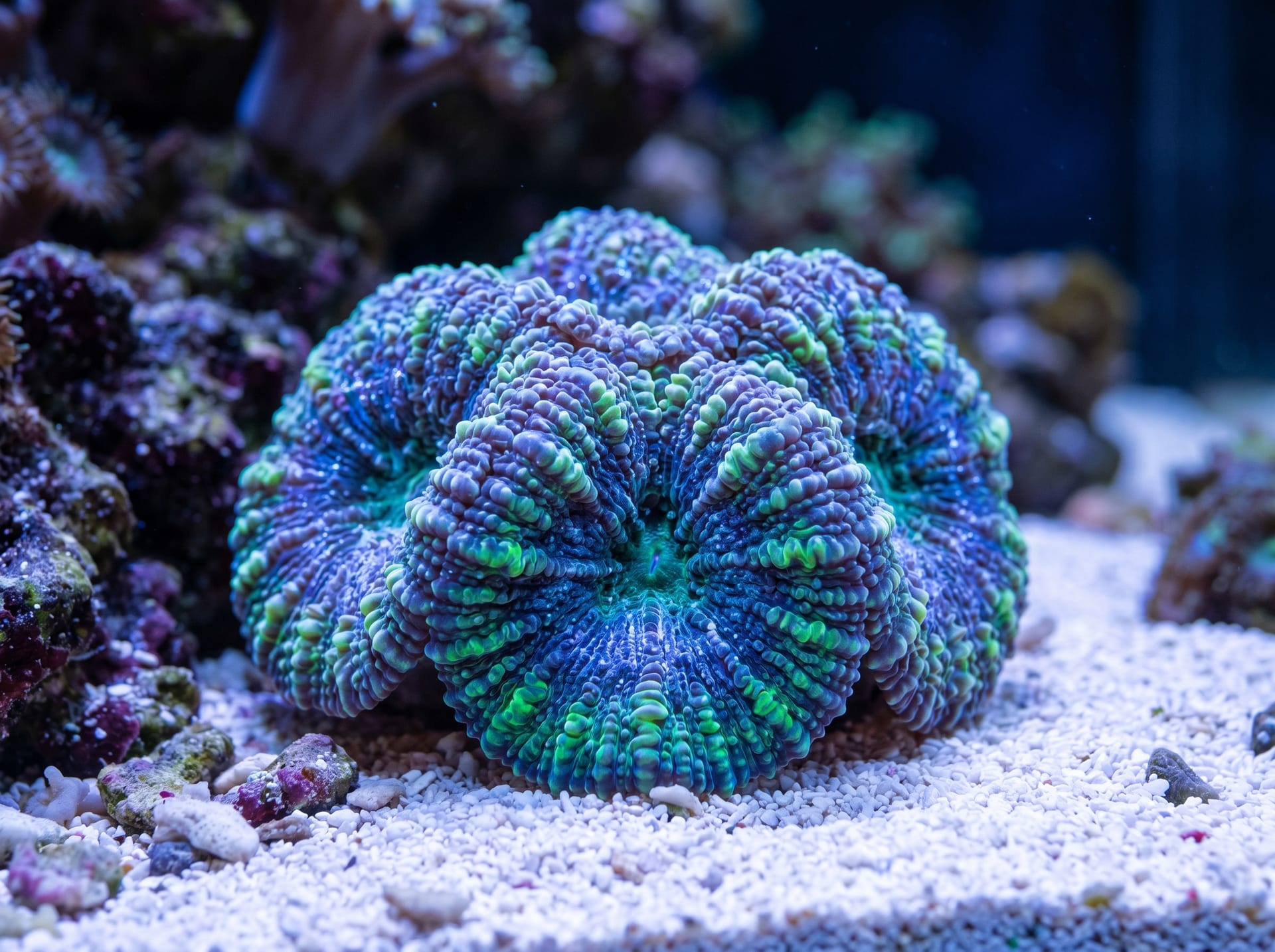
Discosoma (bubble discs) are popular corals that belong to the soft coral family while possessing their own unique charm. True to their name, they are characterized by transparent, bubble-shaped polyps, and their diverse color variations—green, blue, red, orange, and more—captivate many reef aquarists. This article provides a detailed explanation from basic Discosoma care management to propagation techniques.
Basic Characteristics of Discosoma
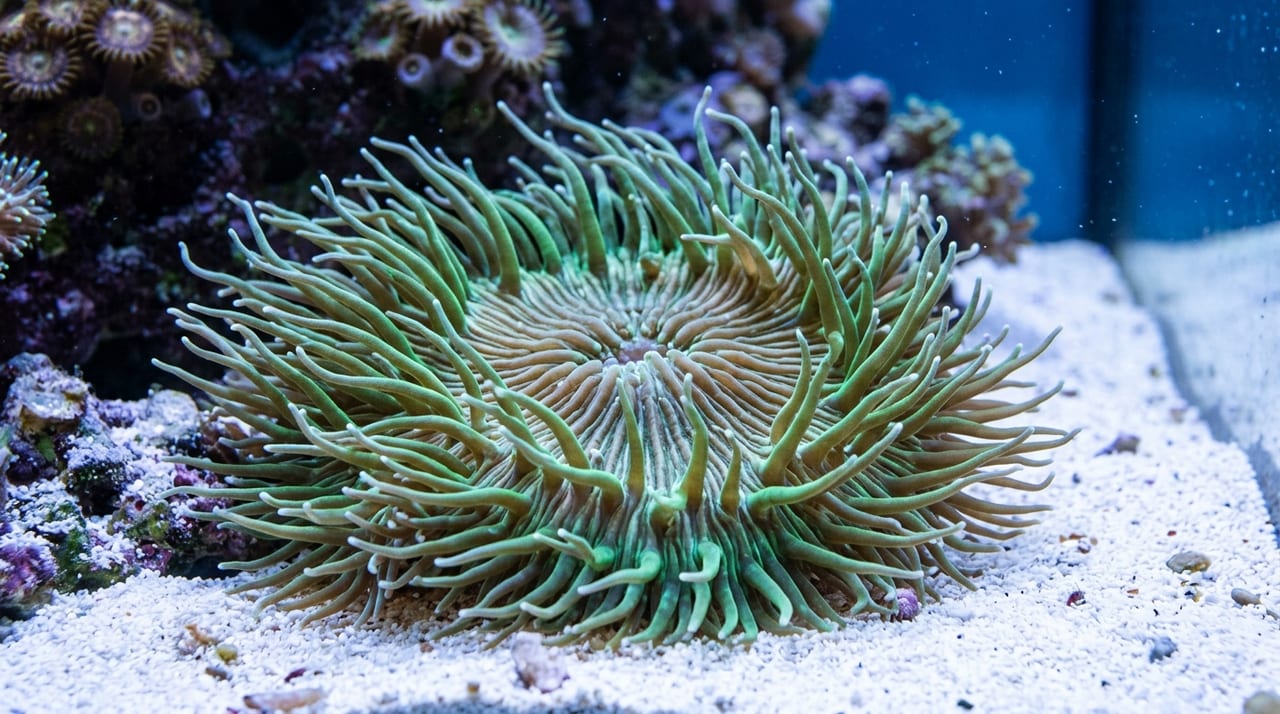
Discosoma (Discosoma genus, formerly Actinodiscus) belongs to the order Corallimorpharia (mushroom anemones) and is also called disc coral or mushroom coral. Bubble discs are specifically a collective term for varieties with well-developed bubble-like protrusions, and due to their striking appearance, they often command high prices in the trade.
The care requirements are relatively modest, with less stringent water quality demands compared to LPS or SPS corals. They are known as one of the easiest corals for beginners to start with, though bringing out their beautiful coloration requires attention to several key points.
In nature, they typically inhabit areas with relatively dim light, such as rock crevices and cave interiors. Exposing them to direct intense light can cause fading or bleaching.
Optimal Water Quality Parameters
The following water quality parameters should be maintained to keep Discosoma in good condition:
- Temperature: 24–27°C (avoid sudden changes)
- Salinity (Specific Gravity): 1.024–1.026
- pH: 8.1–8.3
- KH (Carbonate Hardness): 8–11 dKH
- Calcium: 380–450 ppm
- Magnesium: 1,250–1,350 ppm
- Nitrate (NO₃⁻): 5–20 ppm (they prefer some nutrient levels)
- Phosphate (PO₄³⁻): 0.05–0.1 ppm
Despite being soft corals, Discosoma tend to prefer environments with some nutrient content rather than ultra-low nutrient salt (ULNS) environments where nutrients are nearly zero. Many reports indicate that tanks with nitrate levels around 10–20 ppm maintain healthier coloration more easily. Conversely, in overly pristine conditions they fade more readily, making them better suited to LPS tanks or moderately managed aquariums rather than cohabitation with SPS systems.
Lighting and Placement Considerations
Lighting has the most significant impact on Discosoma coloration. They generally prefer low to mid-range lighting (50–150 PAR), and excessively intense direct light causes bleaching and fading.
Regarding color temperature (Kelvin), blue-white light in the 14,000–20,000K range brings out the fluorescent proteins' coloration. Blue to violet wavelengths (420–460 nm) particularly activate Discosoma's fluorescent colors, so setting a higher ratio of blue LEDs enhances their visual appeal.
Keep the following placement considerations in mind:
- Placing them in rock crevices or shaded areas mimics their natural habitat
- Ensure sufficient space without contact with other corals (to avoid allelopathy issues)
- Position them where they receive indirect water flow, as direct flow causes them to retract
- Placement on the substrate or in lower areas of the tank is ideal
When acclimating, it is safest to start them in a dimly lit area and gradually move them to their target location to allow for photoadaptation.
Feeding: Necessity and Methods
While Discosoma obtain much of their nutrition from photosynthesis via zooxanthellae, feeding enhances growth and coloration.
Recommended Foods:
- Commercial liquid plankton (Reef Roids, Coral Frenzy, etc.)
- Fine flake foods dissolved in water
- Phytoplankton
- Baby brine shrimp (larval stage)
Target feeding is the most effective method. Use a dropper or syringe to deliver small amounts of liquid food near the polyps. The best timing is at night when polyps are open or immediately after lights turn off. Feeding once or twice per week is sufficient; overfeeding degrades water quality, so exercise caution.
However, if they have adequate light for photosynthesis, they can survive and grow without supplemental feeding. In tanks with moderate nutrient levels, they often grow well without feeding.
Propagation and Fragging Methods
Discosoma propagation is relatively straightforward and ideal for beginning propagators. The main methods are as follows:
Natural Division (Very Slow):
Healthy specimens will naturally split over time, but the following methods are used for intentional propagation:
Cutting Method (Sectioning):
- Prepare sterilized scissors or a scalpel
- Cut the parent disc into 2–4 sections from the center
- Apply disinfectant (Lugol's solution/iodine solution) to the cut surfaces to prevent infection
- Attach the fragments to plugs (sand with coralline algae) or specialized frag holders
- Allow 1–2 weeks for recovery in a dim location, then confirm polyps re-extend
Attaching them to frag sticks or small stones makes display, sale, and exchange more convenient.
Siphon Method:
This method uses a glass tube or syringe to apply water pressure, lifting the disc from the substrate and moving it to a frag. It reportedly causes less trauma to the specimen.
Troubleshooting
When Polyps Don't Open or Are Shriveled:
- Lighting too strong or too weak
- Direct water flow impacting them
- Sudden changes in temperature or salinity
- Post-transport stress (observe for 1–2 weeks)
- Chemical competition with neighboring corals (allelopathy)
When Fading or Bleaching Occurs:
- Lighting too intense (particularly direct PAR exceeding 200)
- Ultra-low nutrient environment (nitrate below 1 ppm)
- Zooxanthellae expulsion (bleaching) → recovery often occurs when returned to stable conditions
When Polyps Remain Contracted and Don't Recover:
- Exposure to medications (copper treatments, strong pharmaceuticals)
- Low temperature (below 23°C)
Purchase Checklist
When purchasing Discosoma from breeders or online retailers, check the following:
- Polyps are fully extended and the specimen appears healthy
- The color is vibrant (not faded to brown)
- No visible wounds or lesions on the surface
- Secure attachment to the frag or substrate
For shipments, perform water acclimation (drip method or floating bucket method) immediately upon arrival, and it is recommended to dip (quarantine treat) for pest checks (flatworms, etc.) before introducing to the main tank.
Summary
Discosoma (bubble discs) are attractive corals combining vibrant appearance with relatively easy care requirements. The key to enhancing coloration is maintaining them in environments with moderate nutrients rather than ultra-low nutrient conditions, under low to mid-range lighting while avoiding direct intense light. Because they propagate readily, another major appeal is the ability to enjoy breeder-level cultivation while reducing acquisition costs. Start with one or two individuals, select specimens suited to your tank environment, and aim for long-term success.