Azuma Nishiki
IntermediateCarassius auratus
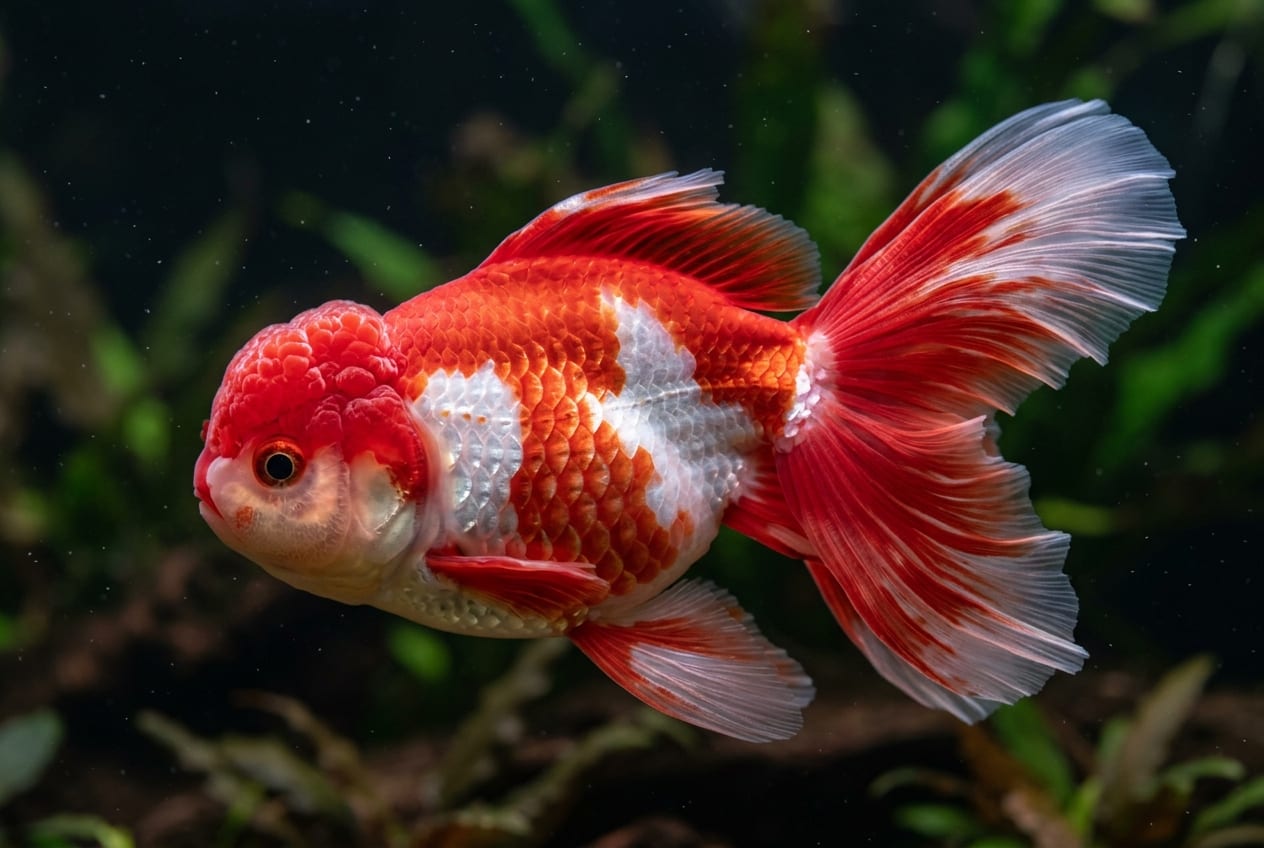
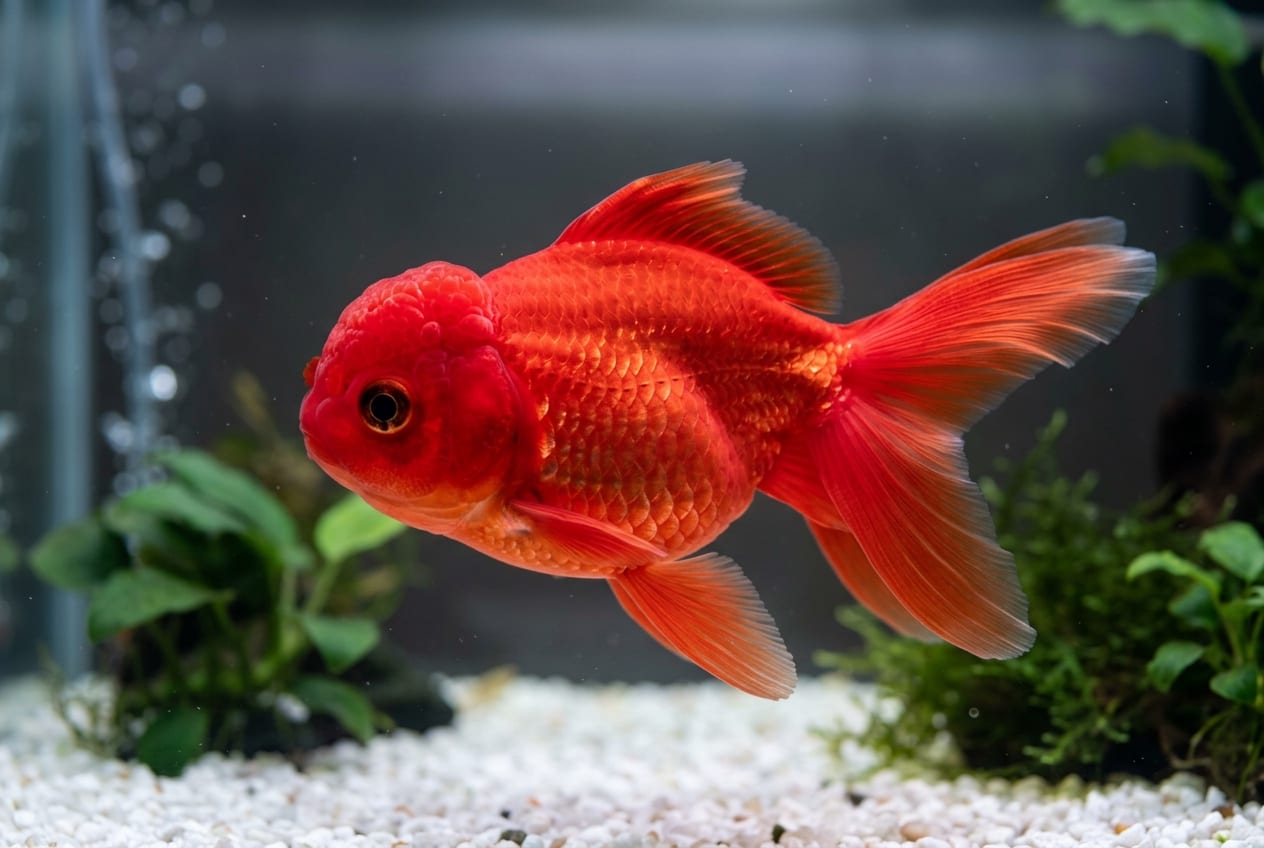
An Oranda whose strongly rounded tail spreads in a half-circle from the central split. The upper part of the tail tends to develop strongly, giving a striking side profile. Colors include calico, red-and-white and panda.
Halfmoon Oranda is a trade name for Orandas distinguished by tail shape. The tail is strongly rounded and spreads left and right in a half-circle from the central split, with the upper part often especially well developed; the side profile is the main attraction. It differs from the Rose-tail Oranda, whose frilled, wavy tail folds over itself in layers and is said to grow longer and larger. Goldfish specialists list it as a tail-type category alongside broadtail and veiltail. Like the parent Oranda it has a dorsal fin and a head growth. The large tail burdens swimming and is easily damaged, so keep the current gentle and avoid decor that can snag fins. Colors include calico, red-and-white and panda (hagoromo). There is little documentation of where or when it was developed; in Japan, fish imported from Indonesia and elsewhere are sold by goldfish specialists and online shops. The Oranda is longer-bodied and longer-finned than the Ryukin and is said to grow large.
Source: Wikipedia (CC BY-SA 4.0)
The Halfmoon Oranda lives 10-15 years.
The ideal temperature for the Halfmoon Oranda is 20〜23℃.
Origin
Mainly imported fish from Indonesia and elsewhere (little documentation of its origin)
Lifespan
10-15 years
Temperature
20〜23℃
Edited & verified by: BreederDirect editorial team
The taxonomic, regulatory, and husbandry data on this page are compiled and verified against the authoritative primary sources below.
Accepted name: Carassius auratus (Linnaeus, 1758)
Synonyms: Cyprinus auratus Linnaeus, 1758, Carassius auratus auratus (Linnaeus, 1758)
Authority databases: GBIF · GBIF: Carassius auratus · FishBase: Carassius auratus
Nomenclature follows global taxonomic authority databases.
Goldfish (Carassius auratus) are not listed in the CITES Appendices (checked on Species+, 2026-09-23) and are not designated Invasive Alien Species in Japan. Never release pet goldfish into rivers or ponds.
Sources: Species+ (CITES) / Ministry of the Environment: list of Invasive Alien Species
Regulations may change. Always verify the latest information with the relevant authorities.
Find listings for this species
Omnivore (goldfish pellets as the staple; also bloodworms and daphnia)
The tail spreads in a half-circle with a large upper lobe; the Rose-tail Oranda instead has layered, frilled waves.
The large tail is damaged by strong current; keep flow gentle and avoid sharp rocks or driftwood that could snag it.
The ideal range for fancy goldfish is about 20-23°C, pH around 7.0-8.4. Avoid sudden changes in temperature or water chemistry.
Allow roughly 38 L (10 gallons) or more per adult fish, with a generously sized filter.
Keep with gentle round-bodied goldfish, away from fin-nippers and fast swimmers.
Poor water quality quickly damages the fins; keep the water clean with regular changes.
Intermediate. This is an intermediate-level species. Some prior experience and knowledge of environmental management are recommended.
The ideal temperature for Halfmoon Oranda is 20〜23℃. Avoid sudden temperature changes and maintain a stable environment.
The average lifespan of Halfmoon Oranda is 10-15 years. With proper care and nutrition, they can live a long and healthy life.
Halfmoon Oranda feeds on: Omnivore (goldfish pellets as the staple; also bloodworms and daphnia). Aim for a balanced diet with appropriate feeding frequency.
The price of Halfmoon Oranda varies significantly depending on variety, size, and individual quality. Check our market price page for the latest pricing information.
Last updated: September 30, 2026