Rosetail Oranda
IntermediateCarassius auratus
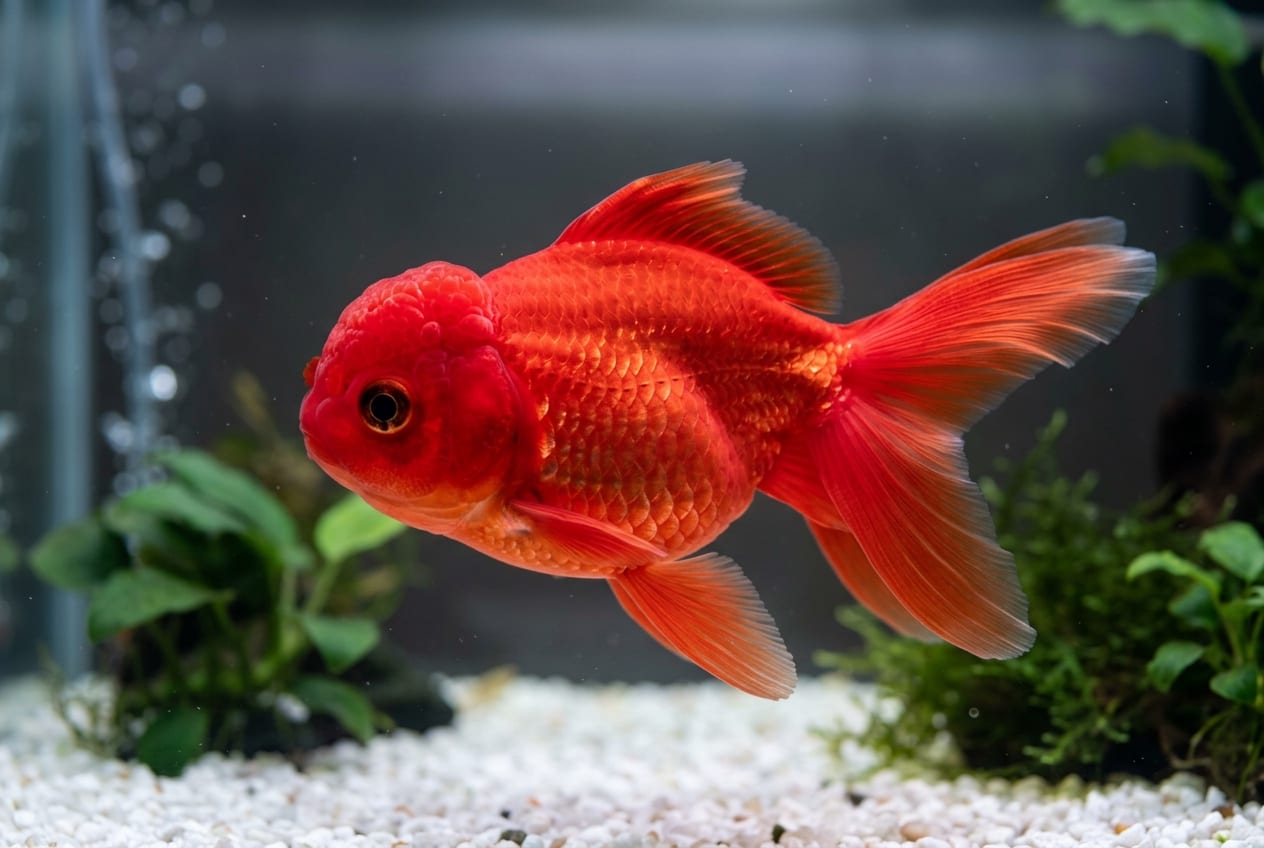
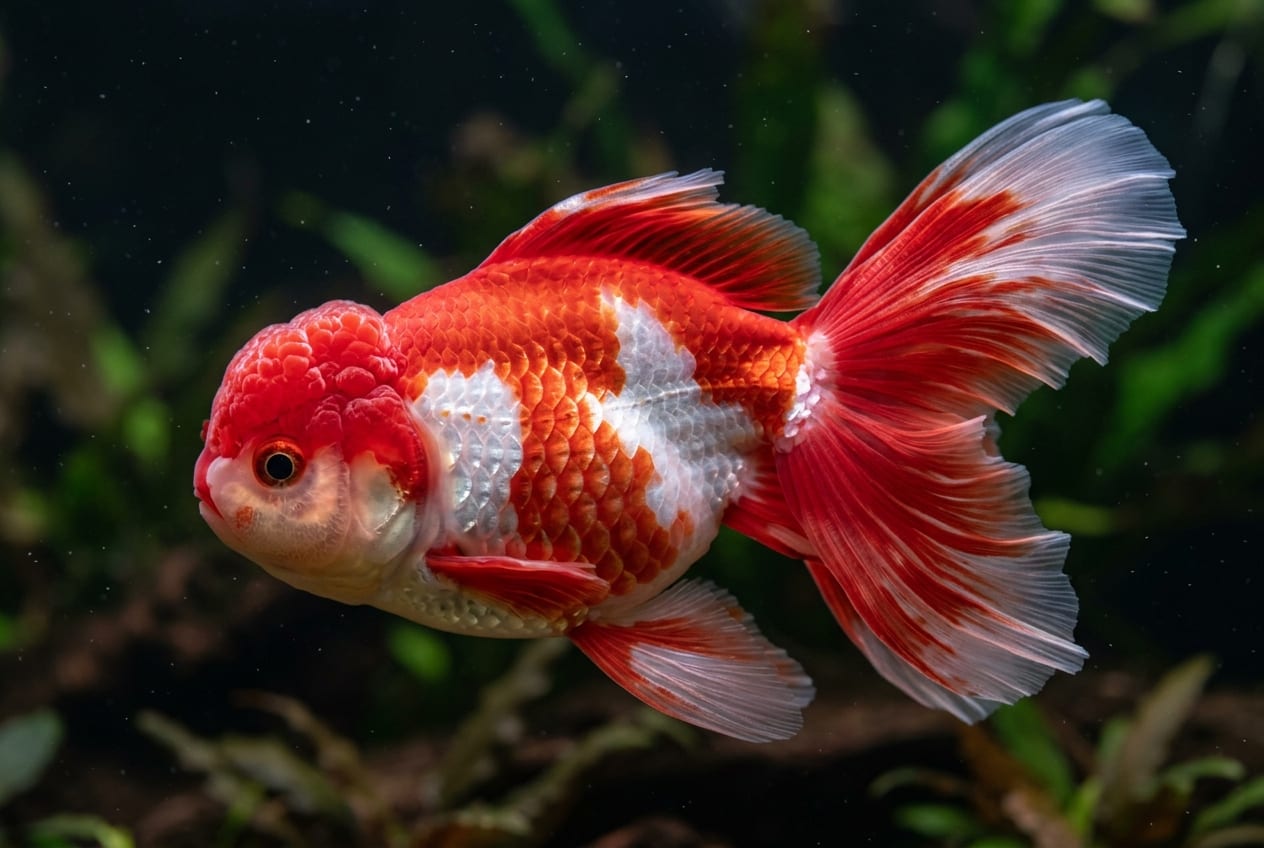
An Oranda bred for a short tail. The short tail emphasizes the round body and wen, and the fish swims with a wiggling motion. Many color patterns based on red, white and black; mostly imported from Southeast Asia.
Short-tail Oranda (Oranda Short-tail) is an Oranda bred to shorten its normally long split tail. The Oranda has a dorsal fin and a head growth (wen) and usually a tail that is long relative to the body. With a short tail, the round body and wen stand out, and the fish swims with a side-to-side wiggle. It differs from the Short-tail Ryukin by its wen and body shape — the Ryukin has a high shoulder hump and no wen. While 'Balloon Oranda' names a body type (a short body), 'Short-tail' names a tail type, and fish that also have a short body are sometimes sold as 'short-body' as well. Colors are based on red, white and black, with tricolor, sakura, calico and more. Short-tailed round goldfish are said to be prone to buoyancy problems, so watch feeding amounts and keep the temperature steady. In Japan, fish imported from Thailand, Indonesia and other Southeast Asian sources are sold as a separate category by goldfish specialists and online shops. The parent Oranda came from China in the Edo period, and its name ('lion head') is said to come from the lion-like wen.
Source: Wikipedia (CC BY-SA 4.0)
The Short-tail Oranda lives With proper care goldfish can live over 20 years in captivity (figure for goldfish in general; variety-specific data are scarce).
The Short-tail Oranda grows to Goldfish commonly reach about 10 cm TL; variety-specific adult size data are scarce.
The ideal temperature for the Short-tail Oranda is 20〜23℃.
Edited & verified by: BreederDirect editorial team
The taxonomic, regulatory, and husbandry data on this page are compiled and verified against the authoritative primary sources below.
Primary sources
Accepted name: Carassius auratus (Linnaeus, 1758)
Synonyms: Cyprinus auratus Linnaeus, 1758, Carassius auratus auratus (Linnaeus, 1758)
Authority databases: GBIF · GBIF: Carassius auratus · FishBase: Carassius auratus
Nomenclature follows global taxonomic authority databases.
Goldfish (Carassius auratus) are not listed in the CITES Appendices (checked on Species+, 2026-09-23) and are not designated Invasive Alien Species in Japan. Never release pet goldfish into rivers or ponds.
Sources: Species+ (CITES) / Ministry of the Environment: list of Invasive Alien Species
Regulations may change. Always verify the latest information with the relevant authorities.
Find listings for this species
Origin
Southeast Asia such as Thailand and Indonesia (mainly imported fish)
Lifespan
With proper care goldfish can live over 20 years in captivity (figure for goldfish in general; variety-specific data are scarce)
Size
Goldfish commonly reach about 10 cm TL; variety-specific adult size data are scarce
Temperature
20〜23℃
Omnivore (goldfish pellets as the staple; also bloodworms and daphnia)
A short tail relative to the body plus a wen; the Short-tail Ryukin has no wen. 'Balloon' names a short body rather than a short tail, and some fish have both, so check the fish itself.
The ideal range for fancy goldfish is about 20-23°C, pH around 7.0-8.4. Avoid sudden changes in temperature or water chemistry.
Allow roughly 38 L (10 gallons) or more per adult fish, with a generously sized filter.
A slow swimmer; keep with other round-bodied goldfish.
Short-tailed round goldfish are said to be prone to buoyancy problems; feed small portions several times rather than one large meal.
Sudden drops in temperature can trigger indigestion, so keep the temperature steady, especially at the change of seasons.
Intermediate. This is an intermediate-level species. Some prior experience and knowledge of environmental management are recommended.
The ideal temperature for Short-tail Oranda is 20〜23℃. Avoid sudden temperature changes and maintain a stable environment.
The average lifespan of Short-tail Oranda is With proper care goldfish can live over 20 years in captivity (figure for goldfish in general; variety-specific data are scarce). With proper care and nutrition, they can live a long and healthy life.
Short-tail Oranda typically reaches Goldfish commonly reach about 10 cm TL; variety-specific adult size data are scarce as an adult. Size may vary depending on care conditions and individual genetics.
Short-tail Oranda feeds on: Omnivore (goldfish pellets as the staple; also bloodworms and daphnia). Aim for a balanced diet with appropriate feeding frequency.
The price of Short-tail Oranda varies significantly depending on variety, size, and individual quality. Check our market price page for the latest pricing information.
Last updated: September 23, 2026