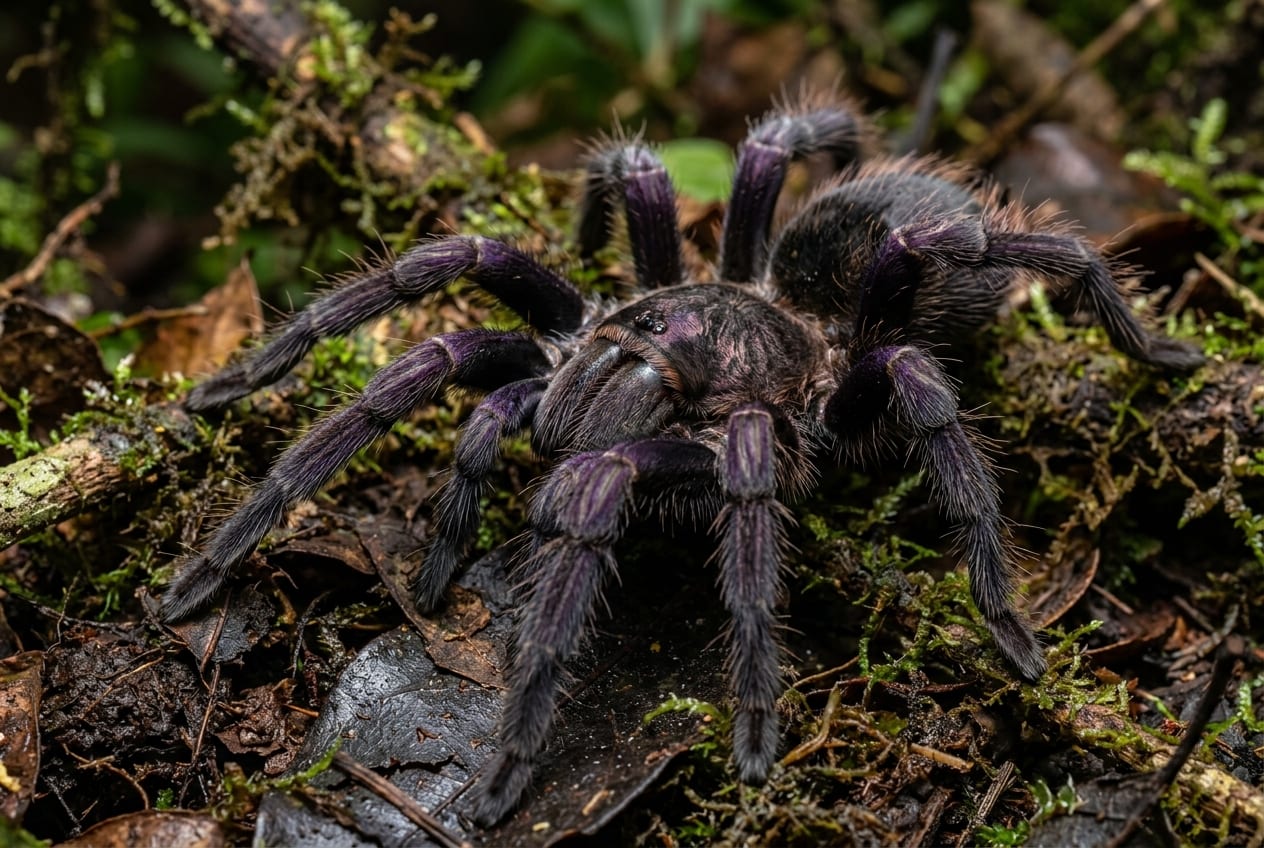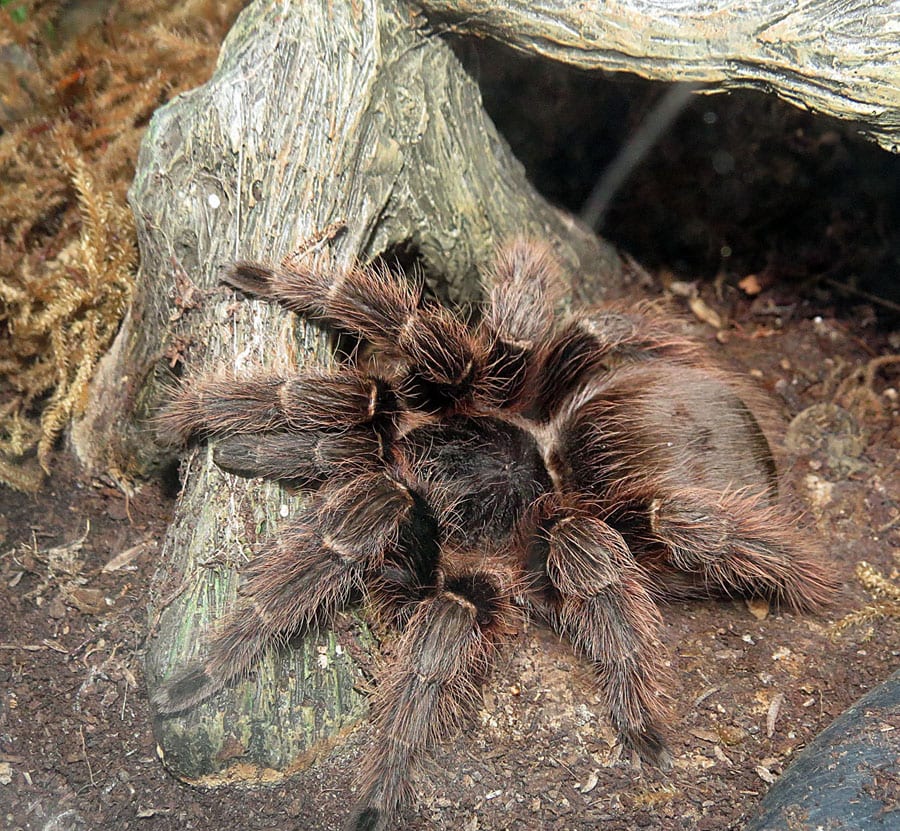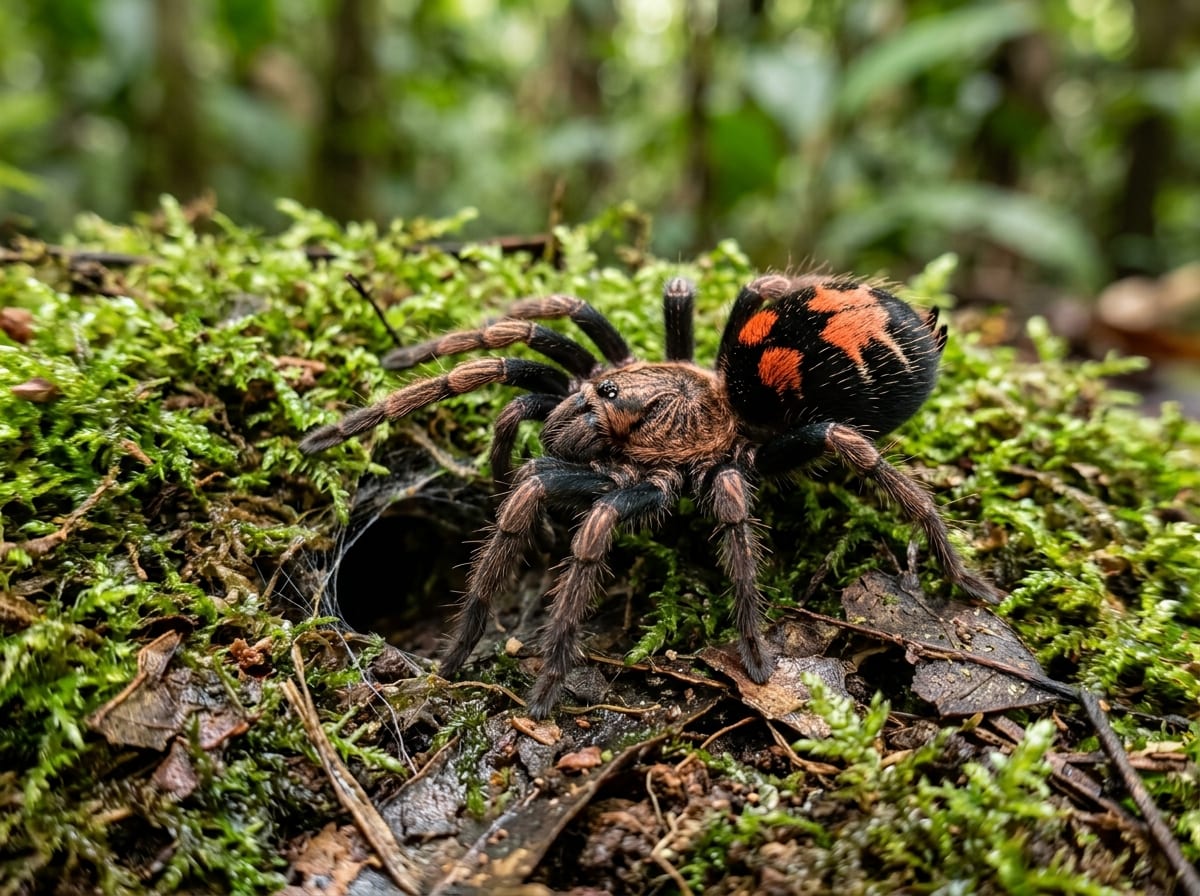
AI-generated image
Peruvian dwarf beauty
IntermediateCyriocosmus bertae
A small South American Cyriocosmus. The genus comprises small to medium spiders with type III urticating setae. Despite the 'Peruvian' trade name, scientific records are from Brazil and Bolivia.
Difficulty
Intermediate
Lifespan
Little data (congener C. elegans: females up to 7 years, males about 2)
Size
Little data (a small-bodied genus)
Diet
Carnivorous (live insects such as crickets and roaches)
About
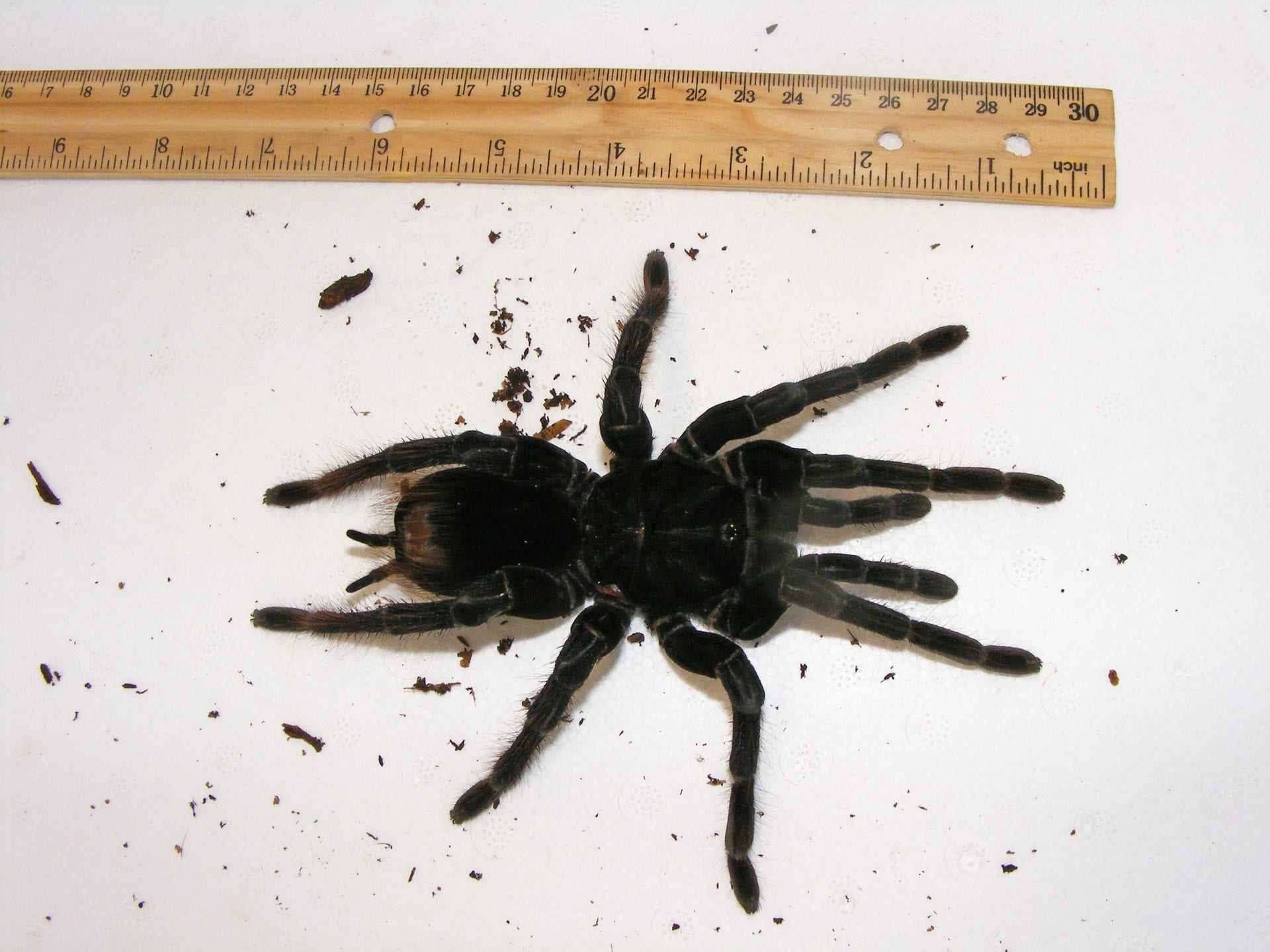
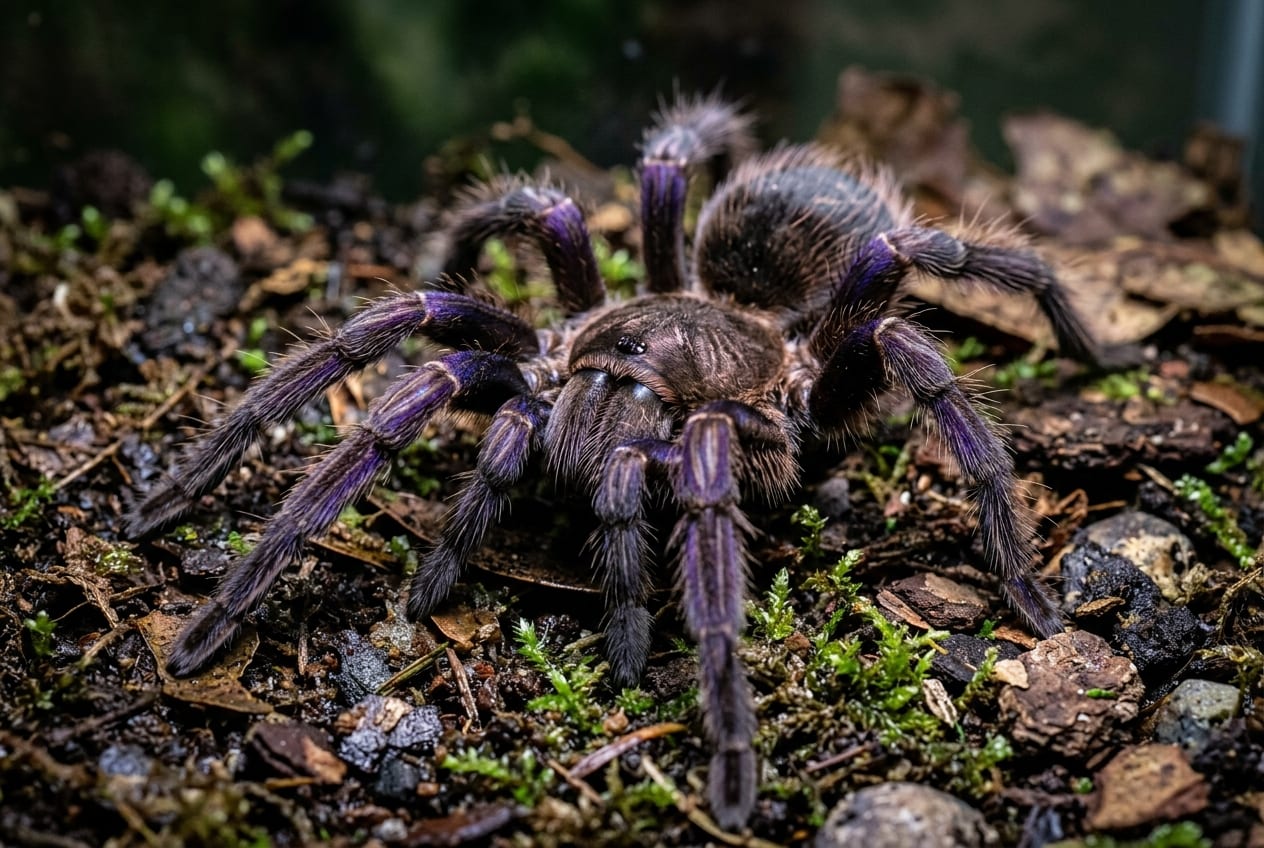
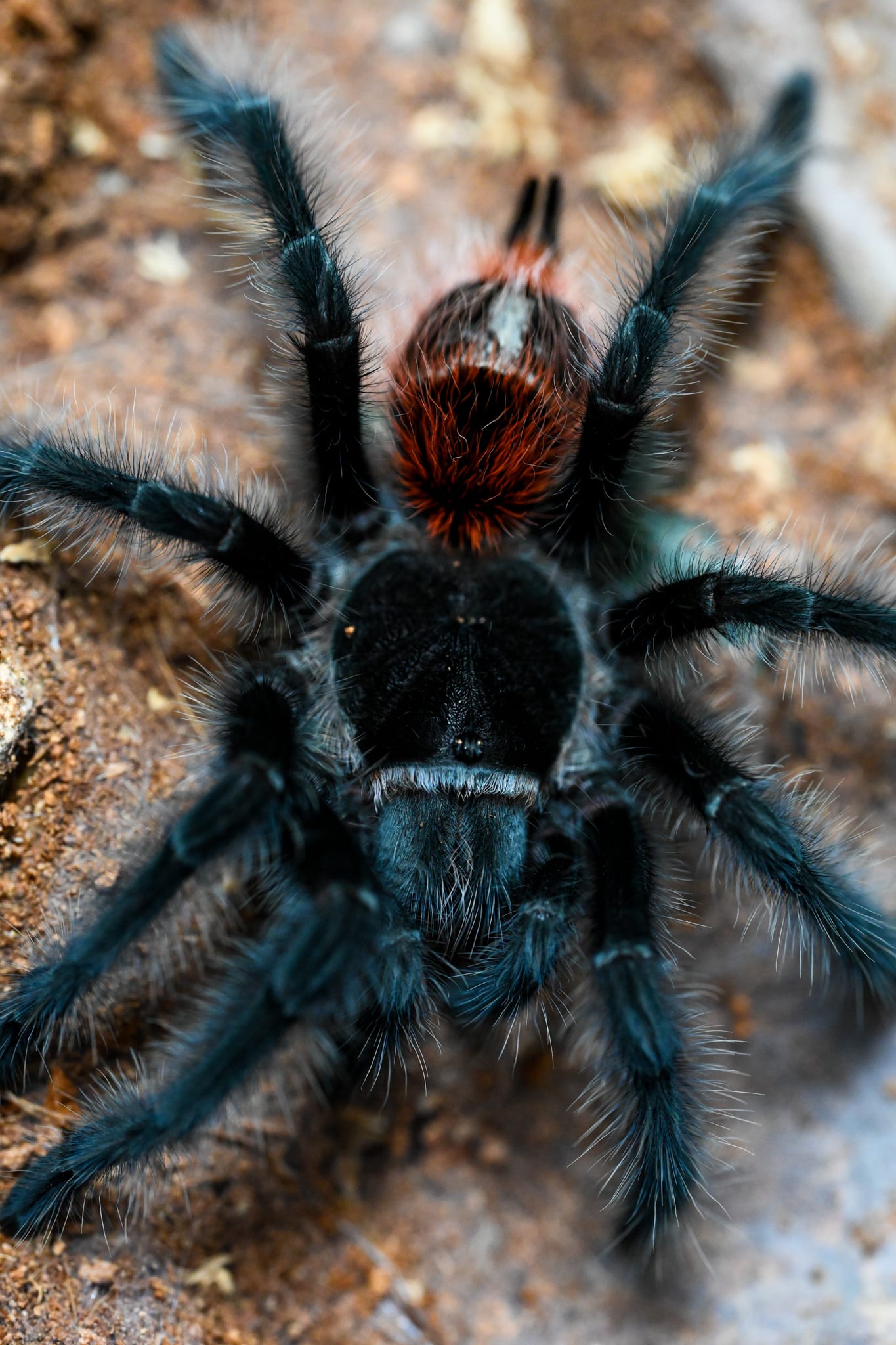
Cyriocosmus bertae Pérez-Miles, 1998 was described in a revision of Cyriocosmus, a genus of 24 small to medium tarantulas distinguished by male palpal and female spermathecal structures, all with type III urticating setae (Wikipedia). The species list gives its range as Brazil, and GBIF has only two records, from Acre (Brazil) and Santa Cruz (Bolivia). The trade name 'Peruvian' does not match this, so check whether spiders sold as Peruvian are this species or another of the several Cyriocosmus found in Peru, such as C. aueri or C. peruvianus. Care information for C. elegans describes a tiny species of about 5 cm leg span, with females living up to 7 years and males about 2, very fast and quick to retreat into its burrow. It is distinct from the two Cyriocosmus species already listed.
Source: Wikipedia (CC BY-SA 4.0)
Lifespan of the Peruvian dwarf beauty
The Peruvian dwarf beauty lives Little data (congener C. elegans: females up to 7 years, males about 2).
Primary sources on its size or lifespan are scarce.
Basic Info
Origin
South America (records from Brazil and Bolivia)
Lifespan
Little data (congener C. elegans: females up to 7 years, males about 2)
Size
Little data (a small-bodied genus)
Diet
Carnivorous (live insects such as crickets and roaches)
References & Sources
Edited & verified by: BreederDirect editorial team
The taxonomic, regulatory, and husbandry data on this page are compiled and verified against the authoritative primary sources below.
Primary sources
- Wikipedia
- Species+ CITES query (not listed)
- Ministry of the Environment: list of regulated alien species, including taxa needing an identification certificate
- The Tarantula Collective: Cyriocosmus elegans care sheet
- Wikipedia: Tarantula (urticating setae and Old World venom)
- GBIF: Cyriocosmus bertae Pérez-Miles, 1998
Taxonomy & Authority
Regulations & Conservation Status
Not CITES-listed
Not listed in the CITES Appendices (checked on Species+). Theraphosidae are neither designated invasive alien species nor taxa requiring an identification certificate on import in Japan (September 2026). Use a lockable enclosure to prevent escapes, and never release captive animals.
Sources: Species+ CITES query (not listed) / Ministry of the Environment: list of regulated alien species, including taxa needing an identification certificate
Regulations may change. Always verify the latest information with the relevant authorities.
Peruvian dwarf beauty Listings
Loading latest listingsFind listings for this species