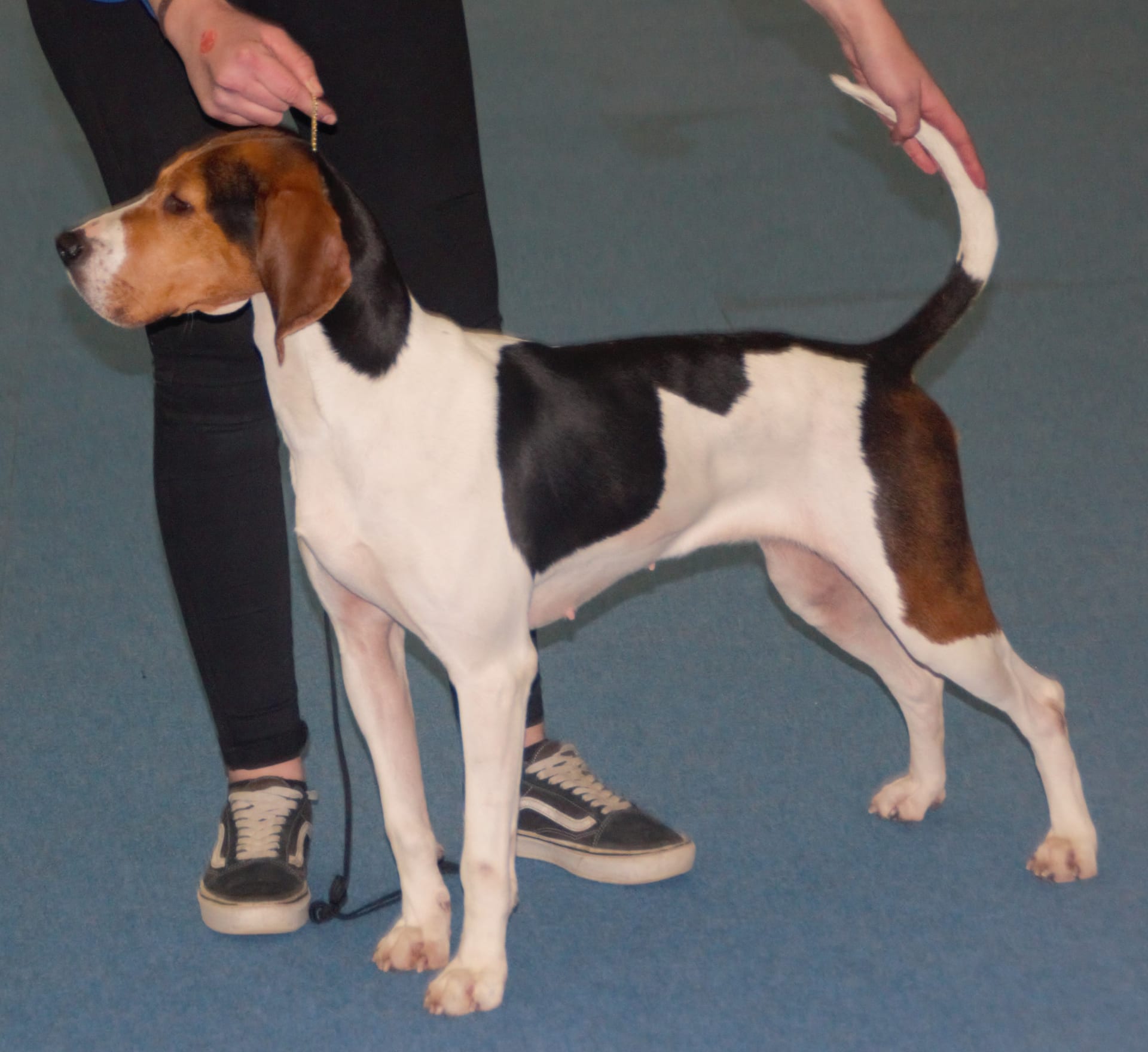
Source: Wikimedia Commons
Treeing Walker Coonhound
AdvancedCanis lupus familiaris
A short-coated American coonhound, preferably tricolour, developed from Walker Foxhounds and specialised in 'treeing': chasing game up a tree and baying beneath it.
Difficulty
Advanced
Temperature
15〜26℃
Lifespan
12-13 years
Size
Height 51-69cm
Diet
Complete dog food matched to its activity level
About
The Treeing Walker Coonhound is an American scenthound. Its ancestors were the 'Virginia hounds', founded on hounds imported from England by Thomas Walker of Virginia in 1742 and by George Washington in 1770, which George Washington Maupin and John W. Walker of Kentucky developed into the Walker Foxhound. In the 19th century an outcross to a dog of unknown origin known as Tennessee Lead had a lasting influence. The UKC first registered Walkers as part of the English Coonhound and made them a separate breed in 1945. The AKC recognised the breed in 2012; the FCI and JKC do not. It is prized for running game up a tree and baying there, with a clear, ringing bugle or steady chop that changes at the tree. The coat is short, hard and glossy; white-black-tan tricolour is preferred, and white with black or tan spots is acceptable. The AKC recommends screening for hip dysplasia and eye anomalies, and advises checking under the drop ears for ticks after every outing. Only a handful are bred in Japan, mainly as hunting dogs, and it is almost never seen as a family pet.
Lifespan of the Treeing Walker Coonhound
The Treeing Walker Coonhound lives 12-13 years.
Size of the Treeing Walker Coonhound
The Treeing Walker Coonhound grows to Height 51-69cm.
The UKC standard gives a height of 56-69cm for males and 51-64cm for females, with weight in proportion to size and working condition.
Basic Info
Origin
United States
Lifespan
12-13 years
Size
Height 51-69cm
Temperature
15〜26℃
Diet
Complete dog food matched to its activity level
Care Guide
Temperament
Energetic, intelligent and friendly, with an independent, stubborn streak
Exercise
Very high; long walks or runs every day
Coat Care
Short, easy-care coat; wipe with a hound glove or damp towel
Origin
United States
Notes
Strong scent drive, always keep on lead. Check ears for ticks and debris after outings
Large breedHunting dogHoundAdvanced owners
Treeing Walker Coonhound FAQ
QHow difficult is it to keep Treeing Walker Coonhound?
A
Advanced. This is an advanced-level species. It requires specialized equipment and advanced husbandry skills with precise environmental control.
QWhat is the lifespan of Treeing Walker Coonhound?
A
The average lifespan of Treeing Walker Coonhound is 12-13 years. With proper care and nutrition, they can live a long and healthy life.
QHow large does Treeing Walker Coonhound get?
A
Treeing Walker Coonhound typically reaches Height 51-69cm as an adult. Size may vary depending on care conditions and individual genetics.
QWhat should I feed Treeing Walker Coonhound?
A
Treeing Walker Coonhound feeds on: Complete dog food matched to its activity level. Aim for a balanced diet with appropriate feeding frequency.
QWhat is the typical price for Treeing Walker Coonhound?
A
The price of Treeing Walker Coonhound varies significantly depending on lineage, coat color, sex, and age. Check our market price page for the latest pricing information.
Last updated: September 23, 2026
References & Sources
Edited & verified by: BreederDirect editorial team
The taxonomic, regulatory, and husbandry data on this page are compiled and verified against the authoritative primary sources below.
Taxonomy & Authority
Regulations & Conservation Status
Not CITES-listed
Domestic dogs (Canis lupus familiaris) are excluded from the CITES appendices and are not listed as Invasive Alien Species or Specified Animals under Japanese law, so no special permit is needed. Under Japan's Rabies Prevention Act, dogs must be registered with the local municipality and vaccinated against rabies once a year.
Sources: Species+ (Canis lupus; domesticated form excluded) / Ministry of the Environment, Japan: list of Invasive Alien Species
Regulations may change. Always verify the latest information with the relevant authorities.
Related Species
Treeing Walker Coonhound Listings
Loading latest listingsFind listings for this species
Related Articles
A Complete Guide to Dog Environmental Enrichment | Practical Program to Stimulate the Brain and Senses and Prevent Behavioral Problems
Dogs' "boredom" when dissatisfied with just walks and meals is the root cause of behavioral problems. This article explains how to improve barking, destructive behavior, and separation anxiety through scientific environmental enrichment that combines olfactory, auditory, visual, and social stimulation.
Complete Guide to Heat Stroke Prevention and Summer Management for Dogs | Identifying Symptoms, Emergency Response, and Implementing Preventive Measures
Dogs face higher heat stroke risk than humans. This guide details early symptom detection, emergency procedures, and practical prevention strategies for summer walks and indoor management.
Complete Guide to Giving Medication to Dogs | How to Administer Tablets, Liquids, Eye Drops, and Ear Drops, and Handling Dogs That Resist
Essential reading for owners who find it difficult to give medication to dogs. This guide explains the correct administration methods for each dosage form—tablets, capsules, liquid medications, eye drops, and ear drops—as well as training techniques to acclimate dogs that resist medication.
A Complete Guide to Dog Supplements | How to Choose Omega-3, Joint Supplements, and Probiotics and Administer Them Correctly
Do dogs need supplements? A thorough explanation of omega-3 fatty acids, glucosamine, probiotics, and other products recommended by veterinarians—how to choose based on breed and age, and safe dosage guidelines.