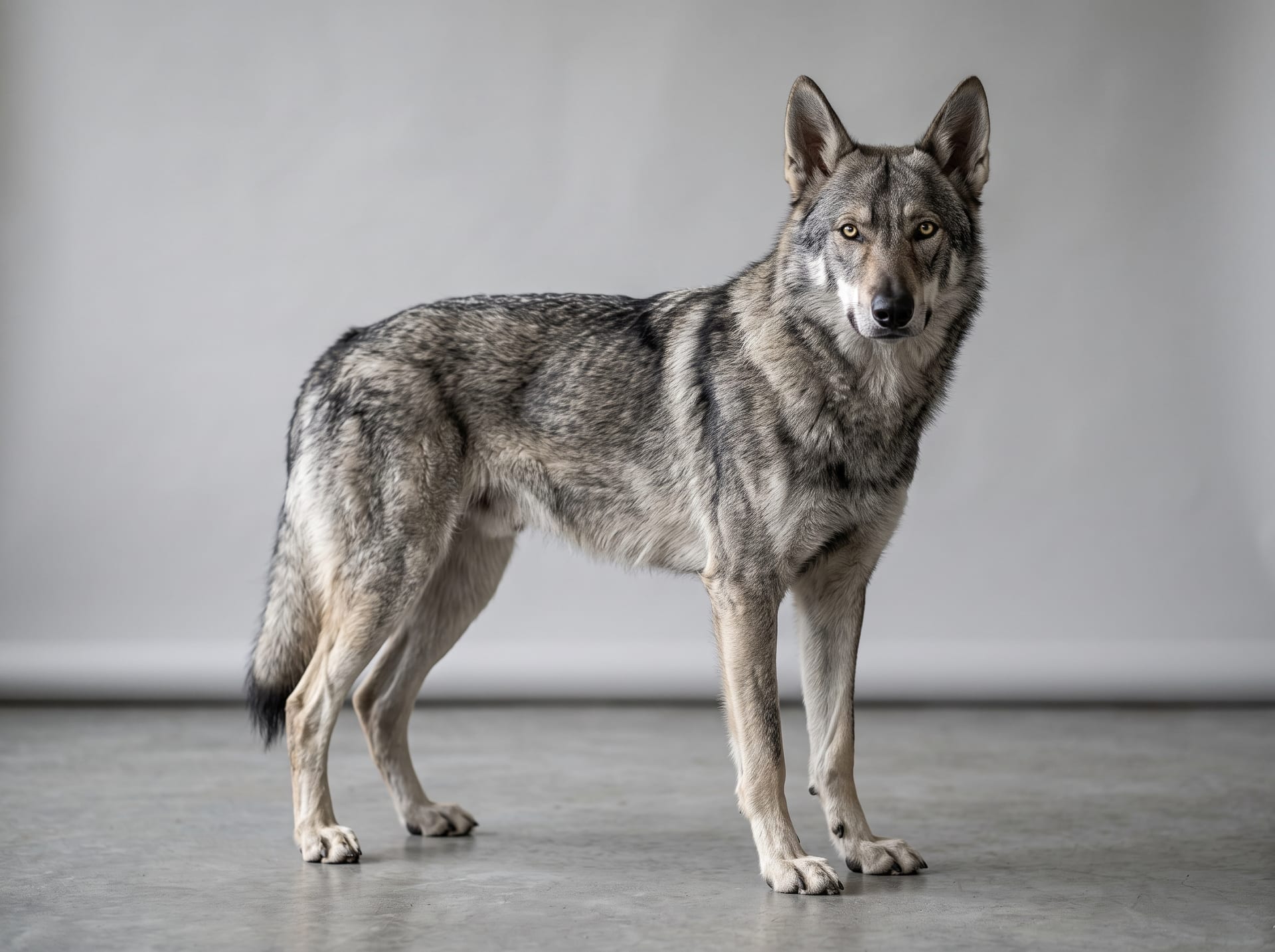
AI-generated image
Saarloos Wolfdog
AdvancedA Dutch breed created by crossing a German Shepherd with a wolf. Wolf-like in appearance, yet deeply devoted to its master.
Difficulty
Advanced
Temperature
10〜24℃
Lifespan
10-12 years
Size
Height: males 65-75cm / females 60-70cm
Diet
High-quality large-breed dog food. Feed twice daily.
About
The Saarloos Wolfdog was created in the Netherlands by Leendert Saarloos, who in 1932 crossed a male German Shepherd Dog with a female European wolf to restore natural canine traits, gaining breed recognition in 1975. Wolf-like in build, gait and coat, it is energetic, proud and independent, deeply devoted to its master but reserved with strangers, requiring an experienced owner and thorough socialization.
Lifespan of the Saarloos Wolfdog
The Saarloos Wolfdog lives 10-12 years.
Size of the Saarloos Wolfdog
The Saarloos Wolfdog grows to Height: males 65-75cm / females 60-70cm.
Basic Info
Origin
Netherlands
Lifespan
10-12 years
Size
Height: males 65-75cm / females 60-70cm
Temperature
10〜24℃
Diet
High-quality large-breed dog food. Feed twice daily.
Care Guide
Temperament
Energetic, proud and independent. Deeply affectionate with its master, reserved with strangers.
Exercise
90+ min of exercise daily. Provide opportunities to move freely in open spaces.
Coat Care
Wolf-like coat. Brush 2-3 times weekly, daily during shedding season.
Origin
Netherlands
Notes
Independent nature suits experienced owners. Tends to avoid unfamiliar situations; early socialization is essential.
AdvancedLargeWolfdogIndependent
Saarloos Wolfdog FAQ
QHow difficult is it to keep Saarloos Wolfdog?
A
Advanced. This is an advanced-level species. It requires specialized equipment and advanced husbandry skills with precise environmental control.
QWhat is the lifespan of Saarloos Wolfdog?
A
The average lifespan of Saarloos Wolfdog is 10-12 years. With proper care and nutrition, they can live a long and healthy life.
QHow large does Saarloos Wolfdog get?
A
Saarloos Wolfdog typically reaches Height: males 65-75cm / females 60-70cm as an adult. Size may vary depending on care conditions and individual genetics.
QWhat should I feed Saarloos Wolfdog?
A
Saarloos Wolfdog feeds on: High-quality large-breed dog food. Feed twice daily.. Aim for a balanced diet with appropriate feeding frequency.
QWhat is the typical price for Saarloos Wolfdog?
A
The price of Saarloos Wolfdog varies significantly depending on lineage, coat color, sex, and age. Check our market price page for the latest pricing information.
Last updated: August 31, 2026
References & Sources
Edited & verified by: BreederDirect editorial team
The taxonomic, regulatory, and husbandry data on this page are compiled and verified against the authoritative primary sources below.
Primary sources
Taxonomy & Authority
Authority databases: JKC (Japan Kennel Club) breed profiles (JA)
Nomenclature follows global taxonomic authority databases.
Related Species
Saarloos Wolfdog Listings
Loading latest listingsFind listings for this species
Related Articles
Complete Guide to Papillon Care | Personality, Training, and Health Management of Smart Small Dogs with Butterfly-Like Ears
Complete explanation of Papillon characteristics, personality, training, and health management. Papillons, characterized by butterfly-like large ears, are intelligent and active small dogs. We provide detailed information from coat care and exercise requirements to common health issues and proper dietary management.
Dog Resource Guarding (Possession Aggression): Causes and How to Address It
Explaining the causes, signs, and correct approaches to dog resource guarding (possessive aggression over food and objects). We introduce behavior modification approaches without punishment.
The Roles of Guide Dogs, Service Dogs, and Hearing Dogs: What General Pet Owners Should Know
This article explains the roles and mechanisms of guide dogs, service dogs, and hearing dogs, and introduces in detail the etiquette that general pet owners should know and how to interact with their pet dogs.
Breed-Specific Regulations and Dog Bite Liability: A Legal Guide | Responsibility and Administrative Procedures for Large Breed and Pit Bull Ownership
Do you need permission to breed Pit Bulls in Japan? This guide explains Japan's current breed-specific regulations and the "designated dog" ordinances in Ibaraki, Sapporo, and Saga prefectures (enclosure housing requirements and signage obligations). We also cover civil, criminal, and administrative liability for bite incidents, large breed management duties, and practical risk management for accident prevention.