Source: Wikimedia Commons
Porites Cylindrica (Yellow Finger Porites)
IntermediatePorites cylindrica
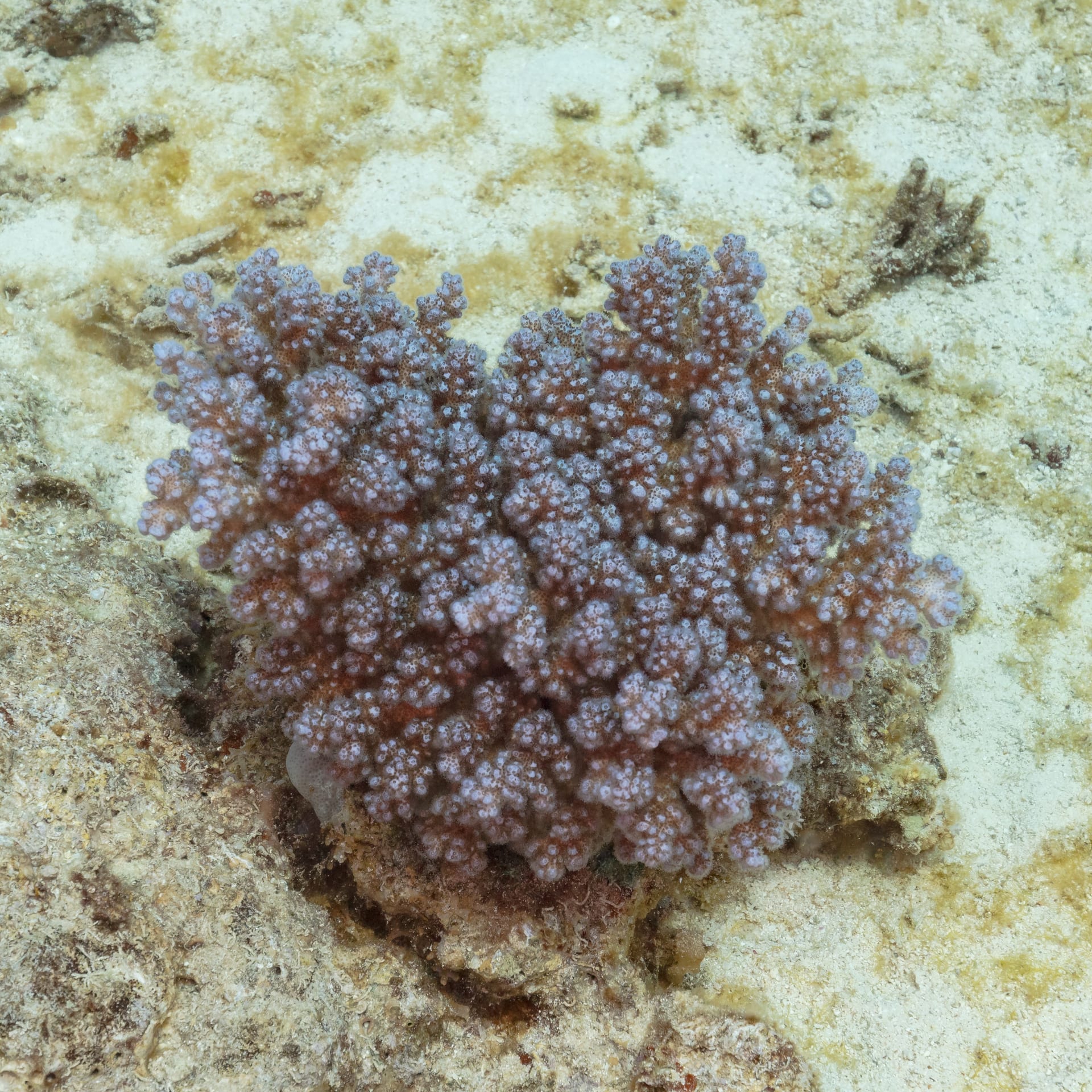
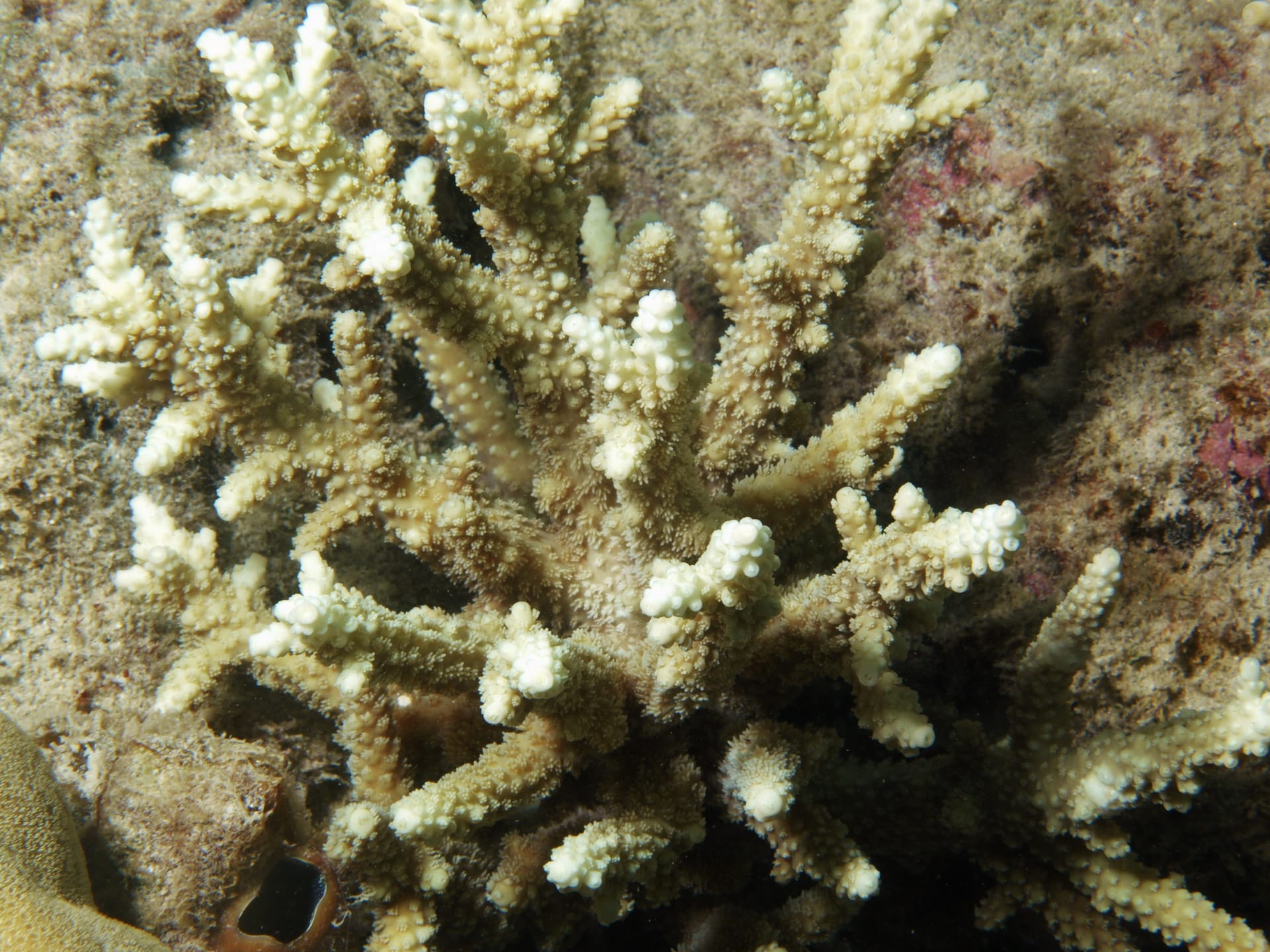
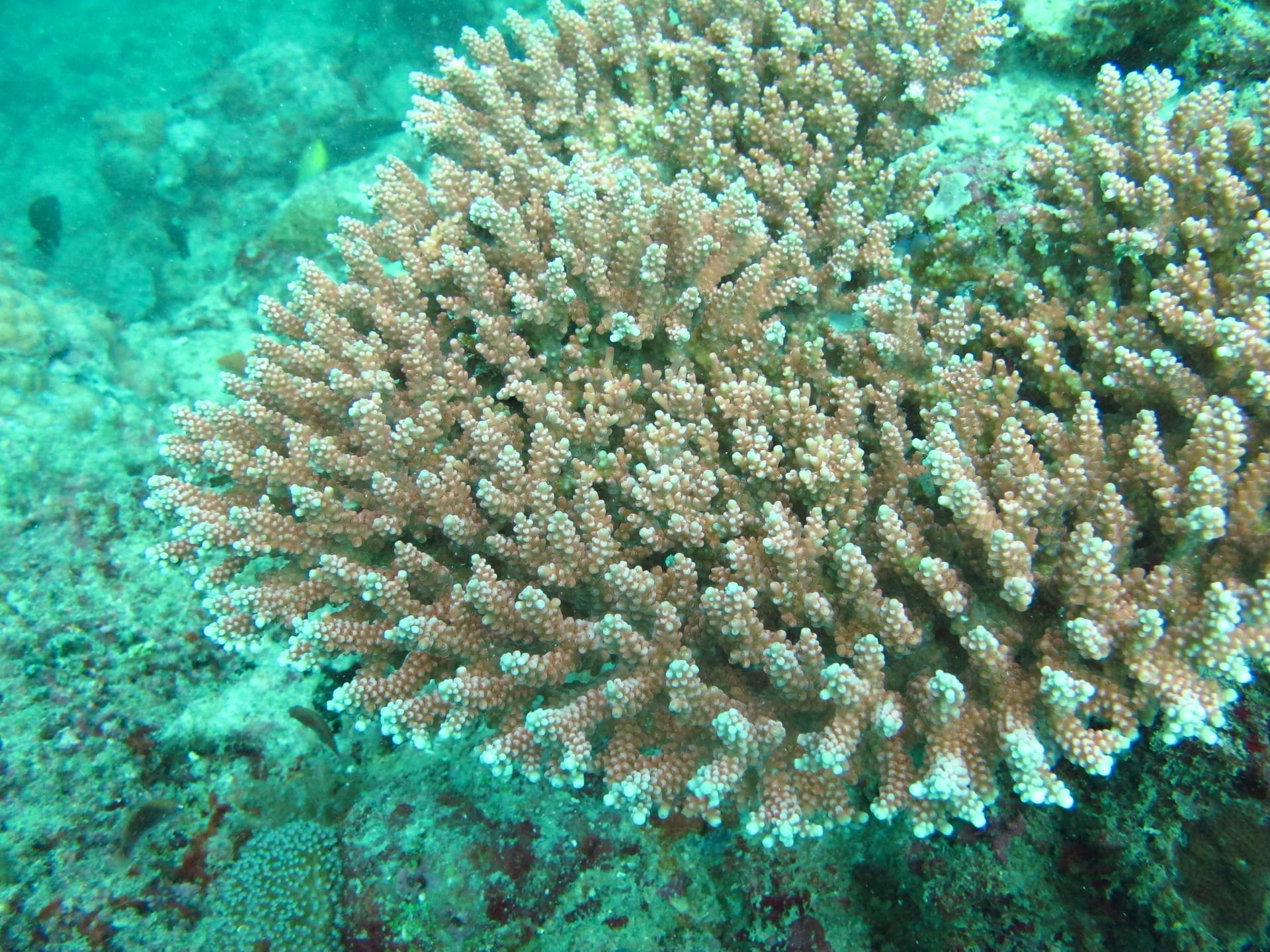
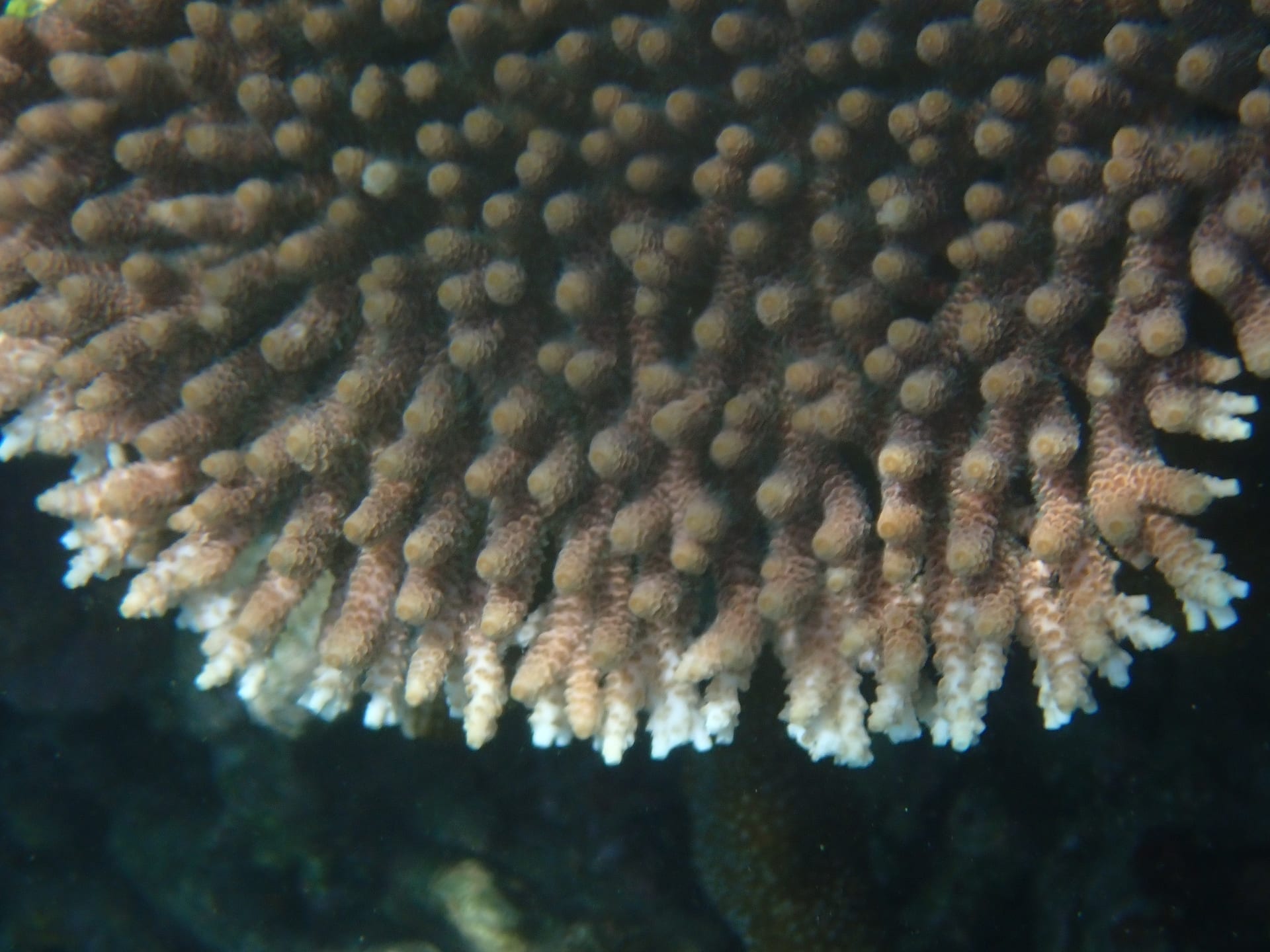
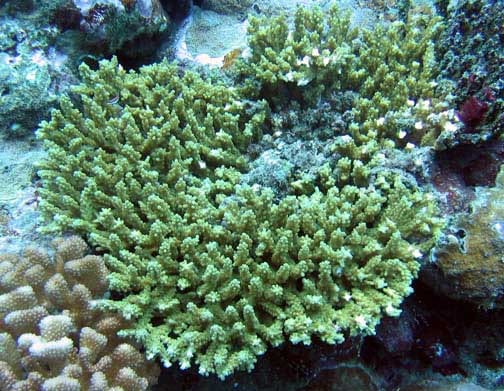
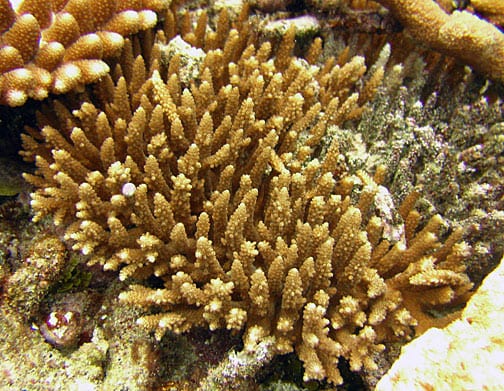
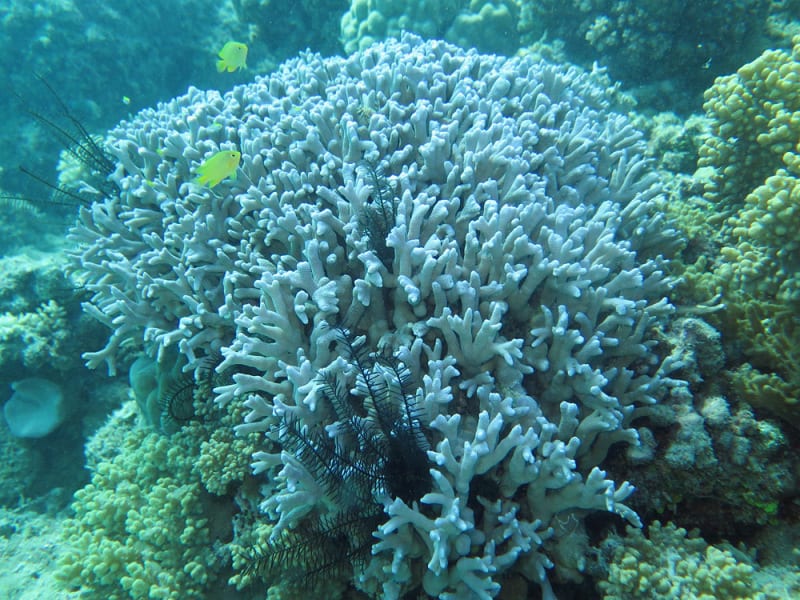
A Porites that raises thick, finger-like branches. Its corallites are minute, so the surface looks smooth, and yellow colonies are traded as Yellow Finger Porites. Hardy, fast-growing, and useful as shelter for small fish.
Difficulty
Intermediate
Temperature
24〜27℃
Size
Colonies to several tens of cm
Diet
Mainly nutrition from symbiotic zooxanthellae, supplemented with powdered coral foods and phytoplankton.
About
Porites cylindrica is a reef-building poritid of the Western Central Pacific. SeaLifeBase gives its depth range as 0-48 m, and it forms large stands in sheltered lagoons and back-reef pools. Colonies raise thick, finger-like branches that end bluntly. The corallites are about a millimetre across, so to the eye the surface appears smooth. Colour may be yellow, green or brown, and yellow colonies are traded as Yellow Finger Porites. It is zooxanthellate and draws most of its nutrition from photosynthesis. The spaces between the branches shelter small fish such as blue-green chromis, and in the wild these stands function as fish habitat. In the aquarium it prefers strong light and strong flow; being hardy and fast-growing it is among the easier stony corals to keep. Tissue recedes where water stagnates inside the branch thicket, so choose a well-flushed position. The IUCN assessed it as Least Concern in 2023, and as a scleractinian it is listed on CITES Appendix II.
Source: Wikipedia (CC BY-SA 4.0)
Temperature & humidity for the Porites Cylindrica (Yellow Finger Porites)
The ideal temperature for the Porites Cylindrica (Yellow Finger Porites) is 24〜27℃.
Basic Info
Origin
Western Central Pacific, on reefs from the surface down to about 48 m
Size
Colonies to several tens of cm
Temperature
24〜27℃
Diet
Mainly nutrition from symbiotic zooxanthellae, supplemented with powdered coral foods and phytoplankton.
Care Specifications
- Carbonate (KH)
- 8–12 dKH
- Water Temp.
- 24–27℃
- Specific Gravity
- 1.023–1.025
- Salinity
- 33–35 ppt
- Calcium (Ca)
- 400–450 ppm
- Magnesium (Mg)
- 1280–1350 ppm
SPSPeacefulLight: High (PAR>150)Flow: HighPlacement: Middle
Sources: SeaLifeBase (Porites cylindrica) / LiveAquaria (Yellow Porites Coral) / AlgaeBarn: Water Parameters 101
References & Sources
Edited & verified by: BreederDirect editorial team
The taxonomic, regulatory, and husbandry data on this page are compiled and verified against the authoritative primary sources below.
Taxonomy & Authority
Accepted name: Porites cylindrica Dana, 1846
Synonyms: Porites andrewsi Vaughan, 1918, Porites galeata Nemenzo, 1955, Porites laevis Dana, 1846
Authority databases: WoRMS
Nomenclature follows global taxonomic authority databases.
Regulations & Conservation Status
CITES Appendix IIIUCN LC · Least Concern
Domestic law: Collecting in Japanese waters is governed by each prefecture's fisheries adjustment regulations, which differ by prefecture. Okinawa Prefecture's regulations ban the collection of reef-building corals, including stony corals (Scleractinia), organ-pipe corals (Tubiporidae) and blue coral (Helioporacea); this covers corals naturally attached to quays or ropes, broken fragments lying on the seabed, and skeletons. Possessing or selling illegally collected corals is also banned. Cultured corals are exempt, and the prefecture advises buyers to confirm that a coral is cultured, on an artificial base or tagged.
Sources: CITES Appendix II (Scleractinia spp. listed as an order) / IUCN Red List 2025-2 (assessed 2023, via SeaLifeBase)
Regulations may change. Always verify the latest information with the relevant authorities.
Porites Cylindrica (Yellow Finger Porites) Listings
Loading latest listingsFind listings for this species