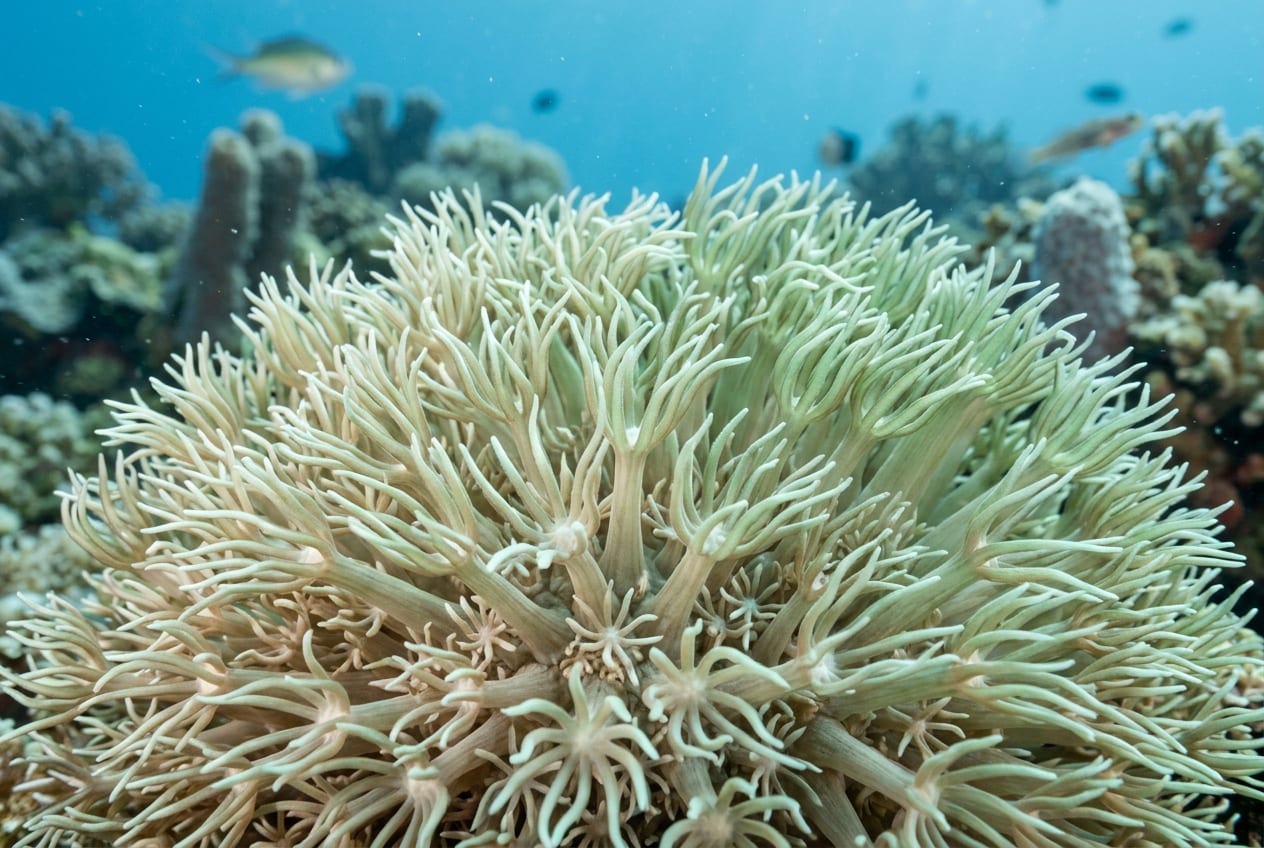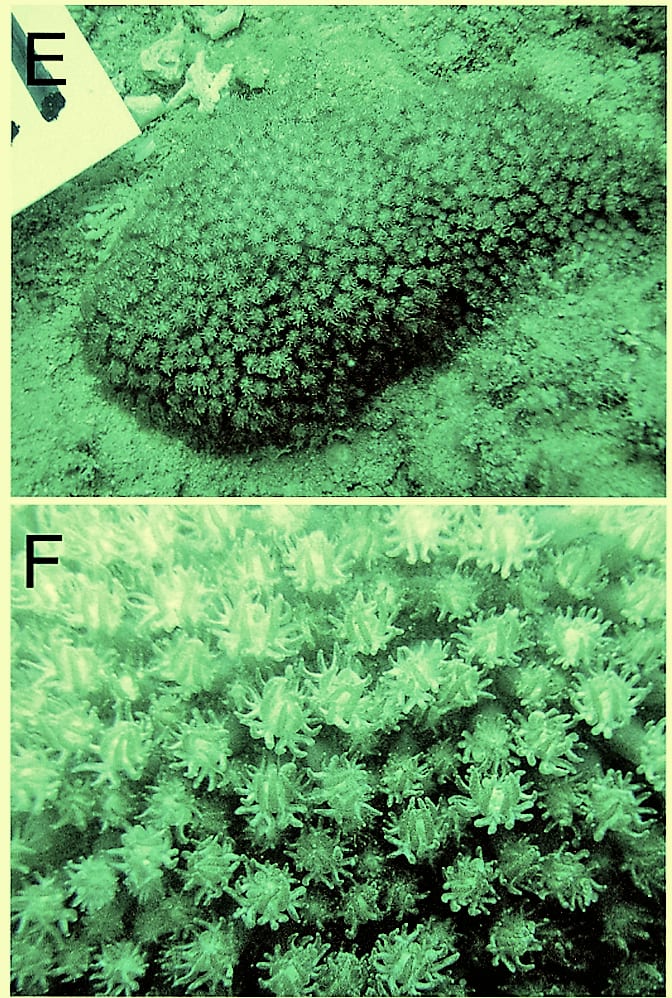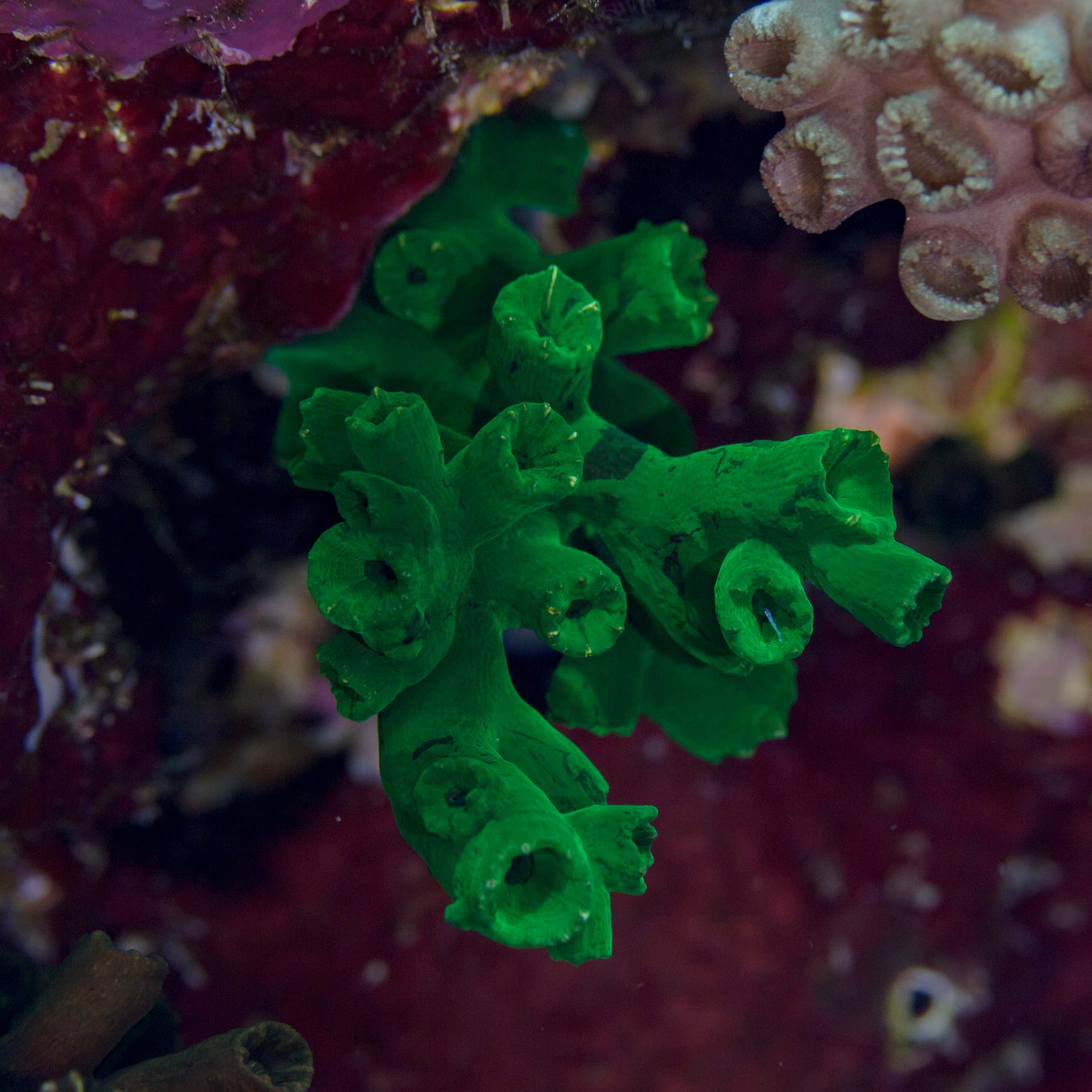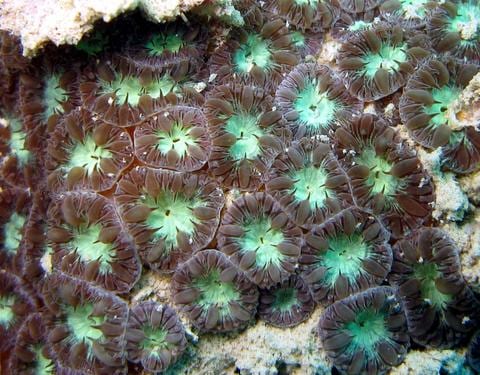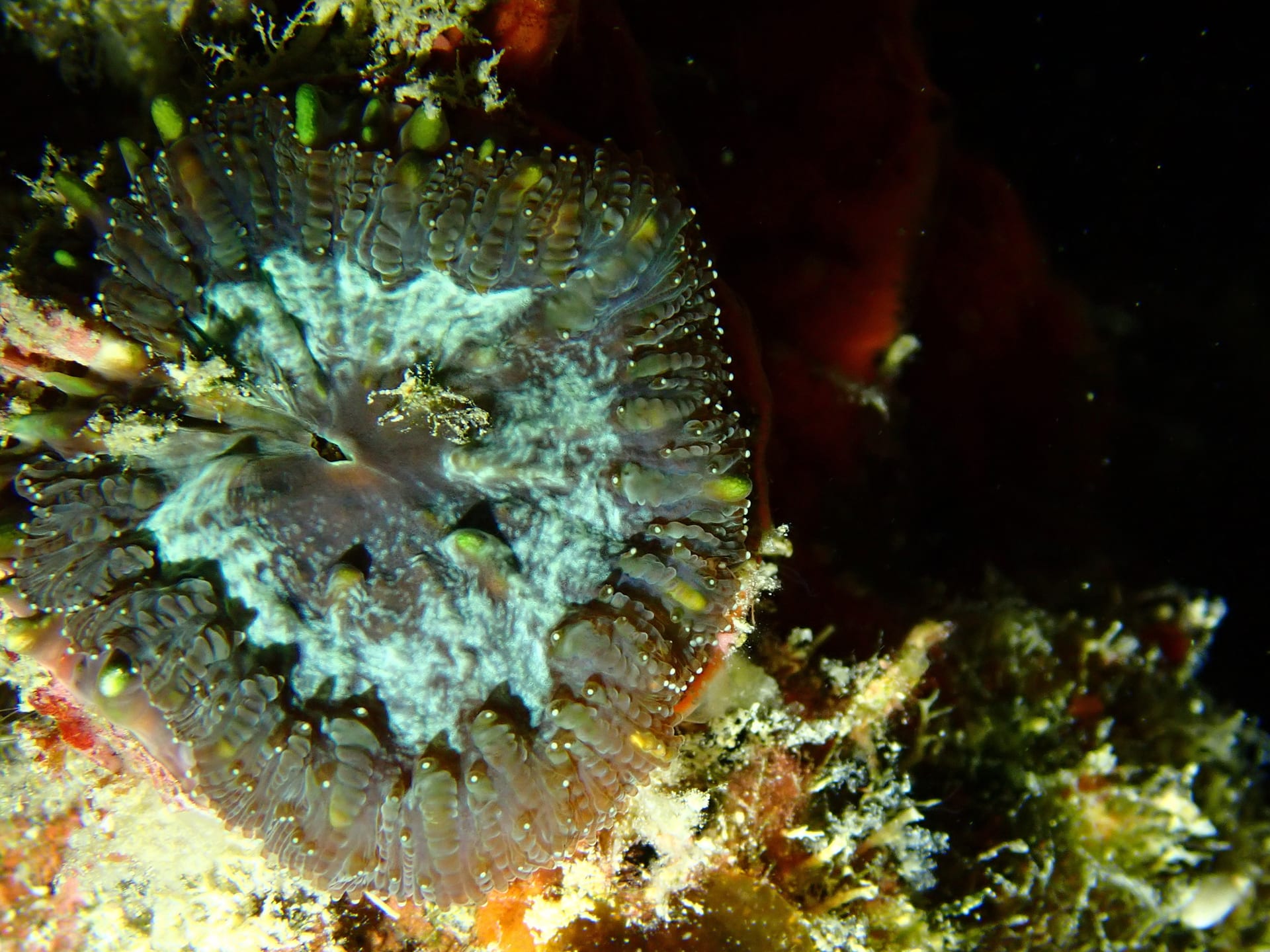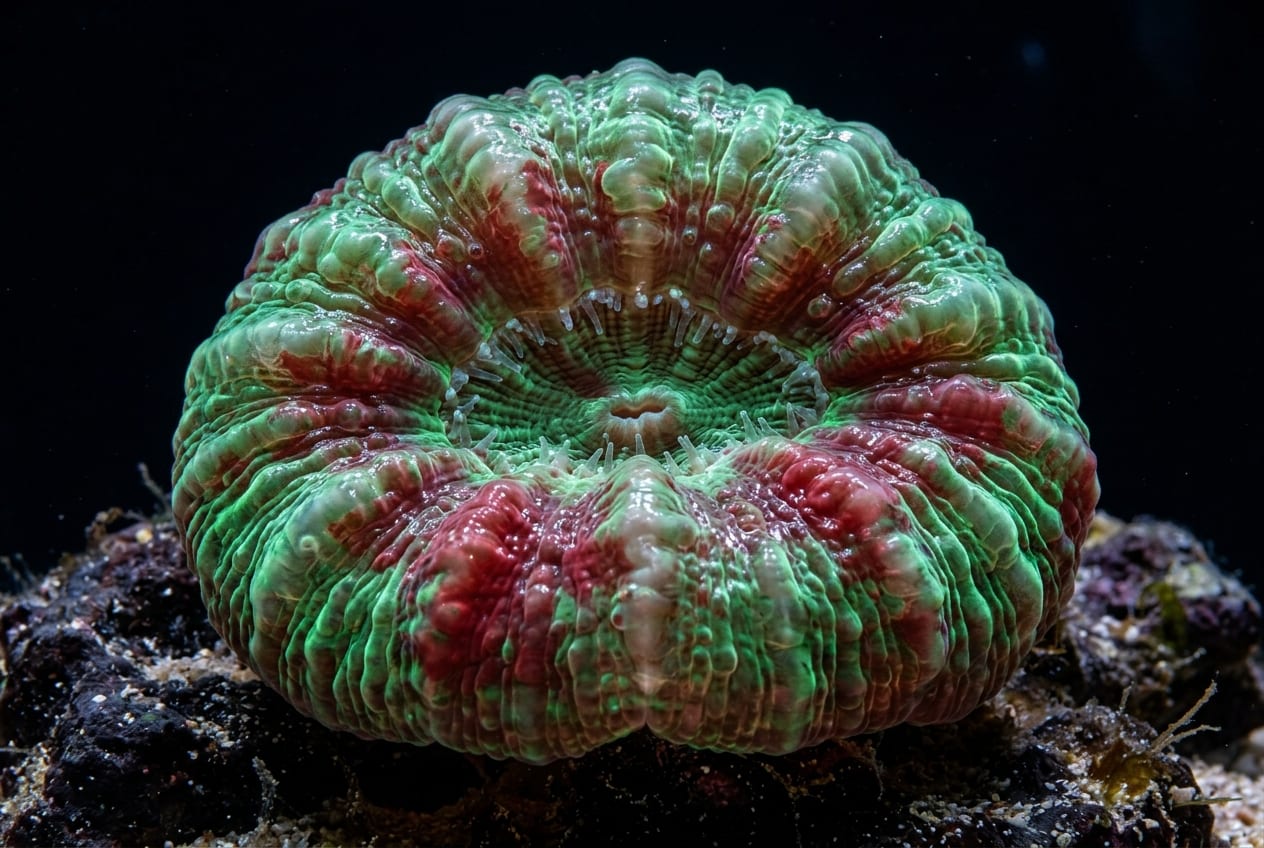
AI-generated image
Indophyllia
IntermediateCynarina macassarensis
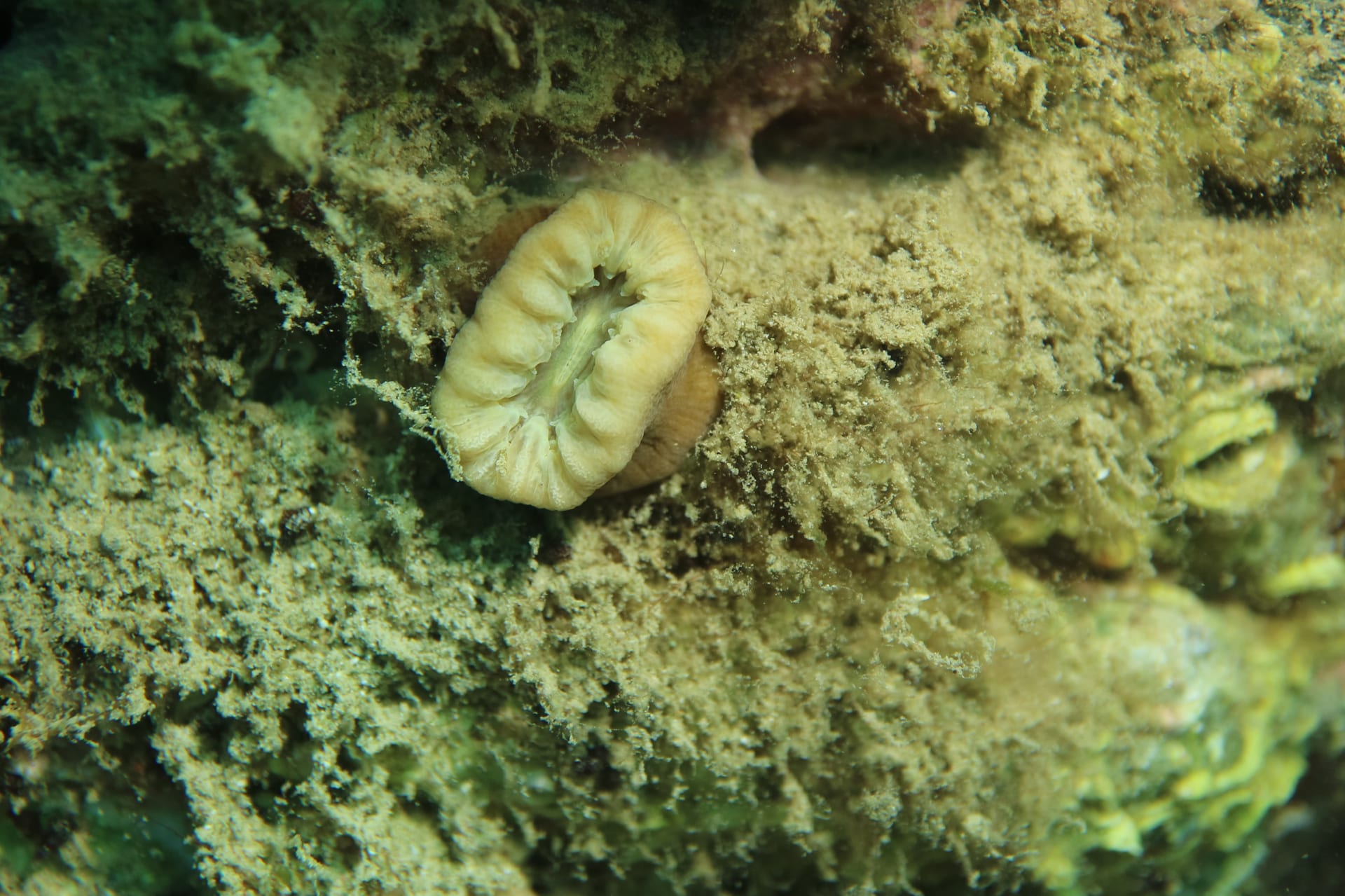
A solitary stony coral whose skeleton is covered by a single fleshy polyp. Described from the Makassar area of Indonesia and rarely traded, it is usually sold under its former genus name Indophyllia and kept much like Cynarina lacrymalis.
Difficulty
Intermediate
Temperature
24〜27℃
Size
Disc a few cm to about 10 cm across
Diet
Mainly nutrition from symbiotic zooxanthellae, supplemented with meaty coral foods offered to the tentacles at night.
About
Cynarina macassarensis, the coral traded in Japan as Indophyllia, is a lobophylliid stony coral. Best and Hoeksema described it in 1987 as Indophyllia macassarensis from material collected near Makassar on Sulawesi, Indonesia, and WoRMS now treats Cynarina macassarensis as the accepted name. The specimen records aggregated by GBIF are all Indonesian, so its range appears to be a very small part of the central Indo-Pacific. The skeleton is discoidal to cup-shaped and is covered by one large fleshy polyp, through which strongly toothed septa show. In the aquarium it is handled like its congener Cynarina lacrymalis, the button coral: placed on sand under moderate light and gentle flow, and fed meaty coral foods when the tentacles extend at night. It very rarely reaches the trade and is usually offered under a genus or former-genus label only. As a scleractinian it is listed on CITES Appendix II.
Source: Wikipedia (CC BY-SA 4.0)
Size of the Indophyllia
The Indophyllia grows to Disc a few cm to about 10 cm across.
Temperature & humidity for the Indophyllia
The ideal temperature for the Indophyllia is 24〜27℃.
Basic Info
Origin
Central Indo-Pacific (Makassar area of Sulawesi, Indonesia)
Size
Disc a few cm to about 10 cm across
Temperature
24〜27℃
Diet
Care Specifications
- Carbonate (KH)
- 8–12 dKH
- Water Temp.
- 24–27℃
- Specific Gravity
- 1.023–1.025
- Salinity
- 33–35 ppt
- Calcium (Ca)
- 380–450 ppm
- Magnesium (Mg)
- 1200–1400 ppm
LPSLight: Medium (PAR 50-150)Flow: LowPlacement: Bottom
Sources: LiveAquaria / AlgaeBarn: Calcium Supplementation / WoRMS (World Register of Marine Species)
References & Sources
Edited & verified by: BreederDirect editorial team
The taxonomic, regulatory, and husbandry data on this page are compiled and verified against the authoritative primary sources below.
Taxonomy & Authority
Accepted name: Cynarina macassarensis (Best & Hoeksema, 1987)
Synonyms: Indophyllia macassarensis Best & Hoeksema, 1987
Authority databases: WoRMS
Nomenclature follows global taxonomic authority databases.
Regulations & Conservation Status
CITES Appendix II
Sources: CITES Appendix II (Scleractinia spp. listed as an order)
Regulations may change. Always verify the latest information with the relevant authorities.
Indophyllia Listings
Loading latest listingsFind listings for this species