Source: Wikimedia Commons
Echinomorpha
IntermediateEchinomorpha nishihirai
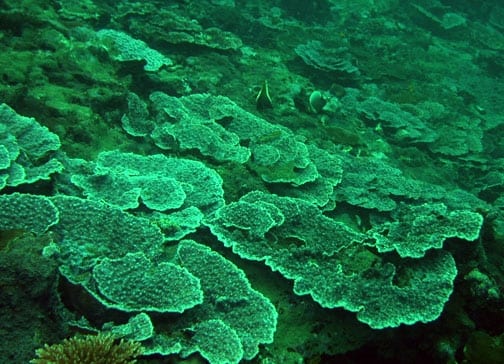
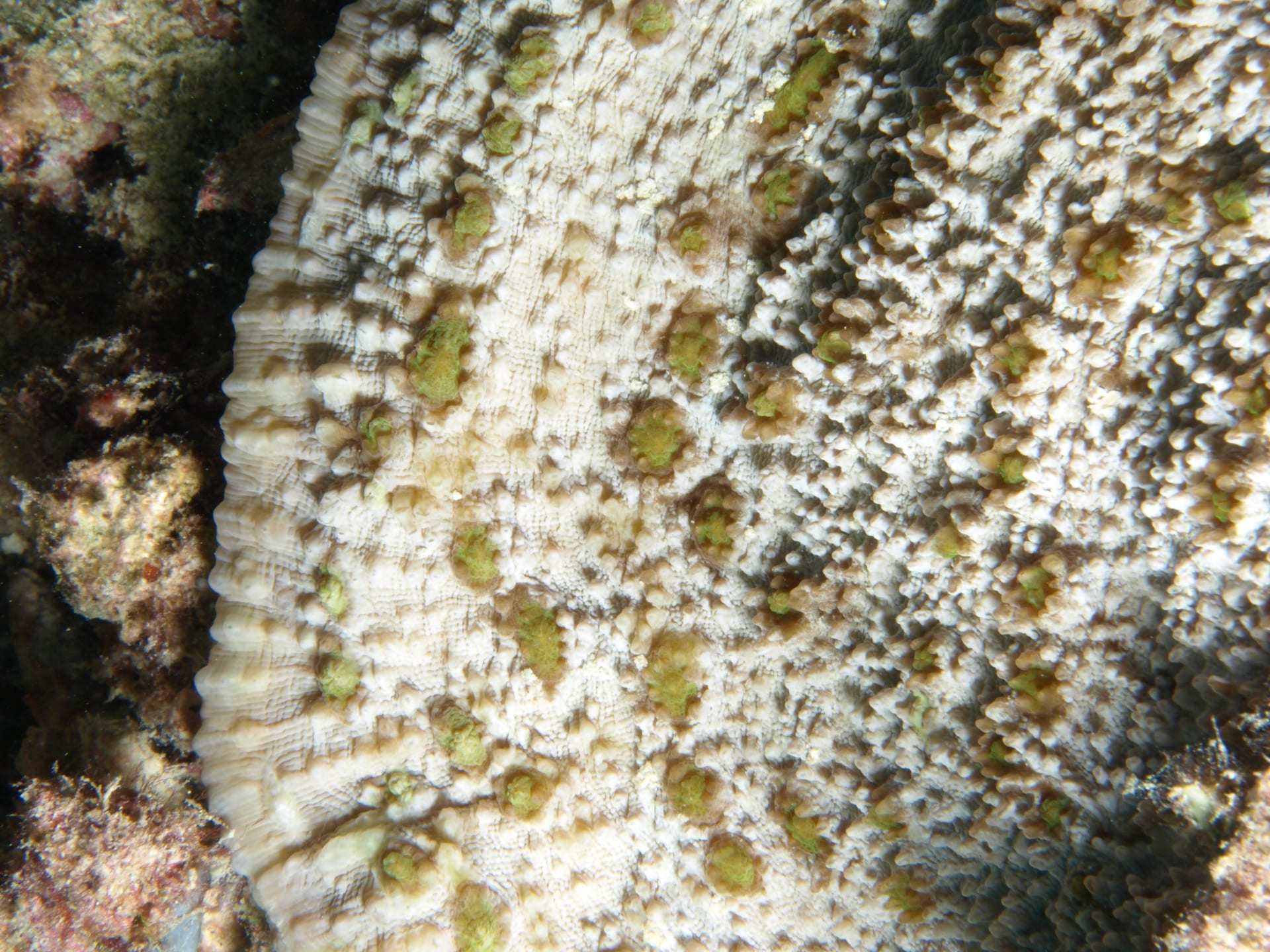
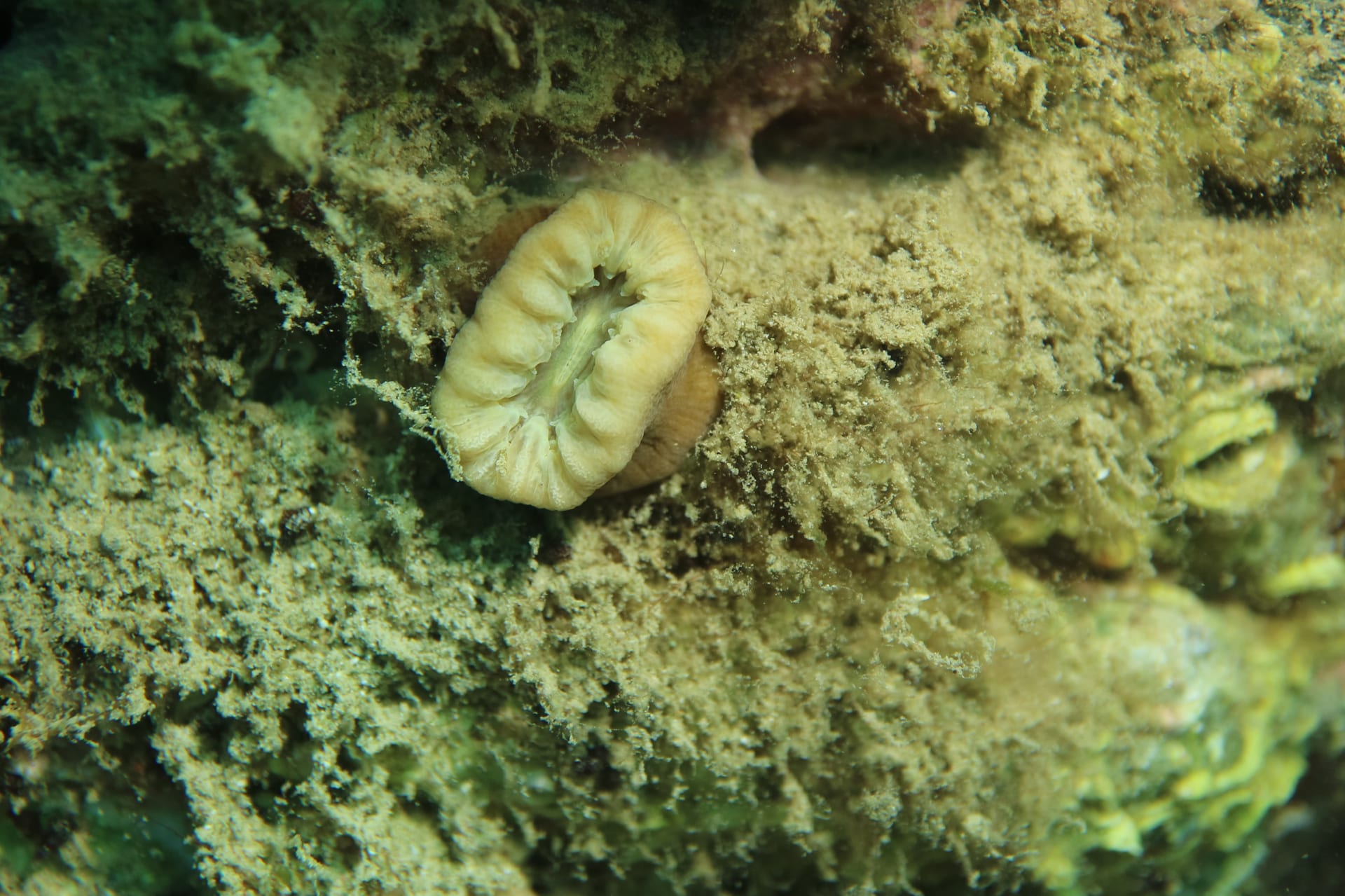
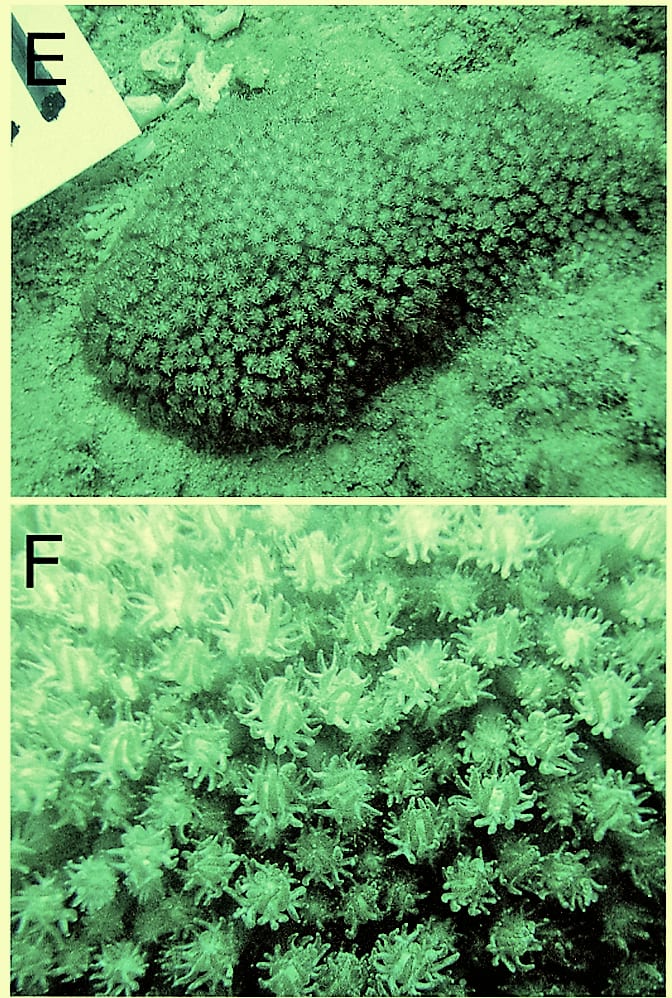
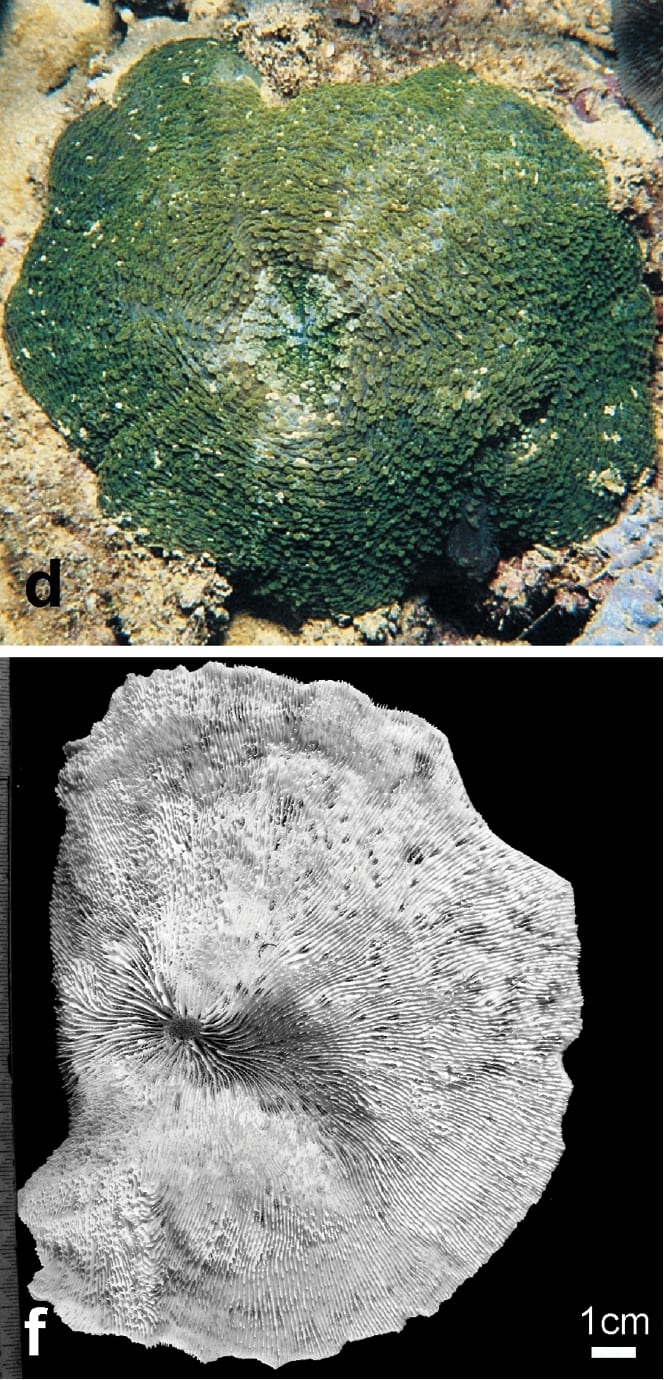
A lobophylliid reef coral in which one large corallite develops at the centre of a plating skeleton. Echinomorpha contains this species alone, and it is recorded from Japan to the island groups of the South Pacific.
Difficulty
Intermediate
Temperature
24〜26℃
Size
Colonies from about 10 cm to several tens of cm
Diet
Mainly nutrition from symbiotic zooxanthellae, supplemented with small meaty coral foods offered at night.
About
Echinomorpha nishihirai is a reef-building lobophylliid coral for which WoRMS gives the Japanese name Okinawa kikka sango. Veron described it in 1990 as Echinophyllia nishihirai, and it was later placed in the separate genus Echinomorpha, which contains this species alone. WoRMS records it from Japan and the western North Pacific, and the specimen records aggregated by GBIF cover Fiji, New Caledonia, Japan, French Polynesia, Vanuatu, Tonga and American Samoa. Colonies spread as thin plates with a single large corallite developed at the centre, which is what separates the genus from the rest of the family. Colonies are green or brown, usually with the central corallite a contrasting colour. It is kept much like the chalice corals it resembles, under low to moderate light and moderate flow, and it rarely reaches the trade. As a scleractinian it is on CITES Appendix II.
Source: Wikipedia (CC BY-SA 4.0)
Size of the Echinomorpha
The Echinomorpha grows to Colonies from about 10 cm to several tens of cm.
Temperature & humidity for the Echinomorpha
The ideal temperature for the Echinomorpha is 24〜26℃.
Basic Info
Origin
Western North Pacific (Japan) and the South Pacific island groups, including Fiji, New Caledonia, French Polynesia, Vanuatu, Tonga and American Samoa
Size
Colonies from about 10 cm to several tens of cm
Temperature
24〜26℃
Care Specifications
- Carbonate (KH)
- 8–12 dKH
- Water Temp.
- 24–26℃
- Specific Gravity
- 1.023–1.025
- Salinity
- 33–35 ppt
- Calcium (Ca)
- 380–450 ppm
- Magnesium (Mg)
- 1200–1400 ppm
LPSLight: Low (PAR 30-50)Flow: MediumPlacement: Bottom
Sources: LiveAquaria / AlgaeBarn: Calcium Supplementation / WoRMS (World Register of Marine Species) /
References & Sources
Edited & verified by: BreederDirect editorial team
The taxonomic, regulatory, and husbandry data on this page are compiled and verified against the authoritative primary sources below.
Taxonomy & Authority
Accepted name: Echinomorpha nishihirai (Veron, 1990)
Synonyms: Echinophyllia nishihirai Veron, 1990, Echinophyllia nichihirai Veron & Pichon, 1990
Authority databases: WoRMS
Nomenclature follows global taxonomic authority databases.
Regulations & Conservation Status
CITES Appendix II
Sources: CITES Appendix II (Scleractinia spp. listed as an order)
Regulations may change. Always verify the latest information with the relevant authorities.
Echinomorpha Listings
Loading latest listingsFind listings for this species