Source: Wikimedia Commons
Yellow-crowned Parakeet (Yellow-fronted Kakariki)
IntermediateCyanoramphus auriceps
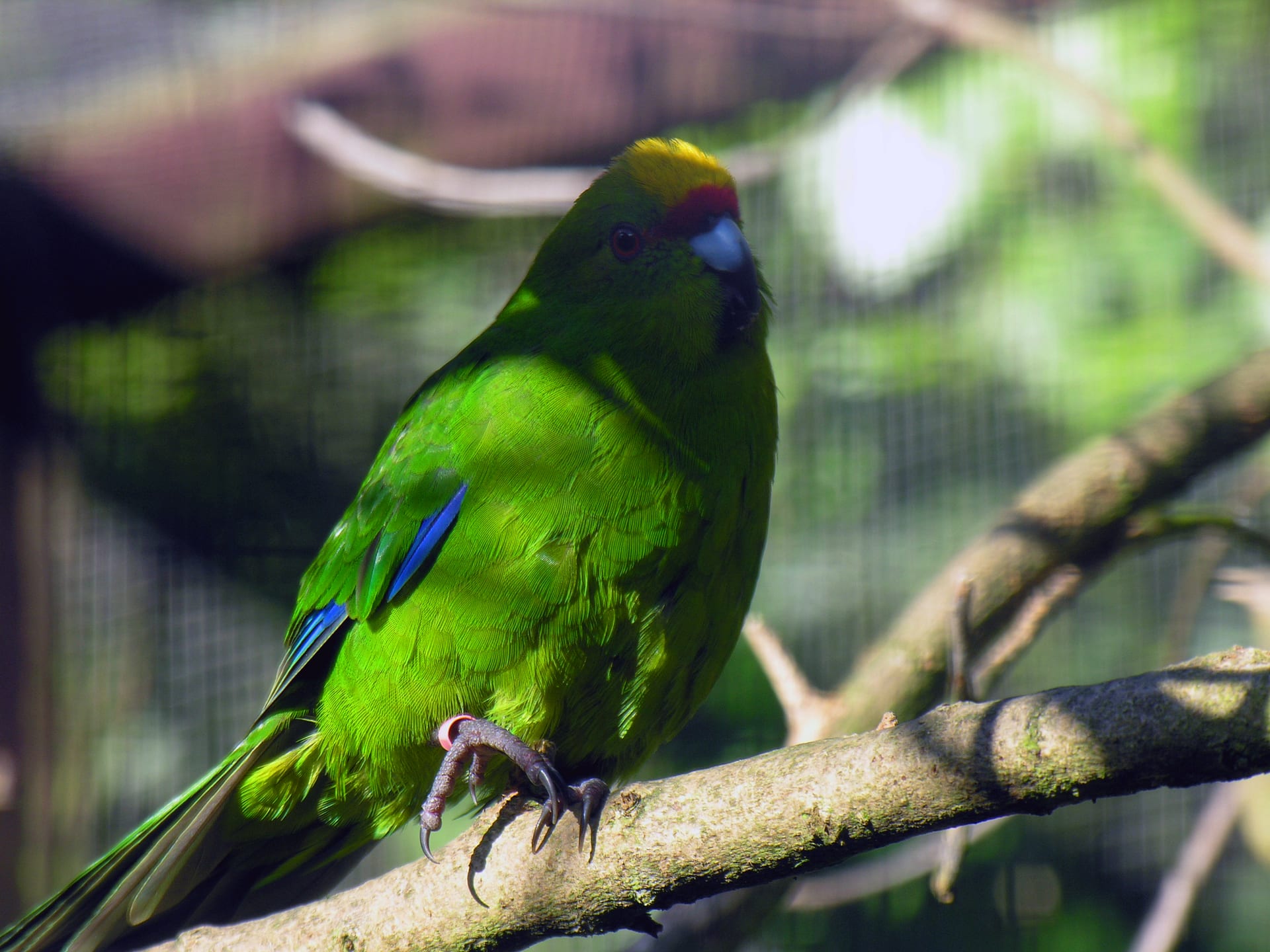
A 23 cm parakeet, bright green with a yellow crown and a crimson frontal band. Endemic to New Zealand and very active, it is traded in Japan as the yellow kakariki and lays large clutches of five to ten eggs.
Difficulty
Intermediate
Temperature
15〜30℃
Lifespan
More than 10 years
Size
23cm (about 95g)
Humidity
40〜60%
Diet
Small seeds (millet, canary seed, small amounts of oats and buckwheat), greens, seeding grasses, fruit and pellets
About
The yellow-crowned parakeet (Cyanoramphus auriceps) is endemic to New Zealand. It is 23 cm long and primarily bright green, with a yellow crown and a crimson frontal band; males are larger than females, and females have disproportionately smaller bills. Once widely distributed across the main and outlying islands, it has declined through predation by introduced species such as stoats, but unlike the red-crowned parakeet it has not been extirpated from the mainland and still occurs on the North, South and Stewart Islands and the subantarctic Auckland Islands. In the wild it lives up to 1,250 m in lush native forest of Nothofagus and Podocarpus, eating shoots, buds, berries, flowers and seeds as well as scale insects and caterpillars. In captivity a walk-in flight 3 m long is recommended, and clutches are large at five to ten eggs. The IUCN assesses it as Near Threatened, with 10,000-30,000 mature individuals and a decreasing trend.
Source: Wikipedia (CC BY-SA 4.0)
Lifespan of the Yellow-crowned Parakeet (Yellow-fronted Kakariki)
The Yellow-crowned Parakeet (Yellow-fronted Kakariki) lives More than 10 years.
Size of the Yellow-crowned Parakeet (Yellow-fronted Kakariki)
The Yellow-crowned Parakeet (Yellow-fronted Kakariki) grows to 23cm (about 95g).
Basic Info
Origin
New Zealand (North, South and Stewart Islands and the subantarctic Auckland Islands)
Lifespan
More than 10 years
Size
23cm (about 95g)
Care Specifications
PeacefulPair
Sources: World Parrot Trust Parrot Encyclopedia / Wikipedia - Yellow-crowned parakeet
References & Sources
Edited & verified by: BreederDirect editorial team
The taxonomic, regulatory, and husbandry data on this page are compiled and verified against the authoritative primary sources below.
Taxonomy & Authority
Accepted name: Cyanoramphus auriceps (Kuhl, 1820)
Synonyms: Psittacus auriceps
Authority databases: GBIF
Nomenclature follows global taxonomic authority databases.
Regulations & Conservation Status
CITES Appendix IIIUCN NT · Near Threatened
Cyanoramphus auriceps. The order Psittaciformes is listed in CITES Appendix II except for species placed in Appendix I, so this species is Appendix II and international trade requires an export permit. The related Cyanoramphus novaezelandiae and C. forbesi are listed in Appendix I and are handled differently.
Sources: CITES Appendices (Appendix II) / IUCN Red List
Regulations may change. Always verify the latest information with the relevant authorities.
Yellow-crowned Parakeet (Yellow-fronted Kakariki) Listings
Loading latest listingsFind listings for this species