Source: Wikimedia Commons
Great Horned Owl
AdvancedBubo virginianus
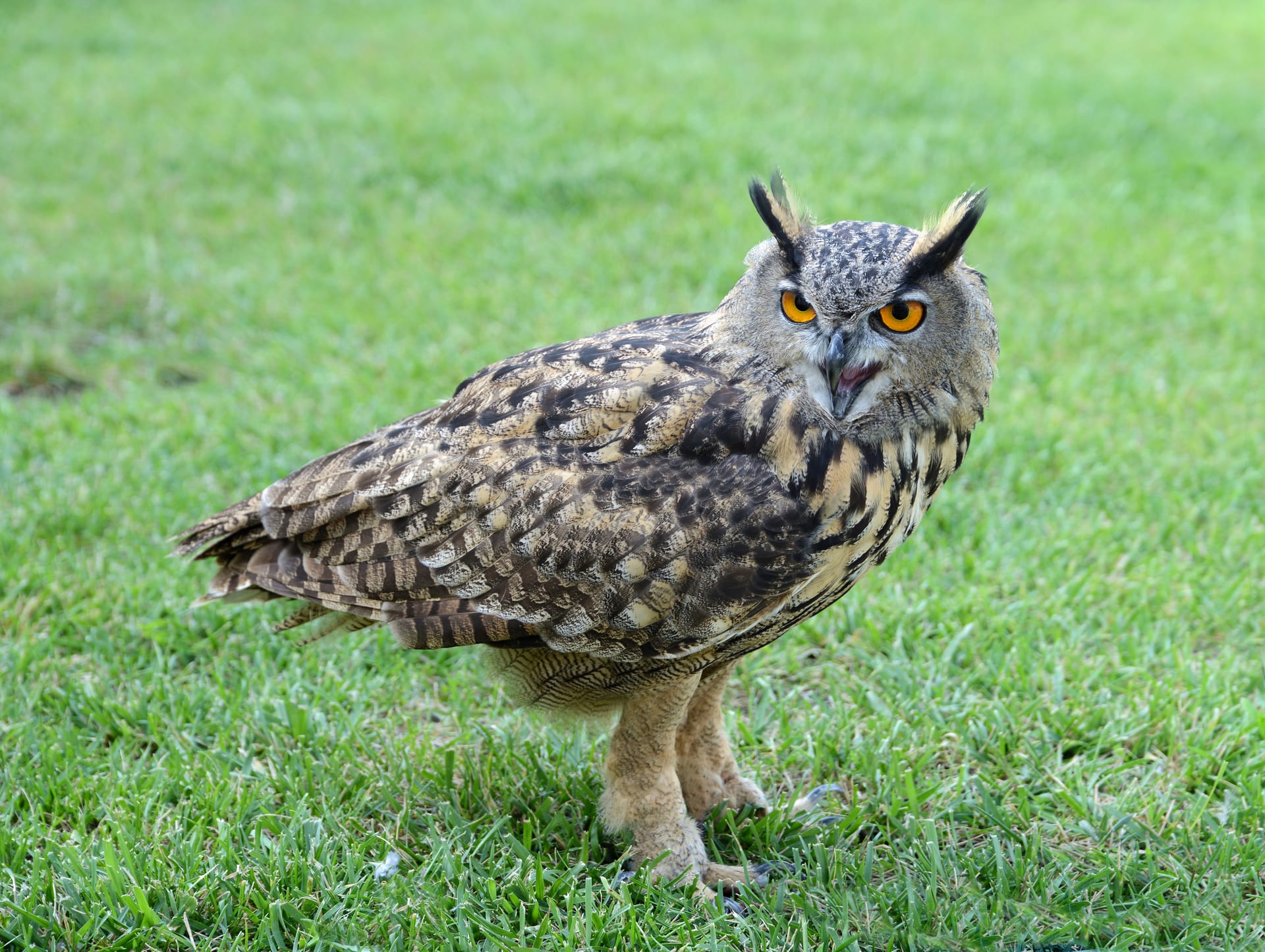
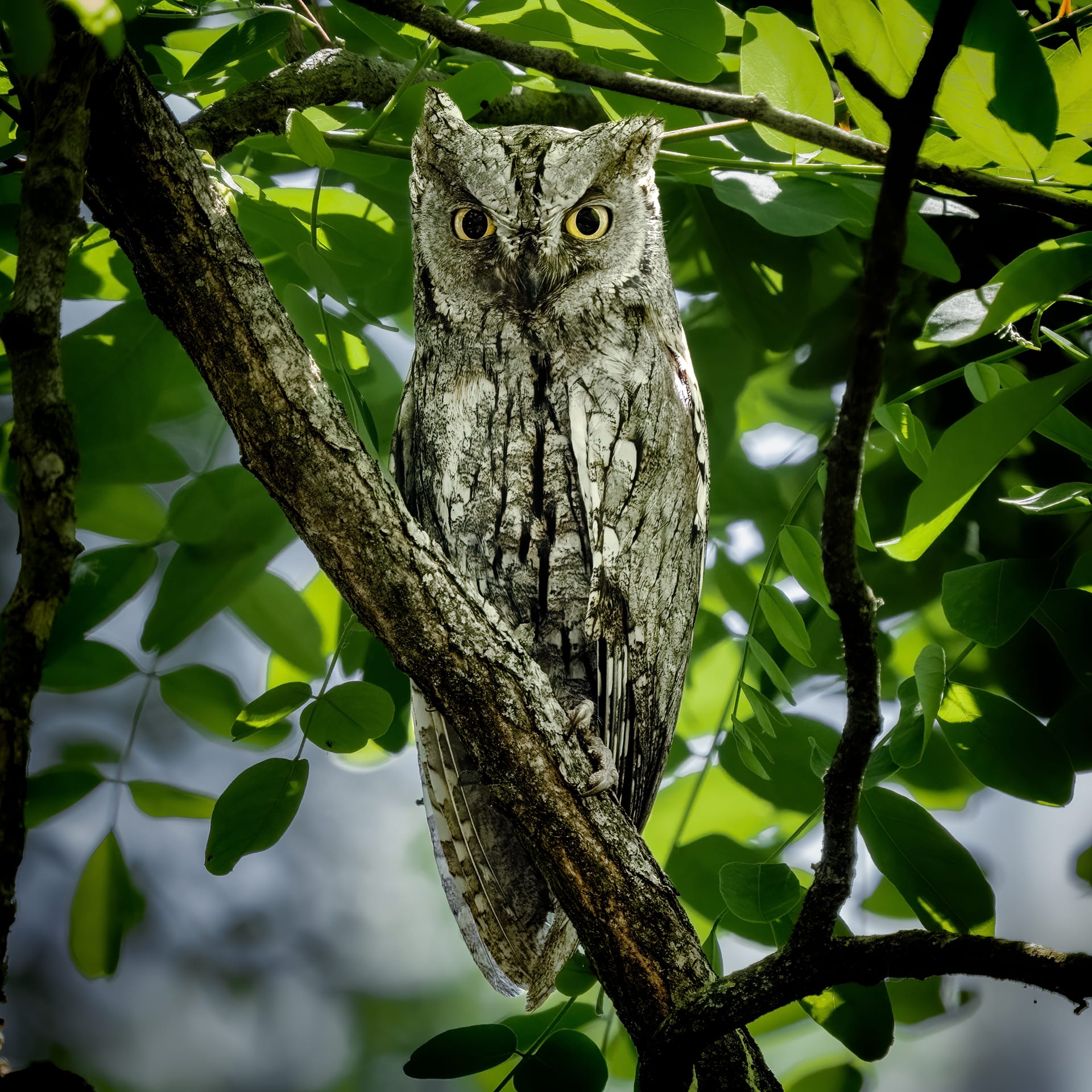
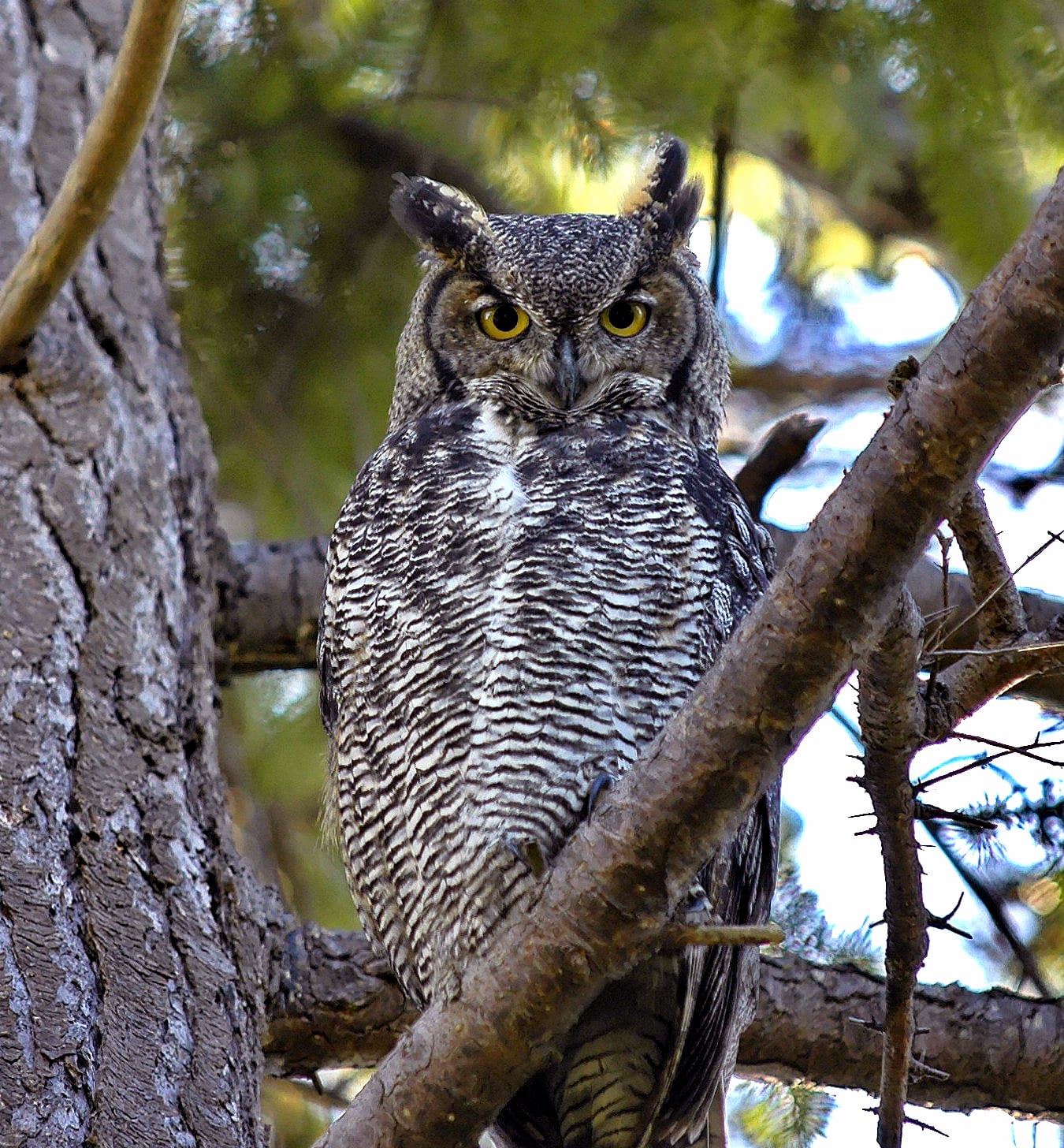
One of the largest owls in the Americas, with long ear tufts, yellow irises and a white throat patch. Wide-ranging and adaptable, it spans 1.5 m across the wings and is powerfully footed, so it needs a large aviary and real raptor-handling skill.
Difficulty
Advanced
Temperature
15〜30℃
Lifespan
Up to about 29 years in the wild; the captive record is 50 years
Size
43-64cm (average 55cm; wingspan 91-153cm)
Humidity
40〜60%
Diet
In the wild rabbits, rodents, birds and reptiles; in captivity frozen mice, day-old chicks and quail
About
The great horned owl (Bubo virginianus) is the most widely distributed owl in the Americas. It is 43-64 cm long, averaging 55 cm, with a wingspan of 91-153 cm; females average 1,608 g and males 1,224 g, so females are the larger sex. Long ear tufts, yellow irises and a white throat patch mark the bird, and early naturalists' description of it as the tiger of the air gave rise to the alternative name tiger owl. It ranges across almost all of North America and through Central America to the uplands of Argentina, Bolivia and Peru, and is highly adaptable. Its diet is exceptionally broad, centred on rabbits, hares, rats, mice and voles but extending to birds, reptiles, amphibians and invertebrates, and it is one of the few regular predators of skunks. Its wing loading is among the highest of any raptor. It is one of the earliest nesting birds in North America, laying weeks or months before other birds of prey.
Source: Wikipedia (CC BY-SA 4.0)
Lifespan of the Great Horned Owl
The Great Horned Owl lives Up to about 29 years in the wild; the captive record is 50 years.
The wild longevity record is about 29 years and the captive record 50 years.
Size of the Great Horned Owl
The Great Horned Owl grows to 43-64cm (average 55cm; wingspan 91-153cm).
Basic Info
Origin
The Americas, from Alaska and Canada through Central America to the uplands of Argentina, Bolivia and Peru
Lifespan
Up to about 29 years in the wild; the captive record is 50 years
Care Specifications
AggressiveSolitary
Sources: Wikipedia - Great horned owl / Wikipedia - Great horned owl, Japanese edition
References & Sources
Edited & verified by: BreederDirect editorial team
The taxonomic, regulatory, and husbandry data on this page are compiled and verified against the authoritative primary sources below.
Taxonomy & Authority
Accepted name: Bubo virginianus (J. F. Gmelin, 1788)
Synonyms: Strix virginiana
Authority databases: GBIF
Nomenclature follows global taxonomic authority databases.
Regulations & Conservation Status
CITES Appendix IIIUCN LC · Least Concern
Bubo virginianus. The order Strigiformes is listed in CITES Appendix II except for species placed in Appendix I, so this species is Appendix II and international trade requires an export permit. It is not among Japan's designated dangerous animals.
Sources: CITES Appendices (Appendix II) / IUCN Red List / Cabinet Order under the Act on Welfare and Management of Animals, appended table (designated dangerous animals)
Regulations may change. Always verify the latest information with the relevant authorities.
Great Horned Owl Listings
Loading latest listingsFind listings for this species