Complete Guide to Raising Great Danes | Managing Their Giant Size, GDV Risk, Health Issues, and the Secrets to Longevity
A complete guide to raising Great Danes (the "King of Dogs"). Covering the food intake, exercise requirements, and living space needed for these giant dogs weighing 50–80 kg, methods to prevent gastric dilatation-volvulus (GDV), health issues such as dilated cardiomyopathy, osteosarcoma, and hip dysplasia, and the importance of training from puppyhood—everything you need to enrich your life with a Great Dane.
Key Takeaways
A complete guide to raising Great Danes (the "King of Dogs"). Covering the food intake, exercise requirements, and living space needed for these giant dogs weighing 50–80 kg, methods to prevent gastric dilatation-volvulus (GDV), health issues such as dilated cardiomyopathy, osteosarcoma, and hip dysplasia, and the importance of training from puppyhood—everything you need to enrich your life with a Great Dane.
Related Species
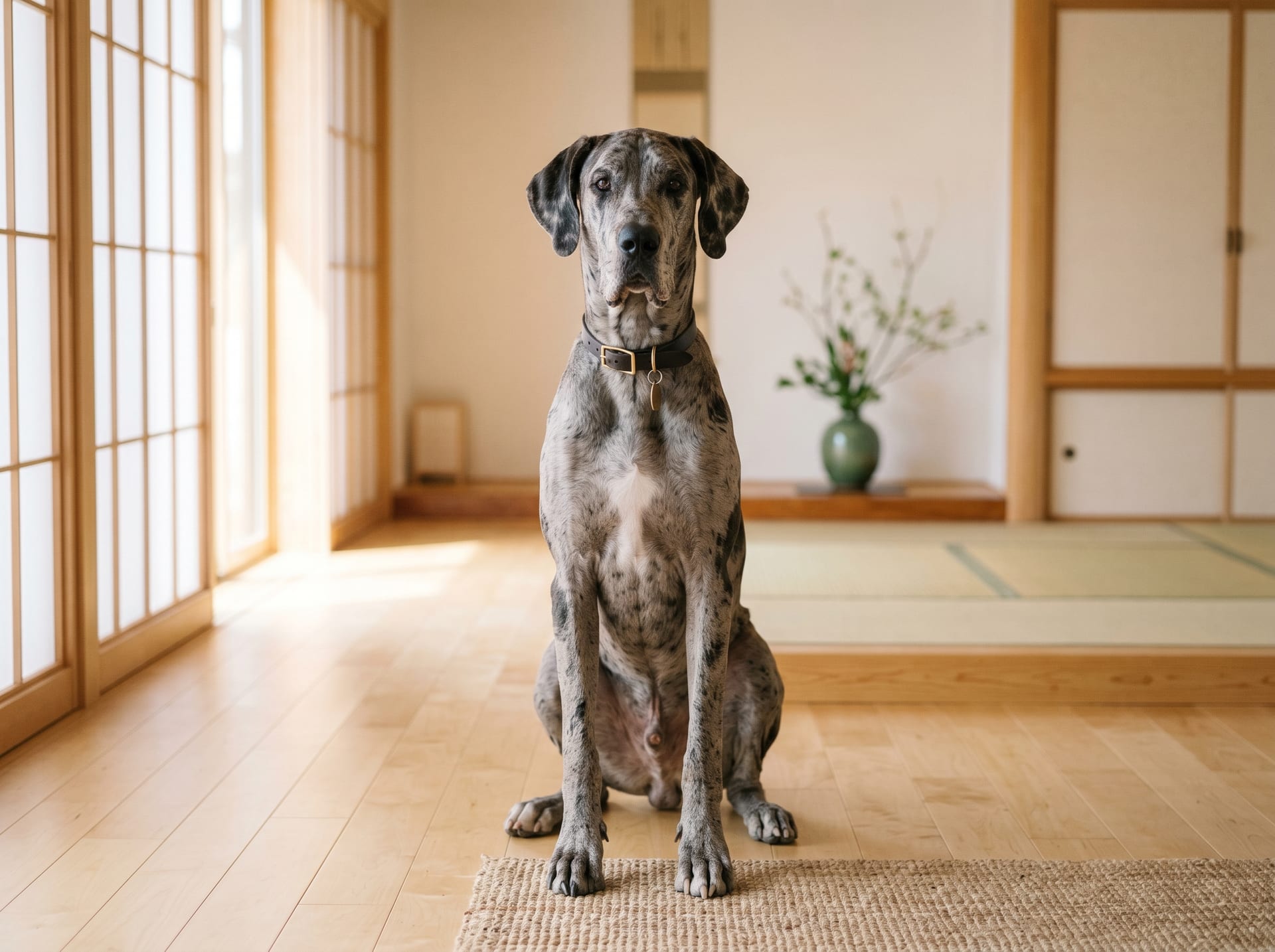
The Great Dane is known as the "King of Dogs" and is one of the world's largest dog breeds. With their impressive stature and gentle temperament, they're also called the "gentle giant," and despite their imposing appearance, they're beloved as very calm family dogs. This article provides a comprehensive overview of Great Dane characteristics, living environment, health management, and common health issues.
Basic Characteristics of Great Danes
The Great Dane is a large breed originating from Germany. Adult males stand 76–86 cm tall at the shoulder, while females are 71–81 cm, with males weighing approximately 50–80 kg. Some individuals exceed 170 cm when standing on their hind legs.
Temperament: They have a very gentle and friendly nature, relatively tolerant of children and other animals. As a "laid-back giant," they prefer lounging on sofas inside the home. While puppies are energetic, they become calmer as adults. Though they can be wary of strangers, they show low aggression and may serve as watchdogs, deterring intruders with their loud bark.
Coat Colors: Fawn (light tan), brindle (striped pattern), blue (grayish), black, harlequin (white with black patches), and mantle (white and black) are among the common colors.
Lifespan: Unfortunately, as with large breeds, their lifespan is short—typically 8–10 years, with some showing signs of aging before age 7. Proper health management and high-quality nutrition are key to extending their lives.
Living Environment and Required Space
A living space appropriate for the Great Dane's large size is essential.
Living Arrangements:
- Apartments and condominiums are generally unsuitable (the mismatch between size and activity level is problematic)
- A large single-family home is ideal
- Regular access to a spacious yard or dog park is desirable
Indoor Setup:
- Bed: A thick orthopedic bed designed for large dogs is important for joint protection
- Gates/pens: Movement restriction is necessary during puppyhood
- Food stand: Elevate food bowls 30–40 cm above the floor to reduce strain on the neck and spine (however, consult your veterinarian regarding the relationship between food height and gastric dilatation)
Note on Food Bowl Height: Previously, it was believed that elevating food bowls reduced the risk of gastric dilatation (GDV), but recent research suggests this correlation is unclear. Avoiding strenuous exercise after meals is considered more important.
Nutrition and Daily Intake
Proper nutrition is especially important for Great Danes. Food specifically formulated for large and giant breeds is recommended.
Choosing the Right Food:
- Choose large-breed food with appropriate calcium-to-phosphorus ratios
- During growth (puppies through age 2), use large-breed puppy formula to prevent skeletal issues from excess calcium
- Select foods with high-quality protein sources (chicken, salmon, etc.) as main ingredients
Daily Feeding Amount (Guidelines):
- Adult male (60 kg): approximately 2,400–2,800 kcal per day
- For typical dry food (400 kcal/100g): approximately 600–700g per day
Divide daily meals into 2–3 feedings. Giving a large meal at once significantly increases the risk of gastric dilatation (GDV).
Post-Feeding Guidelines: It is critical to avoid strenuous exercise for 1–2 hours after meals. Great Danes are known to be particularly susceptible to gastric dilatation-volvulus (GDV), and preventing this is an important responsibility for owners.
Exercise and Activity Levels
Despite their size, Great Danes don't require excessive exercise, but moderate activity is still important.
Adult Exercise Requirements:
- Ideally 30–45 minutes of walking, twice daily
- Jogging and strenuous exercise are generally unsuitable due to joint stress
- Slow, long-distance walks are more appropriate
Puppy Considerations (Ages 1–2): During puppyhood and adolescence, when skeletal development is still underway, vigorous exercise and long-distance running can cause bone and joint development issues (such as OCD). Limit activity to slow walks and free play in open spaces.
Common Health Issues in Great Danes
While common to large breeds overall, Great Danes are particularly susceptible to certain health conditions.
Gastric Dilatation-Volvulus (GDV): A life-threatening emergency in which the stomach dilates with gas and twists. Great Danes have the highest risk of GDV among all dog breeds. Symptoms include abdominal bloating, attempts to vomit with nothing coming up, and restlessness. Seek emergency veterinary care immediately. Prophylactic gastropexy (surgical fixation of the stomach to the abdominal wall) performed while young is one preventive option.
Dilated Cardiomyopathy (DCM): A heart disease common in large breeds where the heart becomes enlarged and thin. Regular cardiac examinations (auscultation and echocardiogram) are recommended. By the time symptoms appear, it's often too late, so annual to bi-annual specialist cardiac checkups are essential.
Hip Dysplasia and Elbow Dysplasia: Skeletal malformations causing joint pain and hind limb instability. These can be prevented or slowed through high-quality nutrition, appropriate exercise management, and weight control.
Osteosarcoma: A malignant bone tumor common in large breeds, typically occurring in the radius/ulna of the front legs or near the knee of the hind legs. If lameness suddenly appears, consult a veterinarian immediately.
Cervical Vertebral Instability (Wobbler Syndrome): A condition where cervical vertebral malformation compresses the spinal cord, causing hind limb instability and ataxia. Treatment options include medical and surgical management.
Training and Socialization
Great Danes are intelligent and eager to learn, but their movements are slow for their size, so training requires patience.
Basic Principles:
- Use positive reinforcement (reward-based) training from puppyhood
- Due to their size, pulling and jumping should be corrected early on
- Socialization (exposure to various people, places, and sounds) is crucial during the sensitive period of 3–14 weeks of age
Retraining a fully grown giant is extremely difficult, making consistent training from puppyhood essential. Participation in puppy classes (group training) is also effective.
Purchase and Choosing a Breeder
While Great Danes are not covered by CITES regulations, they are relatively rare in Japan, making it important to find a reputable breeder.
Before purchasing, verify:
- Health testing results for genetic conditions (hip and heart)
- Health certificates for both parents
- The puppy's socialization history (the environment in which it was raised)
- The breeder's breeding environment and hygiene standards
Specialized platforms like BreederDirect allow you to verify breeder ratings and messaging history, providing peace of mind when making inquiries.
Summary
Despite their massive size, Great Danes have calm temperaments and can form deep bonds with their families. However, they come with unique challenges including short lifespans, high medical costs, and GDV risk. Before bringing one home, gather comprehensive information and carefully plan for annual medical expenses, food costs, and adequate living space. With proper preparation, a Great Dane can become a wonderful life partner.