Source: Wikimedia Commons
Eurasian Eagle-Owl
AdvancedBubo bubo
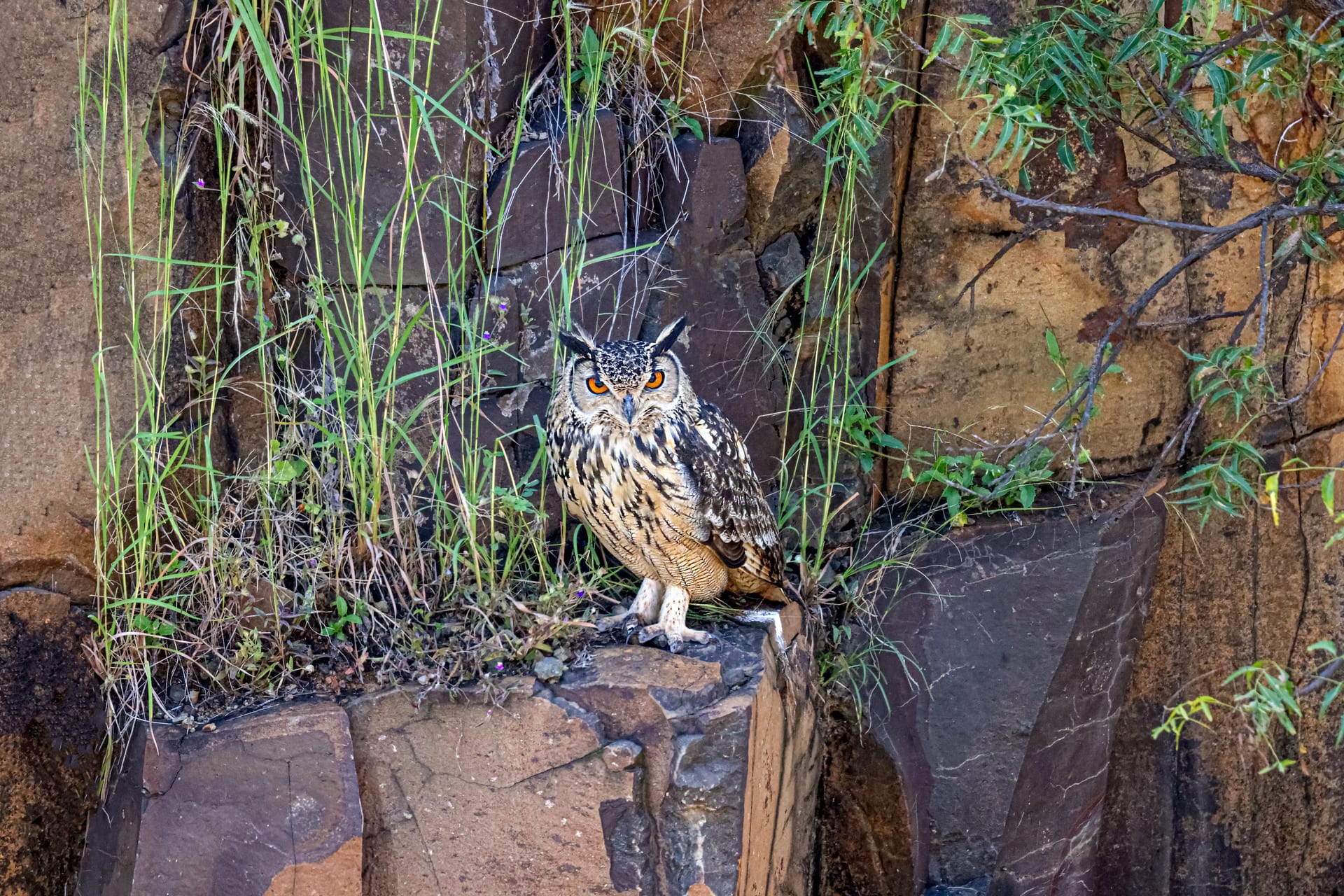
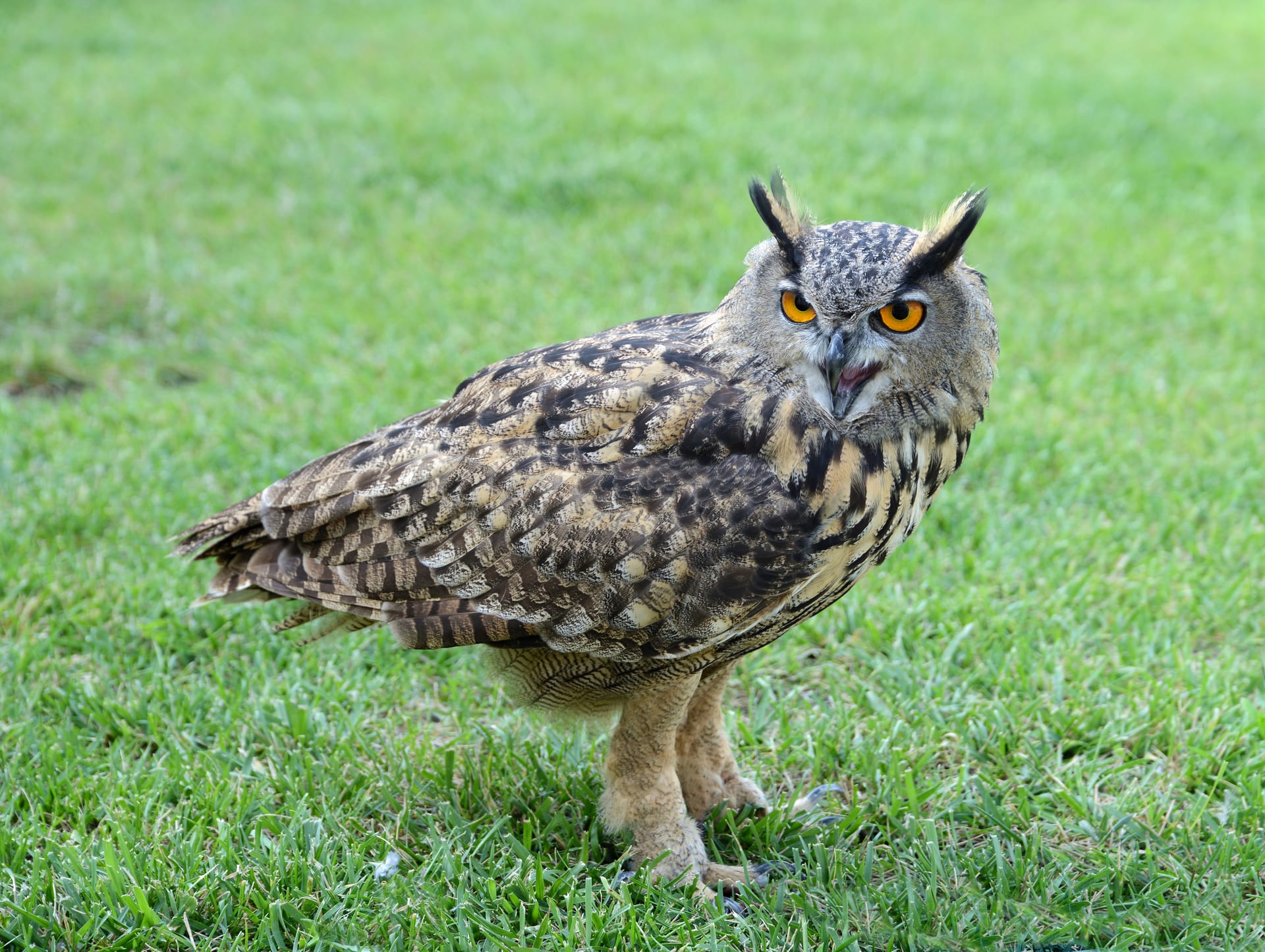
One of the largest owls in the world, with long ear tufts and striking orange eyes; females reach 75 cm in length and a wingspan of 188 cm. Nocturnal, it takes prey from rodents and rabbits to birds. It favours mountainous and rocky country.
Difficulty
Advanced
Temperature
15〜30℃
Lifespan
15+ years
Size
Females reach 75cm with a wingspan of 188cm, males slightly smaller; the largest specimens weigh 4.6kg
Humidity
40〜60%
Diet
Frozen rats, mice, quail and day-old chicks; in the wild mainly small mammals such as rodents and rabbits, plus birds and larger mammals
About
The Eurasian eagle-owl (Bubo bubo) is one of the largest owls in the world, ranging widely across Eurasia. The bird has distinctive ear tufts, upperparts mottled blackish and tawny, barred wings and tail, buff underparts with darker streaking, an ill-defined facial disc and striking orange eyes. Linnaeus described it as Strix bubo in 1758. It favours mountainous and rocky country but also uses woodland edge, shrubland with wetlands, coniferous forest and steppe, and occasionally farmland and city parks. A nocturnal predator, it takes mainly rodents and rabbits along with birds and larger mammals. The female incubates while the male brings food, and the pair tend the young for five months. Its range covers 51.4 million square kilometres and the population is estimated at 100,000-500,000 birds. Tamed eagle-owls are sometimes flown to drive off nuisance birds such as gulls.
Source: Wikipedia (CC BY-SA 4.0)
Lifespan of the Eurasian Eagle-Owl
The Eurasian Eagle-Owl lives 15+ years.
Size of the Eurasian Eagle-Owl
The Eurasian Eagle-Owl grows to Females reach 75cm with a wingspan of 188cm, males slightly smaller; the largest specimens weigh 4.6kg.
Females reach a total length of 75 cm with a wingspan of 188 cm and males are slightly smaller; the largest specimens weigh 4.6 kg, matching the heaviest Blakiston's fish owls, though that species averages a little heavier and the great grey owl averages a little longer.
Basic Info
Origin
Much of Eurasia, chiefly continental Europe, Scandinavia, Russia and Central Asia, with smaller populations in Anatolia, the northern Middle East, northern South Asia, China, Korea and Japan
Care Specifications
AggressiveSolitary
Sources: Wikipedia - Eurasian eagle-owl / Wikipedia - Eurasian eagle-owl, Japanese edition (morphology, range, breeding)
References & Sources
Edited & verified by: BreederDirect editorial team
The taxonomic, regulatory, and husbandry data on this page are compiled and verified against the authoritative primary sources below.
Taxonomy & Authority
Accepted name: Bubo bubo (Linnaeus, 1758)
Synonyms: Strix bubo, Bubo ignavus
Authority databases: GBIF
Nomenclature follows global taxonomic authority databases.
Regulations & Conservation Status
CITES Appendix IIIUCN LC · Least Concern
Bubo bubo. The order Strigiformes is listed in CITES Appendix II except for species placed in Appendix I, so this species is Appendix II and international trade requires an export permit. It is not among Japan's designated dangerous animals.
Sources: CITES Appendices (Appendix II) / IUCN Red List / Cabinet Order under the Act on Welfare and Management of Animals, appended table (designated dangerous animals)
Regulations may change. Always verify the latest information with the relevant authorities.
Eurasian Eagle-Owl Listings
Loading latest listingsFind listings for this species