Source: Wikimedia Commons
Buffy Fish Owl
AdvancedKetupa ketupu
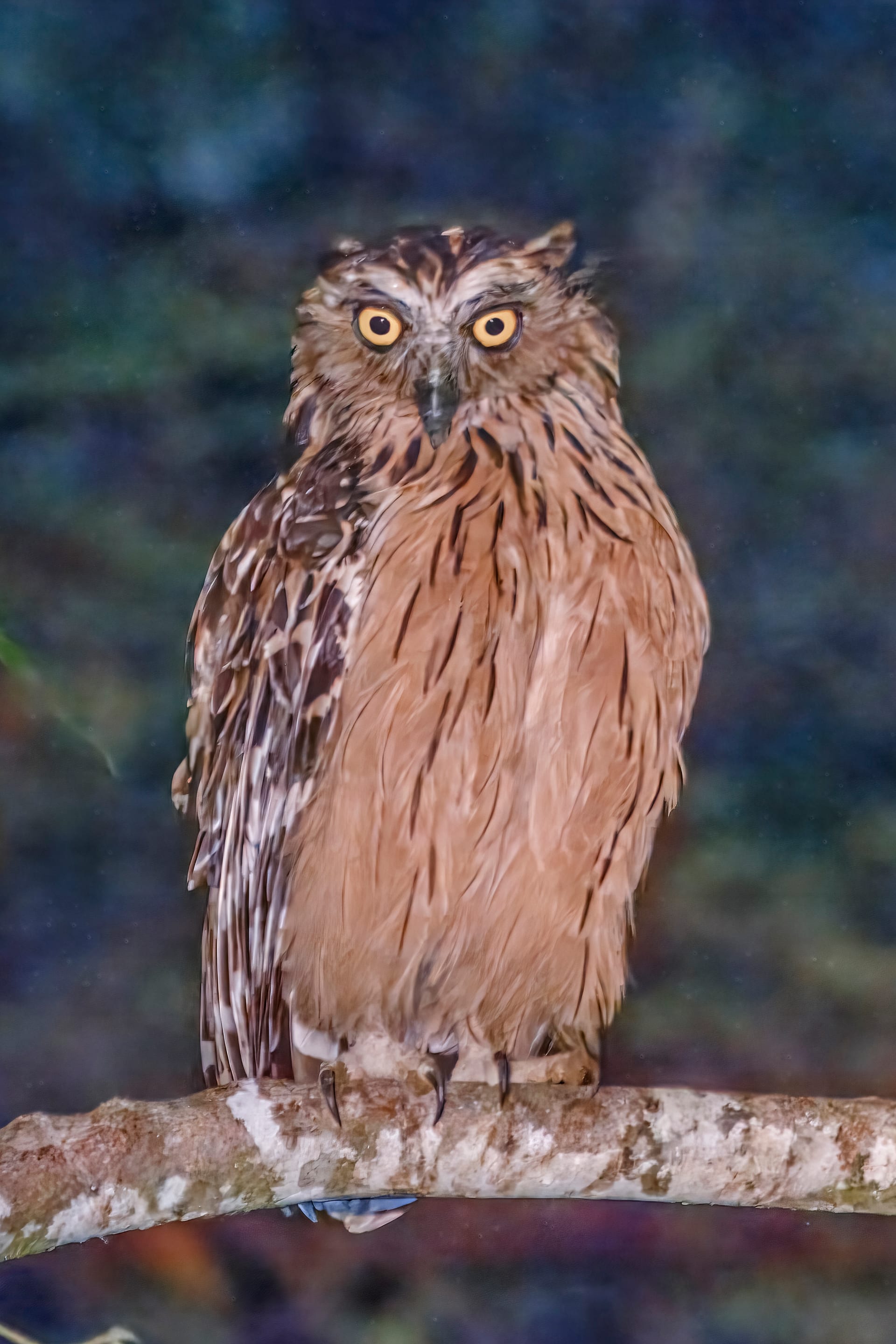
A fish owl of Southeast Asian tropical forest and wetland. At 40-48 cm it is the smallest fish owl, with ear tufts splayed sideways and long unfeathered legs, and it lives by catching fish at the water's edge.
Difficulty
Advanced
Temperature
15〜30℃
Lifespan
15-20 years
Size
40-48cm (1,028-2,100g)
Humidity
40〜60%
Diet
Chiefly fish and other waterside animals in the wild; fish plus frozen mice and chicks in captivity
About
The buffy fish owl (Ketupa ketupu), also known as the Malay fish owl, belongs to the fish owls of the family Strigidae. It is native to Southeast Asia and lives chiefly in tropical forests and wetlands, foraging at the water's edge. Like all fish owls it has prominent ear tufts on the sides of the head, and its long legs are unfeathered. It will not submerge beyond its legs and lacks the sound-muffling feathers of other owls - adaptations to a fish diet that are also seen in the African fishing owls, which are not directly related. It was once treated as the same species as the tawny fish owl, whose range it neatly replaces, but a number of physical, anatomical, habitat and behavioural distinctions separate them. Because of its wide distribution and presumed stable population it has been listed as Least Concern on the IUCN Red List since 2004.
Source: Wikipedia (CC BY-SA 4.0)
Lifespan of the Buffy Fish Owl
The Buffy Fish Owl lives 15-20 years.
Size of the Buffy Fish Owl
The Buffy Fish Owl grows to 40-48cm (1,028-2,100g).
Adults are 40-48 cm long and weigh 1,028-2,100 g, making it the smallest of the fish owls.
Basic Info
Origin
Southeast Asia, in tropical forests and wetlands
Lifespan
15-20 years
Size
40-48cm (1,028-2,100g)
Care Specifications
AggressivePair
Sources: Wikipedia - Buffy fish owl
References & Sources
Edited & verified by: BreederDirect editorial team
The taxonomic, regulatory, and husbandry data on this page are compiled and verified against the authoritative primary sources below.
Taxonomy & Authority
Accepted name: Ketupa ketupu (Horsfield, 1821)
Synonyms: Strix ketupu, Bubo ketupu
Authority databases: GBIF
Nomenclature follows global taxonomic authority databases.
Regulations & Conservation Status
CITES Appendix IIIUCN LC · Least Concern
Ketupa ketupu. The order Strigiformes is listed in CITES Appendix II except for species placed in Appendix I, so this species is Appendix II and international trade requires an export permit. It is not among Japan's designated dangerous animals.
Sources: CITES Appendices (Appendix II) / IUCN Red List / Cabinet Order under the Act on Welfare and Management of Animals, appended table (designated dangerous animals)
Regulations may change. Always verify the latest information with the relevant authorities.
Buffy Fish Owl Listings
Loading latest listingsFind listings for this species