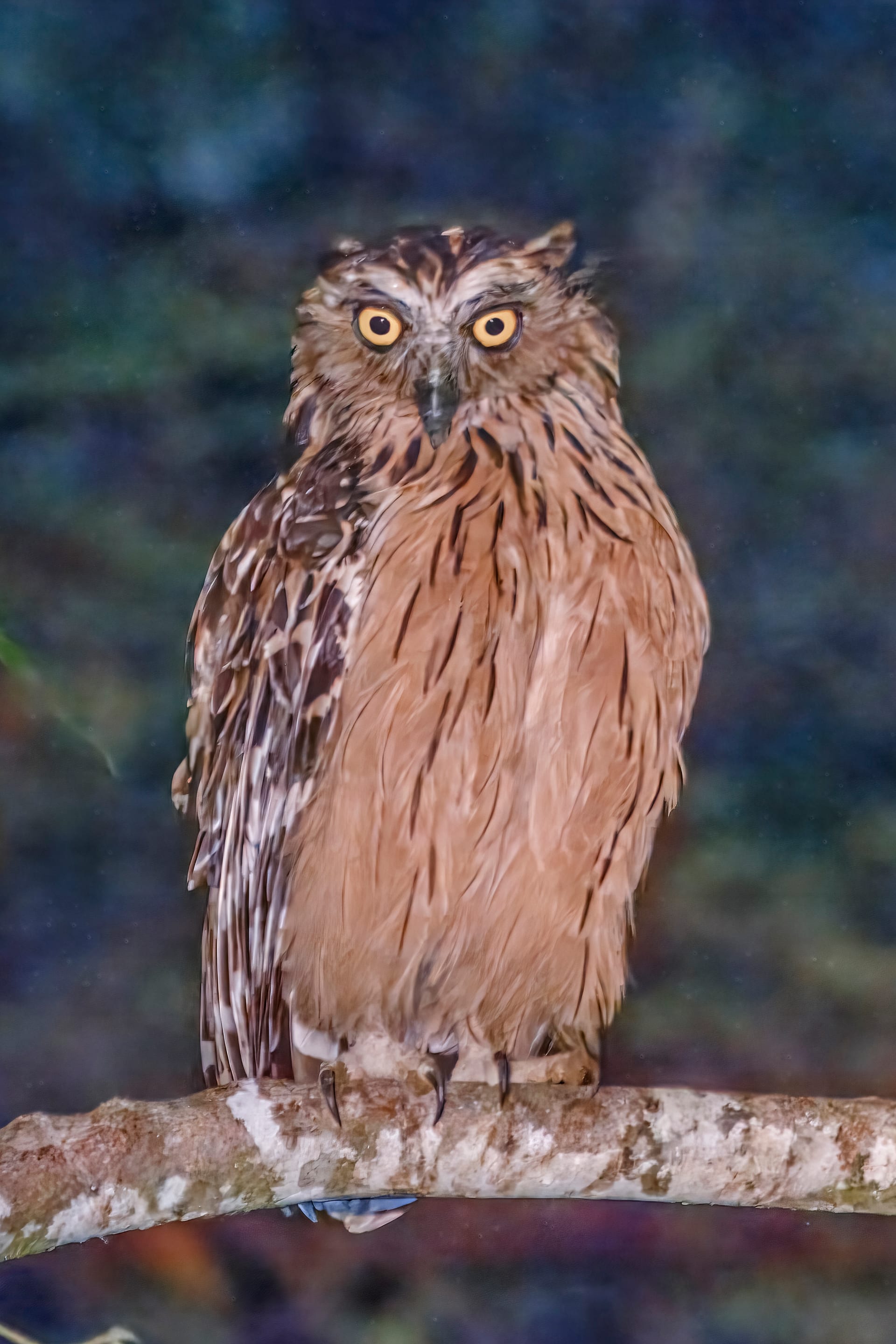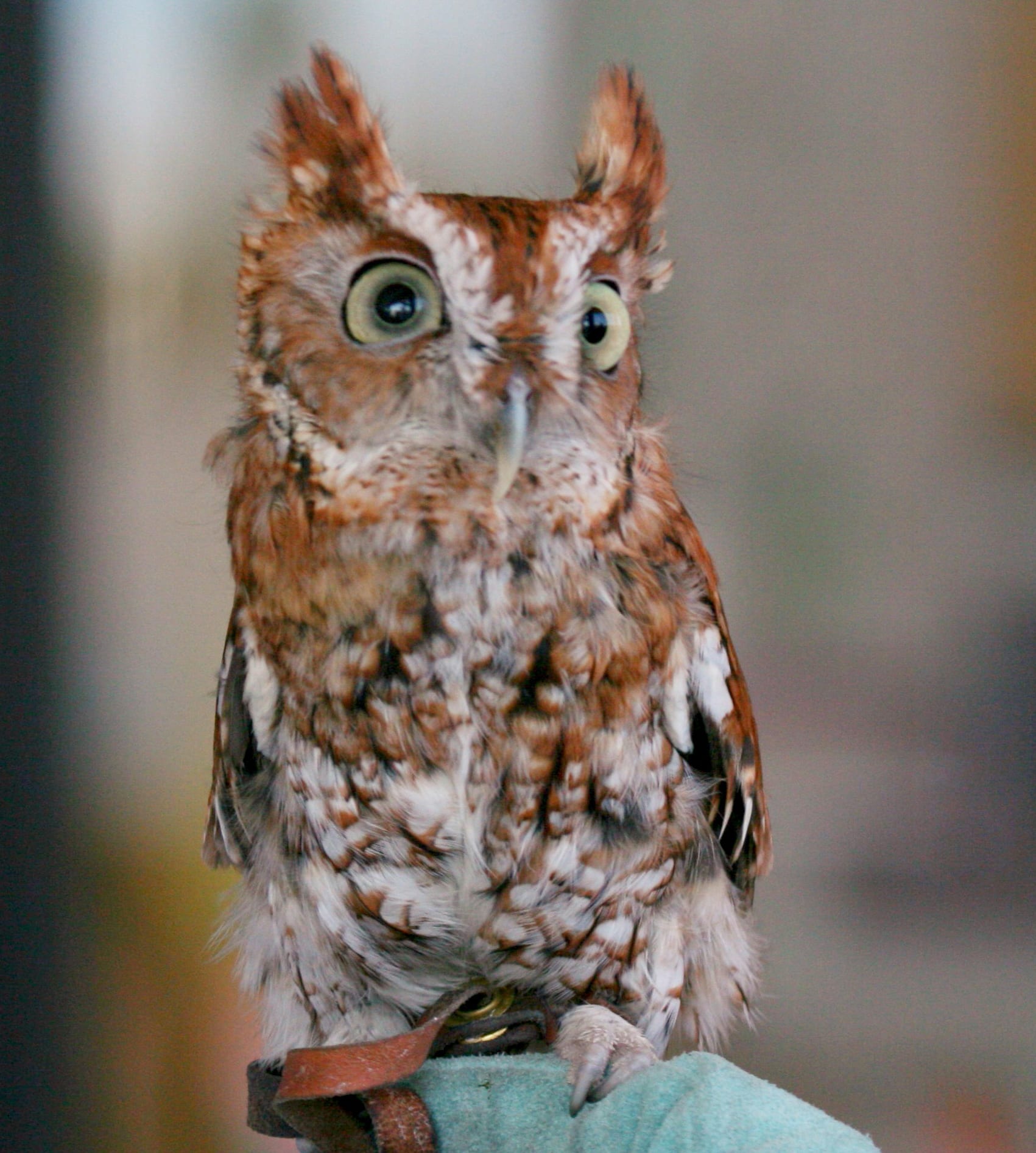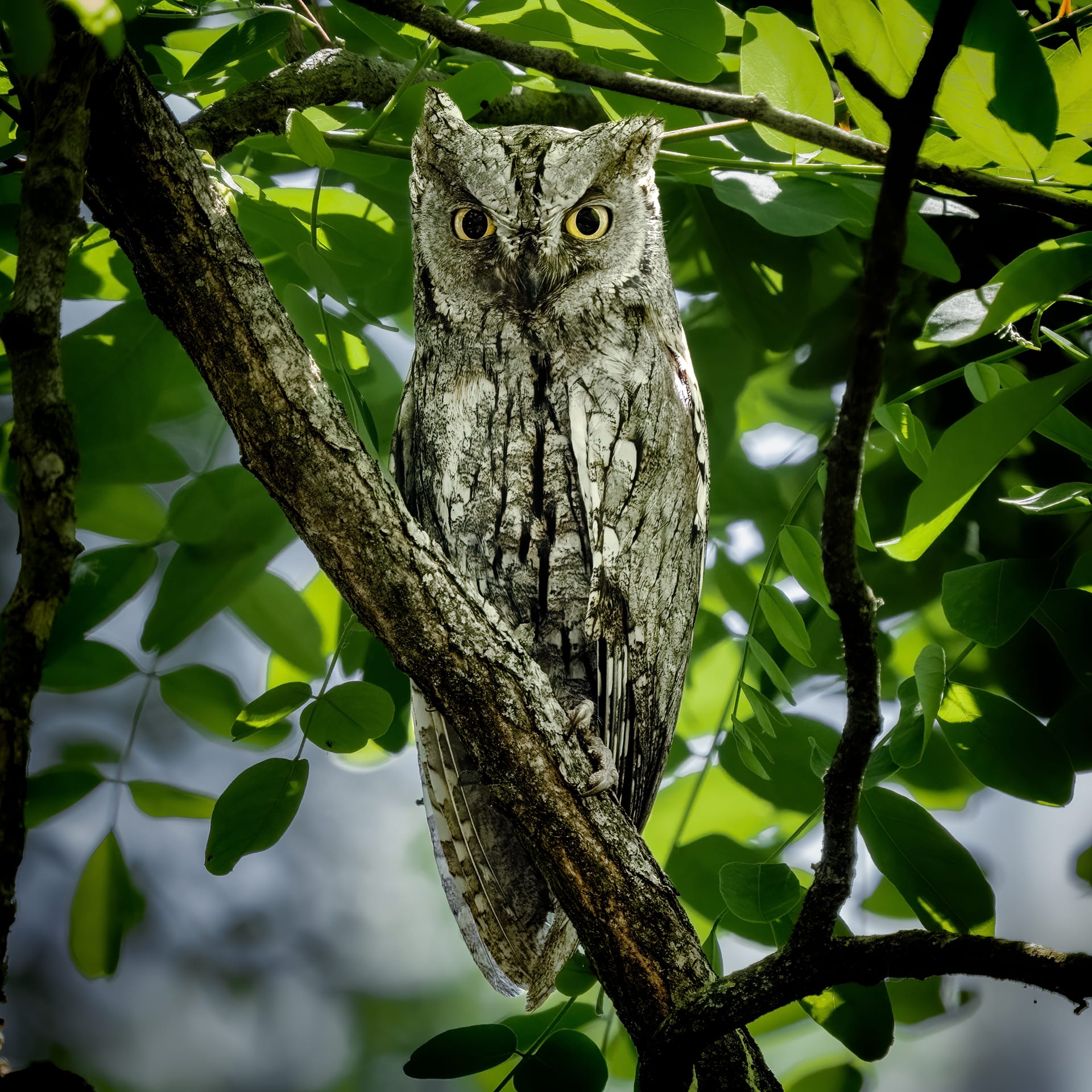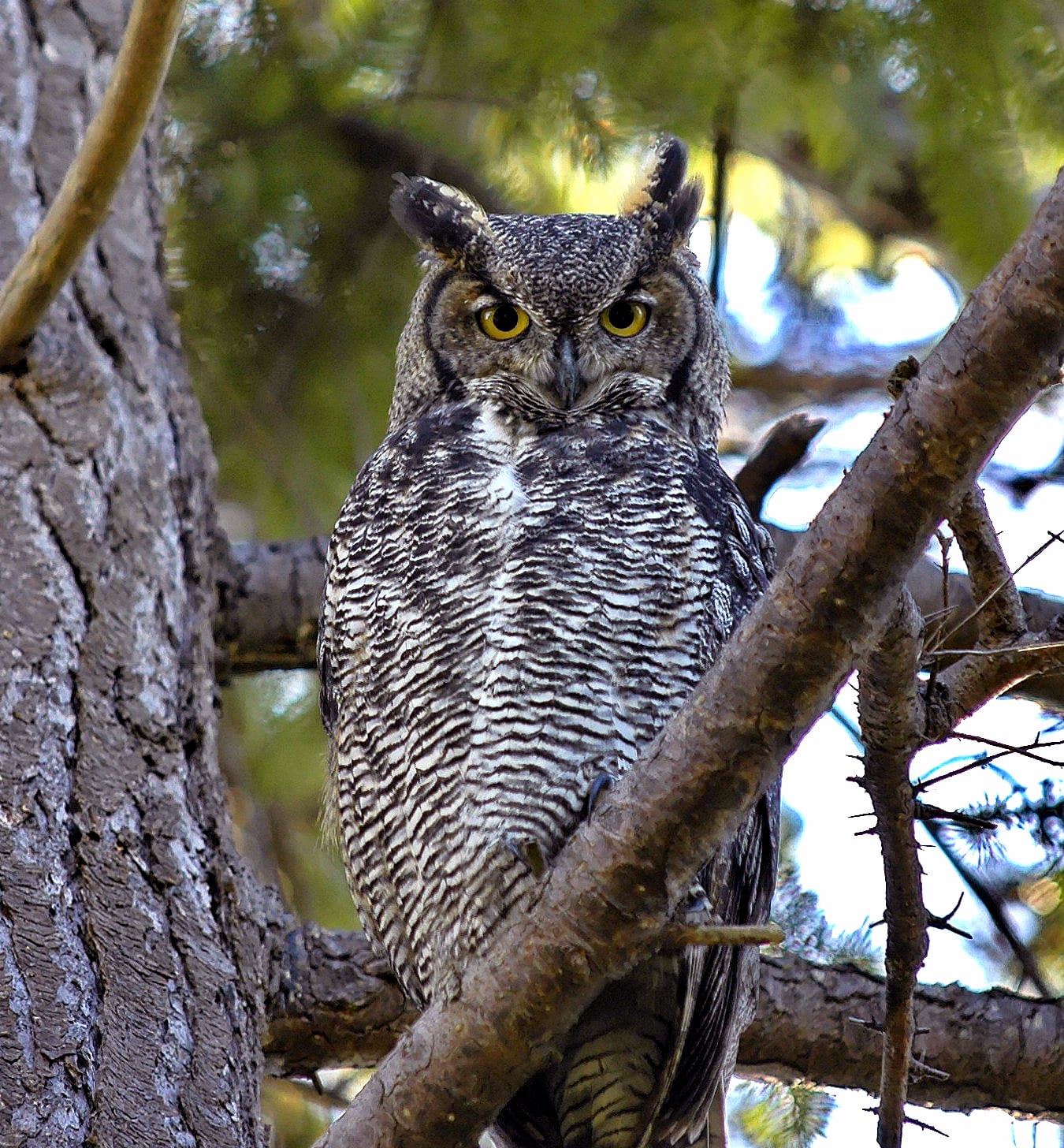
Source: Wikimedia Commons
Southern White-faced Owl
AdvancedPtilopsis granti
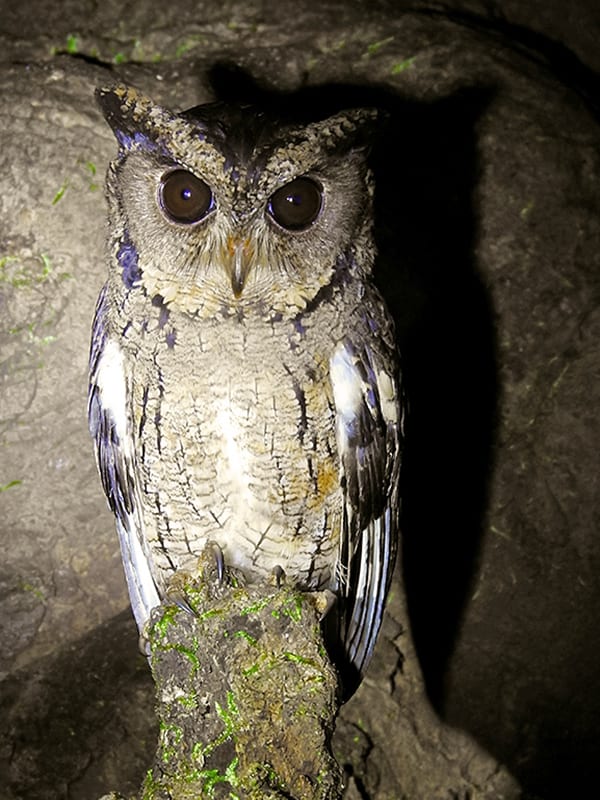
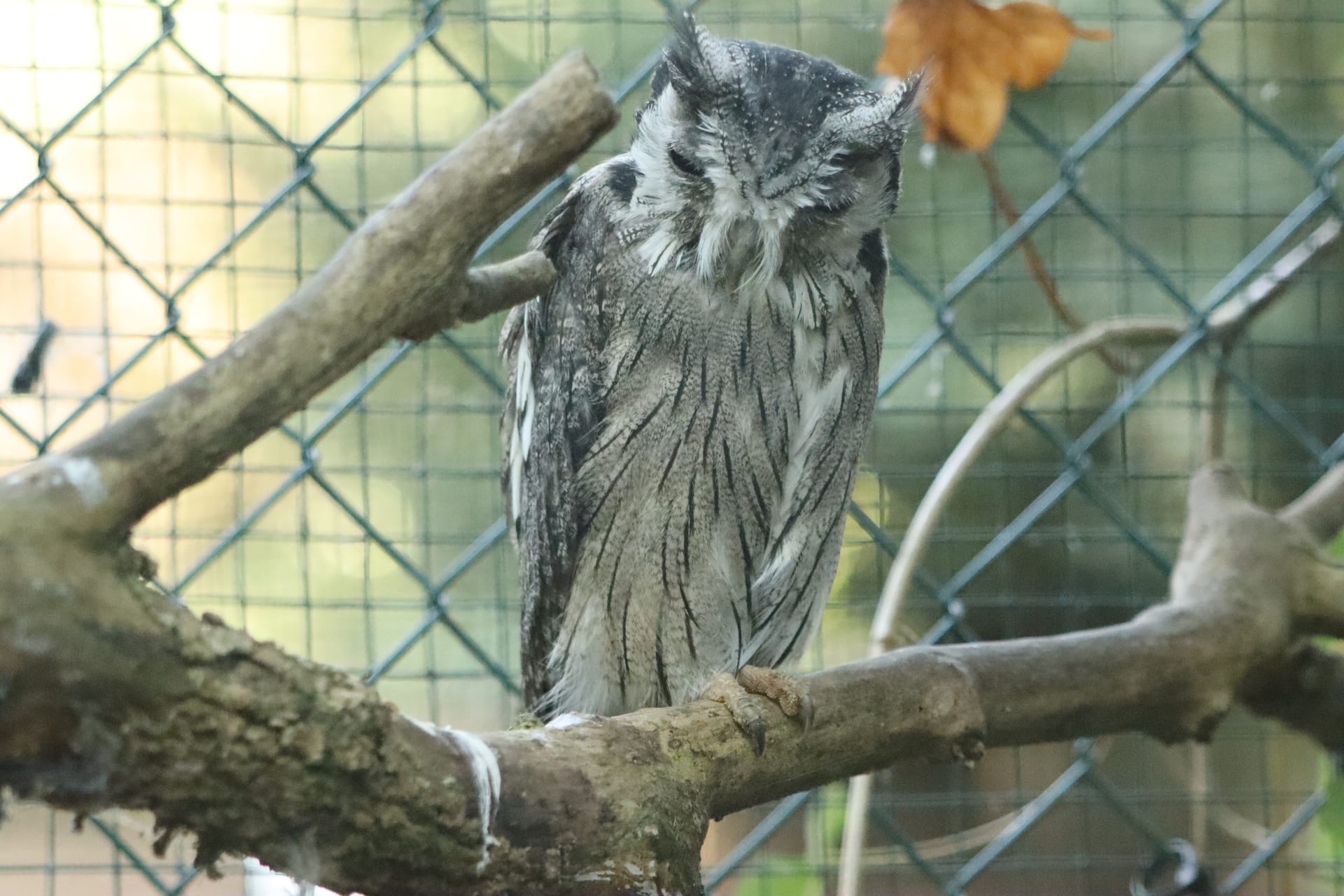
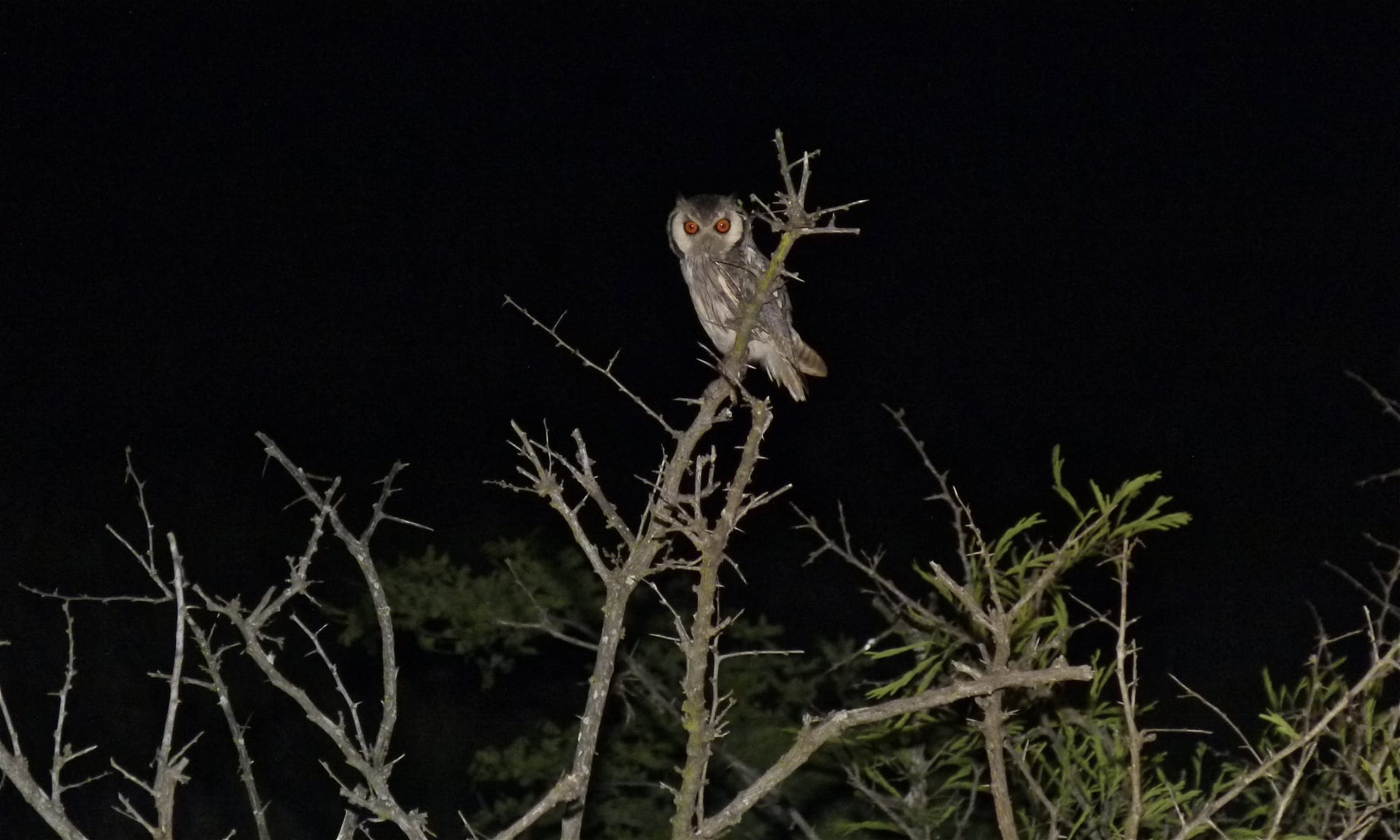
A small owl of southern Africa with a black-rimmed white face, large orange eyes and short black-tipped ear tufts, grey above with dark streaking. Its song is a series of fast bubbling hoots.
Difficulty
Advanced
Temperature
15〜30℃
Lifespan
10-15 years
Size
22-28cm (185-220g)
Humidity
40〜60%
Diet
Frozen mice, day-old chicks and quail; in the wild mainly large insects, plus occasional small mammals, birds and reptiles
About
The upperparts are grey with dark streaks and white spots on the scapulars, the underparts whitish with dark streaks. The face is white with a black border and black around the large orange eyes, and the short ear tufts are black-tipped; juveniles have a greyish face. Formerly treated as a subspecies of the northern white-faced owl, it is now commonly regarded as distinct, the northern bird being paler and browner with less streaking below. Its call is a series of fast bubbling hoots repeated through the night, with pairs often singing together in the breeding season - quite unlike the northern bird's two-note call. It inhabits savanna and dry woodland, alone or in pairs, lays two or three eggs in an old nest of another bird, incubates about thirty days, and the young leave the nest about a month after hatching. Unusually for a bird, it raises its resting metabolic rate by roughly 45 per cent after summer to tolerate colder conditions.
Source: Wikipedia (CC BY-SA 4.0)
Lifespan of the Southern White-faced Owl
The Southern White-faced Owl lives 10-15 years.
Size of the Southern White-faced Owl
The Southern White-faced Owl grows to 22-28cm (185-220g).
The southern white-faced owl (Ptilopsis granti) is a fairly small owl of the southern half of Africa, 22-28 cm long and weighing 185-220 g.
Basic Info
Origin
The southern half of Africa, from Gabon, the Congos and Angola through Uganda, southern Kenya, Tanzania, Zambia, Namibia, Botswana, Zimbabwe, Mozambique and northern South Africa
Lifespan
10-15 years
Care Specifications
Semi-aggressiveSolitary
Sources: Wikipedia - Southern white-faced owl / Wikipedia - Strigidae, Japanese edition (Japanese names)
References & Sources
Edited & verified by: BreederDirect editorial team
The taxonomic, regulatory, and husbandry data on this page are compiled and verified against the authoritative primary sources below.
Taxonomy & Authority
Accepted name: Ptilopsis granti (Kollibay, 1910)
Synonyms: Ptilopsis erlangeri, Otus granti
Authority databases: GBIF
Nomenclature follows global taxonomic authority databases.
Regulations & Conservation Status
CITES Appendix IIIUCN LC · Least Concern
Ptilopsis granti. The order Strigiformes is listed in CITES Appendix II except for species placed in Appendix I, so this species is Appendix II and international trade requires an export permit. It is not among Japan's designated dangerous animals.
Sources: CITES Appendices (Appendix II) / IUCN Red List / Cabinet Order under the Act on Welfare and Management of Animals, appended table (designated dangerous animals)
Regulations may change. Always verify the latest information with the relevant authorities.
Southern White-faced Owl Listings
Loading latest listingsFind listings for this species