Source: Wikimedia Commons
Golden-capped Conure
IntermediateAratinga auricapillus
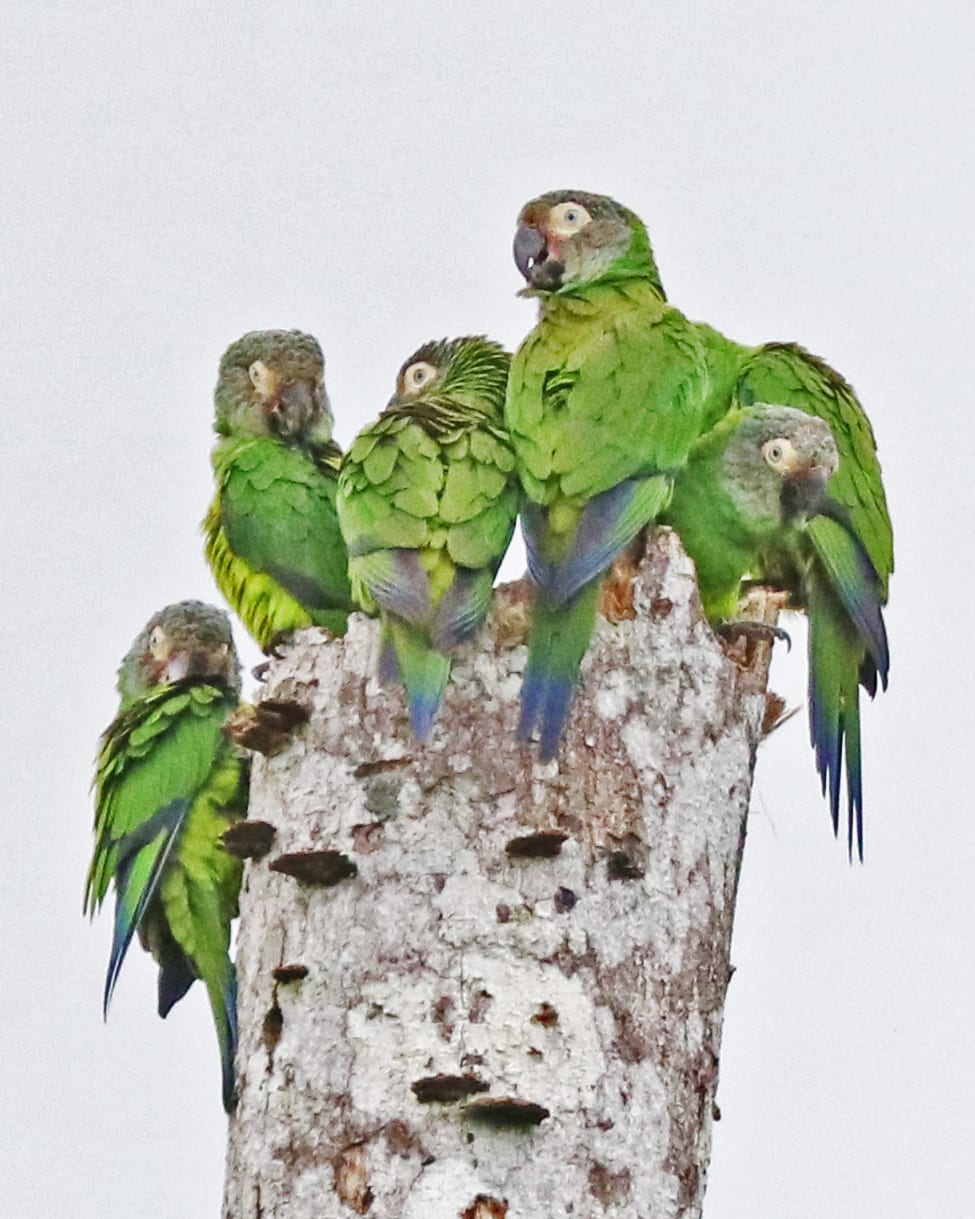
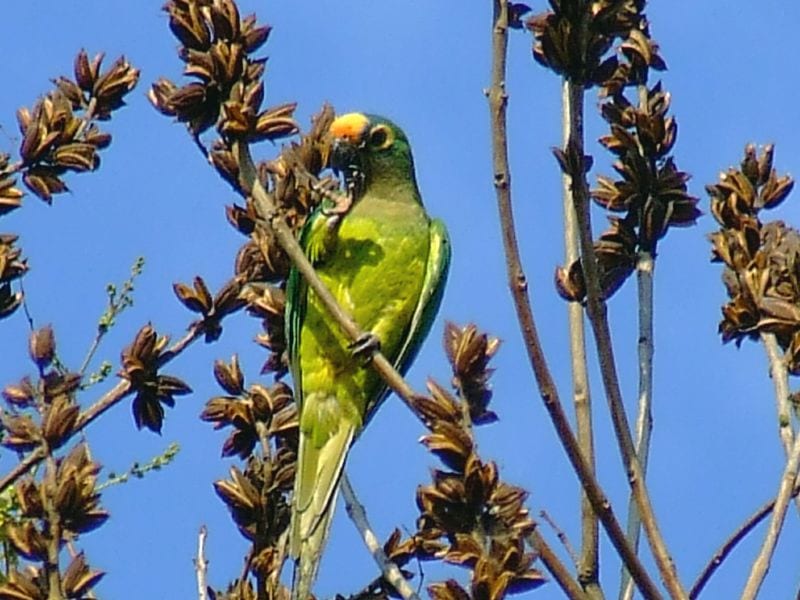
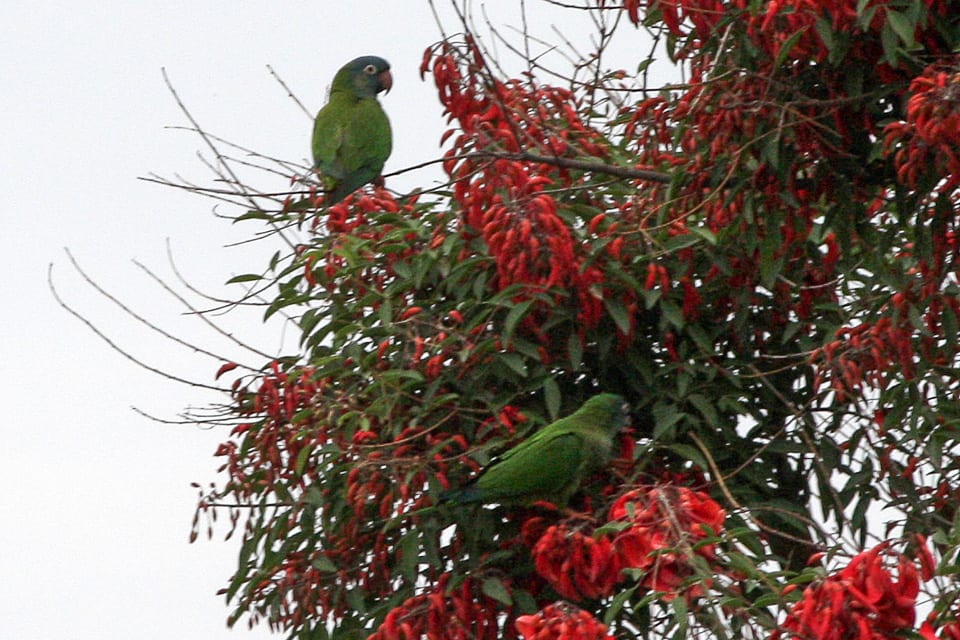
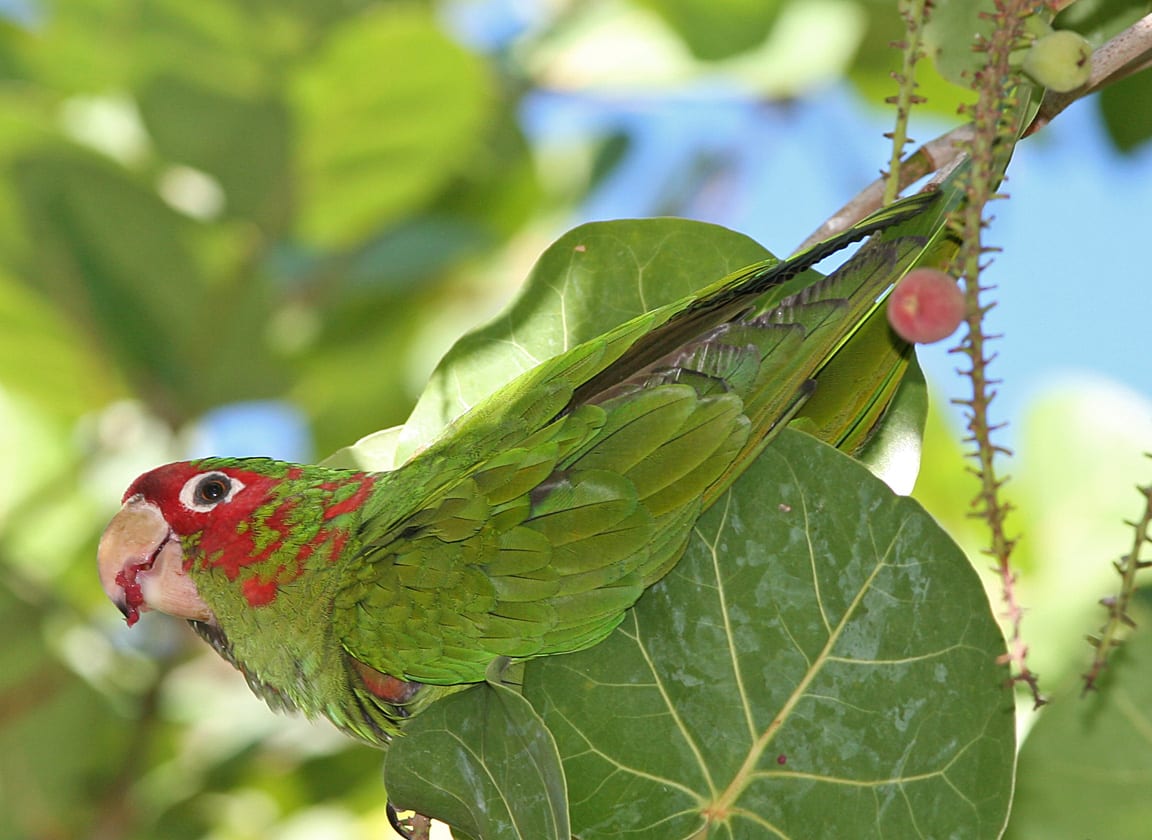
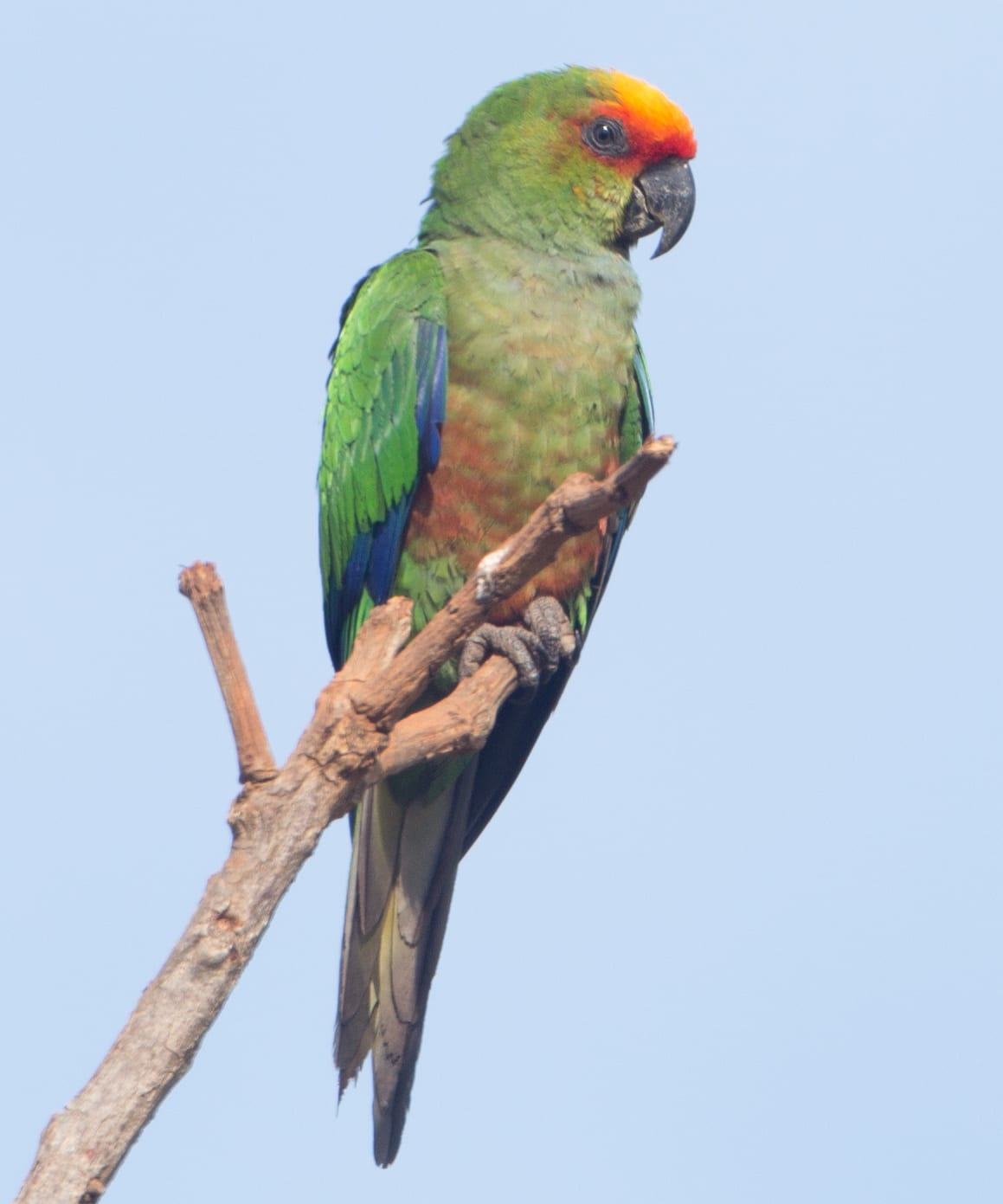
A Brazilian endemic conure combining green plumage with an orange-red forehead and belly. White eye-rings and a black bill stand out, and its sensitivity to forest fragmentation makes it a useful indicator species.
Difficulty
Intermediate
Temperature
15〜30℃
Lifespan
25-30 years
Size
About 30cm
Humidity
40〜60%
Diet
Pellet-based diet, seed mix, fruit, vegetables
About
The golden-capped conure (Aratinga auricapillus) is endemic to eastern and southeastern Brazil. The bill is black and the bare eye-ring white. Two subspecies are recognised, the nominate auricapillus and aurifrons. It inhabits dry forest, moist lowland forest, savanna and plantations, and because it is easily detected and sensitive to forest fragmentation it serves as a biological indicator. Habitat loss is the main threat. In aviculture it is reasonably established in the United States but scarce in Europe.
Source: Wikipedia (CC BY-SA 4.0)
Lifespan of the Golden-capped Conure
The Golden-capped Conure lives 25-30 years.
The World Parrot Trust recommends housing at least 2-3 m long, and captive lifespan is 25-30 years.
Size of the Golden-capped Conure
The Golden-capped Conure grows to About 30cm.
It is about 30 cm long and weighs 140-150 g, with green plumage, an orange-red forehead and forecrown, and orange-red across the centre of the belly.
Basic Info
Origin
Eastern and southeastern Brazil (dry forest, moist lowland forest, savanna and plantations)
Lifespan
25-30 years
Size
About 30cm
Temperature
Care Specifications
References & Sources
Edited & verified by: BreederDirect editorial team
The taxonomic, regulatory, and husbandry data on this page are compiled and verified against the authoritative primary sources below.
Taxonomy & Authority
Accepted name: Aratinga auricapillus (Kuhl, 1820)
Authority databases: GBIF
Nomenclature follows global taxonomic authority databases.
Regulations & Conservation Status
CITES Appendix IIIUCN LC · Least Concern
Aratinga auricapillus. The order Psittaciformes is listed as a whole in CITES Appendix II.
Sources: CITES Appendices (Psittaciformes spp. listed in Appendix II) / IUCN Red List
Regulations may change. Always verify the latest information with the relevant authorities.
Golden-capped Conure Listings
Loading latest listingsFind listings for this species