Source: Wikimedia Commons
Red-breasted Parakeet
IntermediatePsittacula alexandri
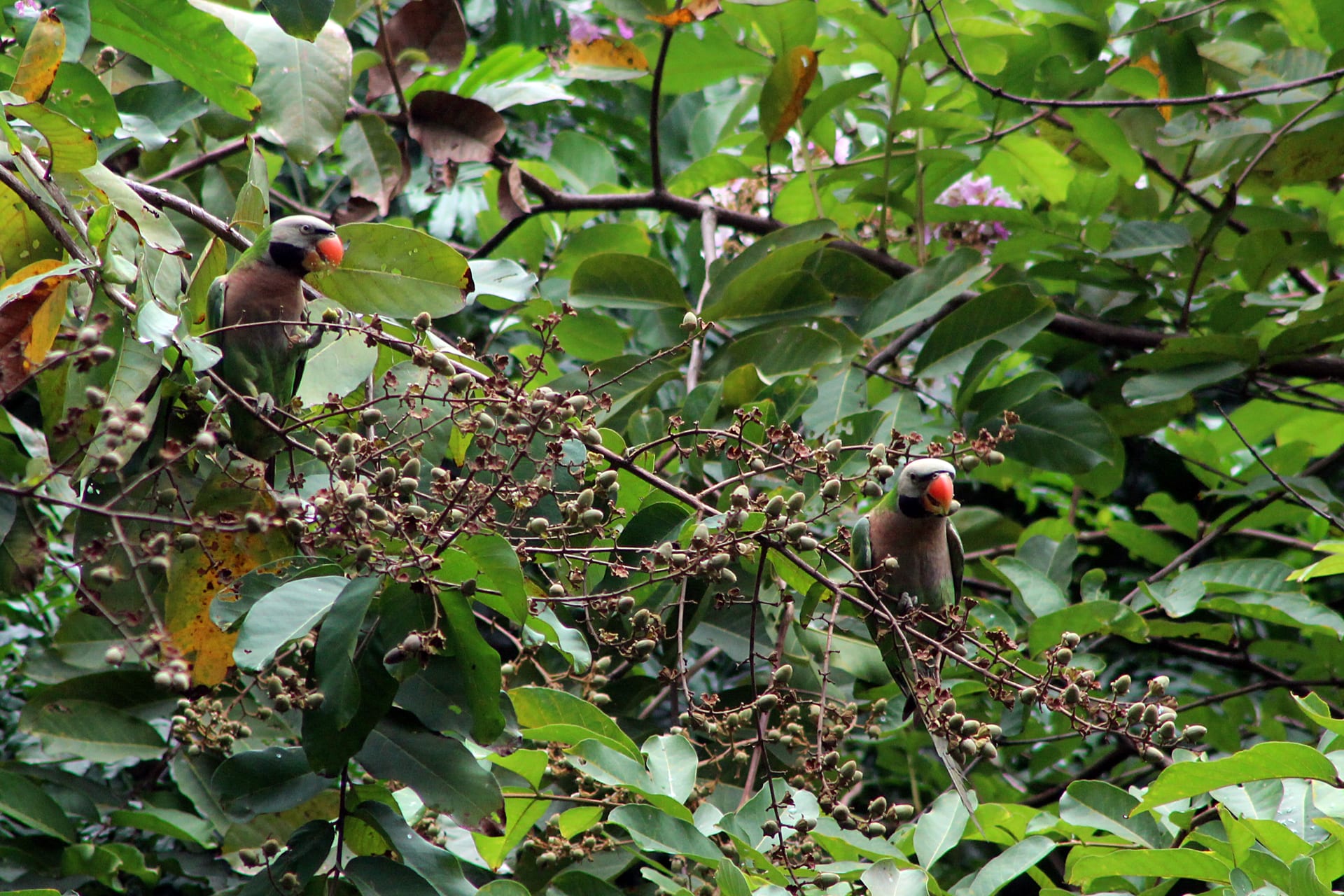
A medium parakeet with a pale blue-grey head, a black chin and moustache mark, and pink from throat to mid-belly. The bill is red with a yellow tip, and eight subspecies span wide geographical variation.
Difficulty
Intermediate
Temperature
15〜30℃
Lifespan
Longevity record about 23 years in captivity
Size
33-38cm
Humidity
40〜60%
Diet
Parrot pellets, seed mix, fruit, vegetables
About
The red-breasted parakeet (Psittacula alexandri) is a medium-sized parrot of Southeast Asia. In the nominate race the head is pale blue-grey with a thin black line from bill to eye, and the chin and lower cheeks are black. The underparts are pink from throat to mid-belly and light green below that, while the sides of the neck, nape and upperparts are green, with yellowish marks on the median wing coverts. Females show duller pink underparts and juveniles are green on head and underparts. Eight subspecies are recognised, making this the most geographically variable species in the genus; most are confined to small Indonesian islands, and the nominate race on Java is close to extinction. The wild bird trade threatens several island races and the IUCN assesses the species as Near Threatened. Feral populations are established in cities such as Mumbai and Singapore. European keepers mostly hold the more cold-tolerant Indochinese stock, with pair keeping in an aviary at least three metres long recommended.
Source: Wikipedia (CC BY-SA 4.0)
Lifespan of the Red-breasted Parakeet
The Red-breasted Parakeet lives Longevity record about 23 years in captivity.
Size of the Red-breasted Parakeet
The Red-breasted Parakeet grows to 33-38cm.
It is 33-38 cm long and weighs 133-168 g, with a red bill tipped yellow.
Basic Info
Origin
Southeast and South Asia (north India to south China and Indochina, the Andaman Islands, islands west of Sumatra, Java, Bali and southern Borneo)
Lifespan
Longevity record about 23 years in captivity
Care Specifications
Semi-aggressivePairBreeding: Moderate
Sources: Wikipedia - Red-breasted parakeet (range, eight subspecies, wild bird trade threat, feral urban populations) / Wikipedia (German) - Bartsittich (33-38 cm, 133-168 g, plumage, aviary at least 3 m, tall nest box) / AnAge - Psittacula alexandri (maximum longevity 23.3 years in captivity)
References & Sources
Edited & verified by: BreederDirect editorial team
The taxonomic, regulatory, and husbandry data on this page are compiled and verified against the authoritative primary sources below.
Taxonomy & Authority
Accepted name: Psittacula alexandri (Linnaeus, 1758)
Synonyms: Psittacus alexandri
Authority databases: GBIF
Nomenclature follows global taxonomic authority databases.
Regulations & Conservation Status
CITES Appendix IIIUCN NT · Near Threatened
Psittacula alexandri. The order Psittaciformes is listed as a whole in CITES Appendix II, and this species is not among the four excluded by annotation, so it is covered by Appendix II. The IUCN assesses it as Near Threatened, and CITES paperwork must be checked for imported birds.
Sources: CITES Appendices (Psittaciformes spp. listed in Appendix II) / IUCN Red List
Regulations may change. Always verify the latest information with the relevant authorities.
Red-breasted Parakeet Listings
Loading latest listingsFind listings for this species