Source: Wikimedia Commons
Brown Lory
AdvancedChalcopsitta duivenbodei
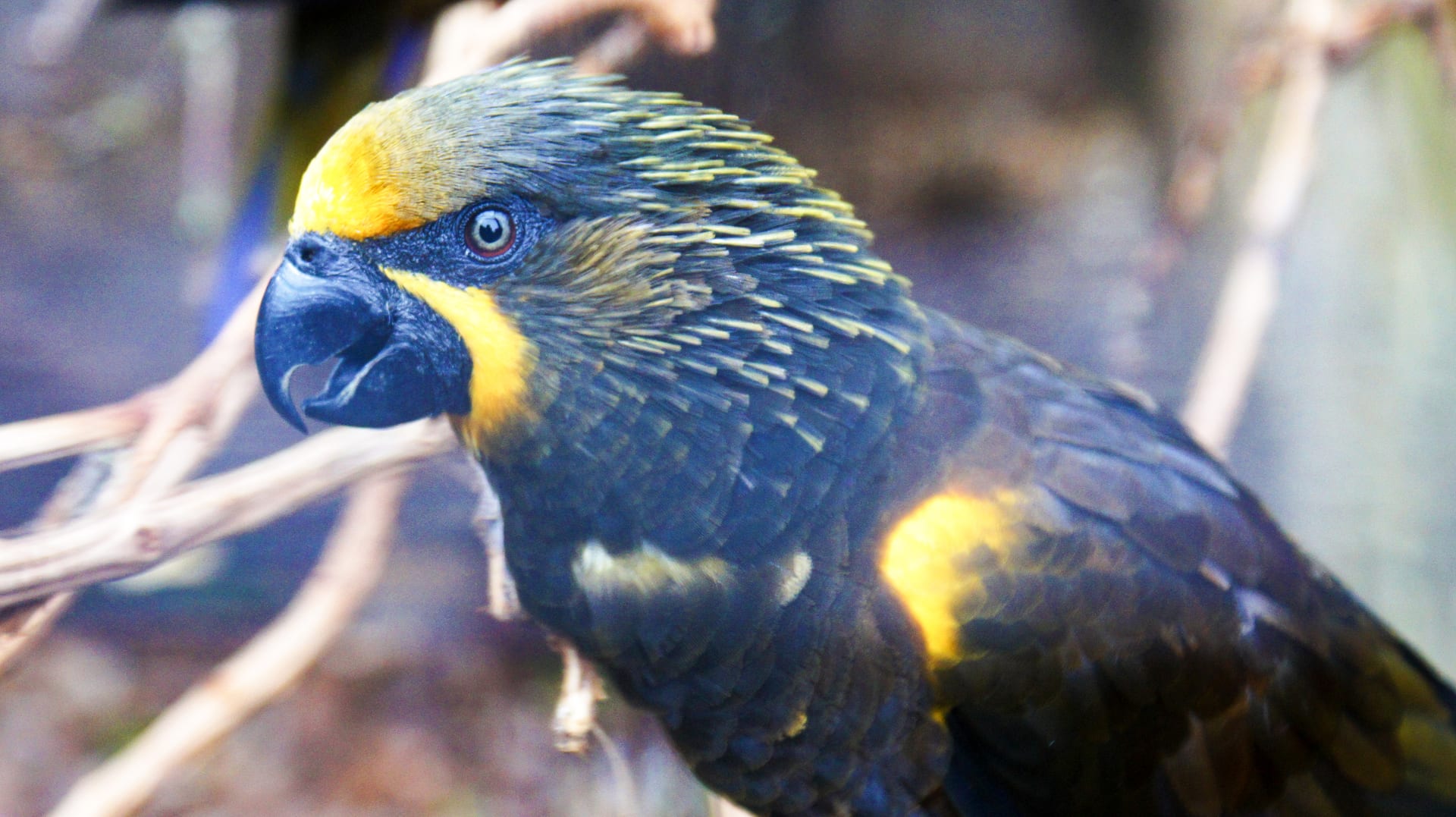
A lory of northern New Guinea with a dark olive-brown body and golden-yellow forehead, cheeks, bend of the wing, thighs and underwing. The bill and feet are black and the tail pale; a loud, lively parrot that feeds on nectar, pollen and fruit.
Difficulty
Advanced
Temperature
15〜30℃
Lifespan
Little data
Size
About 31 cm
Humidity
40〜60%
Diet
Lory nectar or powder, fruit, pollen and fresh budding branches
About
The brown lory (Chalcopsitta duivenbodei), also called Duyvenbode's lory, is a lory of the coastal north of New Guinea, named after the Dutch merchant van Duivenbode. The body is dark olive-brown, with golden-yellow chin, forehead, cheeks, bend of the wing, thighs and underwing coverts shading into black. The bill, eye-ring and feet are black and the iris orange-red. Birds from the north-east have darker, purple-tinged brown on the head and back and are sometimes separated as the subspecies syringanuchalis. It lives in humid lowland forest up to about 200 m, in pairs or groups of 10 to 15. With a long, narrow tongue densely tipped with papillae, it feeds mainly on nectar, fruit and pollen. In captivity clutches are of two eggs, incubation lasts about 24 days and chicks stay in the nest for nearly 11 weeks. It is very loud and lively; wary at first, it becomes confiding once settled, and it loves to bathe. It is only occasionally seen at specialist shops in Japan.
Source: Wikipedia (CC BY-SA 4.0)
Size of the Brown Lory
The Brown Lory grows to About 31 cm.
It is about 31 cm long and weighs 200-230 g.
Basic Info
Origin
Humid coastal lowland forest of northern New Guinea, up to about 200 m
Lifespan
Little data
Size
About 31 cm
Temperature
15〜30℃
Humidity
References & Sources
Edited & verified by: BreederDirect editorial team
The taxonomic, regulatory, and husbandry data on this page are compiled and verified against the authoritative primary sources below.
Taxonomy & Authority
Regulations & Conservation Status
CITES Appendix IIIUCN LC · Least Concern
Chalcopsitta duivenbodei. Parrots (Psittaciformes) are listed in CITES Appendix II apart from a few species, and this species is in Appendix II. International trade needs an export permit, but no registration under Japan's species conservation law is needed to transfer birds within Japan. Imports into Japan are subject to animal import notification under the Infectious Diseases Control Law. It has been in Appendix II since 6 June 1981, and the wild population is thought to be declining. The IUCN assesses it as Least Concern.
Sources: Species+ (Chalcopsitta duivenbodei) / IUCN Red List
Regulations may change. Always verify the latest information with the relevant authorities.
Brown Lory Listings
Loading latest listingsFind listings for this species