Source: Wikimedia Commons
Yellow-bibbed Lory
AdvancedLorius chlorocercus
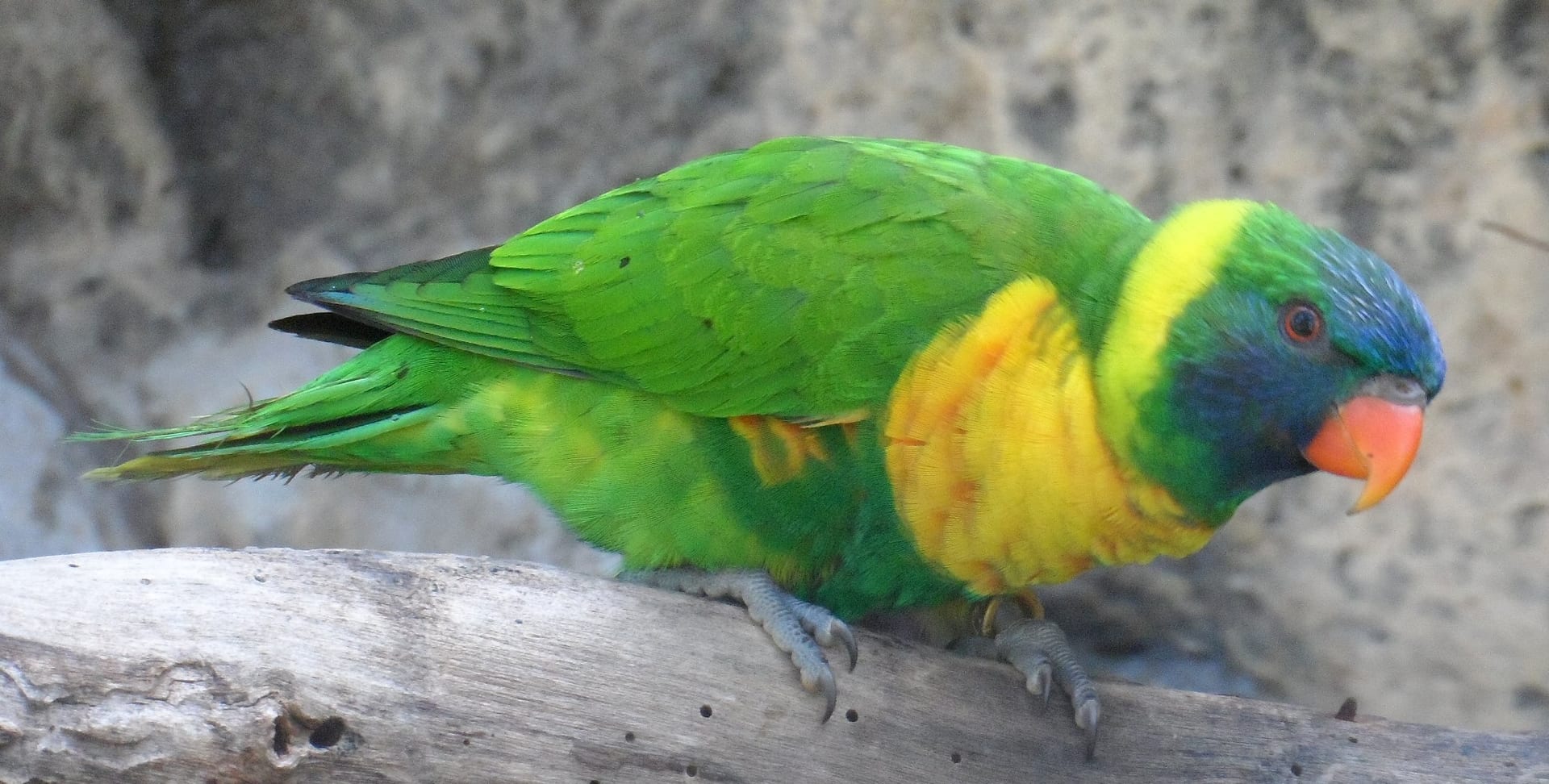
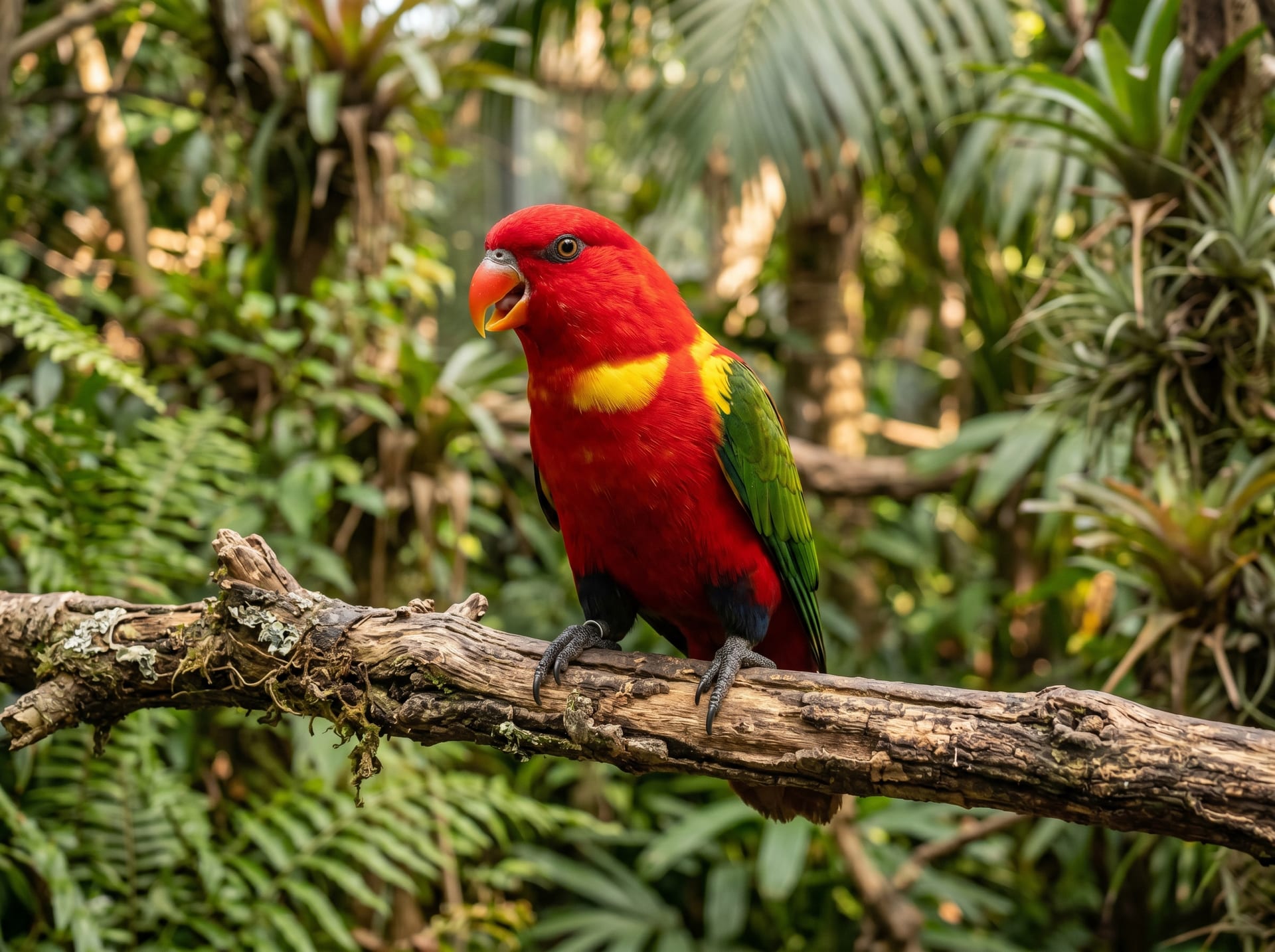
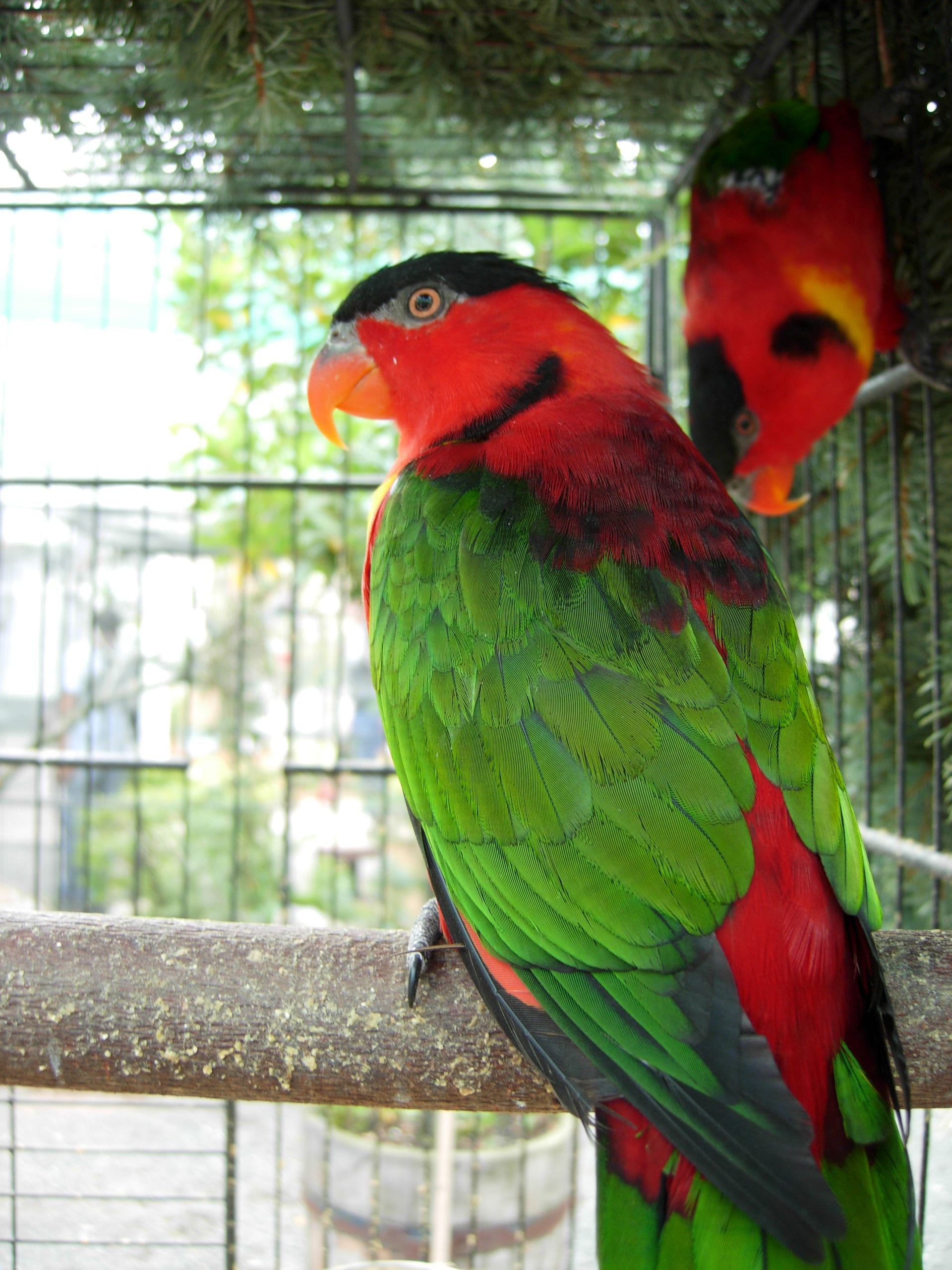
A Solomon Islands lory with a red body, black cap and green wings, and a yellow band across the upper chest like a bib. It has a black crescent on each side of the neck and mimics human speech well.
Difficulty
Advanced
Temperature
15〜30℃
Lifespan
Little data
Size
28 cm
Humidity
40〜60%
Diet
Lory nectar or powdered lory diet and soft fruit
About
The yellow-bibbed lory (Lorius chlorocercus) is a lory endemic to the eastern and southern Solomon Islands. It is 28 cm long. Mostly red, it has a black crown, green wings and a yellow band across the upper chest, which gives it its name. There is a crescent-shaped black patch on each side of the neck; the thighs are blue-green, the legs dark grey, the bill orange-red and the iris orange, with blue feathers under the wings. The yellow chest band and black neck crescents separate it from other Lorius lories. It lives in humid tropical and subtropical lowland and montane forest. Lories have brush-tipped tongues and feed mainly on nectar, pollen and soft fruit. It is also a talking parrot that mimics a wide range of sounds, including the human voice. The Solomon Islands permit its export only under a permit issued under the Wildlife Protection and Management Act. Because it feeds on nectar its droppings are watery, and keeping the cage clean takes work. It is rarely available in Japan and only occasionally seen at shops that handle lories.
Source: Wikipedia (CC BY-SA 4.0)
Size of the Yellow-bibbed Lory
The Yellow-bibbed Lory grows to 28 cm.
Basic Info
Origin
Humid lowland and montane forest of the eastern and southern Solomon Islands
Lifespan
Little data
Size
28 cm
Temperature
15〜30℃
Humidity
40〜60%
References & Sources
Edited & verified by: BreederDirect editorial team
The taxonomic, regulatory, and husbandry data on this page are compiled and verified against the authoritative primary sources below.
Taxonomy & Authority
Regulations & Conservation Status
CITES Appendix IIIUCN LC · Least Concern
Lorius chlorocercus. Parrots (Psittaciformes) are listed in CITES Appendix II apart from a few species, and this species is in Appendix II. International trade needs an export permit, but no registration under Japan's species conservation law is needed to transfer birds within Japan. Imports into Japan are subject to animal import notification under the Infectious Diseases Control Law. Export from the Solomon Islands requires a permit under its Wildlife Protection and Management Act. The IUCN assesses it as Least Concern.
Sources: Species+ (Lorius chlorocercus) / IUCN Red List
Regulations may change. Always verify the latest information with the relevant authorities.
Yellow-bibbed Lory Listings
Loading latest listingsFind listings for this species