Source: Wikimedia Commons
Blue-throated Conure
AdvancedPyrrhura cruentata
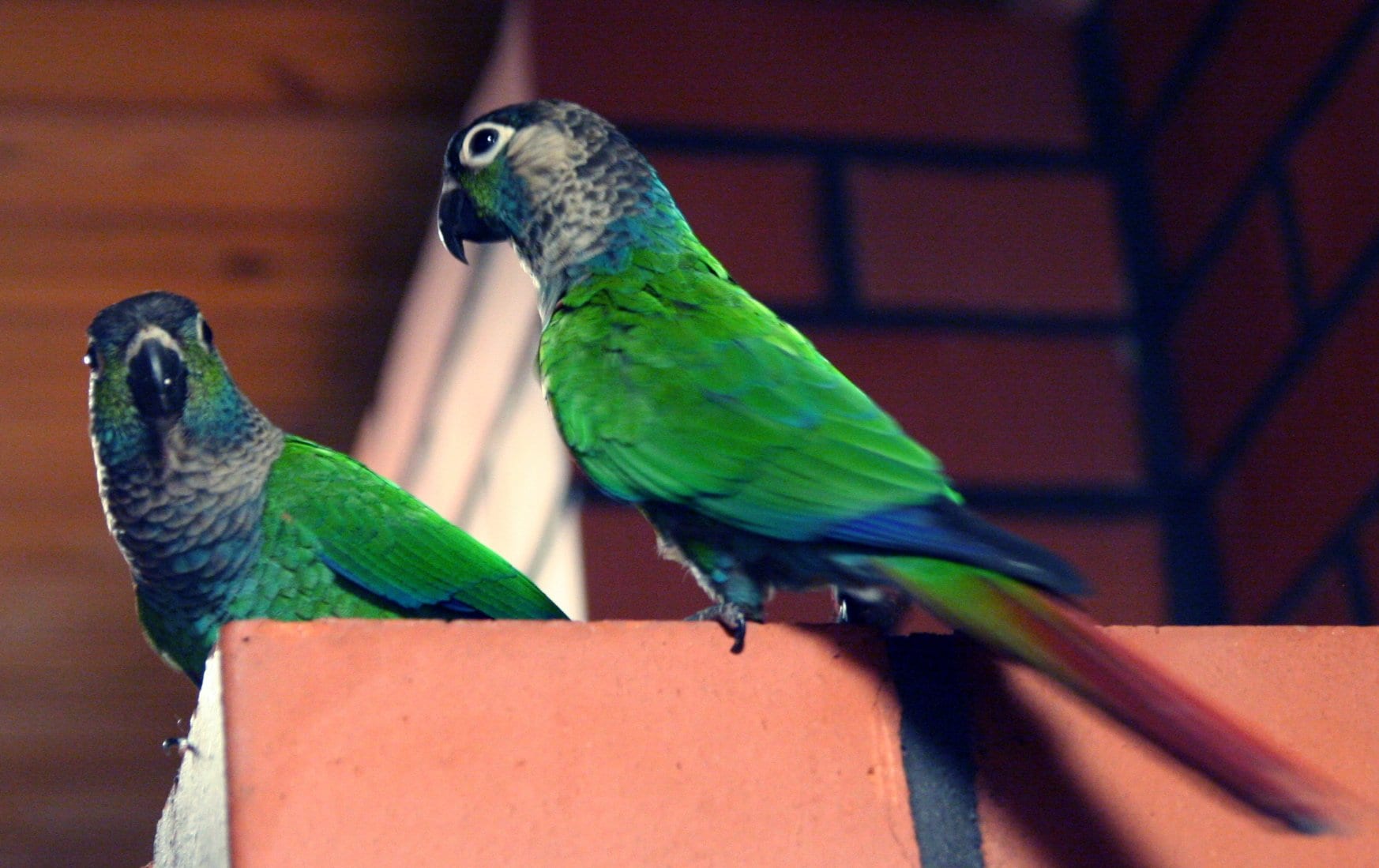
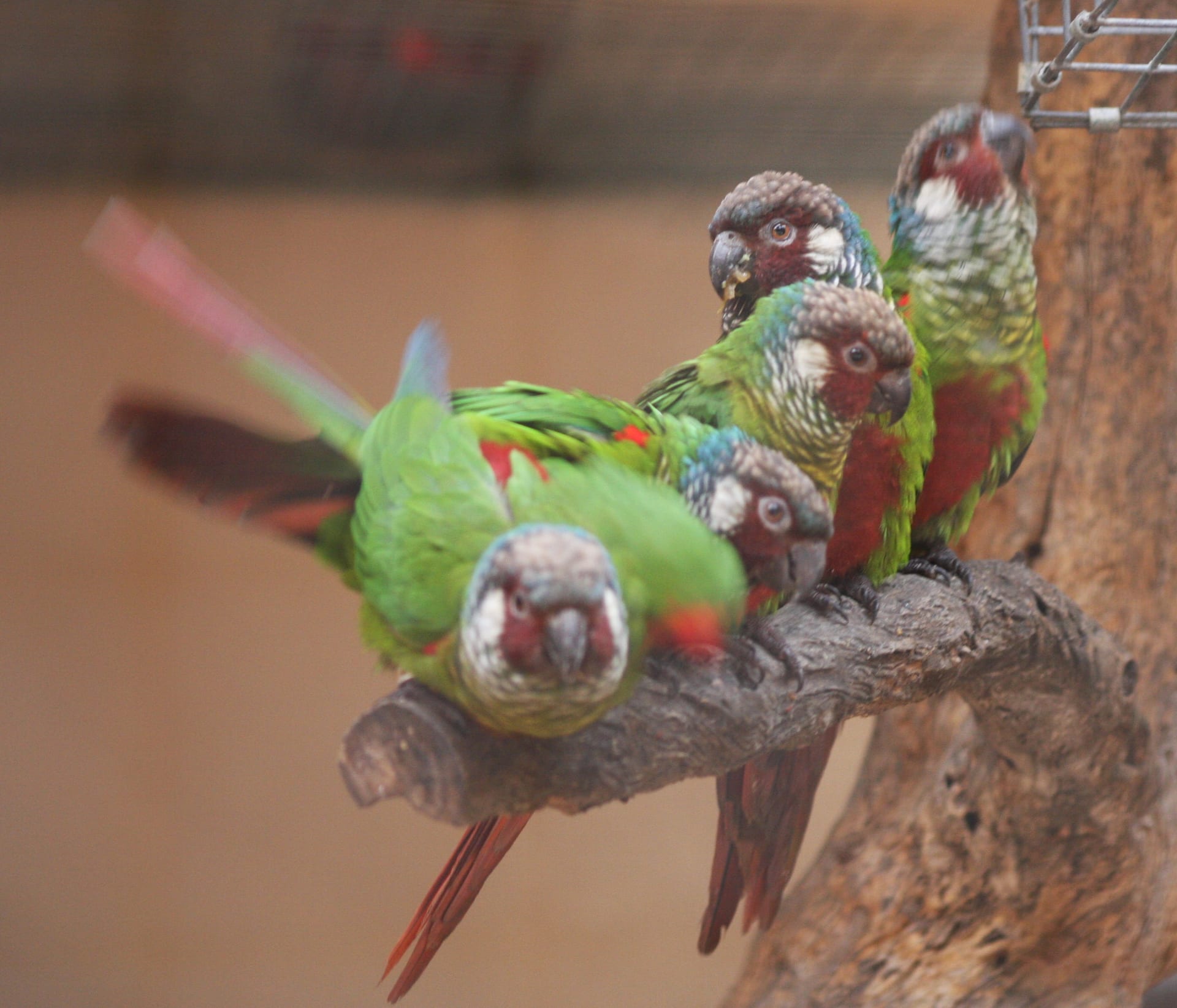
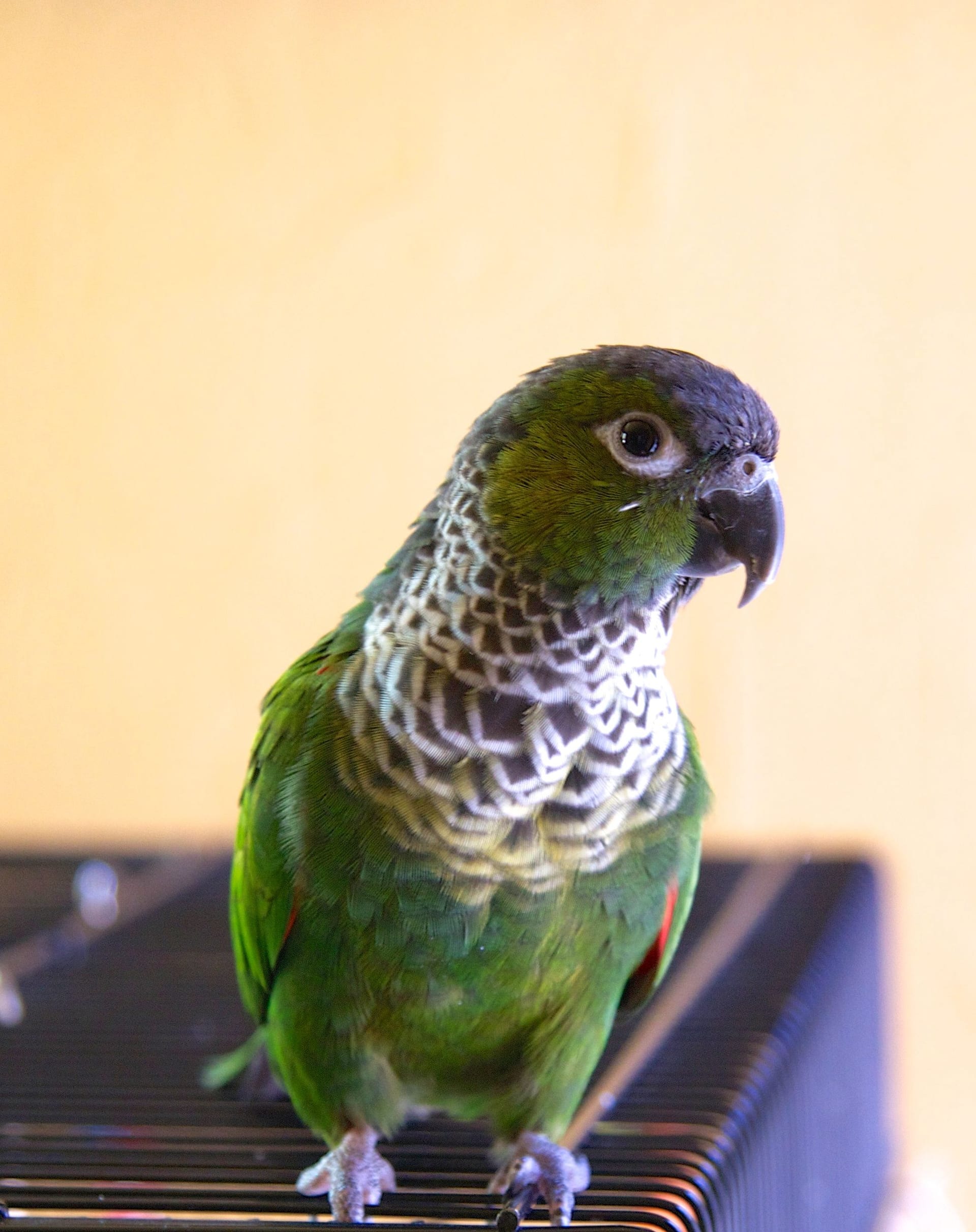
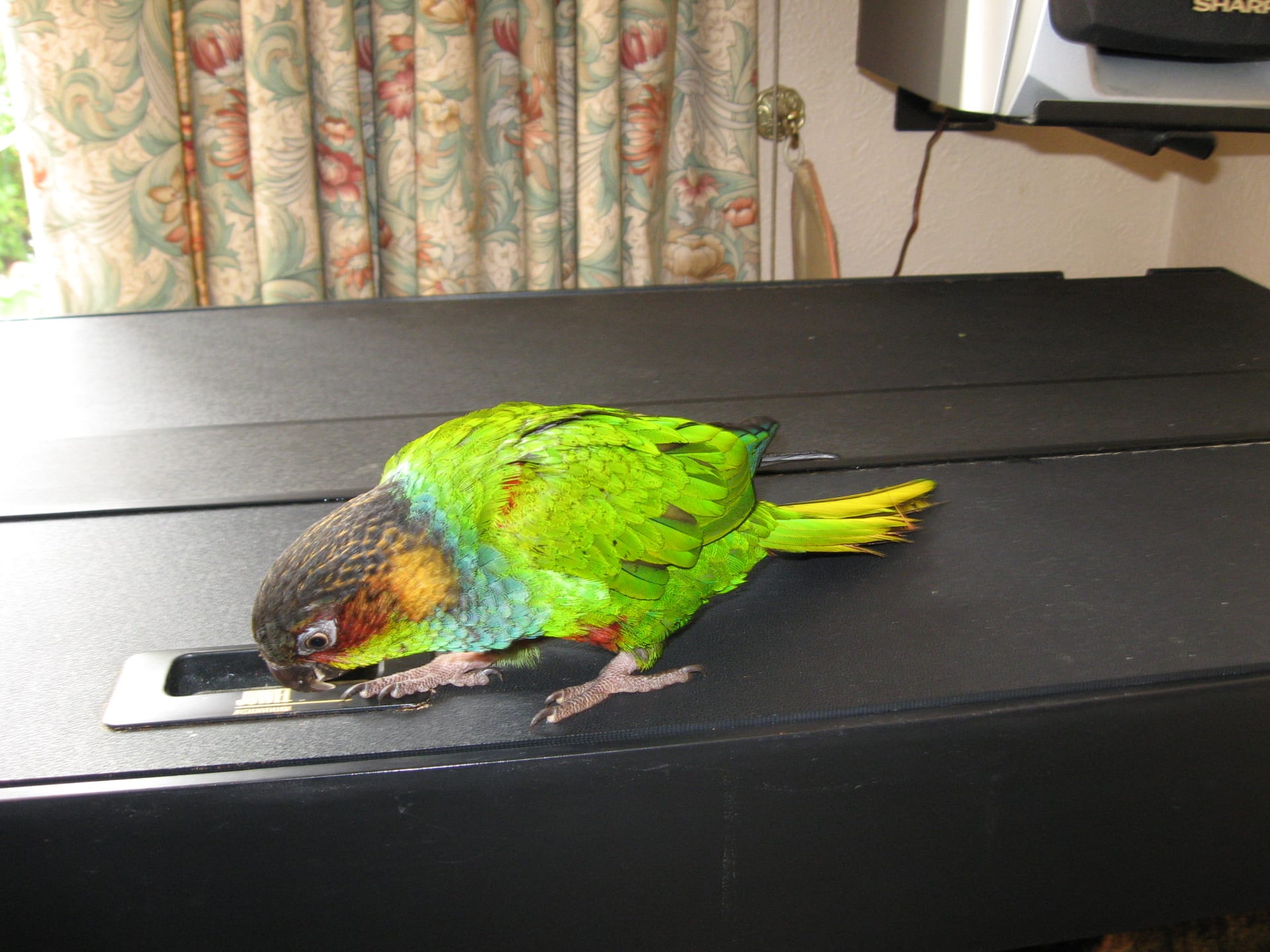
One of the largest Pyrrhura conures, wearing a blue upper breast like a bib with yellow-orange on the sides of the neck. Listed on CITES Appendix I and assessed as Vulnerable, it is very rarely traded.
Difficulty
Advanced
Temperature
15〜30℃
Lifespan
15-25 years
Size
About 30cm
Humidity
40〜60%
Diet
Pellet-based diet, seed mix, fruit, vegetables
About
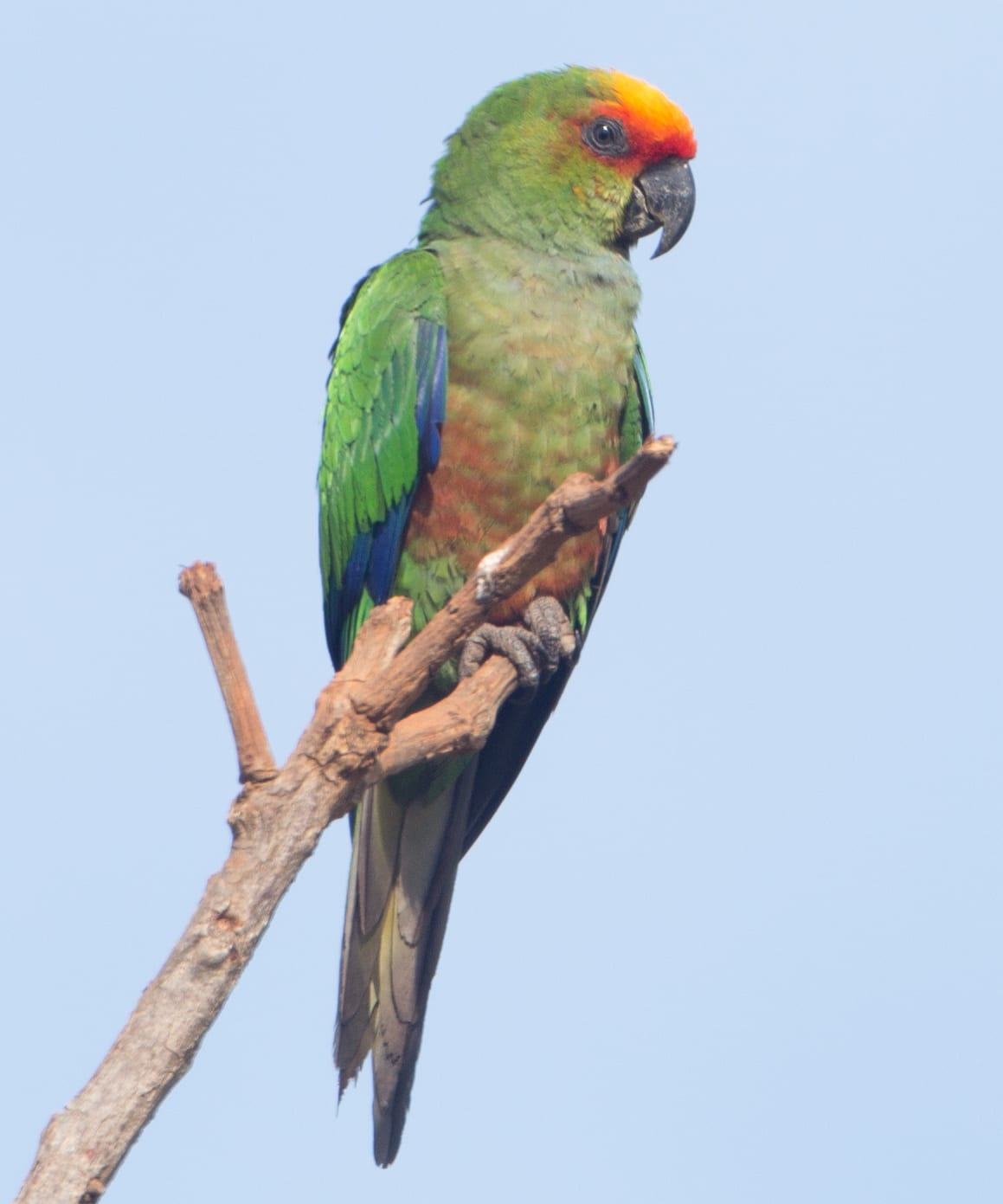
The blue-throated conure (Pyrrhura cruentata) is endemic to the Atlantic Forest of eastern Brazil and, at about 30 cm and around 90 g, is among the largest Pyrrhura conures. A reddish-brown band runs from the forehead through the eye region to the ear coverts, the sides of the neck are yellow-orange, and the blue upper breast looks like a bib, which gives the bird its Japanese name. No subspecies are recognised. A century of forest clearance and fragmentation, compounded by ongoing trapping for the bird trade, has left a declining population of 2,500-10,000 mature individuals. The IUCN assesses it as Vulnerable and CITES lists it in Appendix I.
Source: Wikipedia (CC BY-SA 4.0)
Lifespan of the Blue-throated Conure
The Blue-throated Conure lives 15-25 years.
The World Parrot Trust recommends a walk-in aviary at least 2 m long, and captive lifespan is 15-25 years.
Size of the Blue-throated Conure
The Blue-throated Conure grows to About 30cm.
Basic Info
Origin
Eastern Brazil (the Atlantic Forest)
Lifespan
15-25 years
Size
About 30cm
Temperature
15〜30℃
Care Specifications
References & Sources
Edited & verified by: BreederDirect editorial team
The taxonomic, regulatory, and husbandry data on this page are compiled and verified against the authoritative primary sources below.
Taxonomy & Authority
Accepted name: Pyrrhura cruentata (Wied-Neuwied, 1820)
Authority databases: GBIF
Nomenclature follows global taxonomic authority databases.
Regulations & Conservation Status
CITES Appendix IIUCN VU · Vulnerable
Pyrrhura cruentata. CITES Appendix I. In Japan it is a designated internationally endangered species, and transfer or sale requires a registration certificate.
Sources: CITES Appendices (Appendix I species) / IUCN Red List
Regulations may change. Always verify the latest information with the relevant authorities.
Blue-throated Conure Listings
Loading latest listingsFind listings for this species