Complete Compatibility Chart for Tropical Fish Cohabitation | Beginner-Friendly Combinations
Many failures in tropical fish cohabitation stem from inadequate compatibility assessment. This guide organizes tankmate compatibility from the perspectives of size, temperament, water conditions, and swimming level, introducing combinations that even beginners can succeed with.
Key Takeaways
Many failures in tropical fish cohabitation stem from inadequate compatibility assessment. This guide organizes tankmate compatibility from the perspectives of size, temperament, water conditions, and swimming level, introducing combinations that even beginners can succeed with.
Understanding the Fundamentals of Tankmate Compatibility
Tropical fish cohabitation is an appealing way to keep multiple species together in one tank, but ignoring compatibility creates endless problems. Issues like fin-nipping, predation of smaller fish, and stress-related disease can all be prevented with proper compatibility checks beforehand.
The four basic axes for assessing tankmate compatibility are:
- Size difference: Any fish small enough to fit in a mouth will be eaten (a body length difference of 3x or more is dangerous)
- Temperament (peaceful, neutral, aggressive): Fish with long fins or vivid coloring are especially prone to aggression
- Water quality requirements: Choose species whose tolerances for pH, hardness, and temperature overlap
- Swimming level: Intentionally divide species among upper, middle, and lower tank zones
Combining these elements to design a stress-free group composition is key to successful cohabitation. In particular, "distributing species across swimming levels" reduces competition for food and naturally establishes a "territory" for each fish.
Recommended Tankmate Combinations for Beginners
Here are some tried-and-true combinations that beginners are unlikely to fail with. All are designed with attention to the balance between tank size and bioload.
Pattern A: The Community Tank Standard (45–60 cm tanks)
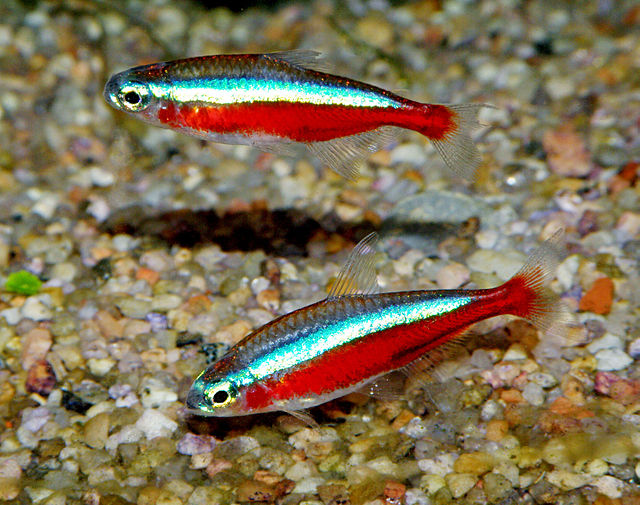
- Neon Tetras × 10 (mid-level, peaceful, schooling)
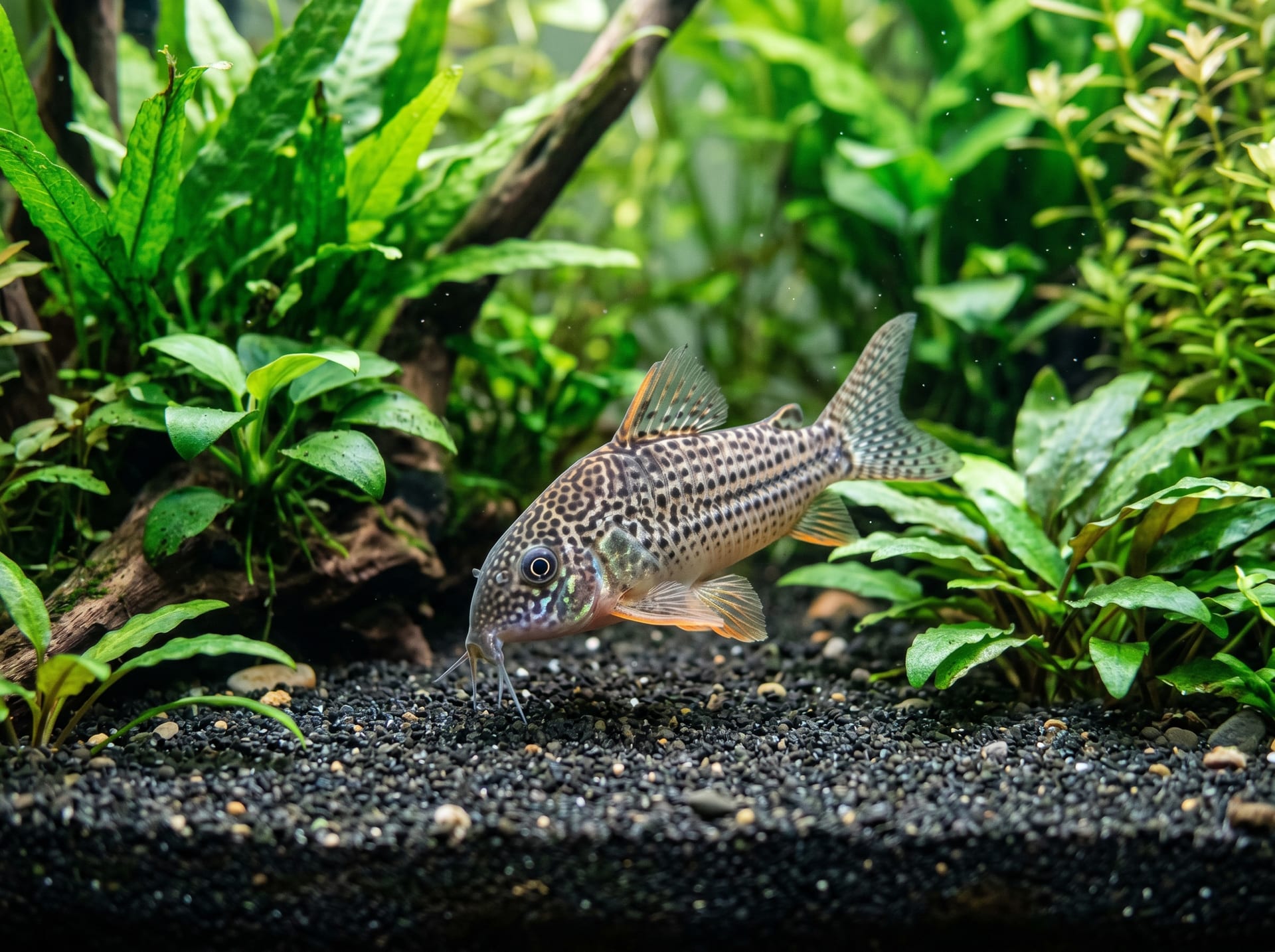
- Corydoras sterbai × 5 (bottom-level, peaceful, substrate cleaning)
- Otocinclus × 3 (glass surface, algae eating, peaceful)
All species are peaceful with similar water requirements and work great in planted tanks. Since Corydoras dig in the substrate, use fine sand (pool sand or silica sand) to avoid damaging their barbels. Neon Tetras maintain beautiful schooling behavior when kept in groups of 10 or more.