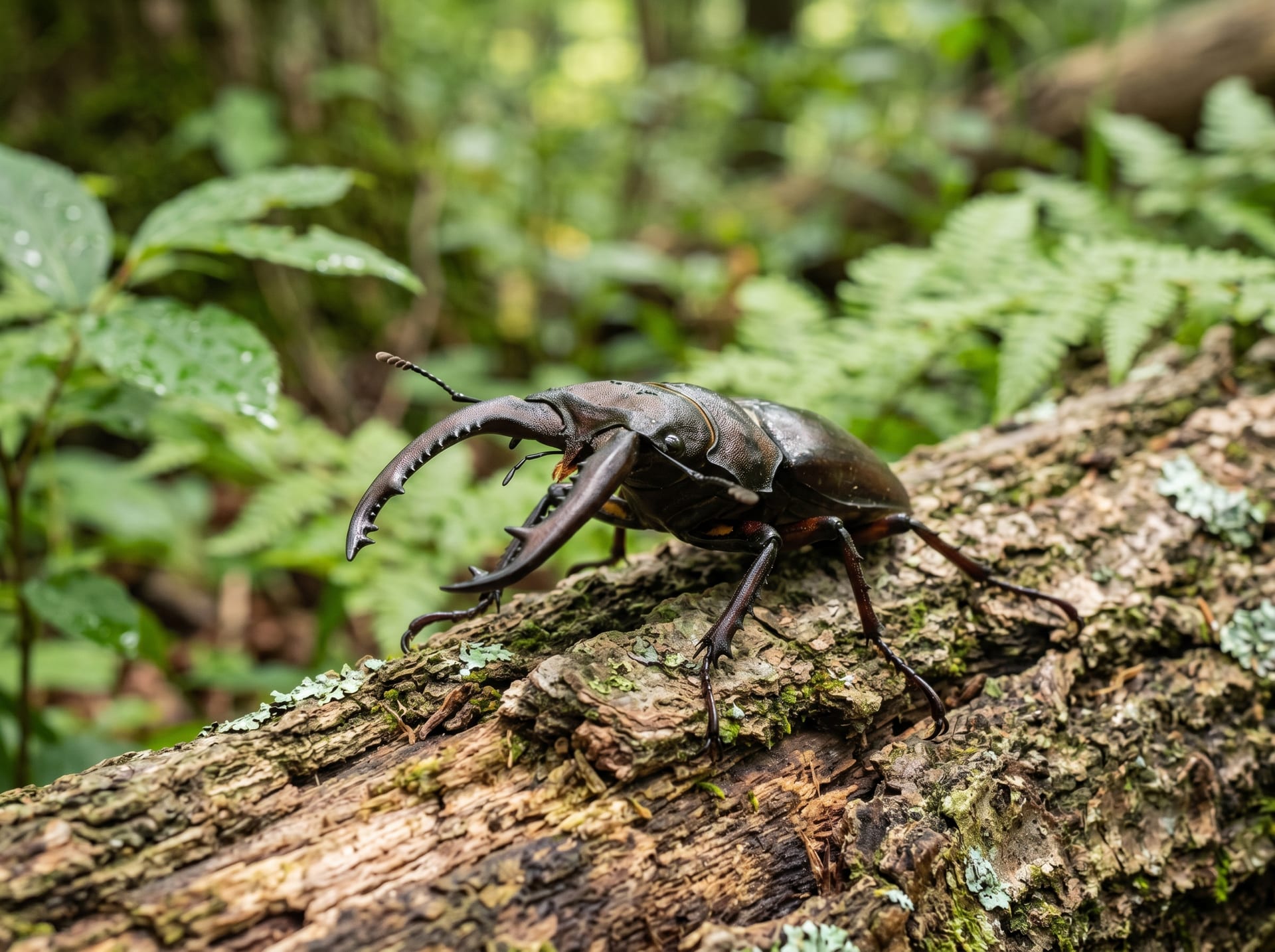
What Are Miyama Stag Beetles?
Miyama stag beetles (Lucanus maculifemoratus) are stag beetles native to mountainous and high-altitude regions of Japan, as their name suggests—"Miyama" means "deep mountain." They are difficult to collect in lowlands and are mountain insects that prefer cool, high-altitude environments.
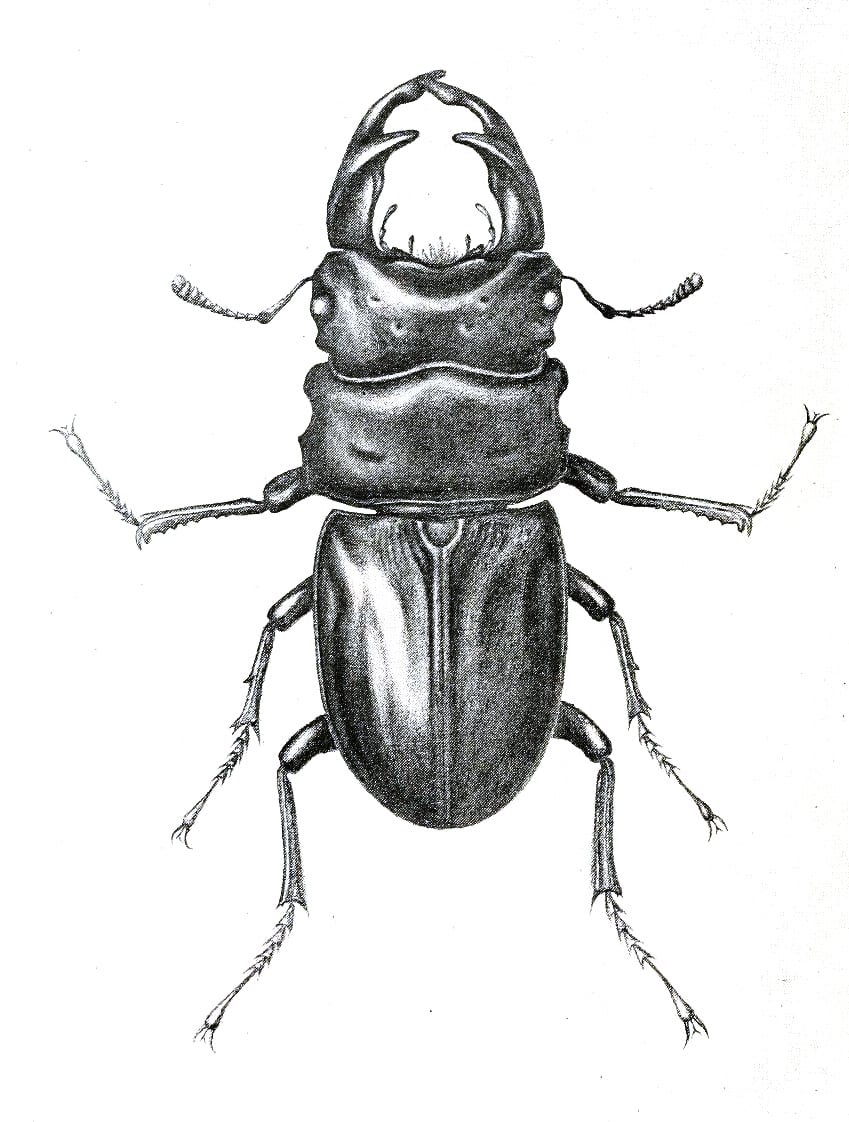
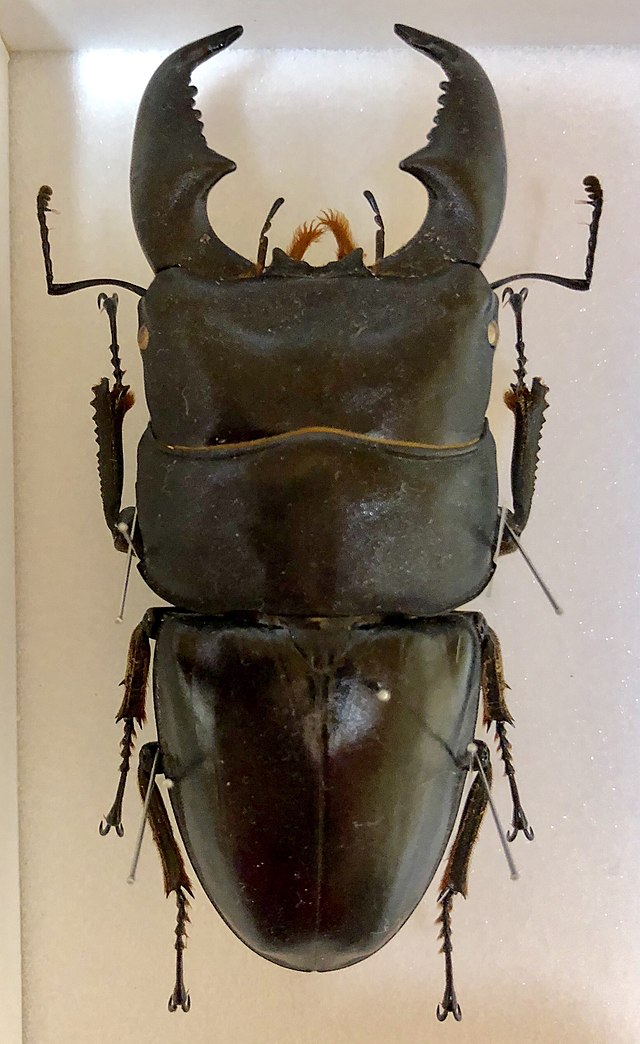
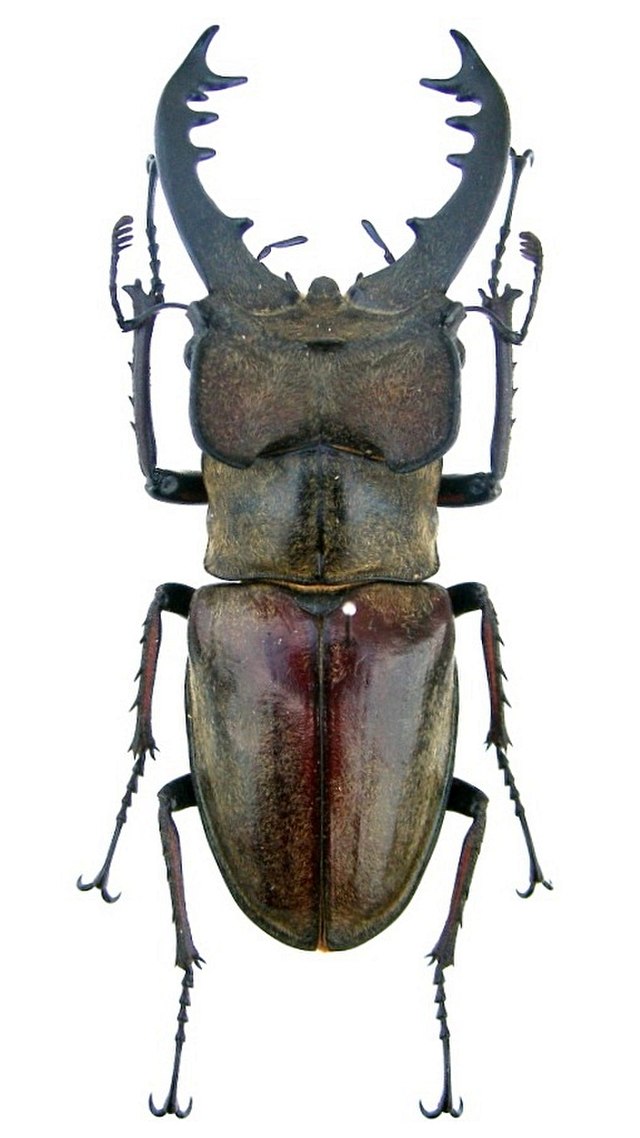
Males are distinctive for their unique head shape (protruding "ear-like projections" and "crown-like projections") and stand out as one of the most characterful-looking stag beetles among Japanese species.
Basic Specs
| Item | Details |
|---|
| Adult body length (male) | 45–78 mm |
| Adult body length (female) | 30–48 mm |
| Origin | Throughout Japan (mainly high-altitude regions) |
| Adult lifespan | 2–3 months (extremely short-lived) |
| Larval period | 2–3 years |
| Price range | ¥1,000–5,000 (varies by size and origin) |
Miyama stag beetle adults are extremely short-lived; after emerging in early summer, most die by autumn without overwintering. This is a major difference from other stag beetles.
How Long Do Miyama Stag Beetles Live?
Miyama stag beetle adults live approximately 2–3 months from the onset of activity. Unlike Japanese giant stag beetles or flat stag beetles, they do not overwinter as adults or live 2–3 years; individuals active in summer typically reach the end of their lifespan by autumn (around September–November). This is because they are adapted to cool mountain environments and struggle to survive the prolonged summer heat of lowlands.
The progression from emergence to death is as follows:
| Stage | Timing | Condition |
|---|
| Emergence | Early to mid-summer | Adult develops inside pupal chamber |
| Dormancy (pre-feeding) | 2–4 weeks after emergence | No feeding until body hardens |
| Post-emergence feeding / activity begins | End of rainy season through mid-summer | Begins feeding and breeding behavior |
| Active period | Approximately 2–3 months | Most active; peak of care and observation |
| Decline and death | Autumn (September–November) | Movement slows, lifespan ends |
Do Males and Females Have Different Lifespans?
There is no major difference in lifespan between males and females; both typically have an active period of 2–3 months. However, females that have mated and laid eggs tend to exhaust their strength and die sooner, whereas females kept singly may live until late autumn. Males also become exhausted through mating and combat, so if you want to observe them for longer, keeping them singly without breeding is most reliable.
Why Do They Die Right After Purchase or Collection?
When they die within days to weeks of starting care, it is almost always due to one of the following:
- High temperature: Prolonged exposure above 28°C weakens them within days. This is the most common cause of death.
- Late acquisition timing: Wild-caught individuals (WD) obtained after late August are already in the latter half of their active period and may have only weeks of life remaining.
- Overturning: They exhaust themselves when flipped over and unable to right themselves. Always include wood pieces or fallen leaves as footholds.
- Drying out: Dehydration occurs if the substrate dries. Maintain moisture with regular misting.
- Cohabitation stress: Combat between males or accidents where males injure females.
To keep them longer, choose individuals that have recently emerged—specimens from early to mid-July—or captive-bred individuals (CB) sold early in the season to enjoy their active period for longer.
Three Tips to Extend Lifespan
Keep temperature at 25°C or below (ideally 20–23°C), separate males and females to avoid breeding-related exhaustion, and never run out of high-protein insect jelly. For more on lifespan differences among stag beetles, see the Stag Beetle Lifespan Guide, and for collection season information, see the Beetle and Stag Beetle Collecting Season Guide.
Care Difficulty
Miyama stag beetles are said to be more difficult to care for than other stag beetles (such as Japanese giant stag beetles or saw stag beetles). The main reasons are:
- Sensitivity to heat: They become ill above 25°C and may die in a short time at 30°C or higher.
- Short adult lifespan: They die by summer's end even in nature and do not overwinter as adults.
- Long larval rearing period: Takes 2–3 years, requiring patience.
- Difficult breeding: Proper breeding setup arrangement and temperature control are critical.
Adult Care
Required Care Environment
Temperature management is paramount.
| Temperature | Condition |
|---|
| 20–25°C | Optimal; actively moving. |
| 26–28°C | Within tolerance but caution needed. |
| 29°C and above | Dangerous; may weaken in short time. |
| 32°C and above | High death risk (summer indoor environments are dangerous). |
For adult care, the ideal location is beside a refrigerator, in a shaded cool place, or in low-temperature control equipment (wine cooler, insect incubator).
Container and Setup
- Container size: Medium to large (care container medium size or larger).
- Substrate: Lay fermented or insect substrate about 5–10 cm deep.
- Overturning prevention: Include plenty of bark and wood branches (Miyama stag beetles often cannot right themselves after flipping).
- Food (jelly): High-protein beetle or stag beetle insect jelly. Deep-type jelly of 16–32 g is particularly easy for them to feed on.
- Humidity: Mist approximately once per week to prevent substrate drying.
Adult Characteristics
Miyama stag beetle males can be aggressive toward females. Keep paired cohabitation only for breeding purposes, and manage them separately except when setting up a breeding container.
How to Set Up a Breeding Container
Success in breeding Miyama stag beetles depends on temperature management and preparing a suitable breeding substrate.
Materials
- Fermented substrate (fully fermented product is ideal)
- Breeding wood from konara or kunugi oak (soft to medium hardness)
- Large care container (large-size fly-proof container recommended)
Setup Method
- Soak breeding wood in water for 24–48 hours to hydrate.
- Pack fermented substrate firmly on the container bottom to a depth of 15–20 cm.
- Arrange breeding wood horizontally and cover with substrate until about half-buried.
- Layer 5–7 cm of substrate loosely on top.
- Humidity should be such that squeezing produces no water seepage.
Temperature During Breeding
22–24°C is ideal. At high temperatures (26°C and above), egg production decreases and females weaken more easily. Low-temperature management is essential even during the breeding setup.
Egg Retrieval
Retrieve eggs 8–10 weeks after breeding. Eggs and first-instar larvae can be found inside and around the breeding wood. Handle eggs gently as they are extremely delicate.
Larval Rearing
Care Method (Substrate Rearing)
Fermented substrate rearing is the standard for Miyama stag beetle larvae. Mushroom bottle rearing often has poor compatibility, so substrate rearing is recommended.
| Stage | Container | Substrate |
|---|
| First to early second instar | Pudding cup 120–200 cc | Fully fermented substrate |
| Mid-second instar onwards | 800–1000 cc bottle | Fully fermented substrate |
| Late third instar | 1100–1500 cc bottle | Fully fermented substrate |
Larval Temperature Management
Larvae tend to grow larger when kept at the lowest possible temperature.
| Temperature | Notes |
|---|
| 15–20°C | Ideal larval rearing temperature; allows slow growth to maximum size. |
| 20–23°C | Within tolerance; growth accelerates but maximum size tends to be slightly smaller. |
| 25°C and above | Larvae exhaust quickly and may pupate prematurely. |
In winter (December–February), larvae enter hibernation (dormancy) at temperatures around 10–15°C and require no feeding during this period.
Substrate Replacement Timing
- Replace approximately every 3–4 months.
- Replace when substrate degrades and darkens.
- Never excavate once larvae begin forming pupal chambers.
Pupation and Emergence
Larvae create their own pupal chamber in the substrate and pupate there. Once pupation occurs, never subject them to vibration and keep management quiet. Leave them undisturbed for 1–2 months after emergence, then remove once they have hardened.
Adult Overwintering
Miyama stag beetle adults basically cannot overwinter. This is a major difference from many other stag beetles (such as Japanese giant stag beetles).
As autumn arrives, their movement gradually slows, and most die by year's end (around October–November). Even long-lived individuals rarely survive until the following spring.
Therefore, the joy of keeping Miyama stag beetles lies mainly in the 3–5 year cycle of collection (summer), breeding setup, and larval rearing.
Collection Tips (Reference)
Reference information for collecting Miyama stag beetles:
- Season: July–August (summer nights)
- Location: Mountainous areas at approximately 400–1500 m elevation; tree sap in konara, kunugi, and beech forests
- Time: After sunset to midnight
- Method: Tree sap collection, light trap
Miyama Stag Beetle Care Difficulty: Comparison with Other Stag Beetles
While Miyama stag beetles are said to be difficult, comparing them with other native Japanese stag beetles clarifies what exactly is challenging.
| Species | Care Difficulty | Adult Lifespan | Adult Overwintering | Heat Resistance |
|---|
| Miyama stag beetle | ★★★★☆ (difficult) | 2–3 months | No | Very weak (dangerous above 25°C) |
| Japanese giant stag beetle | ★☆☆☆☆ (easy) | 2–3 years | Yes | Relatively strong |
| Saw stag beetle | ★★☆☆☆ | 2–3 months | No | Average |
| Flat stag beetle | ★★☆☆☆ | 1–2 years | Yes | Relatively strong |
As the table shows, the difficulty with Miyama stag beetles is not about technique but rather "whether you can maintain an environment constantly at 25°C or below." Conversely, if you can ensure a cool environment, feeding and breeding setup procedures are little different from saw stag beetles. Beginners should measure the maximum temperature of their intended location during summer before deciding to keep them—this is the key to avoiding failure.
Five Summer Heat Prevention Strategies: How Much Heat Can They Take?
The biggest challenge for both adults and larvae is July–September. The longer temperatures exceed 25°C, the greater the exhaustion; in the 30s°C range, death risk increases rapidly in a short time. Here are the main cooling methods:
| Strategy | Initial cost | Temperature stability | Best for |
|---|
| 24-hour AC management | ¥0 (existing equipment) | ◎ | Many specimens / often at home |
| Wine cooler | ¥20,000–50,000 | ◎ | Mostly larvae bottles / long-term breeding |
| Small incubator (Peltier-type) | ¥10,000–20,000 | ○ | Several adults + few larvae bottles |
| Foam box + ice packs | ¥200–2,000 | △ | Temporary short-term / few specimens only |
| Move to entrance / north-facing room | ¥0 | △ | Cool home environment / cold regions |
When using ice packs, the key is to replace them twice daily and wrap them in a towel so they don't touch the container directly. Direct contact causes excessive local cooling and temperature fluctuations that create stress instead. Frozen water bottles work as a substitute, but place a tray underneath to prevent condensation water from dripping onto the substrate.
Frequently Asked Questions
How Many Years Is the Miyama Stag Beetle Larval Period?
Basically 2–3 years. At lower rearing temperatures (15–20°C), they grow large over nearly 3 years, while management above 20°C tends to result in emergence in around 2 years. Emergence in a single year is extremely rare.
Can Miyama Stag Beetles Be Kept at Room Temperature?
Room-temperature rearing is difficult in environments where summer indoor temperature exceeds 28°C. They can be kept at room temperature if your environment maintains 25°C or below even in midsummer (such as Hokkaido or high-altitude regions). In other areas, cooling equipment such as AC, wine coolers, or insect incubators is essentially necessary.
Do Adults Hibernate (Overwinter)?
No. Miyama stag beetle adults normally reach the end of their lifespan by autumn and almost never overwinter and remain active the following year, unlike Japanese giant stag beetles. Larvae, however, enter dormancy at around 10–15°C in winter and survive the season in that state.
What Should I Feed Them?
Commercial high-protein insect jelly is ideal. Fruits such as watermelon or banana have too much water and can cause diarrhea and fruit fly infestations, so regular use is not recommended. Replace uneaten food within 2–3 days, and remove jelly buried in substrate to prevent mold.
Summary
Miyama stag beetles can be successfully kept with proper temperature management, but their short adult lifespan and weakness to heat are the biggest hurdles. The sense of accomplishment from raising larvae and achieving emergence over three years is exceptional, making them ideal for those who enjoy long-term care planning. If you have equipment to maintain a cool environment, try raising this characterful stag beetle born from Japan's deep mountains.