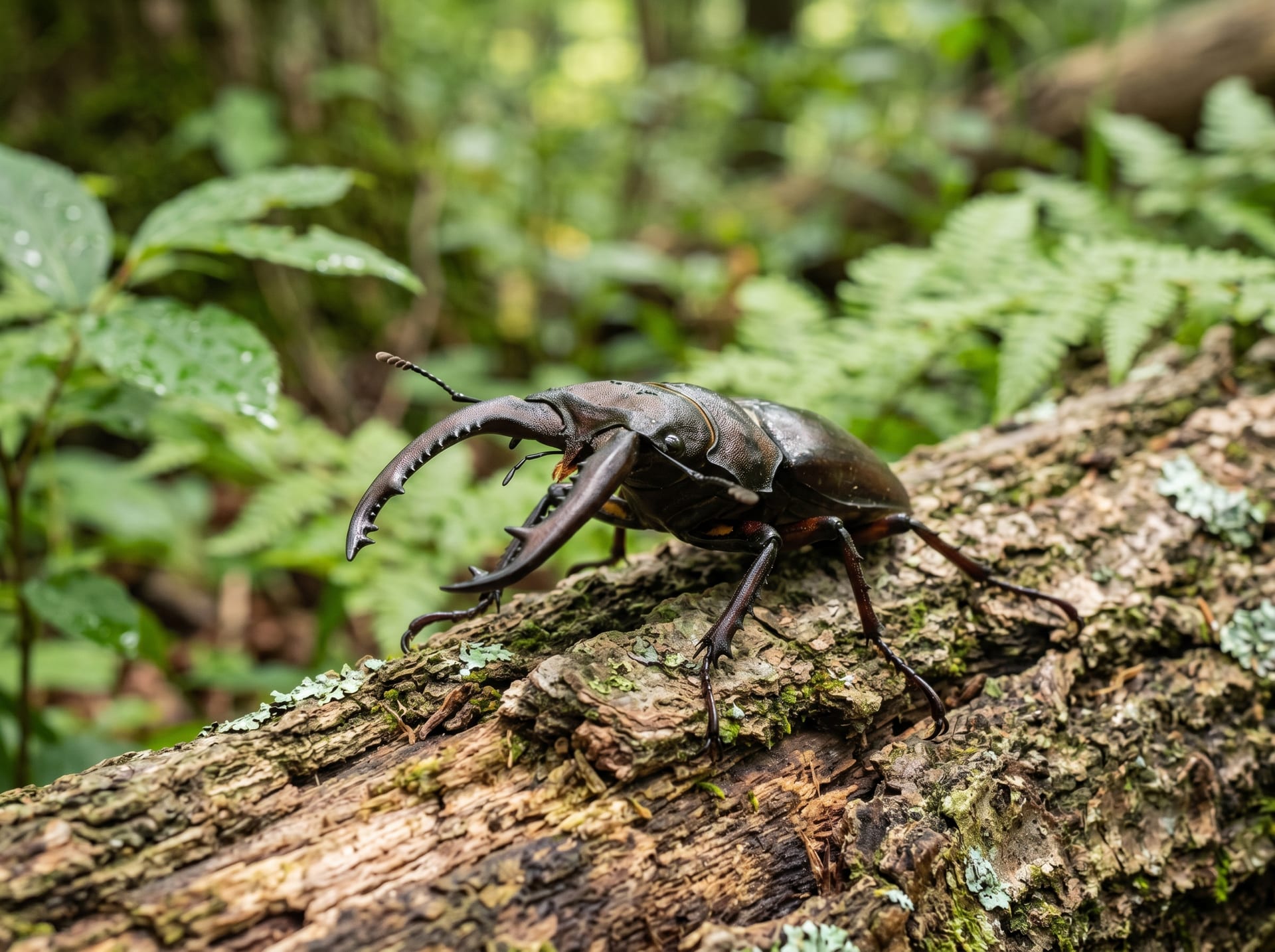
On summer nights, heading into mixed forests to search for stag beetles and Japanese beetles—insect collecting is a beloved Japanese summer tradition that captivates both children and adults. However, few people truly understand "when, where, and how to go to catch them." This article brings together practical information from the basics of "what month you can start catching them" through monthly appearance patterns, the relationship to temperature and weather, and how to choose the right time of day.
What Months Can You Catch Japanese Beetles and Stag Beetles?
To start with the conclusion, in the lowlands of Honshu, adult Japanese beetles and stag beetles can be seen from late June through early September, with the peak season from mid-July through mid-August. During this time, adults emerge above ground, become active, and gather at tree sap.
- Activity begins (appearance): From around late June when temperatures stabilize at around 25°C
- Peak season (best collecting): Mid-July through mid-August after the rainy season ends
- Activity ends: Early to mid-September when mornings and evenings cool down
The lifespan of adults varies greatly depending on the species. Japanese beetles live 2–3 months (only during summer), while stag beetles such as giant stag beetles live for several months to several years. In other words, "the period when you can see adults in summer" and "lifespan in captivity" are different things.
Monthly Appearance Patterns
Keeping track of what happens each month makes it easier to avoid missing the timing for your outing.
June: This overlaps with the rainy season, so collecting days are limited, but mountain stag beetles and flat-horned stag beetles begin to emerge from mid-June. By month's end, Japanese beetles start to appear even in the Kanto plains, marking the beginning of the collecting season.
July: As the rainy season ends, activity levels increase sharply. Mid-July is when most species are present, making it the time of year with the most opportunities to catch them. Mountain stag beetles begin to decrease in numbers from late July onward, so targeting early July is key.
August: Japanese beetles, saw stag beetles, and small stag beetles are at their peak. The period around mid-August coincides with the peak of collectors' outings, but individual numbers are also high at this time. By month's end, mornings and evenings begin to cool, and activity levels gradually decline.
September: Small stag beetles and flat-horned stag beetles are still visible, but Japanese beetles are nearly finished. Early September is effectively the end of the collecting season, and as average temperature drops, individual numbers decline rapidly.
Detailed Monthly Calendar by Species
The table below is based on the lowland plains of the Kanto and Chubu regions. ◎ = best collecting period, ○ = can catch, △ = few/beginning/ending, — = barely seen.
| Species | Early June | Mid June | Late June | Early July | Mid July | Late July | Early Aug | Mid Aug | Late Aug | Early Sept |
|---|
| Japanese Beetle | — | — | △ | ○ | ◎ | ◎ | ◎ | ◎ | ○ | △ |
| Saw Stag Beetle | — | △ | ○ | ◎ | ◎ | ◎ | ◎ |
Summary of Best Collection Period by Species
- Japanese Beetle: Mid-July through mid-August. They increase rapidly right after the rainy season ends, so heading out immediately after the official rainy season declaration is the rule.
- Saw Stag Beetle: Early July through early August. Appearance timing is nearly the same as Japanese beetles, and they are often caught at the same tree sap locations.
- Mountain Stag Beetle: Late June through early July is best. They disappear rapidly when temperatures get too high. In higher altitude mountain areas, they can be caught until late July.
- Small Stag Beetle: July through August are easier times to collect, but this species continues to be active through September, and individuals preparing to overwinter can also be seen.
- Giant Stag Beetle: July is peak. Habitat is localized and numbers are few, making this rare species difficult to deliberately catch.
- Flat-horned Stag Beetle: Active for the longest period (May–September). They tend to have an even longer period in western Japan.
When Exactly Is the Japanese Beetle Season?
Focusing specifically on "the Japanese beetle season": Adult Japanese beetles can be seen from late June through late August in the Honshu lowlands, with the peak from mid-July through mid-August. They appear slightly later than stag beetles (mountain and flat-horned types appear from mid-June) and few remain into September.
- From when?: Activity intensifies from around late June to early July, around the end of the rainy season. In western Japan like Kyushu, aim for mid-June; in Tohoku aim for early July
- What time do they appear?: 7 PM to 10 PM is when they are most active, with peak emergence around 10 PM. Early morning from 4–6 AM you can also catch individuals staying on tree sap
- When can you catch them until?: Numbers drop sharply by late August, and essentially end by early September. Adult Japanese beetles do not overwinter, and their lifespan in the wild is 1–2 months. In other words, the season when you can catch Japanese beetles is limited to roughly two and a half summer months
Unlike stag beetles, Japanese beetles do not overwinter, so you can only encounter this year's adults in summer. Heading out on a hot, humid night during the peak season from mid-July through mid-August is the surest approach.
Regional Appearance Times (Hokkaido to Kyushu)
To answer the question "what month do they start appearing in my region?" here is a summary of expected appearance times by region. Since this is linked to temperature, the further north you go the later it appears and the shorter the season, and the further south the earlier and longer.
| Region | Start Appearing | Peak Season | Ending |
|---|
| Hokkaido | Mid-July | Late July–August | Mid-September |
| Tohoku | Early July | Late July–mid-August | Early September |
| Kanto/Koshin | Late June | Mid-July–mid-August | Early September |
| Chubu/Kinki | Late June | July–August | Early September |
| Chugoku/Shikoku/Kyushu | Mid-June | July–early August | Late August–September |
In high altitude mountain areas, mountain stag beetles are abundant, while in plains saw stag beetles and Japanese beetles dominate. Even within the same prefecture, mountainous areas tend to be 1–2 weeks behind the plains. Okinawa and remote islands have different species composition and a longer active period than the mainland, so check region-specific information.
Temperature, Weather, and Collecting Effectiveness
Temperature Guide
Nighttime temperature directly affects collecting success. Rough guidelines are as follows:
| Nighttime Temperature | Activity Level |
|---|
| 28°C or higher | Extremely active. The easiest night to catch them. |
| 25–28°C | Active. Sufficient collecting opportunity. |
| 20–25°C | Slightly reduced. You can catch them, but individual numbers are low. |
| 20°C or below | Inactive. Not suitable for collecting. |
A good rule of thumb is "the collecting season starts when nighttime lows consistently exceed 20°C." In particular, nights when the nighttime low is around 23–25°C are prime collecting opportunities.
Collecting Effectiveness by Weather
- Clear, hot, humid nights: Most productive. Tree sap fermentation advances and scent spreads over a wide area.
- Humid nights after rain: Insects become active and move around, making it an easy collecting night.
- Cloudy, windless nights: Standard collecting day.
- Dry, windy nights: Scent disperses poorly, and insect activity is somewhat reduced.
- During rain: Activity drops sharply. It is safer to avoid collecting.
Sign of rainy season ending: Once temperatures consistently exceed 30°C after the rainy season ends, you enter the prime collecting period. Heading out within 2–3 days after the official rainy season declaration from the Japan Meteorological Agency often finds peak individual numbers.
Japanese Beetle and Stag Beetle Activity Times | What Time of Day Is Best for Collecting
Activity Levels by Time of Day
Most stag beetles and Japanese beetles are nocturnal, becoming active after sunset. Below is a general guide to activity patterns.
| Time of Day | Activity Level | Notes |
|---|
| Sunset–6 PM | Low–medium | Activity begins. You can target early arrivals. |
| 7–8 PM | Medium–high | Activity becomes serious. They begin circulating on tree sap trees. |
| 8–10 PM | High (peak) | Most productive time of day. |
| 10 PM–midnight | Medium–high | Still active. Even after the peak, you can catch them. |
| Midnight–3 AM | Low–medium | Declining trend. Quiet individuals may be settling. |
| 4–6 AM (early morning) | Low | Time to quietly search for settled individuals. |
One Night Activity Cycle (Japanese Beetle Case)
Japanese beetle activity follows sunset. Understanding the flow of one night makes it easier to decide when to arrive at your location.
- Sunset–7 PM: Emerging from soil and rotting wood. Not yet fully gathered at tree sap
- 7–8 PM: Beginning to move to tree sap trees. Flying increases, and they are attracted to lights
- 8–10 PM: Activity peak. Multiple individuals gather at the same tree, and conflicts appear (peak Japanese beetle arrival is around 10 PM)
- 10 PM–2 AM: Numbers decline, but settled individuals do not move, making them easier to collect
- 3 AM–dawn: Most leave tree sap and return to hiding places
- 4–6 AM: Only remaining individuals stay on tree sap. Numbers are small but so is competition
In other words, "the time they are active" spans from sunset to dawn, and the time with the highest collecting efficiency is 8–10 PM. If you arrive after 11 PM, you may get better results switching to 4–6 AM the next morning.
Note that this time of day changes by season (month) due to sunset time shifting. Sunset in late June is after 7 PM, while by late August it is around 6:30 PM, so in late August the same "two hours after sunset" is about 30 minutes earlier on the clock.
Peak Activity Times by Species
- Japanese Beetle: Peak activity around 10 PM. Many individuals are attracted to lights.
- Stag Beetles in general: 8–10 PM is when they move most. They tend to attach to tree sap slightly earlier than Japanese beetles.
- Mountain Stag Beetle: Prefers relatively cool nights, and becomes active around 8–9 PM in high altitude locations.
On nights with high temperatures (25°C and above) activity is more vigorous. On rainy or windy days activity declines. Conversely, hot, humid nights after rain are said to be particularly productive.
Merits and Drawbacks of Early Morning Collecting (4–6 AM)
Merits: No competition from other collectors. You can quietly observe and collect individuals that have been settled on tree sap since the previous night. Relatively calm individuals are easier to collect.
Drawbacks: Collecting volume is less than peak time. You need safe movement and precautions in the dark. Japanese beetles often leave tree sap around dawn.
How to Find Collection Sites
Types of Trees Where Tree Sap Flows
Stag beetles and Japanese beetles gather at trees with tree sap (nutrient-rich liquid).
Representative trees:
- Kunugi oak (most standard; acorns are large and round)
- Konara oak (second most standard)
- Mizunara oak (mountain and northern Japan)
- Willow (along rivers)
- Ubamegashi (western Japan)
Points where tree sap flows:
- Wounds (where bark is peeled)
- Insect-eating marks (after longhorn beetles, etc. have fed)
- Tree bark cracks
How to Find Locations
- Local insect collecting maps and SNS (collectors in each area share information)
- Participate in local insect and nature communities
- Walk through satoyama, mixed forests, and forest edges of parks to confirm directly
If you are targeting stag beetles, the guide Stag Beetle Collecting Times and Habitats: Targeted Spots by Season with specific target spots by region for Kanto and Kansai is also helpful.
Caution: Collecting may be prohibited on private land or within national parks. Always confirm permission from the landowner or check in advance whether collecting is permitted.
Collection Methods
1. Direct Collection (Tree Sap Collection Without Lights)
Carry a flashlight (headlamp) and check trees with flowing sap one by one. The most standard method.
Tips:
- Check carefully from the base to the upper trunk (especially tree bark cracks and wounds)
- Many are found on the back side of the tree
- Also check branch bases and forks
2. Banana Trap
Mix ripe blackened banana, sugar water, and liquor, tie it to a tree trunk, and collect the insects that gather.
How to make it:
- 1 banana (blackened)
- 50g sugar
- 100ml liquor Mix together in a plastic bag and allow to ferment lightly (about 1 day).
Placement: Fix it to the tree trunk at 1.5–2m height in the evening the day before you plan to check at night. Check early the next morning or that night.
3. Light Trap
Set up a powerful white light (mercury lamp, blacklight, etc.) at night to attract and collect insects drawn to the light. Highly effective but requires large equipment and consideration for light pollution and other collectors.
Precautions While Collecting
Safety:
- Night forests have poor visibility and are dangerous. Always go with a group or inform someone beforehand if you go alone and check safety
- Watch for snakes, especially pit vipers (Mamushi). Be careful of ground level and tree root areas
- Tick prevention (long sleeves, long pants, insect repellent spray)
Legal and Rules:
- Do not collect in prohibited areas (national parks, designated natural monuments)
- Rare species (giant stag beetles are protected by ordinance in Aichi and some regions) require verification before collecting
- Introducing and releasing non-native species is prohibited
Etiquette:
- Do not peel tree bark or damage trunks to collect
- Take trash with you
- Do not casually post collection site information online (to prevent overharvesting)
Frequently Asked Questions | Japanese Beetle and Stag Beetle Collecting Q&A
Q. What month can you start catching Japanese beetles?
In the Honshu lowlands, you can start catching them from late June to early July, with the peak season from mid-July through mid-August. In western Japan aim for mid-June, and in Tohoku and Hokkaido aim for July.
Q. What time of day are Japanese beetles easiest to catch?
7 PM to 10 PM after sunset is when they are most active, with peak arrival around 10 PM. If targeting individuals settled on tree sap from the previous night, early morning 4–6 AM is also effective.
Q. Can you catch them on rainy days?
During rain, activity drops sharply, making it unsuitable. On the other hand, hot, humid nights after rain actually become easier to catch them on. Hot, humid nights when nighttime lows exceed 23–25°C are your target.
Q. How long do collected Japanese beetles and stag beetles live?
Adult Japanese beetles do not overwinter, and their lifespan in the wild is 1–2 months. Some stag beetles like giant stag beetles live for several years in captivity. For species-specific differences, see Japanese Beetle and Stag Beetle Popularity Ranking and Stag Beetle Lifespan Guide.
Q. Can I collect anywhere?
Collecting may be prohibited or restricted in national parks, designated natural monuments, and on private land. Always check in advance whether collecting is permitted, and follow etiquette such as not damaging trees and taking trash with you.
Summary
Once you understand "the right time, place, and method" for collecting stag beetles and Japanese beetles, the chances of encountering them increase significantly even for inexperienced people. Appearance times vary greatly by region, so the trick is to head out during the peak season in your area (often mid-July through mid-August). If you want to keep the beetles you collect, check the Japanese Beetle and Stag Beetle Popularity Ranking to find the best species to choose. Raise the collected individuals with care, and approach your time with insects with respect for life.