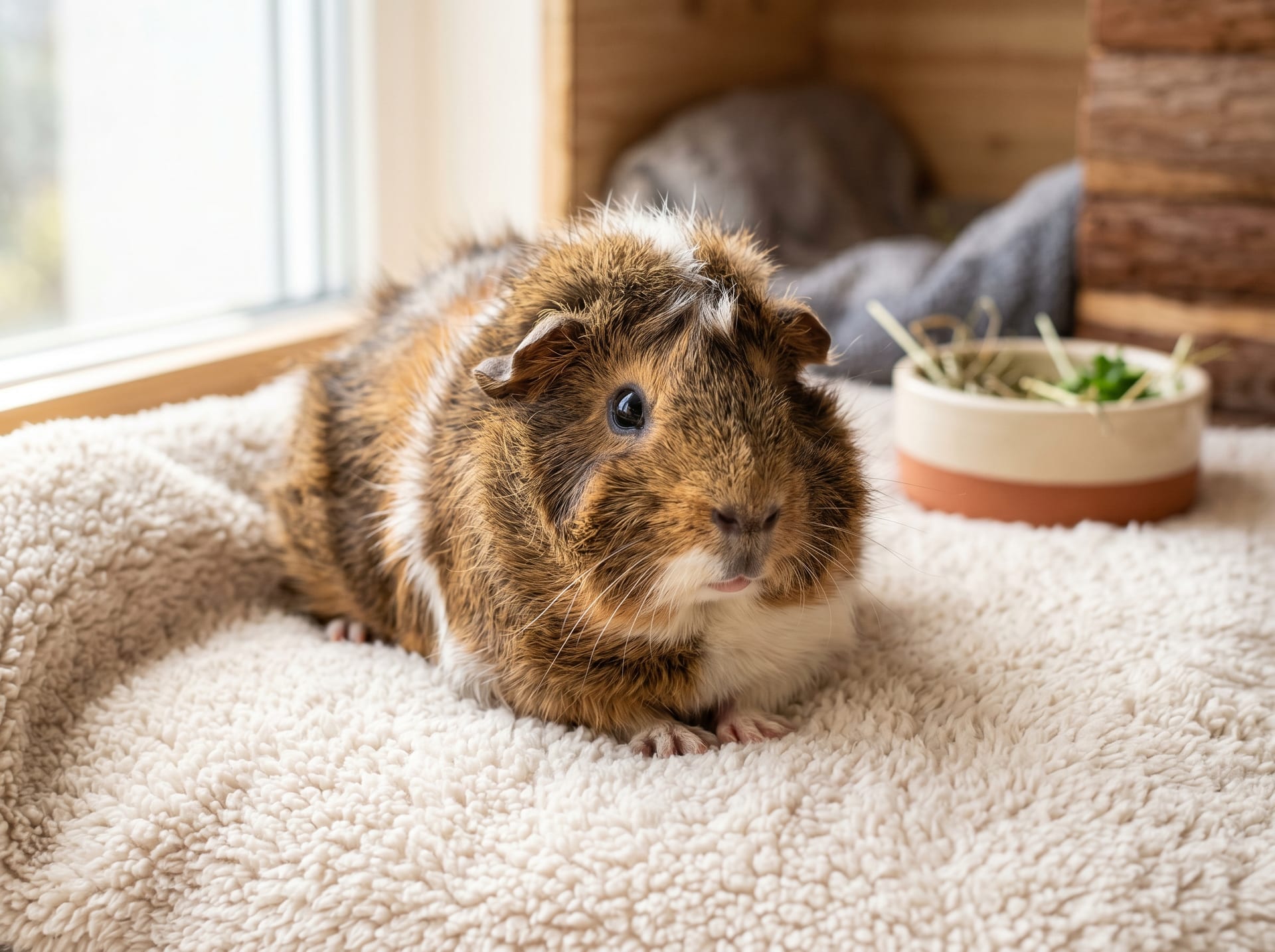
Guinea pigs (Cavia porcellus) are gentle-natured small animals with an adorable, rounded appearance, beloved worldwide. Their quiet vocalizations make them suitable for apartments, and being larger and easier to handle than hamsters, they're excellent companions for children. This article explains all the basics of care for those raising guinea pigs for the first time.
- Origin: South American Andes Mountains
- Body length: 20–35 cm
- Body weight: 700–1,200 g
- Lifespan: 5–8 years
- Diet: Herbivorous (hay, vegetables, pellets)
- Characteristics: Cannot synthesize vitamin C themselves; dietary supplementation is essential.
Guinea pigs are social animals and prefer living in groups rather than alone. If possible, keeping two or more together is recommended (exercise caution regarding breeding when housing males and females together).
Required Housing and Equipment
Cage
Minimum size is 60 cm × 90 cm or larger. The larger the space, the less stress. Since guinea pigs don't jump well, an "open-top" style cage with removable sides is easy to work with. High cages designed for hamsters are unnecessary.
Wooden pens are also easy to use and have the advantage of not catching guinea pig claws as easily.
Bedding
- Paper bedding (most common; soft and highly absorbent)
- Thick layers of hay (timothy; creates a natural environment)
- Fleece mats (washable and reusable; require washing 1–2 times per week)
Avoid metal grates, as they put strain on the feet.
Water Bottle
Bottle-type waterers are hygienic as the water stays cleaner. Replace with fresh water daily.
Shelter (Hideaway)
Having a place to hide increases their sense of security. Wood or ceramic shelters are recommended.
Feeding and Nutrition Management
Hay (Timothy)
Hay makes up 70–80% of a guinea pig's diet. Provide timothy hay (first cutting is highest quality) continuously in a hay feeder so they can eat freely at all times. Hay is essential for dental wear and digestive function.
Pellets
Feed guinea pig–specific pellets at approximately 20–30 g per day (roughly 3% of body weight). Choose pellets specifically formulated for guinea pigs with added vitamin C. Do not substitute rabbit pellets, as they contain insufficient vitamin C.
Vegetables
It is important to offer vitamin C–rich vegetables daily.
Recommended vegetables:
- Bell peppers (especially rich in vitamin C)
- Mustard greens, bok choy, broccoli
- Carrots (leaves are also acceptable)
- Cilantro
Vegetables to avoid:
- Onions, garlic (toxic)
- Potato eyes and raw potatoes
- Avocado
The Importance of Vitamin C Supplementation
Since guinea pigs cannot synthesize vitamin C in their bodies, they must obtain it daily from their diet (requirement: 25–50 mg/kg per day). Vitamin C deficiency causes scurvy (scorbutus), which presents as bleeding gums, weight loss, and reduced activity.
Methods for vitamin C supplementation:
- Daily feeding of vitamin C–rich vegetables
- Guinea pig–specific vitamin C supplements (tablets or powder)
- Adding vitamin C to drinking water (decomposes quickly when dissolved in water, so daily replacement is necessary)
Temperature and Environment Management
Ideal temperature: 18–24°C (avoid heat, cold, and sudden temperature changes)
Ideal humidity: 40–70%
Guinea pigs struggle with temperature regulation, and heatstroke risk increases above 28°C. Air conditioning is essential in summer. In winter, use heating devices (such as pet heaters).
Handling and Communication
Once tame, guinea pigs will sit in your hands and communicate through vocalizations. A "puip-puip" sound indicates they're asking for food, while a "coo-coo" sound signals relaxation.
At first, don't force contact; start by offering food from your hand, gradually getting them used to your touch. Support their belly and cup them in both hands to make them feel secure.
Health Management and Common Illnesses
Dental Problems (Malocclusion)
A condition in which teeth don't align properly. Caused by insufficient hay or genetics. Prevent it by continuously providing hay. If symptoms (drooling, loss of appetite) appear, consult a veterinarian.
Gastrointestinal Stasis (GI Stasis)
A serious condition in which intestinal movement stops. Caused by insufficient hay, stress, or dehydration. If the belly is silent or defecation stops, emergency veterinary care is needed.
Scurvy (Vitamin C Deficiency)
Symptoms include bleeding gums and weight loss. It can be prevented with daily vitamin C supplementation.
Regular Health Checkups
Annual or biannual veterinary checkups (at clinics experienced with exotic animals) are recommended.
Understanding Emotions and Communication Through Vocalizations
Guinea pigs are exceptionally vocal among small animals and express emotions vividly. Learning what their different sounds mean makes communication much more enjoyable.
| Vocalization | Meaning |
|---|
| Puip-puip (short) | Asking for food; may vocalize while looking at their owner |
| Quee-quee (high-pitched) | Happy or excited |
| Rur-rur-rur (low, slow) | Relaxed and content |
| Grrr (low rumble) | Vigilant, annoyed, or threatening |
| Squeee (high-pitched squeal) | Hurt or scared; check on them immediately |
| Chut-chut | Grooming between companions or a sign of affection |
Beyond vocalizations, a behavior called "popcorning"—where they bounce with rapid body movements—is a sign of joy. If you provide supervised floor time (room playtime) a few times per week where they can run freely outside their cage, you'll see this behavior often. For general small animal health management, also refer to Small Animal Health Checklist | Daily Observation Tips and Signs of Illness.
Keys to Successful Multi-Guinea Pig Keeping
Guinea pigs are naturally herd animals, and living in groups results in less stress and a tendency toward longer lifespans. Keeping two or more together is considered ideal.
Choosing Compatible Pairs
- Recommended: Females together, or a neutered male with a female
- Caution: Males together often results in territorial disputes and fighting; compatibility may prevent cohabitation
- If breeding is not desired: Verify sexes and consider neutering/spaying
Considerations When Introducing a New Guinea Pig
When introducing a new guinea pig, the basic rule is to establish an isolation period of 1–2 weeks before placing them in the same cage. Verify the new animal's health status to prevent introducing infections. Conduct introductions in a spacious, neutral area, and move them to the shared cage only after they've both settled down.
Cage Management for Multi-Guinea Pig Households
- Provide at least one hideaway per guinea pig (fewer shelters lead to territorial occupation)
- Set up multiple food dishes and water bottles to prevent competition during feeding
- Regularly check for fighting or injuries
Summary
With proper care, guinea pigs are wonderful small animals that will be part of your family for 5–8 years. The basics of health maintenance are daily hay management, vitamin C supplementation, and keeping the cage clean. We encourage you to welcome a healthy guinea pig from a breeder and enjoy the delightful guinea pig experience.