Degus are intelligent social animals from Chile. Covers their unique dietary needs (no sugar), socialization, cage setup, exercise requirements, and taming methods.
Key Takeaways
Degus are intelligent social animals from Chile. Covers their unique dietary needs (no sugar), socialization, cage setup, exercise requirements, and taming methods.
Degu Care Guide | Intelligent and Friendly South American Small Animals
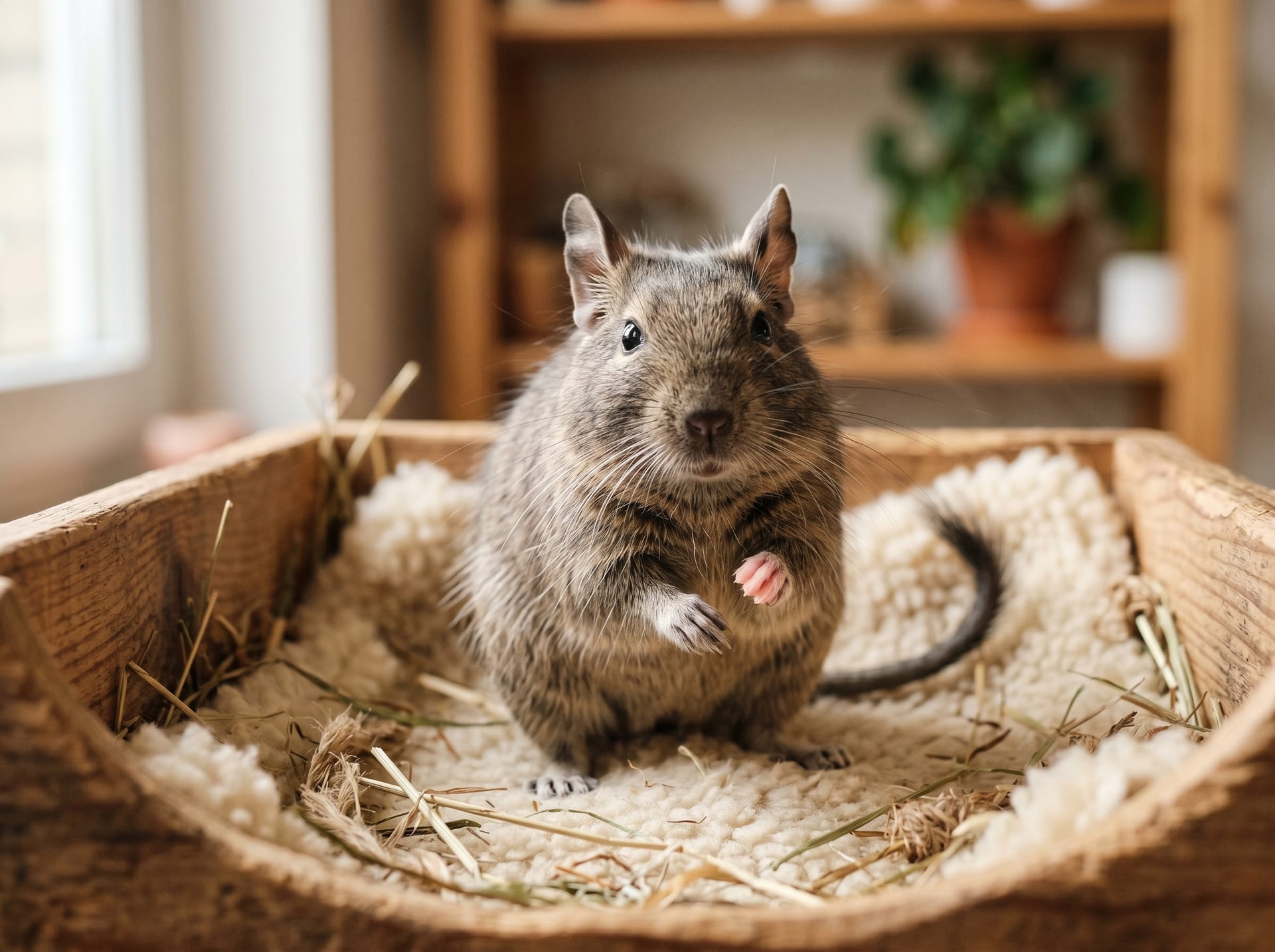
Degu (Octodon degus) is a rodent native to Chile, known for its high intelligence and social nature, earning it nicknames like "Chile's squirrel" or "South America's philosopher." They have a herd-living lifestyle, and when raised properly, they become extremely affectionate and endearing animals that bond closely with their owners. In recent years, they've become increasingly popular as pets, but raising them without knowledge of their specific care requirements can lead to problems. This article explains the fundamentals of degu care in detail.
✍️
BreederDirect Editorial
The BreederDirect editorial team specializes in care information for animals, covering veterinary care and breeding to deliver beginner-friendly guides.
Find Small Animals on BreederDirect
Buy directly from verified breeders
Browse Related Listings
Find Small Animals listings related to this article on BreederDirect. Buy directly from verified breeders.
Related Tools
Related Articles
Browse by Category
🪸Coral
🐠Marine Fish
🐟Tropical Fish
🐡Goldfish
🐟Medaka
🦎Reptiles
Share
Basic Information About Degus
Origin: Chile (arid regions of the Andes Mountains)
Body Length: 15-20 cm (excluding tail)
Weight: 170-300g
Lifespan: 6-8 years
Diet: Herbivorous (hay, vegetables, and specialized pellets)
Special Characteristic: Abnormal glucose metabolism (prone to diabetes when consuming sugars)
Degus are diurnal, so their daily rhythm aligns well with humans, making them easy to observe during the day.
Most Important Consideration: No Sugar
The most critical aspect of degu care is avoiding sugar entirely. Degus have issues regulating insulin secretion, and even small amounts of sugar or fructose can trigger diabetes.
Foods to Avoid:
- Any foods containing sugar, fructose, or glucose
- Sweet fruits (bananas, grapes, apples, etc.)
- Commercial hamster treats (most contain sugar)
- Excessive grains (starch also affects glucose metabolism)
Required Housing Equipment
Cage
Degus are active and require a tall cage. A minimum of 60cm×60cm×90cm (prioritizing height). Wide-spaced metal bars on the cage pose risks of escape or foot injuries. Degu-specific cages or chinchilla cages are most suitable.
Bedding
Use paper chips or hay, layered thickly. Slatted floors can cause foot injuries.
Sand Bath Container
Like chinchillas, degus use sand baths to keep their fur clean. Provide a chinchilla sand bath container and sand (fine-grain sand) available 2-3 times per week. Sand baths should last about 20-30 minutes. Longer sessions can cause skin dryness, so keep duration moderate.
Exercise Wheel
A wheel is essential for degus. Install a solid wheel with a diameter of 25-30cm or larger (avoid bar-type wheels as they can trap feet).
Chew Sticks and Toys
Degus instinctively need to gnaw for dental care. Regularly provide fresh chew sticks and wooden toys.
Feeding and Diet
Hay (Timothy Grass)
Like guinea pigs, hay should be the main staple. Provide unlimited hay at all times.
Specialized Pellets
Feed degu-specific pellets (sugar-free) at about 5-10g per day. Check ingredients carefully and choose pellets without sugar, molasses, or fruit.
Vegetables
Offer small amounts of leafy vegetables (bok choy, mustard greens, dandelion leaves, etc.) 2-3 times per week. Choose low-sugar vegetables. Keep carrots to minimal amounts as they're relatively high in sugar.
Safe Treats
Safe treats include pumpkin seeds, sunflower seeds, and unprocessed grains in small amounts. However, avoid high-fat foods as they can lead to obesity.
Sociability and Group Housing
Degus are herd animals and become stressed in solitary housing. If possible, keeping 2-3 degus together is recommended. However, to prevent breeding, you'll need to separate males and females or perform neutering/spaying. Same-sex pairs (especially females) typically get along well, but personality varies, so introduce them gradually while observing their interactions.
Taming and Bonding
Degus are intelligent and become very affectionate with patient interaction.
First, spend a few days talking to them through the cage to get them used to your presence
Repeatedly offer food from your hand
When they climb onto your hand, gently lift them briefly
Play together during supervised free-roam time in a safe room
Degus can learn their names and will respond when you call them regularly.
Health Care and Common Diseases
Diabetes
Symptoms include cataracts (cloudy eyes) and excessive drinking/urination. Prevention involves completely eliminating sweet foods.
Malocclusion
A condition where teeth don't align properly. Prevention requires adequate hay and chew sticks.
Fur Problems
Caused by insufficient sand baths or high humidity. Prevention through regular sand baths (2-3 times per week).
Conclusion
Degus are highly intelligent and social animals with great charm. By carefully managing their sugar intake, providing regular sand baths, quality hay, and adequate exercise space, you can enjoy 6-8 years together as companions. Adopt a healthy individual from a reputable breeder and enjoy the degu experience.