What Kind of Animal Is a Degu?
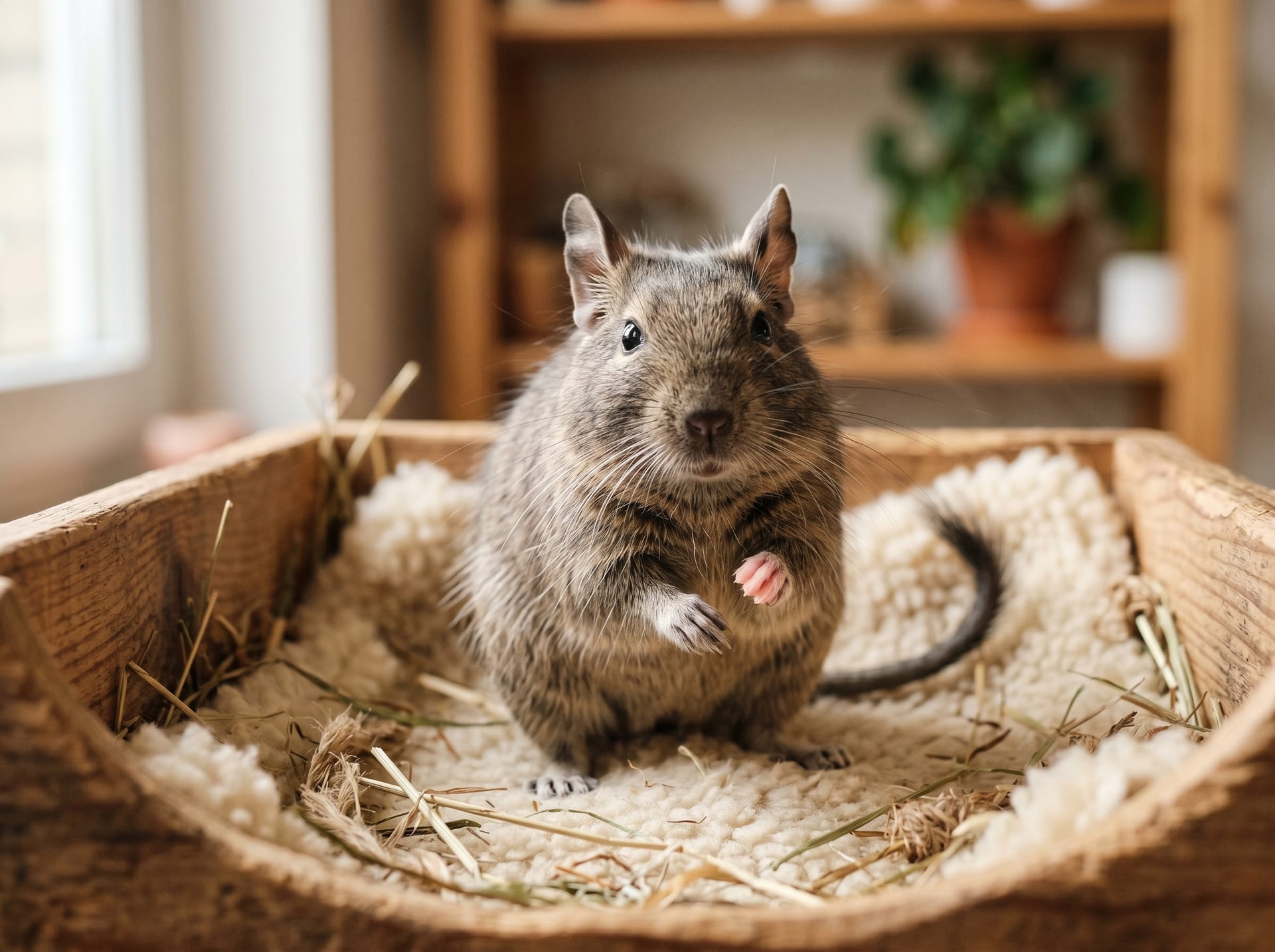
The degu (Octodon degus) is a rodent native to Chile, sometimes called the "Andes squirrel" or "Chilean squirrel." They are small mammals with a body length of 14–20 cm (excluding the tail), characterized by rounded ears and large black eyes.
In the wild, they live in large groups, digging burrows and living communally. They have high intelligence, and their tool-use ability, problem-solving skills, and memory are considered exceptionally advanced among small animals—so much so that they are used as model animals in Alzheimer's disease research.
Basic Degu Specifications
| Item | Details |
|---|
| Weight | 170–300g |
| Body Length | 14–20 cm (excluding tail) |
| Lifespan | 6–10 years |
| Activity Time | Daytime (diurnal) |
| Origin | Central Chile |
| Sociality | Very high (live in groups) |
Why Is Carbohydrate Restriction Necessary?
Degus have a significant anomaly in carbohydrate metabolism. In nature, they eat fiber-rich grasses, seeds, and roots, and do not eat fruits or sweet foods. As a result, their pancreatic β-cell function for secreting insulin is extremely limited, giving them a characteristic susceptibility to diabetes when given sugar.
Consistently feeding dried fruit, honey-based treats, or sweet pellets can lead to cataracts or diabetes within a few years. It is essential to understand from before getting a degu that "degu = carbohydrate restriction is mandatory."
Recommended Diet Composition
| Food | Proportion | Key Points |
|---|
| Timothy hay (1st cut) | 70–80% | Unlimited access at all times. Essential for digestion and tooth wear. |
| Degu-specific pellets | 15–20% | Sugar-free, fruit-free. About 3–5% of body weight. |
| Fresh vegetables and herbs | Small amount | Leafy vegetables, dandelion, small amounts of dried herbs. |
| Treats | Principally none | If given, only sugar-free timothy products or dried vegetables. |
Foods Absolutely Not to Give
- Fruits and dried fruits (dangerous even as natural sugar)
- Honey and sugar-containing foods
- Mixed seed foods high in grains and seeds
- Hamster food (high in sugar)
- Yogurt and dairy products
Sociality Is the Most Important Consideration
The aspect of degu care most often overlooked is addressing their sociality. Degus are herd animals, and solitary housing creates significant psychological stress.
Stress from isolation causes problems such as immune suppression, self-injury (fur chewing), and stereotypic behaviors (repetitive actions). If possible, housing two or more of the same sex together is recommended.
Tips for Introducing Multiple Degus
Littermates and those raised together have relatively good compatibility. Housing individuals raised separately together as adults can result in intense territorial disputes.
- House them in separate cages next to each other for several weeks to acclimate to scents.
- Repeat brief contact in a neutral, spacious area.
- If all goes well, house them in the same cage.
Cage Design and Essential Items
Cage Size
Degus are extremely active and run around for long hours daily. Choose a vertical, multi-level cage at least 60 cm wide × 40 cm deep × 80 cm tall.
Essential Items
- Exercise wheel: Silent wheel at least 25–30 cm in diameter (essential)
- Steps and shelves: Multiple levels for vertical movement
- Wooden nesting box: Provides a hiding place and allows for natural wood-chewing behavior
- Hay holder: Allows for continuous replenishment
- Dust bath container: Degus enjoy dust bathing (do not use chinchilla sand; use degu-specific sand or fine soil)
- Chewing wood: Wooden toys or branches (to redirect chewing from the cage)
Temperature and Environment
The ideal temperature for degus is 18–26°C. While not as sensitive to heat as chinchillas, environments exceeding 30°C are dangerous. Direct sunlight should be avoided.
Enrichment Leveraging Intelligence
Degus are highly intelligent and become bored and stressed without adequate stimulation.
- Foraging feeding: Wrap pellets in towels or paper and hide them for the degu to find and eat
- Puzzle feeders: Toys requiring manipulation to extract food
- Gradual room exploration: Supervised playtime in a pen (15–30 minutes daily)
- Training: Hand-taming, responding to their name, and clicker training are all possible
Common Diseases and Health Management
Diabetes and Cataracts
As mentioned, excessive sugar in the diet is the primary cause. Cataracts can be observed as a white cloudiness in the lens. Once developed, complete recovery is difficult, so prevention is the top priority.
Malocclusion
Insufficient hay intake causes molars to become overgrown, leading to misalignment. Continuous timothy hay supplementation is the basic prevention strategy.
Skin Disease and Hair Loss
These can occur due to stress or parasites (such as mites). Regular body checks and a clean environment help prevent them.
Respiratory Disease
These are common in high-humidity environments or during sudden temperature changes. Proper ventilation and temperature and humidity control are important.
Taming and Communication
Degus communicate through vocalizations. Their main calls have the following meanings.
- Chi-chi (high pitch): Alert, excitement, or calling
- Pwe-ee: Discontent or anger
- Cuck-cuck-cuck: Calling to companions or contentment
Once a bond of trust is established with their owner, degus will respond to their name and even climb onto your shoulder. Start by patiently offering food (hay or sugar-free herbs) from your hand, little by little.
Summary: Five Fundamentals of Degu Care
- Strictly enforce carbohydrate restriction (no fruits or sweet treats)
- House two or more together (solitary housing causes psychological stress)
- Ensure adequate exercise with an exercise wheel and multi-level cage
- Provide timothy hay continuously (prevents malocclusion and digestive disease)
- Bond with your degu through a lifestyle schedule aligned with their diurnal activity rhythm
Intelligent and emotionally rich, degus are small animals that will enrich your life for years with proper care. Diet management is especially key to ensuring their health and longevity.