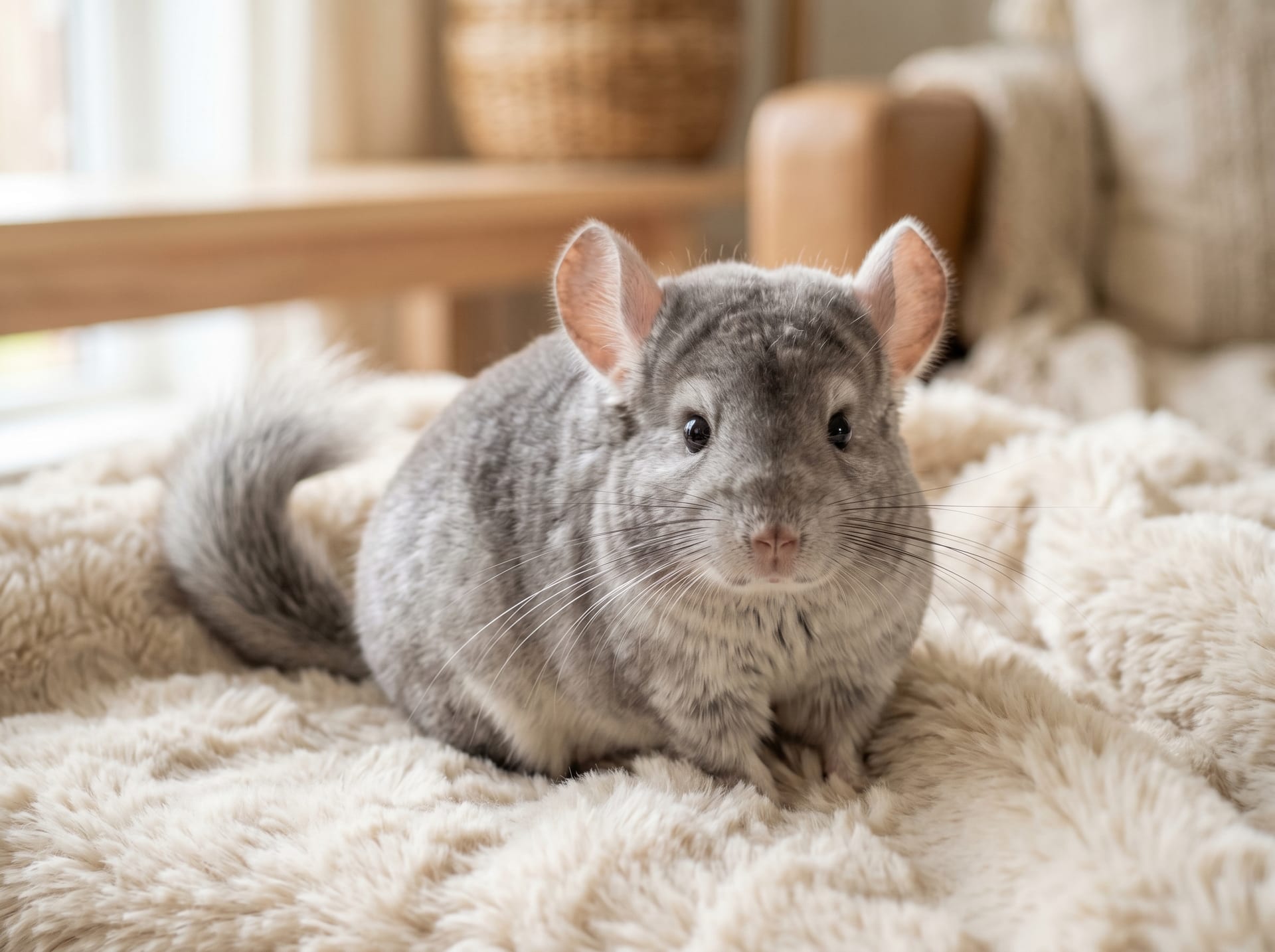
What Kind of Animal Are Chinchillas?
Chinchillas (Chinchilla lanigera) are rodents native to South America's Andes Mountains, inhabiting cool rocky terrain at altitudes of 3,000–5,000 meters in the wild. Their dense fur (over 60 hairs per cm²) is known as the densest animal fur in the world, and their soft texture is their greatest appeal.
With a lifespan of 15–20 years in proper care, they live exceptionally long compared to other small animals, making them suitable as long-term companions. They are intelligent and active, with many individuals eagerly anticipating nightly exercise time, and they form trusting relationships with their owners.
Basic Chinchilla Specifications
| Item | Details |
|---|
| Body Weight | 400–600g |
| Body Length | 25–35cm (excluding tail) |
| Lifespan | 15–20 years |
| Activity Time | Evening to night (crepuscular) |
| Origin | South American Andes |
| Odor | Minimal (coat maintenance through sand baths) |
Why Temperature Management Is Critical
The most dangerous environmental factor for chinchillas is high temperature and humidity. Japan's summers, which are the opposite of their native climate (cool and dry), require special attention.
Ideal Environment
- Temperature: 18–22°C (maximum 25°C is the limit)
- Humidity: 40–60%
- Ventilation: Avoid direct sunlight and direct air conditioning drafts
When temperature exceeds 27°C, the risk of heatstroke increases, and cases of death have been reported above 28°C. Running air conditioning 24/7 during summer is essential.
Signs of Heatstroke
- Mouth open and gasping (they normally don't do this)
- Ears red and bloodshot
- Lethargic and unresponsive
- Excessive drooling
If you notice these symptoms, immediately move them to a cool location and contact an animal hospital.
Sand Baths Are a Daily Essential
Sand baths are essential for chinchilla coat care. Their dense fur easily absorbs water and oils and cannot be washed with water. Instead, rolling daily in fine volcanic ash-like sand removes excess oils, moisture, and dirt.
Sand Bath Tips
- Frequency: About 15–30 minutes daily
- Sand Type: Use chinchilla-specific sand (fine volcanic sand, pumice powder, etc.). Cat litter and bird sand have grains that are too coarse and are not suitable
- Container: Provide a large plastic container or bath house where the chinchilla can fit
- Sand Management: Replace about once every 1–2 weeks. Change earlier if it becomes damp
Note that providing too much sand bath time can cause the skin to dry out excessively. In winter especially, limit to about 10–15 minutes daily.
Diet Management: Timothy Hay as the Foundation
Chinchilla digestive systems are optimized for fiber-rich hay. Improper diet composition can lead to dental malocclusion and digestive disorders.
Recommended Diet Composition
| Food | Percentage | Notes |
|---|
| Timothy Hay (1st cutting) | 70–80% | Always available. Essential for tooth wear and intestinal movement |
| Chinchilla-specific pellets | 15–20% | About 2–3% of body weight daily. Overfeeding causes obesity |
| Vegetables & Herbs | Small amount | Rose hips, dandelion, small amounts of dried herbs. High-moisture vegetables cause diarrhea |
| Treats | Minimal | About 1–2 times weekly. Only small amounts of dried fruit |
Foods to Avoid
- Large quantities of high-sugar fruits (apples, bananas, etc.)
- Avocado, onions, and chocolate
- Moist foods (cause diarrhea and bloat)
- Mixed foods high in seeds (high fat)
Cage Selection and Placement
Cage Size
Chinchillas are active animals with impressive jumping ability. Aim for a cage at least 60cm wide × 45cm deep × 90cm tall. Taller is better, and a vertical cage is ideal.
Cage floors are typically mesh, but if the gaps are too wide, it can cause injury. Place some wooden boards or fleece mats to create resting areas for their feet.
Cage Layout
- Steps & Shelves: Install multiple levels for vertical exercise
- Nesting boxes: Provide 1–2 wooden houses for hiding
- Exercise wheel: Silent wheel 30–40cm or larger in diameter (chinchilla-specific size)
- Water bottle: Nipple-style water bottle
- Hay rack: Holder for constant hay replenishment
Placement Location
- Cool location away from direct sunlight
- Away from direct air conditioning drafts
- Away from noise sources like televisions and speakers
- Lower position (to reduce impact if they fall)
Sociality and Multiple Chinchillas
Chinchillas are naturally herd animals, and keeping two or more together is considered ideal rather than solitary housing. Individuals raised as same-sex pairs tend to maintain more stable mental states.
However, placing multiple individuals in the same cage suddenly can cause intense fighting. A gradual introduction process is necessary—keep them in separate cages for several weeks while slowly increasing contact.
Common Diseases and Prevention
Malocclusion (Dental Misalignment)
Insufficient hay intake prevents back teeth from wearing down, causing them to overgrow and lead to malocclusion. Early signs are loss of appetite, drooling, and tearing; as it progresses, weight drops rapidly. Providing timothy hay continuously is the best prevention.
Fur Chewing (Barbering)
Stress or boredom can cause them to chew off their own or cagemates' fur. Triggers often include a small cage, lack of exercise, and environmental changes. Providing enrichment and identifying the cause are key.
Heatstroke (See Above)
High summer temperatures are the greatest risk. Temperature control with air conditioning and thermometer placement are the basics of prevention.
Diarrhea and Digestive Disorders
These occur easily from high-moisture foods, sudden diet changes, and stress. Maintaining stable diet management centered on fiber-rich hay is key to prevention.
Pre-Adoption Checklist
When adopting from a breeder, check the following.
| Check Item | Good Condition |
|---|
| Eyes | Clear with no discharge |
| Nose | Dry with no secretions |
| Fur | Shiny with no hair loss |
| Teeth | Upper and lower incisors orange-colored and properly aligned |
| Weight | Appropriate for age |
| Behavior | Active and curious |
Summary: Five Basics of Chinchilla Care
- Keep temperature at 18–22°C with air conditioning (high summer heat is the biggest threat)
- Daily sand baths to keep coat and skin clean
- Provide timothy hay constantly to prevent malocclusion
- Sufficient exercise space (tall cage and wheel essential)
- Annual or twice-yearly vet checkups to detect malocclusion and weight changes early
With a lifespan of 15–20 years, chinchillas are wonderful companion animals if cared for properly. Prioritize temperature management, maintain proper diet and environment, and maximize their healthy lifespan.