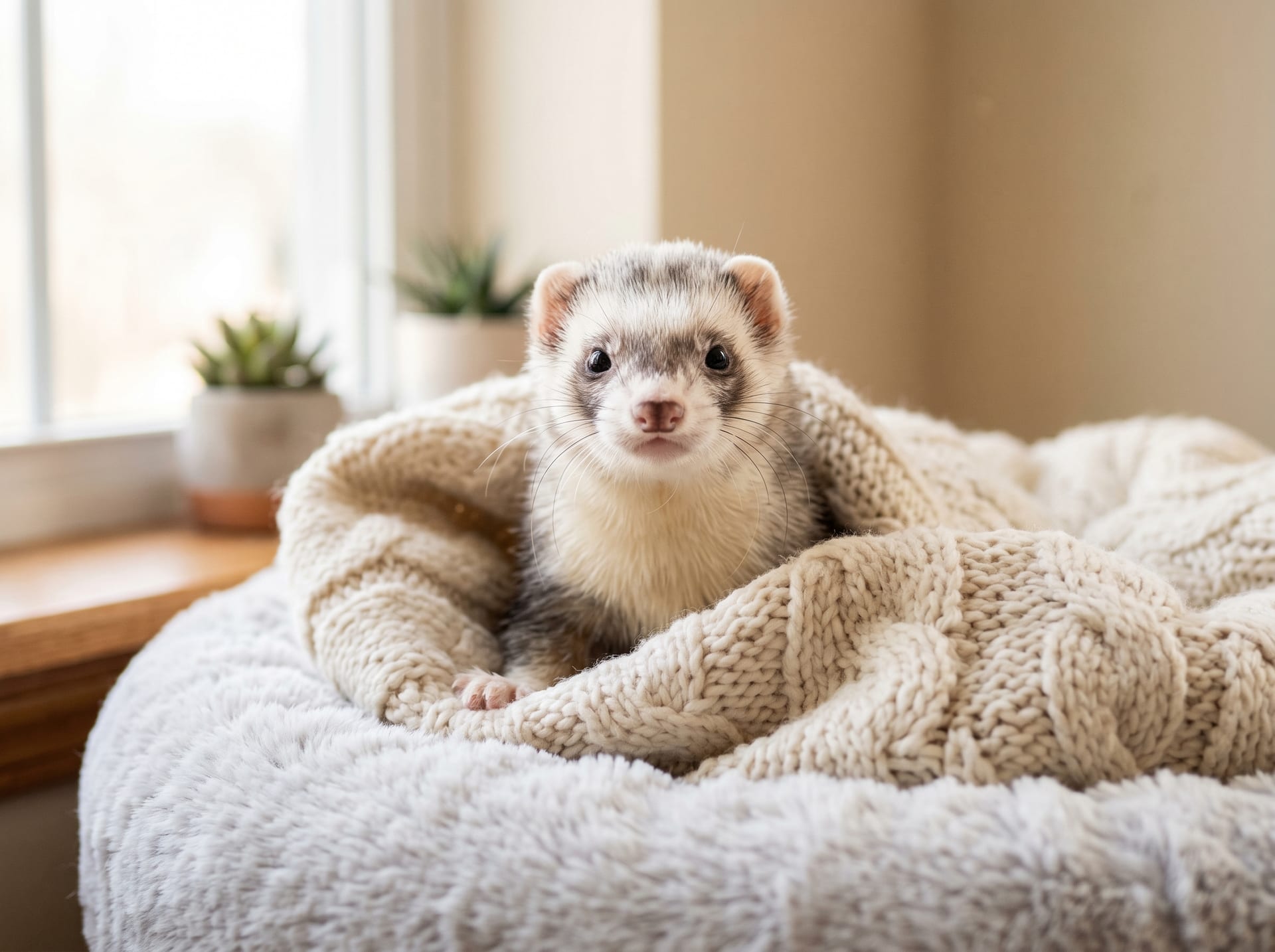
Ferrets are small animals beloved for their curious and mischievous personalities. They possess a unique charm quite different from dogs or cats, and with proper knowledge and care, you can build a deep bond that lasts for years. This article provides a comprehensive guide to ferret care fundamentals—whether you're considering getting a ferret or already have one.
Ferret Basic Data and Characteristics
Let's start by understanding the basic profile of ferrets as animals.
- Lifespan: 5–10 years (average 7–8 years)
- Weight: Males 700g–2kg, Females 400g–900g
- Activity Pattern: Crepuscular (most active in early morning and evening)
- Sleep Duration: 14–18 hours per day
- Body Temperature: 37.8–40°C
Ferrets are crepuscular animals, meaning they're most active in the early morning and evening hours. They sleep for long periods during the day, so there's no need to worry if they appear inactive. They sometimes sleep so deeply—almost as if unconscious—that first-time owners are often startled, but this is completely normal behavior.
Additionally, ferrets belong to the Mustelidae family and are obligate carnivores that hunt small animals and birds in the wild. Understanding this dietary nature is the first step toward providing proper care.
Personality and Play Methods | Building a Bond with Your Ferret
Ferrets are highly social animals that enjoy play and interaction with their owners. While individual personalities vary, they're naturally curious and love exploring different areas of the home.
A behavior called the "war dance" (or "weasel war dance")—where they contort their bodies and bounce around excitedly—signals excitement, happiness, and a desire to play. This adorable behavior is uniquely ferret-like, and ferrets that are comfortable with you will display it frequently.
Recommended Play Methods
- Hide-and-seek with tunnels and hideaways: Ferrets love squeezing into tight spaces, so specialized tunnel toys are ideal
- Chase games with balls and stuffed toys: They respond readily to moving objects and enjoy pouncing on rolling toys
- 2–3 hours of daily free-roaming time: Provide ample time for them to move freely outside their cage
When allowing free roaming, thorough room safety checks are essential beforehand. Ferrets may chew electrical cords or squeeze into tiny gaps and get stuck. Be especially careful about spaces under washing machines, refrigerators, and other appliances where they might hide.
Food Selection | Nutrition Management for Obligate Carnivores
Because ferrets are obligate carnivores, you should never feed them dog food or foods designed for herbivorous small animals. High-protein, high-fat, and low-carbohydrate diets are essential for maintaining their health.
How to Choose Food
- Select food with at least 30–40% protein and 15–20% fat
- Look for animal-based proteins (chicken, turkey, salmon) listed as primary ingredients
- Avoid foods with corn, wheat, and other grains as main components—these are difficult to digest and can cause illness
- Ferret-specific food or high-quality grain-free cat food are suitable options
Feeding should follow free-feeding principles (always having food available). Ferrets have short digestive tracts and require meals every 3–4 hours. However, they're prone to obesity, so weigh them once or twice monthly to ensure they're not gaining too much.
Giving them raw meat as treats (chicken breast, gizzards, etc.) is also a good option, but always use fresh meat and avoid overfeeding. Fruits and vegetables high in sugar can disrupt blood glucose levels, so they should generally be avoided.
Odor Control | Reducing Odor Through Proper Care
Many people assume ferrets are inherently smelly, but with proper care, odor can be reduced to manageable levels. The characteristic ferret odor comes from musk secretions in their skin glands—this is natural.
Specific Methods for Reducing Odor
- Neutering/spaying and anal gland removal: Most ferrets sold in Japan are already surgically altered before importation. These procedures dramatically reduce hormone-related odors
- Regular bathing: Once or twice monthly is ideal. Over-bathing can actually increase odor by stimulating excess oil production, so avoid excessive bathing
- Regular cage and bedding cleaning: Aim for weekly to bi-weekly cleaning. Wash sleeping bags and hammocks, and wipe down the cage regularly. Dirty bedding is the primary source of odor
- Air purification: Regular room ventilation combined with a pet-specific air purifier is highly effective
Cage Selection and Environment Setup
Since ferrets are very active, choosing the largest possible cage is important.
Cage Selection Guidelines
- Size: Aim for dimensions of at least 90cm (width) × 60cm (depth) × 90cm (height)
- Choose cages with multiple levels or shelves to allow vertical movement and prevent exercise deficiency
- Always select metal cages with secure locks (ferrets can cleverly open doors)
Items to Include in the Cage
| Item | Points to Consider |
|---|
| Sleeping bags/hammocks | Ferrets prefer dark, cramped spaces—providing multiple is reassuring |
| Water bottle | Nozzle-type bottles are hygienic. Change water daily |
| Food dish | Ceramic dishes are recommended as they're less likely to tip over |
| Litter box | Placing it in a corner of the cage makes training easier |
Ferrets are relatively easy to litter-train. They naturally eliminate in certain corners, so placing a litter box in their preferred spot is usually all that's needed. If accidents are frequent, try relocating the box.
Health Management and Important Diseases to Watch
Ferrets can contract canine distemper virus and influenza. Canine distemper has an extremely high mortality rate, making annual distemper vaccination mandatory.
Several ferret-specific diseases require special attention:
- Adrenal disease: Commonly seen in ferrets over age 5. Main symptoms include hair loss, weight loss, and swelling of the external genitalia
- Insulinoma: A pancreatic tumor causing sudden drops in blood sugar. Seek veterinary care immediately if you notice stumbling or collapse
- Cardiomyopathy: Risk increases in middle-aged and older ferrets. Regular auscultation and ultrasound examinations are effective
Regular check-ups every 6–12 months are strongly recommended. Once ferrets reach age 5, increase visits to twice yearly for early detection and treatment. Since ferret-experienced veterinarians are limited to exotic animal clinics, locate a nearby facility before bringing your ferret home.
Summary | Living Happily with Your Ferret for Years to Come
With proper environment and care, ferrets bring tremendous joy to pet ownership. While their odor and activity levels may seem challenging at first, proper care management resolves most issues.
- Choose high-protein food suited to obligate carnivores
- Build trust through daily free-roaming time and interaction
- Keep sleeping areas clean and manage odor with regular bathing
- Prevent illness through vaccination and regular health check-ups
Bringing home a healthy ferret from a reputable breeder is the foundation for long-term ferret ownership. Br-choku connects you directly with ferret-knowledgeable breeders and provides comprehensive care advice and ongoing support after adoption. If you want to start your ferret journey with confidence, we encourage you to explore Br-choku.