A comprehensive guide to the initial costs of setting up a coral tank. We introduce market prices for essential equipment such as tanks, lighting, protein skimmers, and live rocks, as well as budget planning for livestock.
Key Takeaways
A comprehensive guide to the initial costs of setting up a coral tank. We introduce market prices for essential equipment such as tanks, lighting, protein skimmers, and live rocks, as well as budget planning for livestock.
Coral cultivation is one of the most equipment-intensive fields within saltwater aquariums. Many people worry, "I'd like to start, but how much will it actually cost?" However, with proper budget planning in advance, you can avoid unnecessary expenses while creating a beautiful coral tank. This article provides a detailed explanation of the pitfalls that beginners commonly encounter, from equipment costs by tank size to how to select livestock.
✍️
BreederDirect Editorial
The BreederDirect editorial team specializes in care information for animals, covering veterinary care and breeding to deliver beginner-friendly guides.
Find Coral on BreederDirect
Buy directly from verified breeders
Browse Related Listings
Find Coral listings related to this article on BreederDirect. Buy directly from verified breeders.
Related Tools
Related Articles
Browse by Category
🪸Coral
🐠Marine Fish
🐟Tropical Fish
🐡Goldfish
🐟Medaka
🦎Reptiles
Share
Tank and Basic Equipment Costs
The starting point for coral cultivation is selecting the tank and circulation system. Most coral tanks use an "overflow method," with a sump (filter tank) typically positioned beneath the tank stand.
Equipment
60cm Tank
90cm Tank
Tank set (with sump)
¥50,000–¥80,000
¥80,000–¥150,000
Main pump (circulation)
¥15,000–¥25,000
¥20,000–¥30,000
Flow pump (wave generation)
¥10,000–¥25,000
¥20,000–¥40,000
Protein skimmer
¥15,000–¥50,000
¥30,000–¥100,000
The protein skimmer is essential for coral cultivation. This device removes organic matter from the water through foam separation, and its performance directly affects water stability. Selecting an appropriate model for your tank size is crucial, and overly inexpensive units often lack adequate processing power. This is one area where you shouldn't skimp—choose a product from a trusted manufacturer. For more details, see Top 5 Protein Skimmers.
Lighting Options and Costs
Lighting is one of the most critical components in coral cultivation, as it serves as an energy source for the "zooxanthellae" (symbiotic algae). The amount of light required varies significantly depending on the type of coral you want to cultivate.
Entry-level models (¥20,000–¥40,000): Designed for soft corals and light-demanding LPS corals. Easy for beginners to handle
Mid-range models (¥40,000–¥80,000): Compatible with most LPS corals, including Acropora digitifera and Elegance corals
High-end models (¥80,000–¥150,000): SPS corals like Acropora require high PAR values, making these models practically essential
For beginners, starting with soft corals and entry-level lighting is the most rational choice. As you gain experience, upgrading your lighting and gradually challenging yourself with more difficult species to keep will be a less failure-prone approach. For detailed LED lighting comparisons, also check out LED Lighting Selection Comparison Guide.
Live Rock & Water Quality Management Equipment
To maintain a healthy coral tank, you need live rock—the foundation of biological filtration—and various devices to stabilize water quality.
Live Rock and Substrate
Live rock: ¥1,500–¥3,000 per kilogram. For a 60cm tank, approximately 5–8kg is recommended
Substrate (coral sand): ¥1,500–¥2,500 per 5kg. The amount needed varies depending on whether you choose a thin layer (1–2cm) or deep sand bed (5cm or more)
Live rock is not merely decorative stone—it's "living filtration media" where countless bacteria establish themselves. Introducing quality live rock in appropriate quantities will make your tank setup much smoother. For more on live rock selection and management, see Live Rock Selection and Management Guide.
Water Quality Management Equipment
RO/DI water purifier: ¥15,000–¥30,000. Removes impurities from tap water to improve artificial seawater quality
Water quality test kit: ¥5,000–¥10,000. Regularly test ammonia, nitrite, nitrate, pH, and alkalinity
Tank chiller: ¥30,000–¥80,000
Auto top-off system (ATO): ¥10,000–¥25,000
Although expensive, a tank chiller is important—when water temperature exceeds 28°C in Japanese summers, the risk of coral bleaching increases dramatically. Air conditioning alone often cannot maintain proper temperature, so a chiller should be considered essentially necessary. Additionally, water loss through evaporation causes fluctuations in salinity levels, making an ATO indispensable for long-term maintenance. For more on ATO systems for coral tanks, see Auto Top-Off System Installation Guide.
Livestock Budget Planning | Selection by Difficulty Level
Once your equipment is set up, it's time to purchase corals. Corals are broadly divided into three groups based on difficulty level.
Soft Corals (Beginner-Friendly)
This group has relatively low demands for light and water quality, making it ideal for beginners.
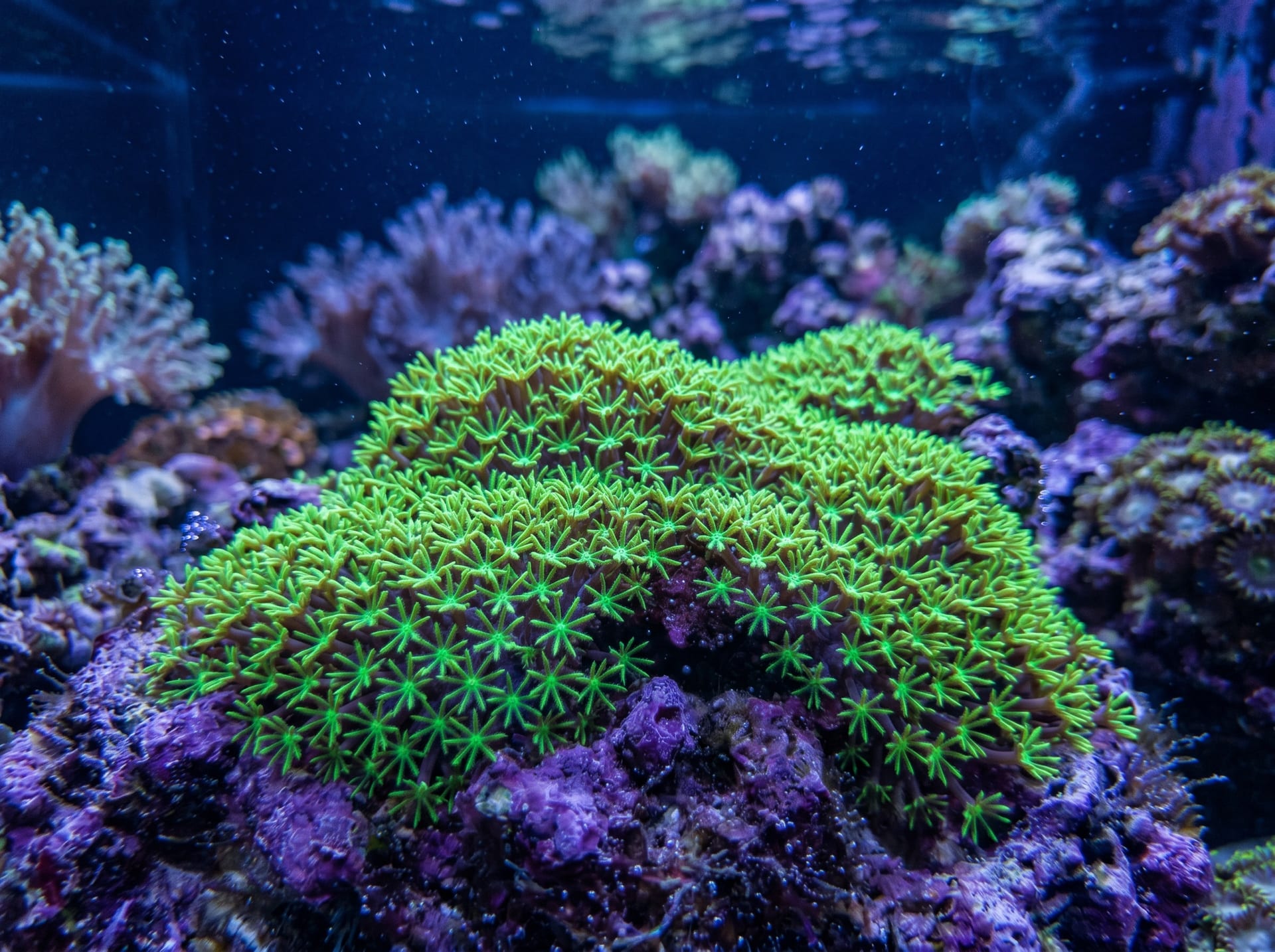
Star polyps: ¥1,500–¥3,000
Mushroom corals: ¥2,000–¥5,000
Palythoa: ¥1,500–¥5,000
Zoanthids: ¥3,000–¥8,000
LPS Corals (Intermediate Level)
This group features large polyps and striking appearances. Water quality requirements are slightly higher than soft corals.
Acropora digitifera: ¥3,000–¥10,000
Elegance corals: ¥5,000–¥15,000
Trumpet corals: ¥3,000–¥8,000
SPS Corals (Advanced Level)
Small-polyp scleractinian corals including Acropora. They require high light, high water quality, and stable flow—not recommended for beginners to start with. Prices range widely from ¥5,000–¥30,000+ depending on species and size.
Starting with 3–5 soft coral species at a total cost of ¥10,000–¥20,000 and moving to LPS after maintaining stability for 3+ months is a wise approach to avoid failure. For more on coral characteristics, see Coral Species Comparison Guide.
Initial Cost Simulation
Consolidating the costs above, initial investment targets are as follows:
60cm tank (soft coral-focused)
Equipment total: approximately ¥150,000–¥250,000
Livestock: approximately ¥15,000–¥30,000
Estimated total: approximately ¥165,000–¥280,000
90cm tank (LPS + soft coral mix)
Equipment total: approximately ¥250,000–¥450,000
Livestock: approximately ¥30,000–¥60,000
Estimated total: approximately ¥280,000–¥510,000
Monthly running costs for a 60cm tank are estimated at ¥5,000–¥8,000 (electricity, artificial seawater, additives, etc.). Additionally, once you develop coral fragging skills, you can reduce livestock costs by trading corals you've propagated. For detailed annual cost breakdowns, see Coral Annual Husbandry Cost Guide.
BreederDirect's Safe and Reliable System
Choosing where to purchase livestock is an important consideration when starting coral cultivation. When buying from shops, concerns include transport stress and deterioration from chemical treatments.
With BreederDirect, you can purchase corals directly from Japanese breeders who cultivate and manage them themselves.
Farm-raised specimens: Compared to wild-caught, they adapt better to environmental changes and are easier to keep
Ask breeders directly: Confirm husbandry environment, feeding methods, and other details before purchasing
Fair pricing: Bypassing middlemen means you get quality at an appropriate price
Full traceability: You know exactly what environment your corals were raised in
When purchasing corals for the first time, using BreederDirect to obtain healthy farm-raised specimens directly from breeders greatly reduces the risk of failure during setup. With numerous listings of soft corals and LPS corals, you can start building your ideal tank while comparing options against your budget.