Coral Tank Setup Guide | Equipment Selection and Layout
Learn how to choose equipment for coral keeping—tanks, lighting, water circulation pumps, protein skimmers, and more. We introduce live rock layouts, tank cycling schedules, and the right timing for introducing corals.
Key Takeaways
Learn how to choose equipment for coral keeping—tanks, lighting, water circulation pumps, protein skimmers, and more. We introduce live rock layouts, tank cycling schedules, and the right timing for introducing corals.
What You Need to Know Before Starting a Coral Tank
A coral tank (reef tank) is one of the highlights of aquarium keeping, allowing you to recreate one of the ocean's most vibrant ecosystems at home. However, unlike freshwater fish keeping, maintaining a coral tank requires a high level of knowledge and preparation in water quality management and equipment selection.
✍️
BreederDirect Editorial
The BreederDirect editorial team specializes in care information for animals, covering veterinary care and breeding to deliver beginner-friendly guides.
Find Coral on BreederDirect
Buy directly from verified breeders
Browse Related Listings
Find Coral listings related to this article on BreederDirect. Buy directly from verified breeders.
Related Tools
Related Articles
Browse by Category
🪸Coral
🐠Marine Fish
🐟Tropical Fish
🐡Goldfish
🐟Medaka
🦎Reptiles
Share
Most failures stem from inadequate preparation. By gathering all necessary equipment before setting up your tank and completing the cycling process (bacterial colonization) before introducing corals, you'll dramatically increase your success rate. This article provides a systematic guide to equipment selection and tank layout for those attempting a coral tank for the first time.
Essential Equipment and Selection Tips
Maintaining a coral tank requires more equipment than a typical saltwater fish tank. Understanding each component's role will help you choose the right size for your tank.
Tank and Filter
A tank of at least 60cm is recommended for coral keeping. Larger water volume makes it easier to maintain stable water quality and reduces the risk of drastic parameter swings. An overflow-style filter using a sump (external filter tank) is ideal, though an external canister filter can work as well. It's important to ensure sufficient biological filtration capacity.
Protein Skimmer
This device removes organic matter (proteins) dissolved in seawater using foam action at the water surface. By quickly removing mucus and uneaten food excreted by corals, it prevents nitrate accumulation. Choose a model with processing capacity 1.5 to 2 times your tank volume for peace of mind.
Lighting
Zooxanthellae (symbiotic algae) that corals harbor perform photosynthesis and serve as the coral's energy source. Lighting is therefore one of the most critical pieces of equipment for coral keeping.
SPS (such as Acropora): Requires high PAR values (200–400+). High-output LED or T5 fluorescent lighting is essential
LPS (such as Euphyllia): Can thrive with moderate PAR values (75–150)
Soft corals: Can grow even under relatively low PAR, making them beginner-friendly
Lighting duration is important—aim for 8–10 hours of light per day. Use a timer-controlled controller for consistency.
Water Circulation Pumps (Circulation)
Corals receive oxygen and nutrients through water flow. Weak flow can cause tissue necrosis, so creating complex, multi-directional water currents is essential. Install two or more wave pumps with random mode to eliminate dead spots (areas where water stagnates). However, directing strong flow continuously at certain corals can damage them, so angle adjustment is necessary.
Temperature Control and Water Quality Monitoring Equipment
Heater and Chiller: Maintain water temperature around 26°C. A chiller is essential in summer
Refractometer and Hydrometer: Maintain specific gravity of 1.024–1.026 (ideal: 1.025)
Test Kits: In addition to ammonia, nitrite, and nitrate, regularly measure calcium (Ca), alkalinity (KH), and magnesium (Mg)—essential for corals
Tank Cycling (Setup) Process
Before introducing corals, you must establish a bacterial colony in your tank to handle biological filtration. Skipping this cycling process will cause ammonia and nitrite to spike, killing your corals.
Set up a clean tank with artificial seawater, substrate, and live rock, and activate all equipment
Add an ammonia source (pure ammonia solution or a small amount of fish food) to feed the bacteria
Test water quality daily and monitor the progression: ammonia → nitrite → nitrate
Cycling is complete once both ammonia and nitrite are undetectable
This typically takes 4–8 weeks, though bacterial additives (like biostarters) can sometimes accelerate the process. Complete this step patiently—it forms the foundation for long-term success.
Live Rock Selection and Placement
Live rock (porous stone) serves as a home for bacteria while creating the tank's landscape—a critical material.
Quantity guide: About 10–15% of your tank volume. Too much impedes water flow
Shape selection: Arches and tunnel-like arrangements improve water circulation
Coral placement: Use frags (cut pieces) and frag racks; minimize placing corals directly on live rock. Direct placement makes relocation difficult and can cause problems as they grow
Beyond aesthetics, live rock contributes significantly to water quality by housing nitrifying and denitrifying bacteria. Selecting high-quality cured live rock speeds up the cycling process.
Layout Design Basics and Considerations
Coral layout should consider not only aesthetic appeal but also differences in light requirements, water flow, and toxicity by species.
Basic Zone Organization by Position
Position
Recommended Coral Types
Reason
Background/Upper (High light, strong flow)
SPS (Acropora, etc.)
Thrive in strong light and flow
Mid-ground (Moderate light, flow)
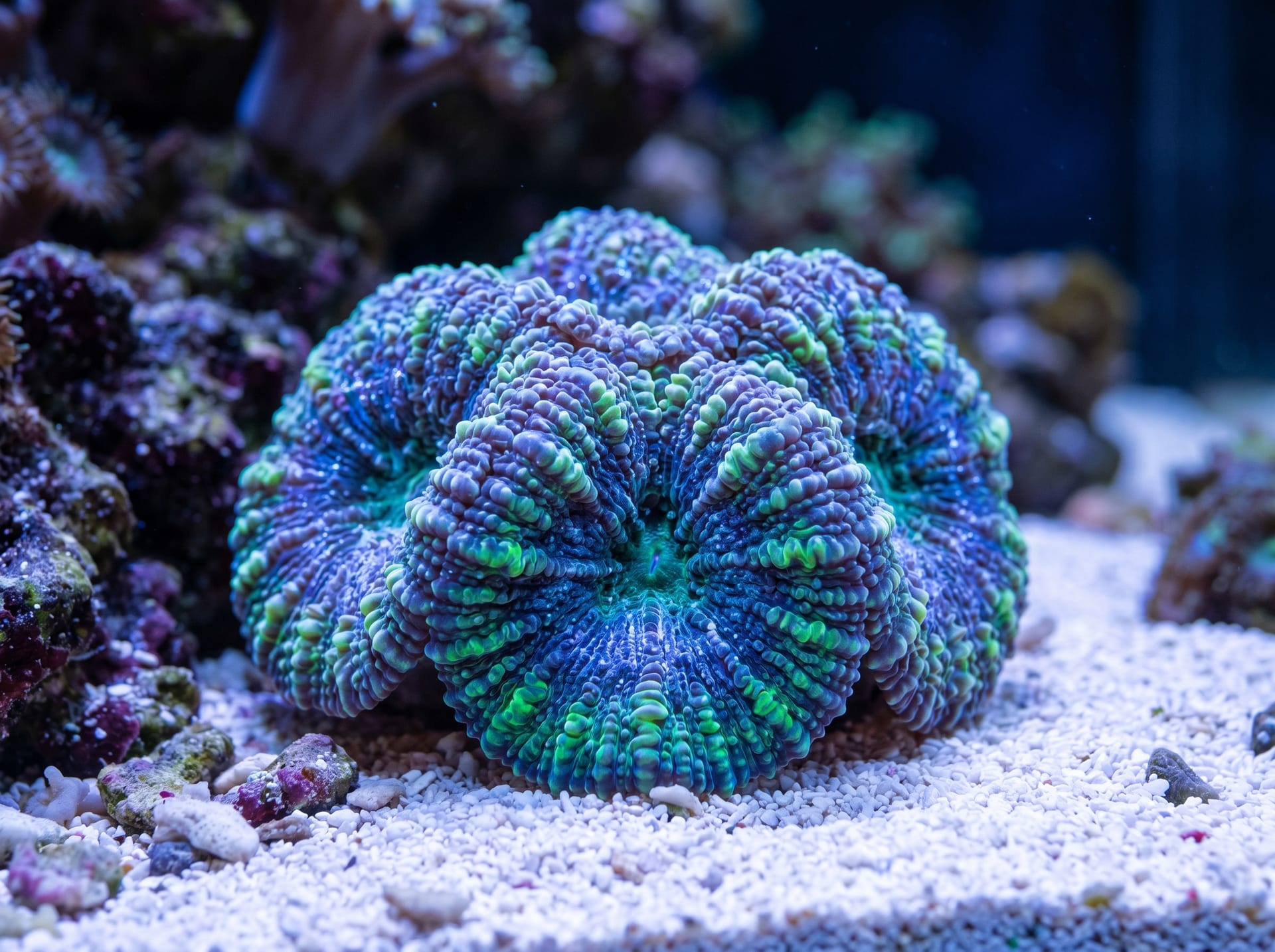
LPS (Euphyllia, Octospaced, etc.)
Prefer intermediate conditions
Foreground/Lower (Low–moderate light)
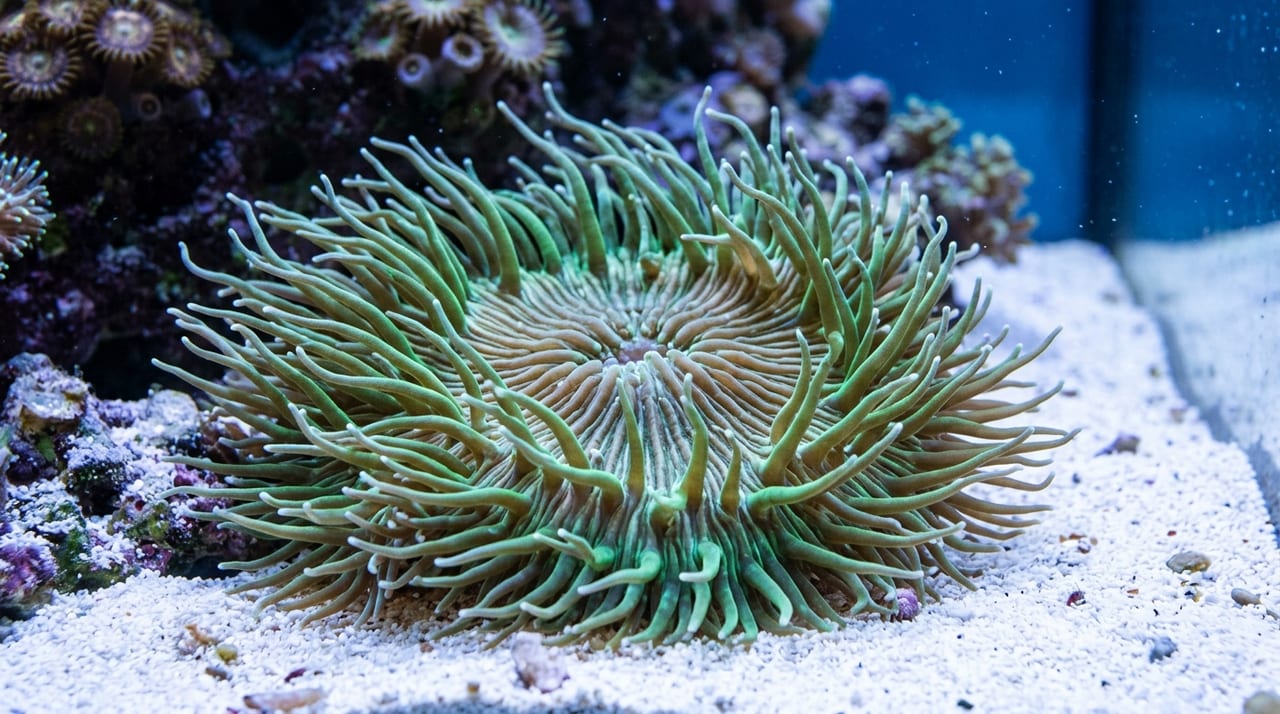
Soft corals (Zoanthids, disc corals, etc.; note—zoanthids carry the highly toxic palytoxin, so use rubber gloves and never touch with bare hands)
Shade-tolerant and beginner-friendly
Spacing and Growth Considerations
Some corals attack adjacent corals using sweeper tentacles or toxins. When placing corals, always leave 10–15cm or more between neighbors and account for their mature size. Placing LPS near SPS can cause LPS sweeper tentacles to damage SPS.
BreederDirect's Safe and Reliable Approach
Once your tank cycles, it's time to introduce corals. For a first addition, soft corals are recommended—they're relatively tolerant of water parameter changes and easier to grow.
In BreederDirect's Coral category, breeders sell frags (small cuttings) to full-sized colonies in various sizes. The direct-from-breeder format means no middleman—you can confirm the coral's condition and the breeder's care environment directly.
Ask the seller questions: Inquire about water parameters and care history beforehand
Abundant frag sales: Experiment with multiple species while keeping costs down
Negotiate payment terms directly: You can arrange to pay after confirming arrival and condition—trading with confidence
Building your tank while nurturing connections with trustworthy breeders is one of the joys of coral keeping. Find your perfect coral on BreederDirect today.