Coral Tank Auto Top Off (ATO) System Installation Guide: Evaporation Prevention and Specific Gravity Stability
Explains how Auto Top Off (ATO) systems prevent specific gravity fluctuations caused by evaporation in coral tanks, and how to choose one. Introduces practical information covering the differences between float and optical sensors, recommended models, safety measures, and installation methods.
Key Takeaways
Explains how Auto Top Off (ATO) systems prevent specific gravity fluctuations caused by evaporation in coral tanks, and how to choose one. Introduces practical information covering the differences between float and optical sensors, recommended models, safety measures, and installation methods.
Related Species
Evaporation Problems and the Importance of Specific Gravity Management in Coral Tanks
When maintaining a coral tank, daily water level loss and specific gravity rise from evaporation are unavoidable challenges. In environments with heated lighting and pumps or dry, air-conditioned rooms, it is not uncommon for several liters of water to evaporate in a single day.
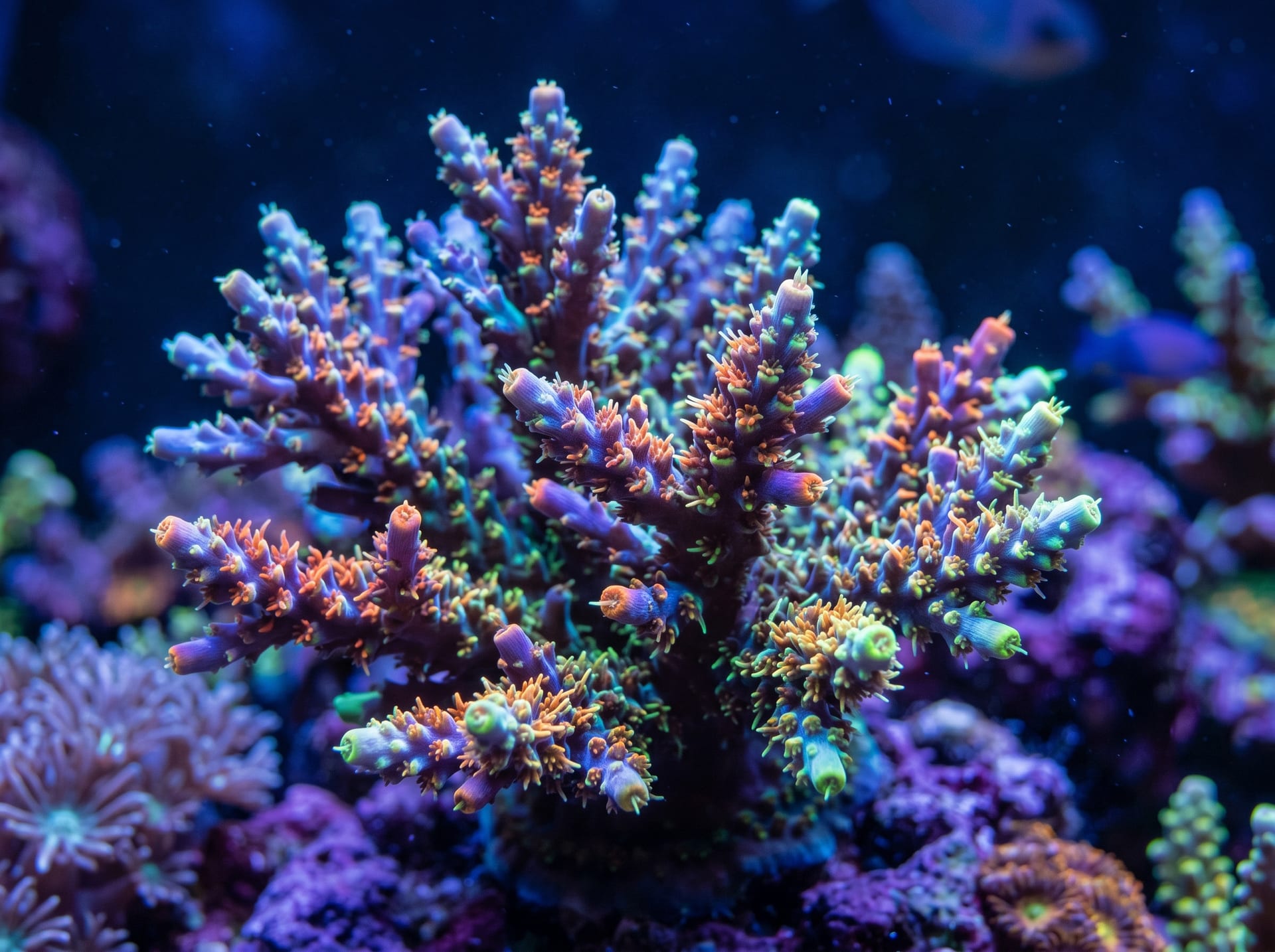
Only "pure water molecules" evaporate. Salts and minerals remain in the tank, so as evaporation progresses, the specific gravity (salinity concentration) gradually rises. The ideal specific gravity for healthy coral growth is around 1.025–1.026, but when it rises to 1.028–1.030, polyps may not open well and coloration becomes dull, signaling stress. Particularly, SPS species like Acropora are sensitive to water quality fluctuations and over the long term can experience bleaching or decline. This can even lead to serious consequences.
Checking water level manually each day and refilling is labor-intensive, and it is difficult to manage the tank while away or sleeping. This fundamental problem is solved by the Auto Top Off (ATO) system. When a water level sensor detects a drop, the system automatically replenishes fresh water from a reservoir tank, maintaining constant specific gravity. Once installed, daily maintenance burden is dramatically reduced, making it an essential piece of equipment in modern coral keeping.
The Basic Mechanism and Types of ATO Systems
ATO systems consist of three main components: a "water level sensor," a "replenishment pump," and a "reservoir (storage tank)." When the sensor detects a water level drop, the pump activates to replenish RO water (purified water) from the reservoir into the tank or sump. When the water level returns to the set value, the pump stops. This simple cycle repeats.
There are two main types of water level sensors.
- Float-type: A classical method that detects water level by the up-and-down motion of a float on the surface. While inexpensive and easy to install, it is prone to malfunction from salt creep and algae accumulation.
- Optical (infrared) type: A method that senses water level using changes in the refraction rate of infrared light. With no moving parts and resistance to contamination, it is highly reliable and has become the current standard.
Additionally, some products employ a dual-sensor system combining both optical and float sensors, providing a backup failsafe if one sensor fails.
Popular ATO Systems: Features and How to Choose
Various ATO systems are on the market, but coral keepers particularly favor the following models:
- Tunze Osmolator: A long-established standard featuring dual sensors (optical + float). With years of proven performance and stable operation, it is popular among advanced keepers who prioritize reliability.
- AutoAqua Smart ATO: Characterized by a high-precision optical sensor and compact design. It can accommodate small tanks and some models allow you to log and monitor evaporation rates.
- XP Aqua Duetto: Combines safety features through dual sensors with ease of use, earning a reputation as beginner-friendly for those installing an ATO system for the first time.
Key points to check when selecting:
- Pump flow rate: Is the flow rate sufficient for your tank size and plumbing distance?
- Safety feature completeness: Maximum operating time restrictions via timer, presence of dual sensors
- Reservoir capacity: Can you establish an operational cycle where you notice before the tank empties?
For small tanks, a 1–3 liter reservoir may last several days, but for large tanks or during high-evaporation summer periods, securing 10+ liters provides peace of mind.
Installation Methods and Essential Safety Measures
ATO is a simple device, but installation or configuration errors can lead to serious accidents. If the sensor malfunctions and replenishment does not stop, water can overflow causing leaks, or specific gravity can drop suddenly, causing fatal damage to corals. Always implement the following safety measures:
① Choose the sensor installation location carefully Air bubbles or wave action can cause false readings. Select a location in the sump where water flow is relatively stable, and secure the sensor where water current does not directly strike it.
② Set an upper limit on replenishment volume per cycle Most products have a "maximum operating time" setting feature. For example, limiting each replenishment to a maximum of 60 seconds automatically prevents over-replenishment in case of sensor malfunction.
③ Design the reservoir capacity appropriately Choose a capacity such that even if all water in the reservoir were to enter the tank, the specific gravity would not reach a dangerous level. An oversized reservoir can actually increase risk.
④ Clean the sensor regularly Even optical sensors accumulate salt and algae with extended use. Check the condition about once per month and clean as needed.
RO/DI Water Preparation and Quality Management
The quality of water used for ATO replenishment is directly tied to maintaining a healthy coral tank. Adding tap water directly can cause gradual accumulation of impurities such as chlorine, heavy metals, and silicates, leading to algae blooms and water quality degradation.
Always use RO water (purified water processed through a reverse osmosis filter), and ideally combine it with a DI (deionized resin) filter for RO/DI water. As a quality standard, regularly check RO water with a TDS (Total Dissolved Solids) meter and confirm that TDS remains below 0–5 ppm. A rising TDS value signals it is time to replace the filter.
Reservoir management is equally important:
- Store in a location away from direct sunlight to prevent algae growth
- Cover to prevent dust and debris from entering
- Check remaining volume regularly and develop the habit of refilling before it runs out
If concerned about the cost of an RO water system, you can purchase RO water from pet shops or home improvement stores, but in the long term, installing an RO/DI water purifier at home offers greater cost and convenience benefits.
Conclusion: ATO Installation Greatly Improves Coral Tank Stability
The ATO system is cost-effective equipment that solves the fundamental issue of specific gravity stability in coral tanks through automation. Once properly installed, it maintains constant specific gravity even when you are away traveling or at work.
Key points to keep in mind during installation are:
- Choose products with optical sensors for higher reliability
- Verify safety features such as dual sensors and timer limits
- Always use RO/DI water for replenishment and monitor TDS regularly
- Prevent malfunction through careful sensor placement and regular cleaning
BreederDirect has many coral breeders registered who have been using ATO systems long-term. Concerns like "which model suits my tank?" or "I'm having trouble with installation" can easily be discussed through direct messaging with breeders. From equipment selection to daily operation, leverage experienced breeders' expertise to further enrich your coral keeping.