How to Choose and Manage Live Rock | Understanding Biological Filtration in Marine Aquariums
A guide to the role, types, selection methods, and curing processes for live rock, which is essential for marine aquariums.
Key Takeaways
A guide to the role, types, selection methods, and curing processes for live rock, which is essential for marine aquariums.
Live rock is an essential "living stone" for maintaining marine aquariums. Countless bacteria that colonize its surface and interior break down ammonia and nitrites in the water, playing a central role in biological filtration that stabilizes water quality. To keep corals and marine fish healthy, it is important to understand the characteristics of live rock, select it properly, and manage it correctly. This article provides a clear explanation from the basic roles of live rock to selection methods, curing procedures, and placement tips.
Five Roles of Live Rock
Live rock is not just a layout material but a multifunctional substrate that supports the entire ecosystem of the aquarium. Let's organize its main roles.
- Foundation of Biological Filtration: Both aerobic and anaerobic bacteria colonize the porous surface and interior of the rock. Aerobic bacteria convert ammonia and nitrites to nitrate, while anaerobic bacteria further break down nitrate into nitrogen gas.
- Nitrate Reduction: The interior of live rock becomes an anaerobic layer where oxygen penetration is limited, allowing nitrate reduction to occur. This makes it easier to maintain water quality while reducing the frequency of water changes.
- Ensuring Biodiversity: Natural live rock hosts diverse organisms such as coralline algae, sponges, amphipods, and copepods that attach and coexist on it, enriching the food chain within the aquarium.
- Shelter for Fish and Corals: By recreating terrain with natural contours and crevices, it functions as a refuge to reduce fish stress and serves as a spawning ground.
- Structural Framework for Layouts: Serves as the backbone of aquarium design, creating a three-dimensional and natural aesthetic.
Which Should You Choose: Natural or Artificial Live Rock?
Live rock is broadly divided into two types: "natural live rock" and "artificial live rock (marine rock, ceramic rock)." Each has advantages and disadvantages, so choose based on your aquarium setup and goals.
Natural Live Rock
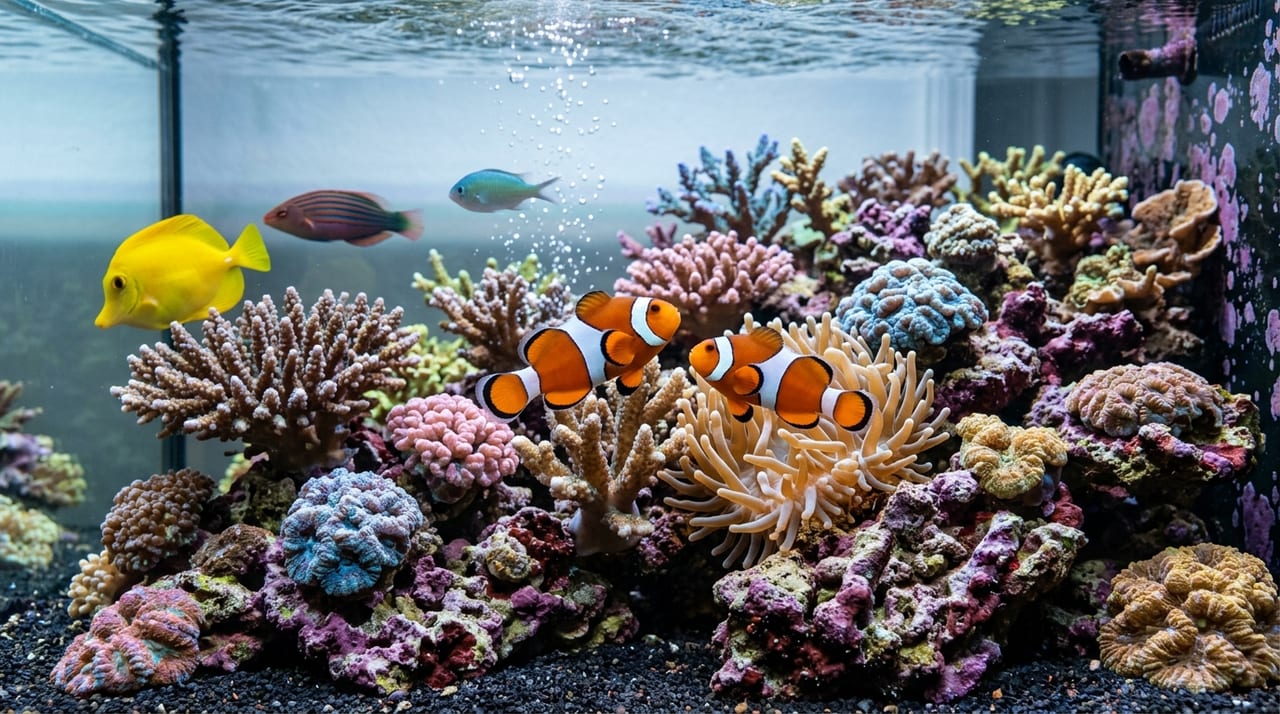
Limestone extracted from the ocean floor with abundant organisms already attached from the start. Since bacteria are already established, the tank cycles quickly and filtration capacity is realized early—a major advantage. The pink and purple hues of coralline algae bring natural beauty to the aquarium.
On the other hand, some organisms die during shipping, producing ammonia, so "curing" is necessary before introduction. Additionally, there is a risk of unwanted pests such as aiptasia (glass anemones), mantis shrimp, and planarian flatworms being introduced.
Artificial Live Rock (Marine Rock, Ceramic Rock)
Porous artificial stone made from ceramics or specialized materials. It is sterile processed during manufacturing, so there is no risk of unwanted pests, and its uniform shape makes it easy to work with. It is also noteworthy for having minimal environmental impact.
The downside is that bacteria start from zero, so it takes 1–3 months for filtration capacity to stabilize. Initially, combining it with natural live rock is also an effective approach.
Proper Curing Procedure
When you purchase natural live rock, be sure to cure it before adding it to your aquarium. Organisms that die during shipping can decompose and produce large amounts of ammonia. Adding it directly to the tank can cause serious harm to your livestock.
- Prepare a Container: Make artificial saltwater using RO water (reverse osmosis purified water) adjusted to a specific gravity of 1.023–1.025 in a bucket or storage container.
- Submerge the Live Rock: Place the live rock in the container and create water circulation using a submersible pump or aeration.
- Daily Full Water Changes: Change the water completely each day to remove decaying organic matter. Gently brushing away dead organisms from the surface further improves effectiveness.
- Check Water Quality: Continue until both ammonia and nitrite readings reach zero. This typically takes 1–2 weeks.
- Completion Signs: When any bad odor is gone and the coralline algae retain their pink or purple color, curing is complete.
During curing, do not add fish or corals, and working in a dark location helps prevent unwanted algae growth.
Placement Tips and Quantity Guidelines
The way you place live rock significantly affects both the appearance and filtration efficiency of your tank. Keep these points in mind:
- Create Space Behind Rocks: Avoid placing them flush against the glass or substrate; ensure water flow passes through the back. Excessive anaerobic zones can produce hydrogen sulfide.
- Three-Dimensional Layout: Rather than stacking from the bottom, create structures with "arches" or "shelves" to provide more hiding places and a more natural aesthetic.
- Securing When Needed: For earthquake safety or to prevent collapse from livestock disturbance, securing with epoxy putty or coral adhesive is recommended.
- Quantity Guidelines: As a general rule, approximately 10 liters of water per 1 kg of live rock is recommended. For a standard 60cm tank (approximately 57 liters), preparing 5–6 kg of live rock helps stabilize filtration.
Note that excessive stacking of live rock can cause detritus (organic waste) to accumulate, so proper quantity and regular maintenance are important. For aquarium layout design, also refer to Reef Tank Aquascaping Techniques.
Keeping marine fish is a deep hobby, and careful daily observation and management lead to maintaining beautiful aquascapes and healthy fish. Regular water quality testing and water changes form the foundation, and being attentive to changes in fish behavior and health is the key to long-term success.
BreederDirect's Reassurance and Safety System
Through BreederDirect, you can connect directly with breeders who sell cured live rock and healthy marine livestock. Since you purchase organisms and materials carefully managed by individual breeders without intermediaries, transparency in quality is a defining feature.
You can check seller profiles and past reviews before purchasing, so even beginners can use it with confidence. When looking for live rock and starter fish needed to cycle your tank, be sure to check BreederDirect. Connecting with trustworthy breeders will surely enrich your marine aquarium hobby.