Cat obesity increases risks of joint disease, diabetes, and urinary issues. Covers BCS assessment, calorie calculation, selecting diet food, and exercise strategies.
Key Takeaways
Cat obesity increases risks of joint disease, diabetes, and urinary issues. Covers BCS assessment, calorie calculation, selecting diet food, and exercise strategies.
Cat Weight Management Guide | Preventing Obesity Through Proper Diet, Exercise, and Weight Loss Methods
✍️
BreederDirect Editorial
The BreederDirect editorial team specializes in care information for animals, covering veterinary care and breeding to deliver beginner-friendly guides.
Find Cats on BreederDirect
Buy directly from verified breeders
Browse Related Listings
Find Cats listings related to this article on BreederDirect. Buy directly from verified breeders.
Many cat owners have noticed, "Has my cat gotten heavier lately?" In fact, a significant number of pet cats in Japan are said to be overweight or obese. Obesity isn't just a matter of "cuteness"—it increases the risk of various diseases including arthritis, diabetes, urinary tract disease, and dermatitis. This article explains everything from identifying your cat's ideal weight to specific diet methods.
Determining Your Cat's Ideal Weight and Obesity
A cat's "ideal weight" varies by breed, bone structure, and sex. The average adult cat weighs 3.5–5 kg, but breeds like Norwegian Forest Cats and Maine Coons have a standard weight of 6–8 kg, showing significant breed differences.
Evaluating with BCS (Body Condition Score)
Rather than relying solely on the number on the scale, the "BCS" method is useful for comprehensively evaluating body shape through touch and visual inspection.
BCS 1–2 (Underweight): Ribs are visible, hip bones protrude
BCS 3 (Ideal): Ribs can be felt but not seen, with a visible waist
BCS 4 (Overweight): Ribs are difficult to feel, no waist definition
BCS 5 (Obese): Ribs cannot be felt, abdomen sags significantly
BCS 3 is the ideal state. Evaluate your cat regularly at home and notice any changes.
Why Cats Gain Weight Easily
Decreased metabolism after spaying or neutering
Reduced sex hormones lower the basal metabolic rate, making cats more prone to weight gain even with the same food intake. After surgery, it's recommended to reduce feed intake by 10–20%.
Decreased activity with age
Senior cats (7 years and older) are less active than when younger. It's time to review their diet.
Exercise deficit from indoor living
Indoor cats have far less activity compared to outdoor cats due to limited space.
Excessive treats
Frequent treat-giving often leads to caloric excess without the owner realizing it.
Calculating Appropriate Food Intake
RER (Resting Energy Requirement)
Your cat's required calories can be calculated using this formula:
RER (kcal/day) = 70 × (body weight in kg)^0.75
Multiply this by the life-stage coefficient to determine daily caloric needs:
- Spayed/neutered adult cats: ×1.2
- Obese cats needing weight maintenance: ×0.8–1.0
Since commercial cat foods list calories, use these numbers to decide appropriate portion sizes.
Key Points for Dieting
Avoid sudden food reduction
Rapid reductions in food intake can cause cats to develop "hepatic lipidosis (fatty liver disease)," a serious condition. Gradually reduce portions by 10–20% increments.
Use diet-specific food
Switching to low-calorie, high-protein, high-fiber diet food allows you to reduce calories while maintaining satiety. Look for foods labeled "light" or "weight reduction."
Increase meal frequency
Splitting 2 daily meals into 3–4 portions reduces hunger while keeping total caloric intake unchanged. An automatic feeder can be effective.
Measure portions precisely
"Eyeballing" creates significant errors. Use a kitchen scale to measure portions accurately every time—this is fundamental to proper management.
Increase water intake
Incorporating wet food (canned or pouch) reduces calories while increasing water content for greater satiety. Wet food is also recommended for cats at high risk of urinary tract disease.
Ways to Increase Exercise
Interactive play
Use cat toys, feather wands, or laser pointers for 15–20 minutes daily. These trigger prey drive and enable intense exercise.
Cat trees and climbing structures
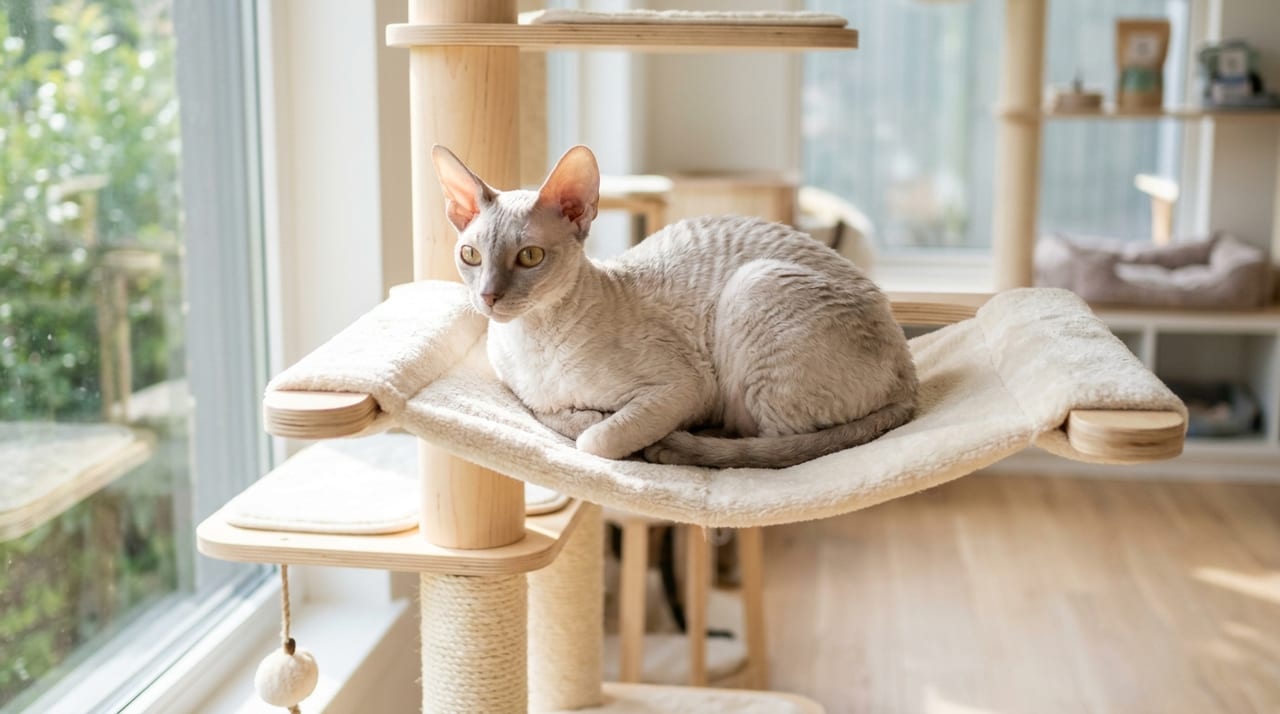
Tall cat trees encourage cats to naturally climb and descend, increasing activity. Placing multiple trees in different rooms increases movement.
Puzzle feeders and enrichment toys
Food puzzle dishes slow down eating, preventing overeating while mentally and physically stimulating your cat.
Regular Weight Monitoring
Measure and record your cat's weight once or twice monthly. You can place your cat in a basket or mesh laundry bag on a scale, or weigh yourself while holding your cat, then subtract your weight.
If weight increases, reduce feed intake by 5–10%; if it decreases, increase slightly. Continue with these fine adjustments.
When to Consult Your Veterinarian
If weight doesn't decrease after 2–3 months of dieting
If weight increases or decreases rapidly
If appetite decreases
In particular, sudden weight changes can be a sign of illness. Have your veterinarian check your cat's weight during regular health exams.
Summary
Cat weight management is fundamental to your cat's health and longevity. Regularly check your cat's body shape using BCS, and maintain ideal weight through proper diet management and consistent exercise habits. Start today for your beloved cat's long and healthy life.