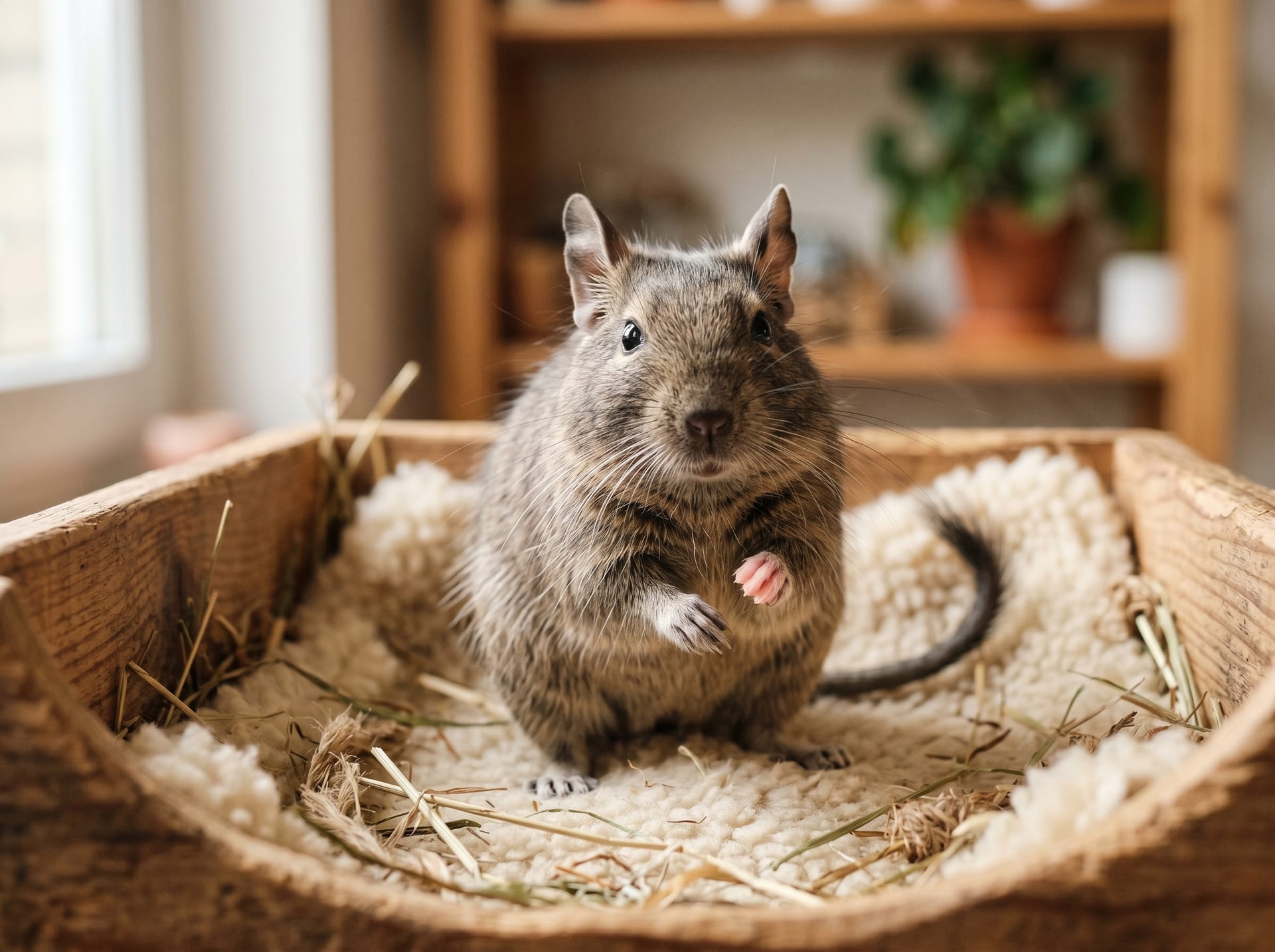
Degu

Degu

Highly intelligent and social rodent from Chile. Called the singing mouse of the Andes for its vocalizations. Diurnal and easy to bond with.

View Degu encyclopedia →
Limited Time Offer

0% commission on your first sales!Register by September 30, 2026 and your first 2 sales are commission-free!

Breeder Wanted!

List on BreederDirect and sell directly to customers nationwide!

Free registrationNo monthly feesCommission on sales only
Register Now for Free

6 Transparency Commitments from Br-Choku

Every Small Pets listing from Breeder includes the information below. We guarantee transparency through health checks, vaccinations, microchips, and more.

  • Hand-Tamed
  • Health Checked
  • Vaccinated
  • Microchipped
  • Real Photos
  • Age Specified

Hand-Tamed

0 items

No listings match your filters

Adjust your filters, or get notified when new listings arrive.

Getting alerts is free with a member account. When new listings match your saved search, we'll notify you by email and in-app.

Browse other categories

Verified breeders (preview)

Are you raising small pets?

Register as a breeder and connect with buyers directly.

Apply as a breeder

Degu key facts

Care level
Intermediate
Lifespan
5-8 years
Size
12-15cm (25cm with tail) / 170-300g
Diet
Degu pellets, timothy hay, small amounts of vegetables
Diet
Extremely susceptible to diabetes. No fruits or sugary vegetables
Sociality
Highly social. Keeping in groups is strongly recommended
Cage
Tall multi-level cage. Provide dust bath area and exercise wheel
Notes
Never grab the tail — it deglobes. Diurnal so matches human schedule
TraitsIntermediateIntelligentSocialDiurnal

About Degu

The degu is a small rodent native to the rocky slopes and scrublands of the Andes Mountains in Chile, where it lives in social groups of five to ten individuals. Its name for vocal complexity is well earned — degus are said to use more than fifteen distinct vocalizations, earning them the nickname "the singing mouse of the Andes." Adults typically measure 15 to 20 cm in body length and weigh between 170 and 350 grams, with soft grey-brown fur and expressive round eyes. Their high intelligence allows them to learn their names and even simple tricks, and individuals that are well socialized from a young age often enjoy sitting on a hand or shoulder. As diurnal animals, degus are naturally active during daytime hours, making them easier to bond with than nocturnal small pets. Their relatively quiet vocalizations also make them suitable for apartment living. Understanding their specific needs — regular dust baths, a sugar-free diet, and the companionship of at least one other degu — is the foundation of keeping them healthy and content.

7 things to know before welcoming a Degu

  1. 1Keep Them in Pairs or Groups

    Degus are highly social animals that naturally live in groups, and solitary housing can lead to stress and health issues. Keeping same-sex pairs or small groups is strongly recommended, especially for first-time owners considering their first degu.

  2. 2Sand Baths Are Essential

    Like chinchillas, degus keep their coats clean by rolling in fine dust or sand. Provide a dust bath container with chinchilla-safe sand several times a week. Avoid water baths, as degus have difficulty drying properly and are prone to chilling.

  3. 3Extremely Sensitive to Sugar

    Degus have a unique insulin response and are particularly prone to developing diabetes when fed sugary foods. Stick to a diet of high-quality pellets and timothy hay as staples, and avoid offering fruit or sweet treats as a general rule.

  4. 4They Need a Tall, Spacious Cage

    Degus are energetic and enjoy climbing as well as running. Choose a metal cage with enough height and floor space to accommodate multiple platforms and a solid-surface exercise wheel. Wire mesh floors should be avoided to protect their feet.

  5. 5Monitor Dental Health Closely

    Like all rodents, degus have continuously growing teeth, and providing ample timothy hay helps wear them down naturally. Malocclusion (misaligned teeth) can cause difficulty eating, so check their teeth regularly and consult an exotic animal vet if you notice any changes in eating habits.

  6. 6Never Grab Them by the Tail

    Degus have a natural defense mechanism where the skin of their tail can detach if grabbed. This skin does not grow back, leaving a permanent injury. Always support their body when handling and never restrain or pull their tail under any circumstances.

  7. 7Temperature Control Is Critical

    Degus are sensitive to heat and can suffer from heatstroke when temperatures exceed 28°C (82°F). Maintain their environment between 18–25°C year-round, using air conditioning in summer months. Good ventilation is also important, as high humidity can negatively affect their coat and respiratory health.

Frequently asked questions about Degu

Q.Can degus be kept by someone living alone?
A.Degus can be kept by people living alone, as their daytime activity schedule aligns well with a typical daily routine. However, because they are highly social, keeping two or more together helps prevent loneliness and stress. If you are away from home for long periods, housing a pair is especially recommended.
Q.How long do degus typically live?
A.With proper care, degus typically live between 5 and 8 years. Preventing common health issues such as diabetes and dental problems through diet management and regular health checks is key to a longer life. They are considered relatively long-lived among small pet rodents.
Q.Is caring for a degu different from caring for a hamster?
A.There are several important differences. Unlike hamsters, which are nocturnal and often solitary, degus are diurnal and thrive in social groups. They also require a strict sugar-free diet and a larger cage with more enrichment to meet their higher activity needs. Hamster equipment and food are generally not suitable for degus.
Q.Do degus bond with their owners? How long does it take?
A.Degus can form strong bonds with their owners, though the time it takes varies by individual. With gentle, consistent daily interaction, most degus become comfortable with their owner within a few weeks to a few months. Avoid forcing contact early on; instead, build trust gradually through calm talking and hand-feeding treats. Degus socialized from a young age tend to bond more readily.
Q.Is it hard to find a vet who treats degus?
A.Many general veterinary clinics that focus on dogs and cats may not treat degus. It is important to find a clinic that specializes in or is experienced with exotic small animals. Researching exotic animal vets in your area before bringing a degu home will help ensure timely care when it is needed.

Useful tools for Degu care

Learn more about Degu in the encyclopedia

View Degu encyclopedia entry →

Care difficulty, lifespan, size and diet — all basics covered.

Degu related articles

See more Degu articles →

More in this category

Can't find the one you're looking for?

Post your wishes for free and breeders with matching animals will contact you with introductions.