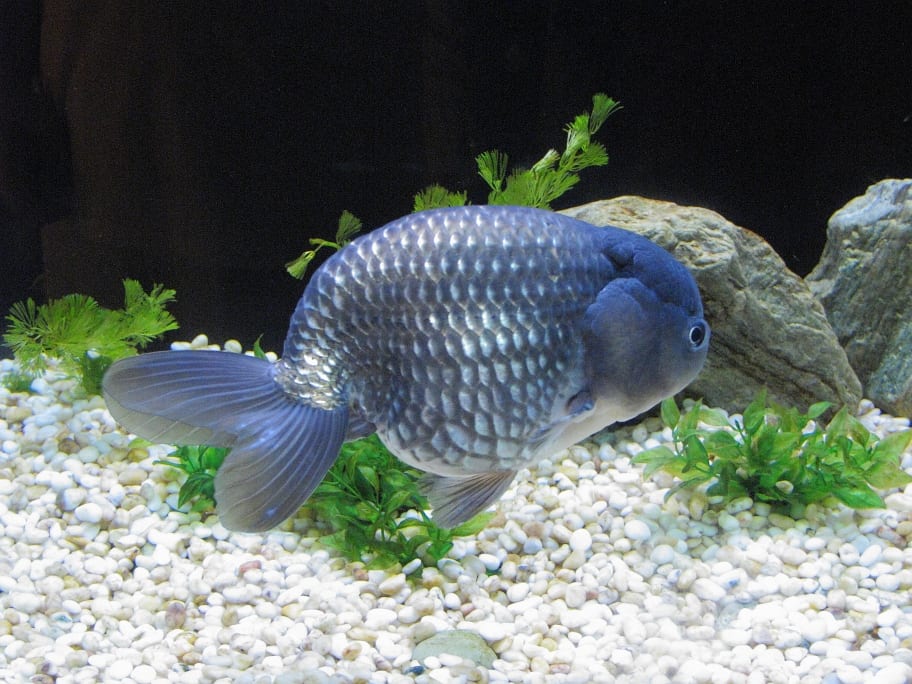
 © Lawrencekhoo / CC BY-SA 4.0
Blue Ranchu
The Blue Ranchu pairs the popular ranchu body shape with a subdued blue-gray coloration inherited from the Blue Wenyu goldfish. Unlike the vivid primary colors of many goldfish varieties, it stands out for its muted, understated tone, and many individuals gradually fade toward white as they mature, making their color transformation part of the appeal. Its rounded body without a dorsal fin gives it a charming look, and the breed is generally known for a calm temperament that doesn't spook easily around people. That said, the same body shape limits swimming power, so water quality and flow need careful attention, making this a variety better suited to keepers with some prior goldfish experience. Adults typically reach about 15 cm in length, growing into an impressively substantial fish.
View Blue Ranchu encyclopedia →0% commission on your first sales!Register by September 30, 2026 and your first 2 sales are commission-free!
Breeder Wanted!
List on BreederDirect and sell directly to customers nationwide!
6 Transparency Commitments from Br-Choku
All Goldfish listings from Breeder include the following details. We guarantee transparency in lineage (Yamato/Yatomi/Edo) and competition awards.
- Lineage
- Real Photos
- Breeder Lineage
- Award History
- Competition History
- Age Stated
Browse all 100 breeds
Care Difficulty
No listings match your filters
Adjust your filters, or get notified when new listings arrive.
Getting alerts is free with a member account. When new listings match your saved search, we'll notify you by email and in-app.
Browse other categories
Verified breeders (preview)
Blue Ranchu key facts
- Care level
- Intermediate
- Lifespan
- 10-15 years
- Size
- About 15cm
- Temperature
- 15〜28℃
- Diet
- Prepared foods, frozen bloodworms
- Lighting
- The blue-grey shifts with the angle of light. Moving the fish to a white bowl and viewing from above makes the depth of colour easier to read; in a tank, diffuse lighting suits it.
- Housing
- With no dorsal fin it swims poorly, so keep the flow gentle. Shallow containers and water bowls suit viewing from above, and in a tank a thin layer of substrate is enough.
- Tank Mates
- It does not swim strongly, so the usual arrangement is with other ranchu types. Mixed with wakin types or comets it will lose out at feeding time.
- Notes
- The blue-grey fades readily with age; a fish whose belly pales is called hagoromo and one that pales throughout hakuo. The change is not a fault, but avoid sudden shifts in water quality.
About Blue Ranchu
Blue Ranchu is a ranchu-type goldfish with a muted blue-gray hue inherited from the Blue Wenyu. Its dorsal-fin-less rounded body and shifting coloration make it a distinctive, intermediate-level variety that grows to about 15 cm.
7 things to know before welcoming a Blue Ranchu
1No Dorsal Fin, Slower Swimmer
Blue Ranchu have a rounded body without a dorsal fin, which makes them slower and less agile swimmers than other goldfish. Strong currents and tanks with steps or ledges can be stressful, so aim for a calm, gentle environment.
2Color Fades With Age
The muted blue-gray inherited from the Blue Wenyu often fades toward white as the fish matures. This is a natural change rather than a sign of illness, so there's no need to worry if the color lightens over time.
3Stable Water Quality Matters
The ranchu body shape is sensitive to shifts in water quality, so regular water changes and reliable filtration are essential. This is part of why the variety is considered better suited to keepers with some prior experience.
4Choose Tankmates Carefully
Because they aren't strong swimmers, Blue Ranchu can struggle to compete for food or get their fins nipped when kept with faster or more aggressive goldfish. Pairing them with similarly slow-swimming varieties tends to work best.
5Keep the Tank Layout Simple
Sharp ornaments or tight gaps in the decor can cause bumps or getting stuck, since the body lacks a dorsal fin for fine control. Choose rounded decorations and leave plenty of open swimming space.
6Change Water Temperature Gradually
As with goldfish in general, sudden temperature swings can cause stress or health problems. Match the temperature during water changes and ease the fish through seasonal shifts slowly.
7Prepare the Tank Before Arrival
Cycling the filter before introducing the fish helps keep water quality stable from day one. Acclimate the fish gradually to the new water's temperature and chemistry before releasing it into the tank.
Frequently asked questions about Blue Ranchu
- Q.Is the Blue Ranchu suitable for beginners?
- A.It's generally considered a variety for keepers with some experience, since its body shape makes it more sensitive to changes in water quality. It's best to build up basic goldfish-keeping experience before taking one on.
- Q.Is it a health problem if the color turns whitish?
- A.Many Blue Ranchu naturally fade toward white as they mature. In most cases this is a normal color change rather than a sign of illness.
- Q.How big do they get as adults?
- A.Adults typically reach about 15 cm in length. Combined with their sturdy build, they end up looking more substantial than that number alone suggests.
- Q.How is it different from the Blue Wenyu?
- A.Blue Ranchu shares the same blue-gray coloration as the Blue Wenyu, but carries it on a rounded ranchu body without a dorsal fin. The color lineage is the same, but the body shape is distinctly ranchu.
- Q.Can it be kept together with other goldfish?
- A.Because it's a slower swimmer, it can struggle to compete for food alongside faster goldfish. If keeping it with others, choose varieties with a similarly relaxed swimming pace.
Useful tools for Blue Ranchu care
Learn more about Blue Ranchu in the encyclopedia
View Blue Ranchu encyclopedia entry →
Care difficulty, lifespan, size and diet — all basics covered.
More in this category
Can't find the one you're looking for?
Post your wishes for free and breeders with matching animals will contact you with introductions.