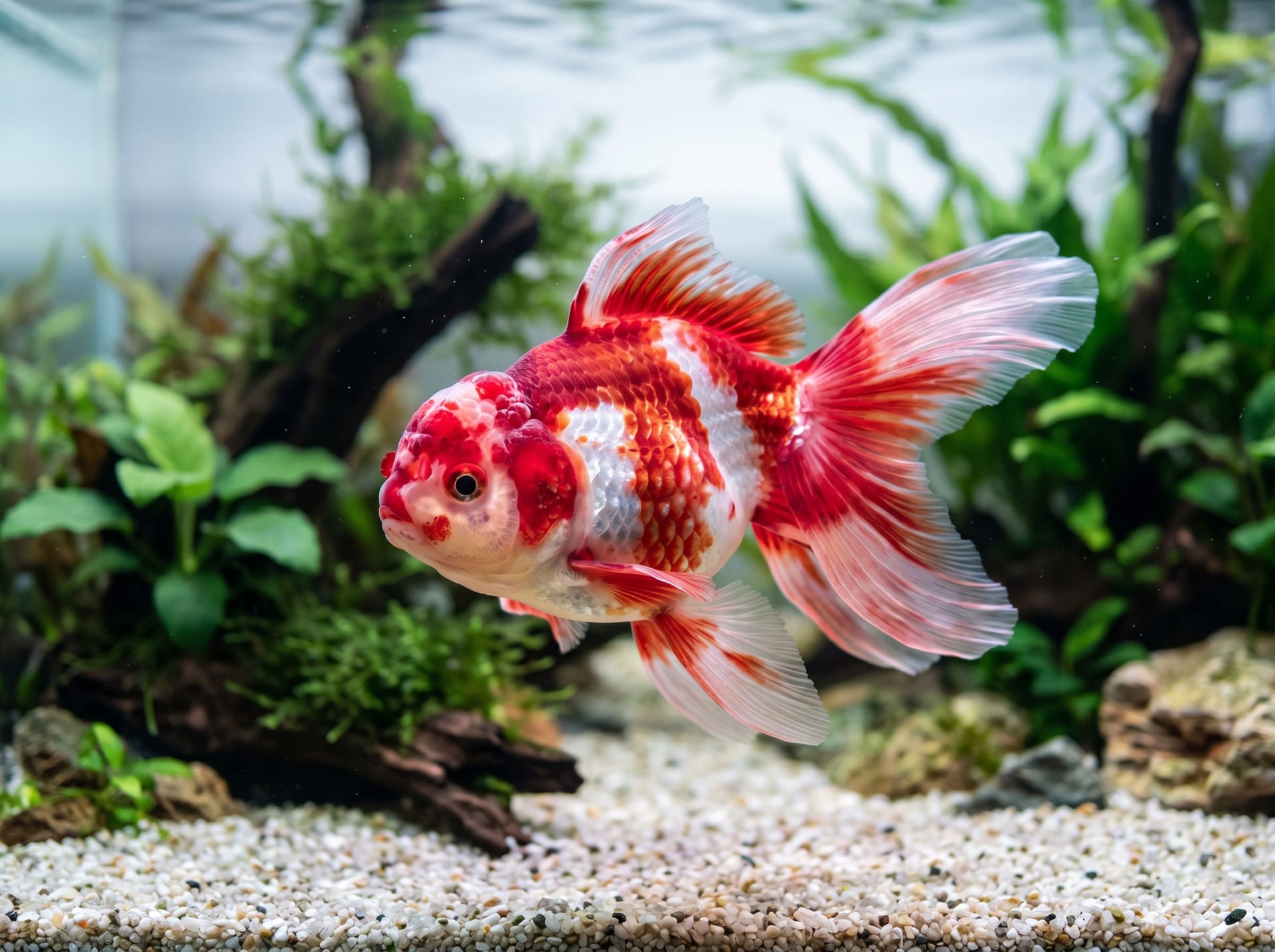
Azumanishiki
Oranda body type with calico (tricolor) pattern. Beautiful mix of red, white, and black coloring.
View Azumanishiki encyclopedia →0% commission on your first sales!Register by September 30, 2026 and your first 2 sales are commission-free!
Breeder Wanted!
List on BreederDirect and sell directly to customers nationwide!
6 Transparency Commitments from Br-Choku
All Goldfish listings from Breeder include the following details. We guarantee transparency in lineage (Yamato/Yatomi/Edo) and competition awards.
- Lineage
- Real Photos
- Breeder Lineage
- Award History
- Competition History
- Age Stated
Browse all 26 breeds
Care Difficulty
No listings match your filters
Adjust your filters, or get notified when new listings arrive.
Getting alerts is free with a member account. When new listings match your saved search, we'll notify you by email and in-app.
Browse other categories
Verified breeders (preview)
Azumanishiki key facts
- Care level
- Intermediate
- Lifespan
- 10-15 years
- Size
- 15-25cm
- Temperature
- 15〜25℃
- Diet
- Goldfish pellets
- Container & Tank
- Keep in a tank of 60L or more. Dirt collects easily in the grooves of the wen, so run adequate filtration to keep the water clean.
- Water Temperature & Quality
- Can be kept at 15-25°C. Healthy wen development depends on clean water, so maintain it with regular water changes.
- Diet & Feeding
- Feed goldfish pellets as the staple; adding color-enhancing food brings out the calico coloring.
- Lighting
- Moderate lighting brings out the beauty of the coloring. The pattern changes as the fish grows, so enjoy watching it develop.
- Tank Mates & Compatibility
- A fairly slow swimmer, so it is best kept with other slow-swimming varieties. Active fish tend to outcompete it for food.
- Notes
- Smaller wen — better swimmer than Oranda
About Azumanishiki
The Azumanishiki is a Japanese-bred fancy goldfish developed in the early twentieth century by crossing the Oranda (known in Japan as Oranda Shishigashira) with calico-patterned varieties. Its name references eastern Japan (Azuma), distinguishing it from the Nankin associated with western Japan. The breed's most striking feature is its calico coloration — an intricate blend of red, white, and black that varies from fish to fish, ensuring no two individuals look alike. Like the Oranda, it has a compact, rounded body and a fleshy wen that develops on the head, adding further visual interest. In temperament, Azumanishiki are calm and unhurried; fish that have grown accustomed to their keeper will often glide toward the surface at feeding time. Adults typically reach 15–25 cm, giving them a commanding presence in any aquarium. While they do require a spacious tank and attentive water quality management, those willing to provide proper care are rewarded with a companion that can thrive for 10–15 years.
Featured breeders for Azumanishiki
See all Azumanishiki breeders (1) →7 things to know before welcoming a Azumanishiki
1Spacious Tank Required
Due to its round body shape and relatively slow swimming ability, a tank of at least 60 cm is recommended. Keep decorations minimal to give the fish room to move comfortably. Plan to upgrade tank size as the fish grows.
2Prioritize Strong Filtration
Goldfish produce a significant amount of waste, making water quality management essential. A high-capacity filter is strongly recommended for keeping Azumanishiki healthy. Regular water changes of about one-third of the tank volume, once or twice a week, help maintain stable conditions.
3Monitor the Head Growth
Like other Oranda-type goldfish, the Azumanishiki develops a fleshy head growth called a wen. In some individuals, the wen can grow large enough to partially cover the eyes, so check periodically that the fish can see clearly. Diet and water conditions influence how prominently the wen develops.
4Suitable for Peaceful Tank Mates
The Azumanishiki is a gentle fish that coexists well with other fancy or round-bodied goldfish varieties. Avoid housing it with fast-swimming types like Comets or fish of very different sizes, as competition for food can become problematic.
5Avoid Sudden Temperature Shifts
The ideal water temperature range is approximately 15–25°C. Sudden fluctuations can stress the fish and increase susceptibility to illness. Using a heater with a thermostat during cooler months helps maintain stable conditions year-round.
6Calico Pattern Changes Over Time
The calico pattern of the Azumanishiki can shift considerably as the fish matures, and the coloration seen in juveniles may look quite different in adults. Predicting the final pattern is difficult, so it helps to embrace the gradual changes as part of the enjoyment of keeping this variety.
7Estimated Initial Costs
Prices for Azumanishiki vary widely based on quality, typically ranging from a few hundred to tens of thousands of yen per fish. Initial equipment costs—including a tank, filter, air pump, and substrate—generally bring the startup budget to around 10,000–30,000 yen. A standard goldfish pellet diet is convenient and provides balanced nutrition.
Frequently asked questions about Azumanishiki
- Q.Is the Azumanishiki suitable for beginners?
- A.Azumanishiki can be kept by beginners who are able to maintain basic water quality and provide an appropriately sized tank. However, their round body shape makes them somewhat prone to swim bladder issues, so it is worth paying attention to portion sizes and feed types from the start.
- Q.Can Azumanishiki be kept with other goldfish?
- A.Azumanishiki coexist well with other round-bodied breeds such as Ranchu and Oranda. It is best to avoid housing them with streamlined, fast-swimming varieties like Comet or Wakin, as competition for food can become an issue.
- Q.Does the calico pattern change over time?
- A.The calico pattern can shift noticeably as the fish matures from juvenile to adult. Black markings in particular may fade or intensify depending on the individual. It is difficult to predict the exact final coloration at the time of purchase, and watching the pattern develop over time is one of the pleasures of keeping Azumanishiki.
- Q.How should water temperature be managed?
- A.The ideal water temperature range is 15–28°C, which is manageable in most Japanese indoor environments year-round. That said, direct summer sunlight and unheated rooms in winter can push temperatures to extremes, so a cooling fan or a submersible heater may be needed to maintain stable conditions.
- Q.What should Azumanishiki be fed?
- A.A formulated goldfish pellet — either sinking or floating — forms the basis of a healthy diet. Floating pellets are sometimes thought to contribute to swim bladder problems; pre-soaking them before feeding or choosing sinking pellets can reduce this risk. Frozen bloodworms or daphnia make excellent occasional treats and provide additional nutritional variety.
Useful tools for Azumanishiki care
Learn more about Azumanishiki in the encyclopedia
View Azumanishiki encyclopedia entry →
Care difficulty, lifespan, size and diet — all basics covered.
Azumanishiki related articles
See more Azumanishiki articles →More in this category
Can't find the one you're looking for?
Post your wishes for free and breeders with matching animals will contact you with introductions.