Source: Wikimedia Commons
Linnaeus's Two-toed Sloth
AdvancedCholoepus didactylus
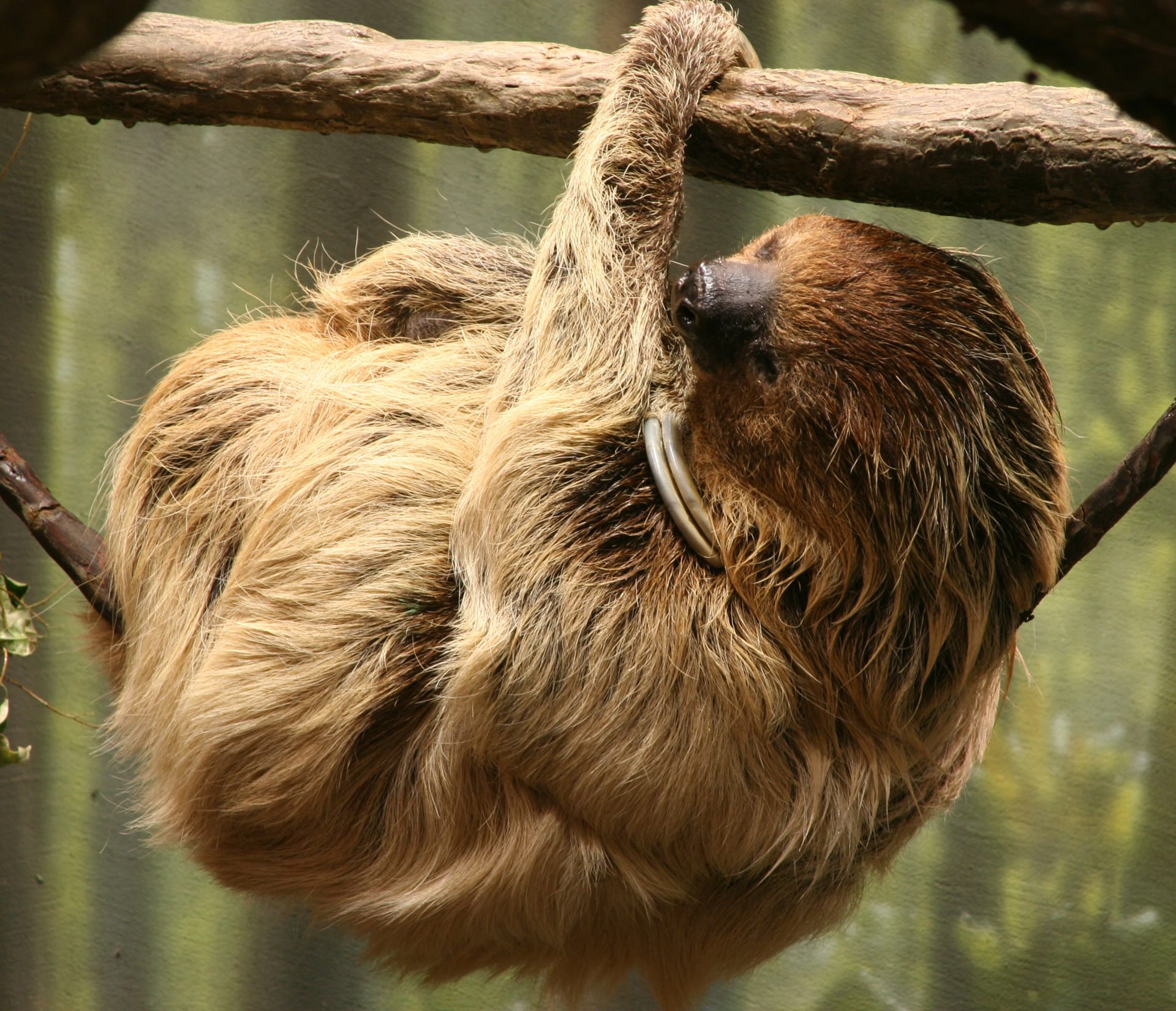
The largest living sloth, an arboreal animal of northern South American rainforest. Head-body 53-89cm, 4-11kg. Nocturnal and solitary, averaging 28 years in captivity. Rare and expensive in Japanese exotic shops.
Difficulty
Advanced
Temperature
18〜26℃
Lifespan
20-30 years (captive average 27.8, up to 40)
Size
Head-body 53-89cm / 4-11kg
Humidity
40〜60%
Diet
Leaves, fruit, vegetables
About
Linnaeus's two-toed sloth (Choloepus didactylus) occurs in Venezuela, Guyana, Suriname, French Guiana, Colombia, Ecuador, Peru and Brazil north of the Amazon. It has two long claws on the forelimbs and three on the hind limbs and spends most of its life hanging from branches, descending to the ground only about once a week to defecate. It eats mainly leaves; in captivity fruit and vegetables are also given. Nocturnal, it sleeps about 15 hours a day and is solitary. Females bear a single young each year after a gestation of about 279 days. It is Least Concern, and it was listed in CITES Appendix II in March 2026 (before that, only the related Hoffmann's two-toed sloth was on Appendix III at Costa Rica's request). Imports fall under the infectious-disease notification system. Husbandry requires a tall room fitted with climbing structures, plus heating and humidity to match rainforest conditions; without something to grip it cannot move. In Japan it is rarely handled by exotic pet shops and is expensive, and a commitment of nearly 30 years must be expected.
Source: Wikipedia (CC BY-SA 4.0)
Lifespan of the Linnaeus's Two-toed Sloth
The Linnaeus's Two-toed Sloth lives 20-30 years (captive average 27.8, up to 40).
Wild lifespan is around 20 years; in captivity it averages 27.8 years with records of 30-40.
Size of the Linnaeus's Two-toed Sloth
The Linnaeus's Two-toed Sloth grows to Head-body 53-89cm / 4-11kg.
At 53-89 cm head-body length and 4-11 kg it is the largest living sloth.
Basic Info
Origin
Northern South America (Venezuela, the Guianas, Colombia, Ecuador, Peru, Brazil north of the Amazon)
Care Specifications
Solitary
Sources: Animal Diversity Web Choloepus didactylus (solitary, lifespan)
References & Sources
Edited & verified by: BreederDirect editorial team
The taxonomic, regulatory, and husbandry data on this page are compiled and verified against the authoritative primary sources below.
Taxonomy & Authority
Accepted name: Choloepus didactylus (Linnaeus, 1758)
Authority databases: GBIF
Nomenclature follows global taxonomic authority databases.
Regulations & Conservation Status
CITES Appendix IIIUCN LC · Least Concern
Domestic law: Subject to Japan's animal import notification system under the Infectious Diseases Control Act (exporting-government health certificate required).
Listed in CITES Appendix II (effective 5 March 2026; before that, the related Hoffmann's two-toed sloth was in Appendix III at Costa Rica's request). A CITES permit is required for import, but no registration is needed to keep or transfer it within Japan. It is also subject to Japan's animal import notification system under the Infectious Diseases Control Act (an exporting-government health certificate is required).
Sources: CITES Appendices (Choloepus didactylus Appendix II) / IUCN Red List Choloepus didactylus / MHLW Animal Import Notification System
Regulations may change. Always verify the latest information with the relevant authorities.
Linnaeus's Two-toed Sloth Listings
Loading latest listingsFind listings for this species