Source: Wikimedia Commons
Springhare
AdvancedPedetes capensis
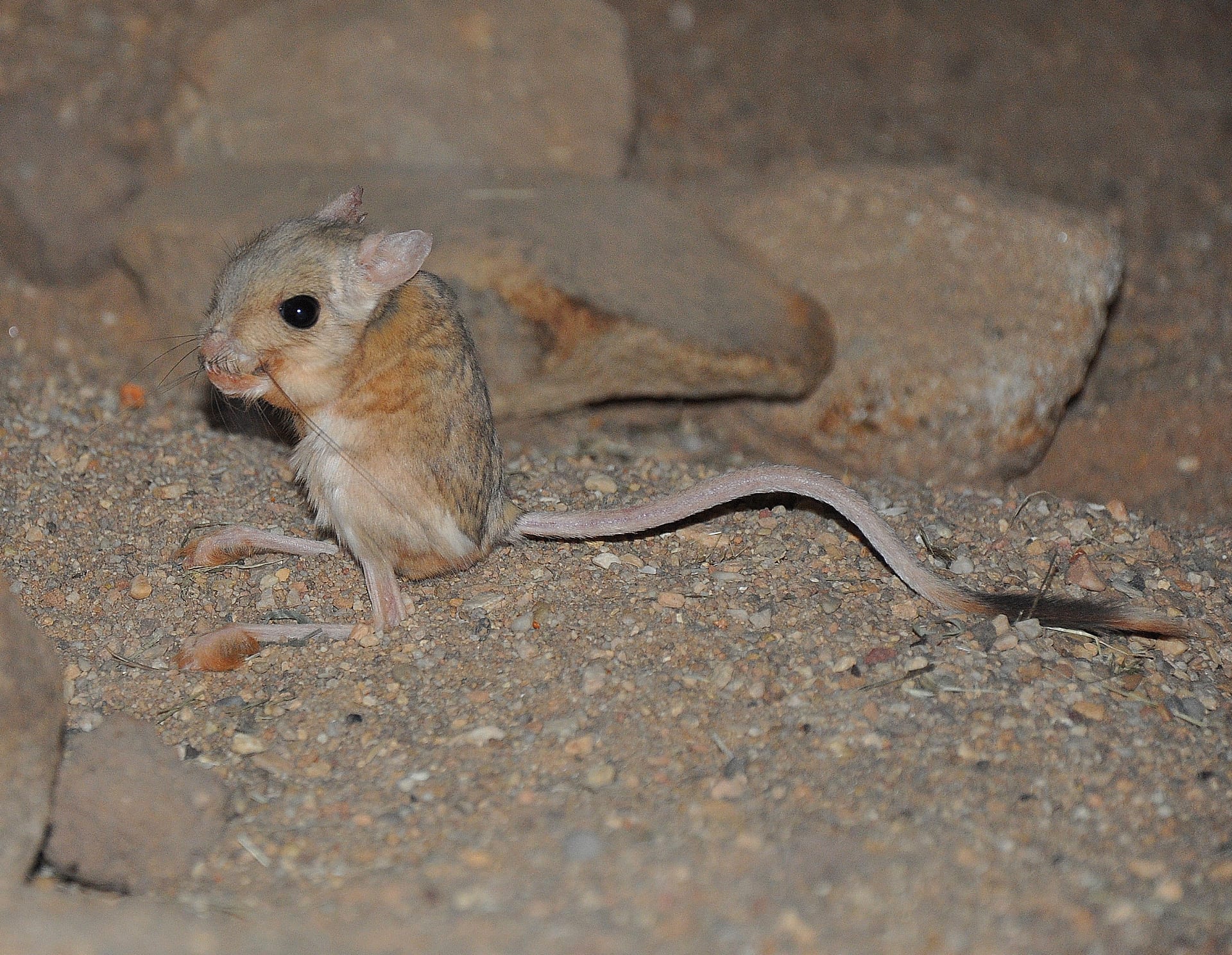
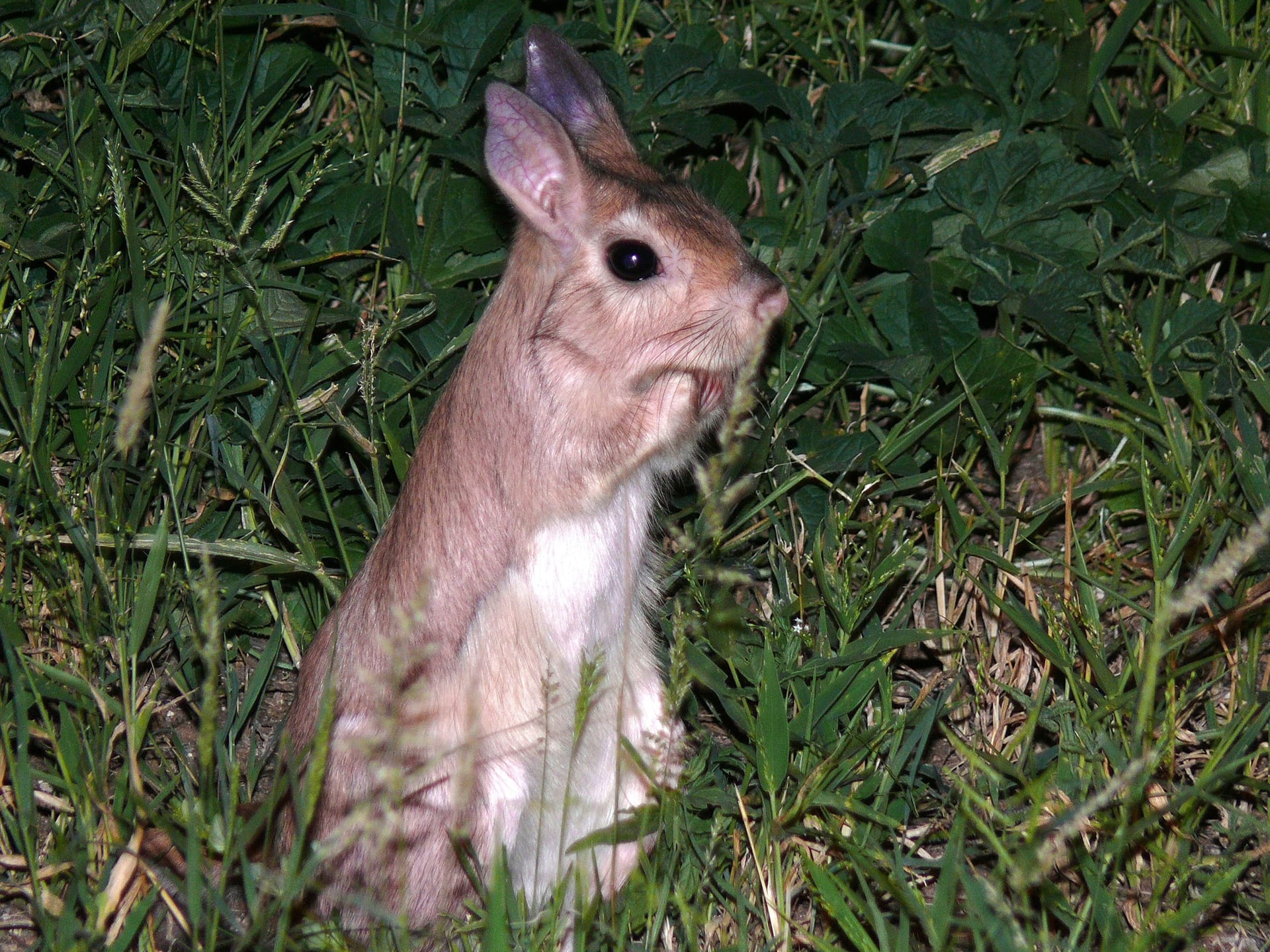
A southern African rodent that hops like a kangaroo on long, powerful hind legs. It has long ears, large eyes and a tail as long as its body with a black brush tip, and is active at night, resting in burrows by day.
Difficulty
Advanced
Temperature
18〜26℃
Lifespan
About 13–14.5 years on average in captivity
Size
35–45cm long plus 37–48cm tail; 3–4kg
Humidity
40〜60%
Diet
Mainly herbivorous: grains and other plants; some beetles and grasshoppers
About
The springhare (Pedetes capensis) is a rodent of the family Pedetidae; despite its name it is not a hare. It lives in southern Africa, including South Africa, on dry sandy savanna and grassland and in cultivated fields of wheat, oats and barley. The forelegs are short and the hind legs long and powerful, and it moves by hopping like a kangaroo. Its 7–9cm ears have a flap that keeps sand out while digging. The back is reddish brown to sandy and the belly white. It is mainly nocturnal, resting by day in burrows it digs and plugs from inside, and marks burrows with perineal gland secretions or urine. It eats mostly barley, oats, wheat and other plants, plus beetles and grasshoppers. Solitary in the wild, it is said to live together well in captivity and is kept in zoos. In Japan, captive-bred animals appear only occasionally at specialists.
Source: Wikipedia (CC BY-SA 4.0)
Lifespan of the Springhare
The Springhare lives About 13–14.5 years on average in captivity.
Average captive lifespan is about 13–14.5 years.
Size of the Springhare
The Springhare grows to 35–45cm long plus 37–48cm tail; 3–4kg.
It is 35–45cm long with a 37–48cm tail ending in a black to dark-brown brush, weighs 3–4kg and stands about 30cm at the shoulder when sitting up.
Basic Info
Origin
Dry savanna and grassland of southern Africa, including South Africa
Lifespan
About 13–14.5 years on average in captivity
References & Sources
Edited & verified by: BreederDirect editorial team
The taxonomic, regulatory, and husbandry data on this page are compiled and verified against the authoritative primary sources below.
Taxonomy & Authority
Accepted name: Pedetes capensis (Forster, 1778)
Authority databases: GBIF · GBIF: Pedetes capensis
Nomenclature follows global taxonomic authority databases.
Regulations & Conservation Status
Not CITES-listedIUCN LC · Least Concern
Not covered by CITES, the Invasive Alien Species Act or the specified-animal rules. Imports fall under Japan's animal import notification system (Infectious Diseases Control Law, MHLW): a health certificate from the exporting country's government must be filed with the quarantine station, and rodents must come from a holding facility designated by that government. Animals bred in Japan can be sold and kept without notification. Never release captive animals into the wild.
Sources: MHLW: Animal import notification system (JA) / Species+ CITES query (not listed) / Ministry of the Environment: Invasive Alien Species list, incl. species requiring a species-name certificate (JA)
Regulations may change. Always verify the latest information with the relevant authorities.
Springhare Listings
Loading latest listingsFind listings for this species