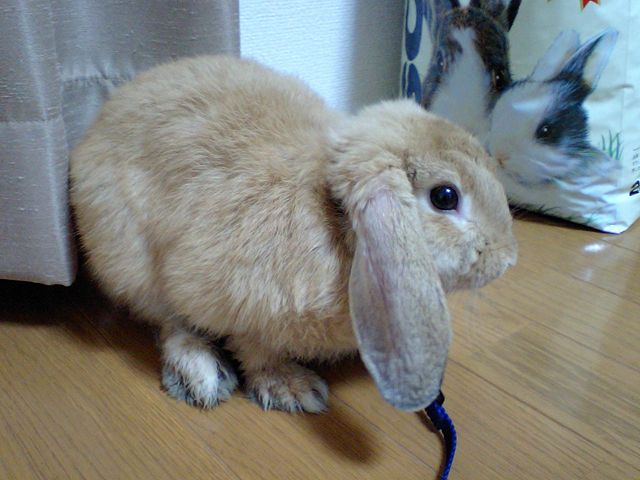
Source: Wikimedia Commons
Mini Lop Rabbit
BeginnerOryctolagus cuniculus
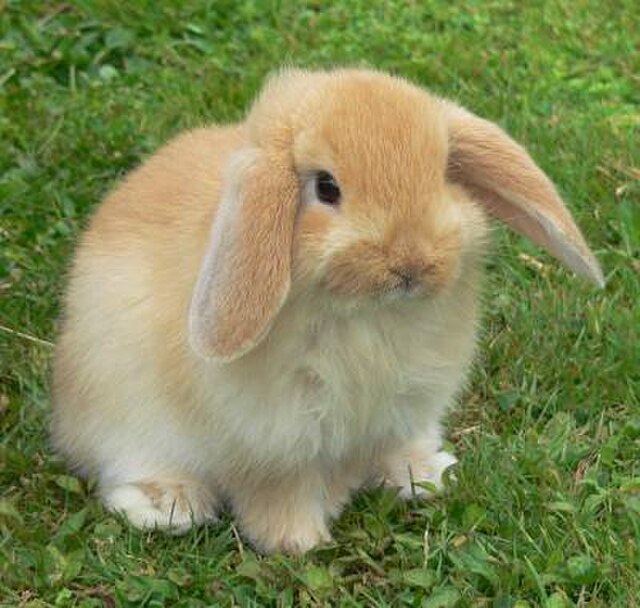
Slightly larger lop-eared rabbit with a muscular, stocky build. Many enjoy being held and are very affectionate.
Difficulty
Beginner
Temperature
18〜26℃
Lifespan
7-12 years
Size
30-36cm / 2.0-3.0kg
Humidity
40〜60%
Diet
Timothy hay (staple), pellets, vegetables
About
The Mini Lop is a medium-sized lop-eared rabbit breed developed in the United States in the 1970s, derived from German Lop and Chinchilla rabbit crosses. Their stocky, muscular build, broad head, and wide, pendulous ears create a robust yet endearing appearance. Mini Lops are known for their easy-going, playful, and affectionate temperament, adapting well to family environments including households with children. Housing requires a cage of at least 65 cm width, with daily supervised free-roaming exercise. Diet consists of unlimited timothy hay, pellets (approximately 1.5% of body weight), and daily fresh vegetables. The lopped ears reduce airflow in the ear canal, making them susceptible to otitis externa; regular ear examinations are important. Common health concerns include malocclusion, ear infections, GI stasis, and obesity.
Lifespan of the Mini Lop Rabbit
The Mini Lop Rabbit lives 7-12 years.
Lifespan is 8–12 years.
Size of the Mini Lop Rabbit
The Mini Lop Rabbit grows to 30-36cm / 2.0-3.0kg.
Adults measure 30–36 cm and weigh 2.0–3.0 kg, making them noticeably larger and more substantial than the Holland Lop.
Basic Info
Origin
United States
Lifespan
7-12 years
Size
30-36cm / 2.0-3.0kg
Temperature
18〜26℃
Care Specifications
Pair
Sources: RWAF Rabbit companionship
Captive Breeding
Live-bearing
- Gestation
- 31〜33 days
- Litter size
- 2〜11
- Weaning
- 4〜6 wk
- Sexual maturity
- 4〜5 mo
Breeding season: Year-round; induced ovulator — ovulation is triggered by copulation rather than a hormonal cycle
Breeding notes
Mini Lop is classified as a medium-sized breed with biological sexual maturity at around 4–5 months. However, breeders commonly recommend delaying the first mating for does until 6–8 months of age to allow full physical development. Weaning is recommended at approximately 6 weeks; kits can be separated from the doe at about 8 weeks.
Breeding requires planning, proper husbandry, and responsibility. These figures are general guidelines.
Sources: Verity Farm — Breeding Mini Lops: Broad Overview / MSD Veterinary Manual — Breeding and Reproduction of Rabbits / PMC — Biology and Diseases of Rabbits (Fox & Marini)
Morphs (Varieties)
ARBA-recognized Mini Lop showroom division.
DominantVisual with a single copy; no distinct super form.
Broken Pattern
Line-bredEstablished by selective line breeding.
Solid Pattern
Sources: ARBA Recognized Breeds and Varieties
A curated selection of notable morphs. Inheritance modes are a breeding-planning guide; actual appearance varies with combos.
References & Sources
Edited & verified by: BreederDirect editorial team
The taxonomic, regulatory, and husbandry data on this page are compiled and verified against the authoritative primary sources below.
Primary sources
Taxonomy & Authority
Accepted name: Oryctolagus cuniculus (Linnaeus, 1758)
Authority databases: GBIF
Nomenclature follows global taxonomic authority databases.
Regulations & Conservation Status
Not CITES-listed
Sources: CITES Appendices / Ministry of the Environment Specified Alien Species List
Regulations may change. Always verify the latest information with the relevant authorities.
Mini Lop Rabbit Listings
Loading latest listingsFind listings for this species