How to Create a Mini Coral Aquarium | Beginner's Guide to Small Reef Tanks for Schools and Offices
Learn how to start a mini reef tank growing corals in small 20–45L aquariums. Covers equipment selection for compact saltwater tanks suitable for offices and schools, recommended corals, and maintenance tips.
Key Takeaways
Learn how to start a mini reef tank growing corals in small 20–45L aquariums. Covers equipment selection for compact saltwater tanks suitable for offices and schools, recommended corals, and maintenance tips.
Related Species
What Is a Mini Reef Tank? You Can Keep Corals in Small Aquariums
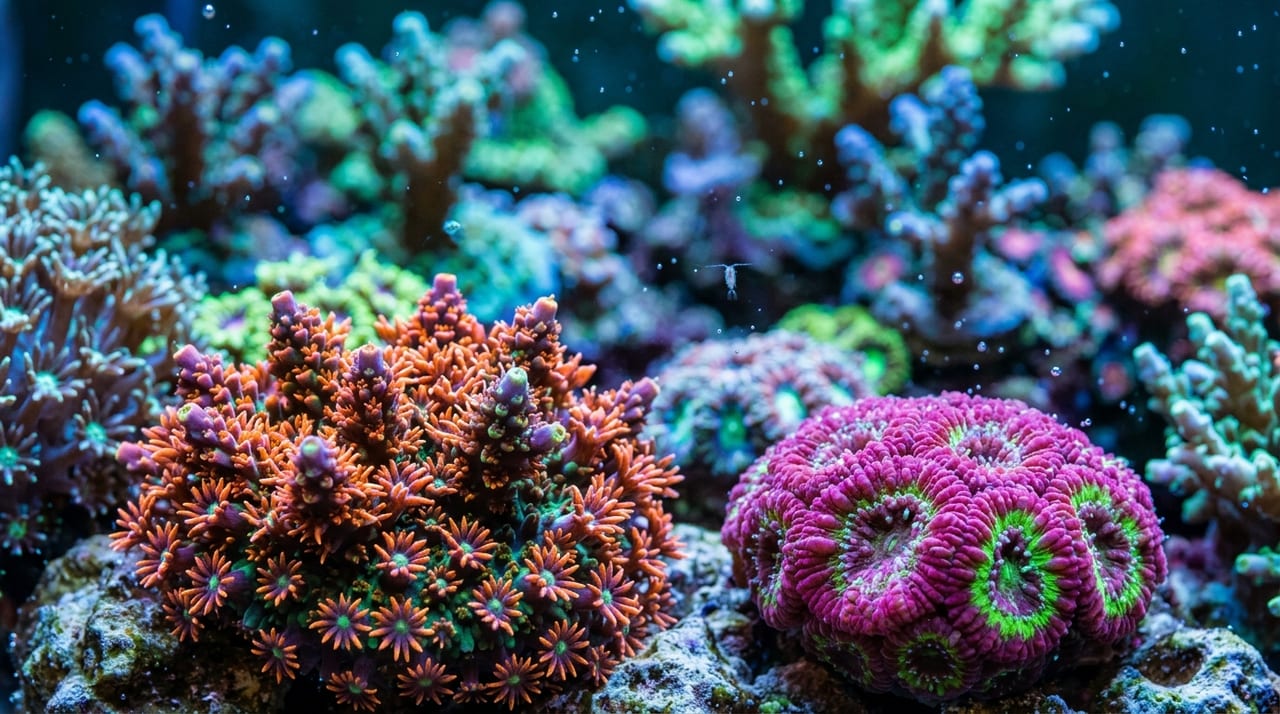
If you want to keep corals but don't have space for a large aquarium, a mini reef tank is the perfect solution. Even in a small 20–45L aquarium, you can beautifully cultivate soft corals and LPS corals, with the appeal being its compact size that fits on an office desk, in a school classroom, or in a corner of your living room.
While it was once said that "large tanks are essential for coral keeping," advances in LED lighting technology, the introduction of compact protein skimmers, and the spread of AIO (All-In-One) tank systems have made it possible to maintain stable, long-term coral keeping even in small 20L tanks.
Benefits of a Mini Reef Tank
- Startup and maintenance costs are lower than large tanks
- Water changes are easier (requires only small amounts of artificial seawater)
- Compact size that fits on desks or shelves
- Allows close observation of organisms' condition changes
Tank Size and Equipment Needed
Features by Recommended Size
| Tank Capacity | Size Guide | Features |
|---|---|---|
| 20–30L | 30–40cm tank | Most compact. Water quality changes rapidly; suitable for experienced keepers |
| 30–45L | 40–45cm tank | Balanced type; recommended for beginners |
| 45–60L | 45–60cm tank | High stability with diverse species options. Upper limit for mini reefs |
For beginners, 30–45L (40cm-class) tanks are the most manageable size. If the water volume is too small, water quality changes become too rapid, so keep in mind that tanks of 20L or less are best suited for experienced keepers.
List of Required Equipment
1. Lighting (LED) Lighting is the most important equipment for coral keeping. Choose a light that provides 50–150 PAR if focusing on soft corals, or 100–250 PAR if focusing on LPS corals.
Recommended options include dedicated coral LEDs such as AI Prime, Coral Box Moon, and Kessil A80. Choose models with well-balanced white, blue, and purple spectrums.
2. Filtration System For small reef tanks, AIO (All-In-One) systems are convenient. Products like the Red Sea MAX Nano series, Waterbox CUBE, and Unisafe Aqua All-in-One models simplify management by integrating filter, skimmer, and pump.
For standalone configurations:
- Live rock (the foundation of biological filtration)
- Small protein skimmer (be mindful of overskimming)
- Small pump (water circulation pump)
3. Heater and Cooler Maintain water temperature between 25–27°C. A 100W heater can cover around 40L, but during summer, water temperature tends to rise, so consider preparing a cooling fan or small chiller.
4. Hydrometer and Test Kits Maintain specific gravity (SG) between 1.024–1.026. Check regularly with a refractometer or digital hydrometer. It's reassuring to also have test kits for calcium, alkalinity (KH), and magnesium.
Recommended Corals for Mini Reefs
Soft Corals (Beginner-Friendly)
Mushroom Corals One of the hardiest and easiest corals to care for. They thrive even in areas with weak water flow and have high adaptability to water conditions, making them ideal starter corals for small tanks.
Zoanthids (Zoas) Prized for their vibrant colors, they add visual appeal to your layout as they colonize. With low light and water flow requirements, they're perfect for mini reefs.
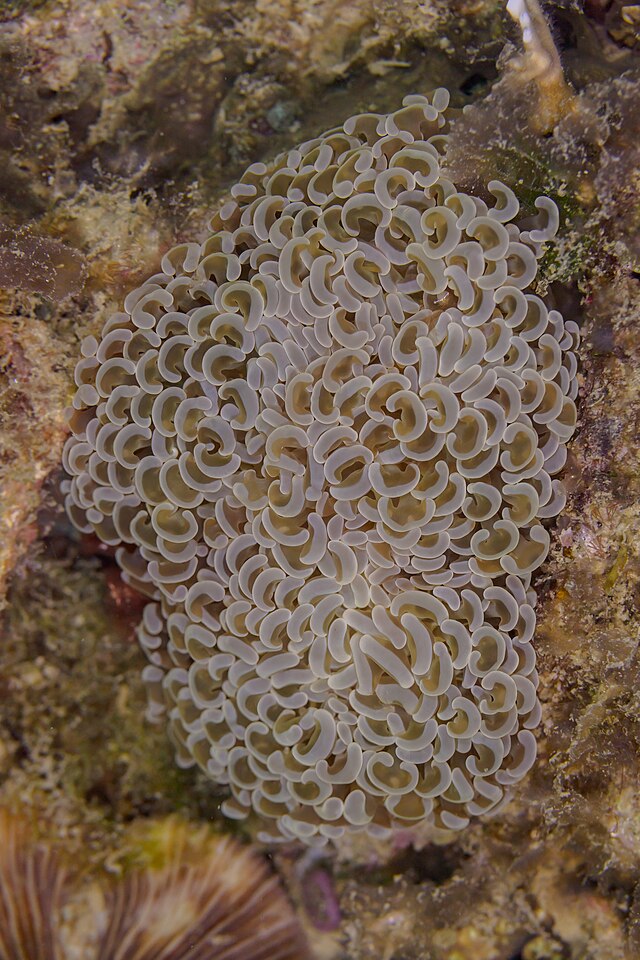
Hammer Corals Beautiful in green and purple hues, they thrive with moderate lighting and water flow.
LPS Corals (Intermediate-Level)
Trumpet Corals With compact colonies that fit well in small tanks, they grow with target feeding 1–2 times per week.
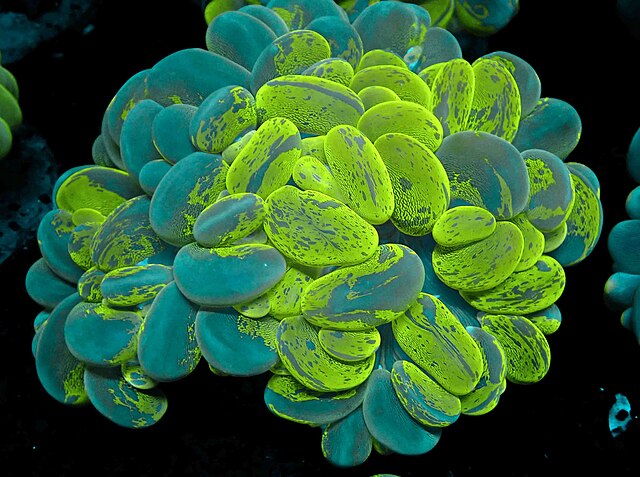
Bubble Corals An LPS with bubble-like polyps that create a unique presence. They require moderate lighting and prefer gentle water flow.
Setup Steps (Using 45L as an Example)
STEP 1: Equipment Setup and Test Run (1–3 days)
Install the tank, prepare artificial seawater, and start the equipment. Verify specific gravity and water temperature, and confirm stable operation for 1–2 days.
STEP 2: Live Rock Introduction (Days 4–7)
Add 1–2 kg of cured live rock. This serves as the foundation for your biological filtration bacteria colony. Design the layout with ease of maintenance in mind.
STEP 3: Tank Cycling (2–4 weeks)
Wait for the ammonia → nitrite → nitrate cycle to establish. Test 1–2 times per week with test kits. When nitrite is no longer detected, the tank is ready for livestock.
STEP 4: Introducing Soft Corals
Start with mushroom corals or zoanthids. Acclimate them carefully and monitor their condition closely for the first 1–2 weeks.
STEP 5: Adding More Species After Stabilization
Gradually add more species once the tank is stable. The key to long-term success is adding a few at a time with 1–2 week intervals, rather than introducing many at once.
Maintenance Routine
| Frequency | Task |
|---|---|
| Daily | Check organisms' condition, verify water temperature and specific gravity |
| 1–2 times per week | Top off evaporation loss (RO or low-salinity water), feed organisms |
| Biweekly | 10–15% water change, water quality test (NO₃, PO₄) |
| Monthly | Measure Ca, KH, Mg; clean glass; clean pump |
The Importance of Top-Offs
Small tanks are heavily affected by evaporation and can experience rapid salinity spikes. Develop a habit of adding small amounts of pure water (RO water) daily. An automatic top-off (ATO) system makes management significantly easier.
Considerations When Setting Up at Schools or Offices
Preparing for Power Outages and Electrical Issues Sudden power outages can cause temperature drops and pump failures. Consider installing a UPS (uninterruptible power supply) or preparing backup air pumps.
Management During Summer Break and Long Holidays For school installations, summer break management is a challenge. Use automatic feeders, ATOs, and timers, and establish a system for checking the tank's status 1–2 times per week.
Addressing Light Pollution Office fluorescent lights or direct sunlight can promote algae growth. Position your tank away from direct sunlight and properly control LED brightness.
Summary: Expanding Your Coral World with Mini Reef Tanks
A mini coral aquarium is the perfect entry point for coral keeping. With the right equipment and patient tank cycling, you can create a beautiful reef tank even in a compact 20–45L setup.
Key Takeaways:
- 30–45L (40cm-class) is the optimal size for beginners
- AIO tanks simplify both equipment selection and setup
- Start with soft corals (mushrooms and zoanthids)
- Consistent top-offs and water changes are key to long-term success
A colorful coral world expanding within a small tank. Why not create your own mini aquarium with vibrant corals purchased directly from breeders?